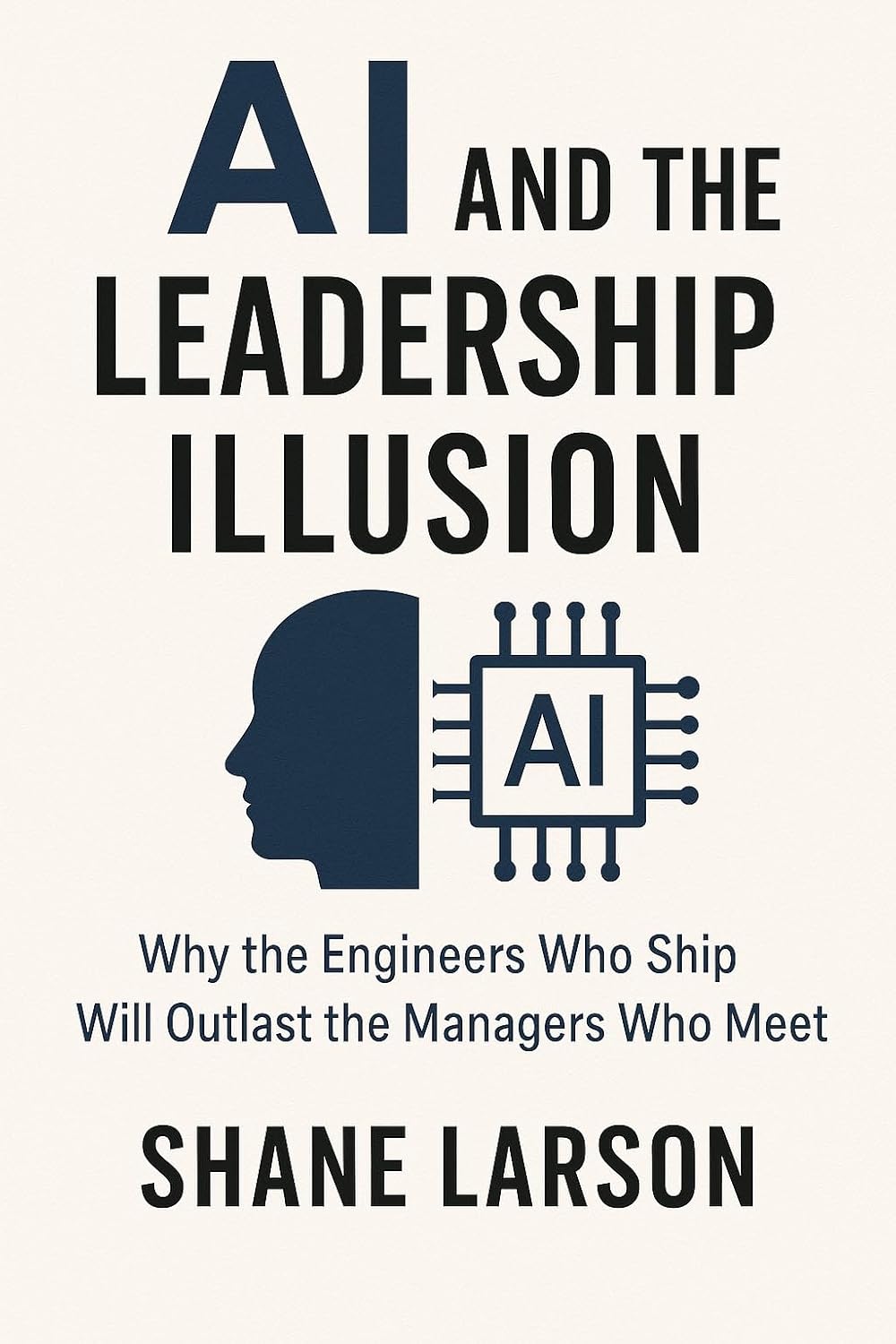
AI and the Leadership Illusion
Why the Engineers Who Ship Will Outlast the Managers Who Meet
By Shane Larson
About This Book
Your company has a senior engineer who ships features before lunch using AI.
They understand the systems. They solve the problems. They build the products that generate revenue. With AI tools, one person is doing what used to require a team.
Your company also has a VP who attends six meetings a day, forwards status updates, and presents other people's work on slides. They haven't touched a production system in years. They talk about driving alignment and setting strategy — which mostly means adding process to work that was already getting done without them.
AI is about to make one of these people dramatically more valuable and the other one redundant.
It's not the one you've been told.
The conventional narrative says AI is coming for engineers first. That's backwards. AI multiplies builders — one engineer with the right tools can now do the work of an entire team. But AI replaces coordinators. When AI can summarize meetings, generate status reports, and produce executive dashboards directly from the actual work, what exactly is left of a role that was mostly coordination?
What's inside:
- Why the "meeting class" of leadership is the most vulnerable layer in any organization — and why they're the last to know it
- How AI-augmented engineers are becoming more valuable than the managers above them
- The difference between real leadership — still essential, still irreplaceable — and organizational theater that AI is already making obsolete
- What the org chart looks like when AI eliminates the translation layer between builders and executives
- Practical strategies whether you're the builder gaining leverage or the leader who needs to evolve before the evolution happens to you
This isn't an anti-management book. It's an anti-fake-management book. Leaders who understand the work, make hard calls, and clear obstacles for their teams are more valuable than ever. The leaders who just go to meetings and talk about the work? Their days are numbered — and the clock is moving faster than their calendars suggest.
The future belongs to builders. This book explains why — and what to do about it.
Included with Kindle Unlimited — read it free if you're a member.
New AI & Workplace Dynamics releases and free chapters — no spam, unsubscribe anytime.
More in This Genre
View all →