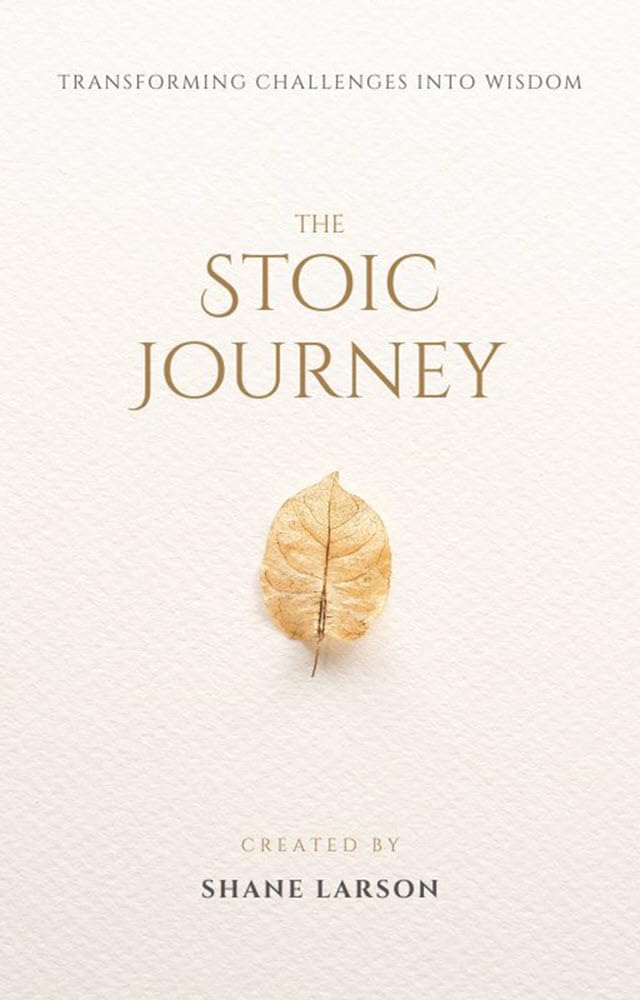
The Stoic Journey
Transforming Challenges into Wisdom
By Shane Larson
About This Book
Two thousand years ago, a slave, an emperor, and a playwright arrived at the same conclusions about how to live well under pressure.
Epictetus was owned by another man and had no control over where he lived or what happened to his body. Marcus Aurelius commanded the most powerful empire on Earth and spent his reign managing plague, war, and betrayal. Seneca navigated the lethal politics of Nero's court, never knowing if today's favor would become tomorrow's execution order.
All three practiced Stoicism. All three left behind ideas that have outlasted every empire, every crisis, and every cultural shift since.
The reason is simple: Stoic philosophy isn't about the circumstances you're in. It's about what you can control when circumstances turn against you — which is always less than you think, and always more than you feel.
The Stoic Journey is a practical guide to applying that insight to a modern life that would be unrecognizable to Marcus Aurelius but would present him with entirely familiar problems.
What's inside:
- The dichotomy of control — the foundational Stoic distinction that changes how you respond to everything
- The four cardinal virtues — wisdom, justice, courage, and temperance — and what they look like in practice
- Eudaimonia — the Stoic concept of flourishing that goes deeper than happiness and outlasts it
- Self-reflection and journaling practices drawn directly from Marcus Aurelius's Meditations
- How Stoic principles apply to professional pressure, difficult relationships, and the ambient anxiety of modern life
- Practical exercises for building genuine resilience — not the performance of resilience, but the real thing
- How to make ethical decisions clearly when the situation is murky and the stakes are real
This isn't philosophy as an academic exercise. It's philosophy as a operating system for difficult times — tested across centuries, refined across cultures, and as applicable to a difficult Tuesday in 2026 as it was to a battlefield on the Danube.
The Stoics didn't promise that life would get easier. They built something better — the ability to handle it as it actually is.
Included with Kindle Unlimited — read it free if you're a member.
New Productivity & Career releases and free chapters — no spam, unsubscribe anytime.
More in This Genre
View all →