The Name Is the Worst Thing About Claude Code
August 5, 2026 · 5 min read
You have probably heard of Claude Code. You may have looked at it, seen the words "agentic coding tool" and "command line," and concluded it was not for you.
You were right about not being a developer. You were wrong about the rest.
Calling Claude Code a coding tool is like calling a Swiss Army knife a cork remover. Accurate, and completely missing the point.
The Actual Capability Is File Access
Here is the difference that matters, and it has nothing to do with programming.
When you use an AI in a browser tab, you are having a conversation inside a sandbox. It cannot see your documents. It cannot open your folders. It cannot read the forty research PDFs you have been accumulating or update the spreadsheet you maintain. Everything has to be copied in by hand and copied back out, one piece at a time, and anything larger than the window simply cannot go in.
That copy-paste tax is the reason most people's AI use stays shallow. It is not that the model can't do the work. It's that assembling the context costs more than the work saves.
Claude Code removes the tax. You point it at a folder and it can read every file in there, understand how they relate, and change them.
That is the whole unlock, and it is why the name is such a problem: the ability to work directly with your files is not a programming feature. It is the thing that finally makes an AI useful for people whose work lives in documents.
What That Looks Like Without Any Code
Consider a few shapes of work that become possible the moment the file barrier drops.
Research synthesis across a real corpus. You have sixty documents — reports, transcripts, saved articles — accumulated over months. Ask what themes recur, where sources disagree, which claims appear in only one place. This is not summarising one document at a time. It is reading the whole body and reasoning across it, which is precisely what you cannot do in a chat window.
Reorganising a folder that got away from you. Hundreds of files with inconsistent names across a directory structure that made sense two years ago. Have it read what the files actually contain, propose a structure based on that, and then execute the reorganisation. The important part is the middle step: the sorting is based on content rather than filenames.
Data work without the spreadsheet fight. Several exports that need to be joined, cleaned, deduplicated, and turned into a summary. This is the category where most people either lose an afternoon or give up. Describing what you want in plain language and having it operate on the actual files is a genuinely different experience.
Long documents that need real consistency. Manuscripts, reports, proposals, documentation sets. Checking that terminology is used the same way throughout, that the numbers in the summary match the numbers in the body, that nothing contradicts something forty pages earlier. Tedious, error-prone, and exactly the kind of thing that benefits from something that can hold the entire document at once.
Work Smarter with Claude Code
Repetitive processes you run monthly. The report that requires pulling from three places, reformatting, and assembling in the same way every time. Once you have described the process, you have described it — and it runs the same way next month.
None of these involve writing software. All of them require the AI to reach your files.
The Part Worth Being Honest About
Two things are genuinely harder than the marketing for these tools admits.
It runs in a terminal. For most non-technical people that is the real barrier, and it is not nothing — the interface is a text prompt with no buttons and no menus. The learning curve is shorter than it looks (you type what you want in ordinary English), but the first ten minutes feel wrong if you have never used a command line, and pretending otherwise is dishonest.
It changes real files. That is the point, and it is also the risk. Something operating on your actual documents can make actual mistakes on them. Work on copies until you trust it. Keep anything important in version control or a backup. Read what it proposes before approving changes to things you cannot recreate.
That second point is the one worth internalising properly, because the failure mode is not dramatic — it is a small wrong edit in the middle of a large correct one, in a file you did not re-read.
When Not to Use It
Knowing the limits makes the tool more useful, not less.
If your task does not involve files, use a normal chat interface — it is more convenient for a quick question or a conversation you are thinking through. If you need something visual, use a tool built for that. If the work requires judgment you would not delegate to a competent assistant who has never met your stakeholders, do not delegate it here either.
And if the task is genuinely small — one short document, one quick rewrite — the setup is not worth it. This earns its place on work that is either large, repetitive, or spread across many files, which is to say the work that was previously not worth doing at all.
Why This Is Worth Your Time
The reason to bother is not that it does what you already do slightly faster.
It is that there is a category of work most people have quietly written off — the reorganisation that would take a weekend, the analysis across two hundred documents, the consistency pass on the long report — because the effort exceeded the value. That work does not appear on anyone's to-do list. It gets abandoned silently.
That category is the one that opens up. And it is almost entirely made of things that have nothing to do with code.
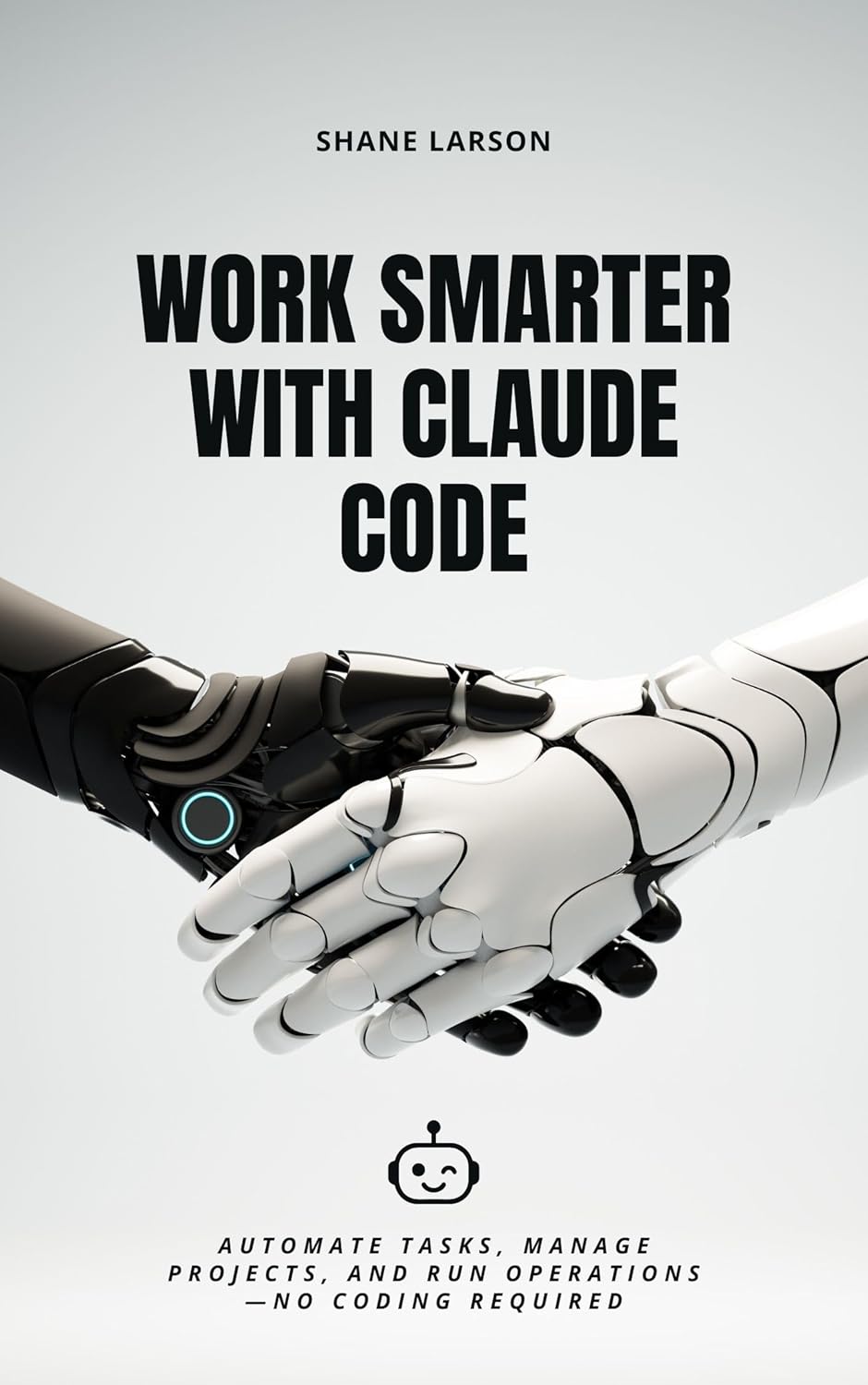
Work Smarter with Claude Code: Automate Tasks, Manage Projects, and Run Operations — No Coding Required is the practical guide: setup, first session, file and folder work, writing and editing, research synthesis, data without spreadsheet hell, automating recurring tasks, and a clear-eyed chapter on when to use something else.
Work Smarter with Claude Code
New posts and releases, straight to your inbox. No spam, unsubscribe anytime.