The Problem With Hacking's Founding Legend
August 5, 2026 · 6 min read
Here is the story everyone tells.
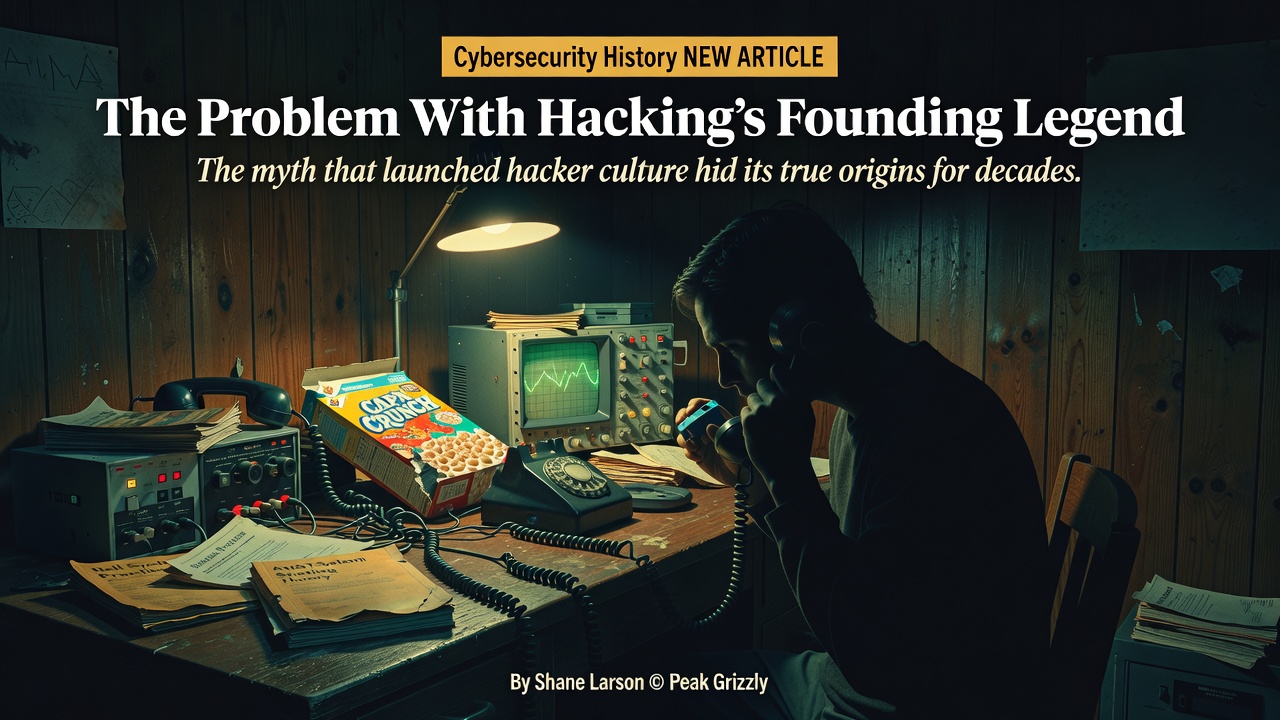
A man named John Draper discovered that a plastic whistle packaged in boxes of Cap'n Crunch cereal produced a tone at exactly 2,600 hertz — the frequency AT&T's long-distance network used to mark an idle trunk line. Blow the whistle into a phone and the network handed you the keys. He took the name Captain Crunch, taught a young Steve Wozniak how it worked, and hacker culture was born in a bowl of breakfast cereal.
It is a wonderful story. It is the most retold origin myth in technology. And nearly every load-bearing element of it is either compressed, borrowed, or quietly avoided.
He Didn't Find the Whistle
The whistle discovery is generally credited to a blind phreak named Bill Acker, or to others in the blind phone-phreaking community, depending on which account you follow. What is not in dispute is that Draper was not first.
More importantly, the whistle was not the discovery that mattered. By the time anyone was blowing a cereal toy into a handset, the community had spent more than a decade mapping AT&T's signaling system by ear. Joe Engressia had been whistling 2,600 Hz since 1957, at age seven. Blind teenagers with perfect pitch had already worked out which switches produced which sounds, how routing tones behaved, and what the network would do when you spoke its own language back to it.
The whistle didn't open the network. It democratized access to something already understood — a free, mass-produced tone generator sitting in supermarkets. That is a great detail. It is not a discovery.
What Draper actually did, and did well, was build. His blue boxes — handheld units that generated the full multifrequency signaling set, not just the single 2,600 Hz tone — were among the best-engineered in the community. That work came out of Air Force electronics training and a genuine obsessive's practice, and it required understanding telecommunications hardware at a level very few amateurs reached.
The legend gave him credit for a discovery he didn't make and undersold the engineering he actually did.
The Wozniak Connection Is Real
This is the part of the story that holds up, and it matters more than the cereal.
Draper taught Steve Wozniak the phone system. Wozniak has said so publicly and repeatedly, without hedging. He and Steve Jobs went on to build and sell blue boxes out of Berkeley dorm rooms — Wozniak engineering, Jobs selling — several years before they built a computer.
The significance isn't that two future Apple founders committed toll fraud. It's what the blue box taught them. It was a consumer device that did something the institution controlling the system had declared impossible for an outsider to do. Building it required believing that a proprietary system's rules were knowable from the outside, and then proving it. Wozniak's later hardware — the Apple I and II, famous for doing more with fewer chips than anyone thought possible — comes out of that same conviction.
The line from the phone phreaks to the personal computer runs directly through this relationship. That part of the legend is earned.
The Rest of the Career Was Harder
The years after phreaking are the part the myth skips, and they're more interesting than the myth.
Draper went to federal prison for toll fraud. He worked briefly at Apple. He wrote EasyWriter, one of the first word processors for personal computers — reportedly, in part, while incarcerated — and it shipped as part of the IBM PC's launch software lineup. That is a real contribution to the early PC ecosystem, and it is the last unambiguous professional success in the story.
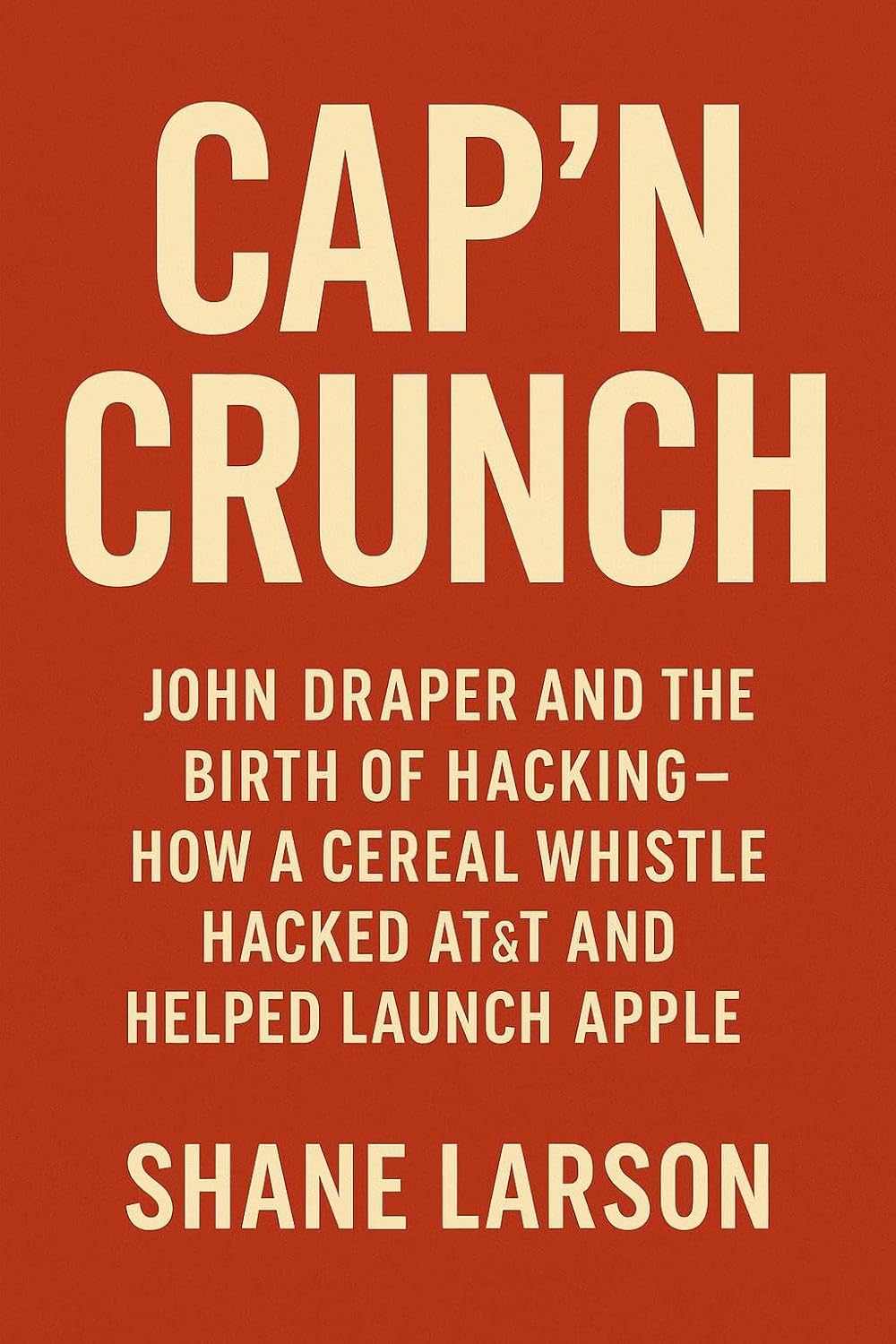
Cap'n Crunch: The Whistle That Started It All
After that, decades of decline. Security consulting that never became a business. Projects that didn't ship. Long stretches of financial precarity, sleeping on couches, and living on the goodwill of a community that regarded him as a founding figure. He remained a fixture at hacker conferences, where his status was largely honorary — the living link to the era before any of it had a name.
The technology industry is not gentle with people who peaked early and never converted fame into equity. Draper was famous for forty years and broke for most of them.
And Then the Part Nobody Wanted to Discuss
In November 2017, BuzzFeed News published an investigation into allegations of sexual misconduct against Draper.
The reporting described a pattern of unwanted physical contact directed largely at young men at hacker conferences — unsolicited "massages" and boundary violations, described consistently by multiple people across different events and different years. Draper's response was that the contact was a voluntary stretching or energy-work practice, therapeutic rather than sexual. Many in the community did not find that persuasive.
These are allegations, reported by journalists and not adjudicated in any court, and it is worth being precise about that. But the reporting surfaced something separate that is not in dispute: the complaints were not new. They had circulated informally inside the community for years — in some accounts, decades — as warnings passed quietly between people, never compiled, never investigated, never addressed.
That is the part worth sitting with. A subculture whose central value was that information wants to be free had, on this one subject, an efficient and well-maintained system for keeping information from traveling. Draper was protected not by a conspiracy but by ordinary social gravity: he was a legend, the legend was load-bearing for the community's own story about itself, and raising the matter meant damaging something people wanted to keep.
He was removed from conference invitation lists. The public career ended.
Both Things, At Once
The reflex with a figure like this is to pick a verdict. Celebrate the contributions and skip the rest, or condemn the conduct and write the contributions out of the record.
Both moves produce bad history.
Draper's contributions happened. He built exceptional hardware. He taught Wozniak. He wrote software that shipped on the original IBM PC. He was a genuine bridge between the phone phreak underground and the computer culture that replaced it, and the hacker ethic — open information, exploration for its own sake, treating a closed system as a puzzle — passed through him on its way to everything that came after.
The allegations also happened, and the community's thirty-year silence around them happened, and that silence is itself part of the history of hacker culture rather than an unfortunate footnote to it.
A subculture that told itself it was fundamentally about transparency turned out to have the same instinct every institution has: protect the founder, protect the story, handle it quietly. That is not a special failing of hackers. It is the ordinary failure mode of any group with a myth to maintain — which is exactly why it belongs in the account.
The cereal whistle is a great story. The real one is better, because it is about what it costs to be the person a movement builds its founding legend around, and what a movement will overlook to keep that legend intact.
Cap'n Crunch: The Whistle That Started It All is the full account of John Draper — the engineering, the prison time, the Apple connection, EasyWriter, the long decline, the 2017 reckoning, and what the legend was doing for everyone who repeated it.
Cap'n Crunch: The Whistle That Started It All
New posts and releases, straight to your inbox. No spam, unsubscribe anytime.