
The Industry Promotes Its Best Builders Into a Job That Uses None of Their Skills
August 5, 2026 · 5 min read
The offer arrives because you are good at the work.
You shipped the hard thing. You are the one people ask. Somebody notices, and the reward the industry has for that is a job in which you will do almost none of it.
This is the standard promotion path in technology, and it contains an obvious flaw that everyone can see and almost nobody acts on: being excellent at engineering is very weak evidence that you will be good at management, because they are different professions.
What the Job Actually Is
The gap between what management looks like from outside and what it is from inside is wide, and most of the difference is invisible until you are in it.
From outside it looks like more authority, more scope, more money, and a seat where decisions get made.
From inside, the day is meetings. Not as a temporary condition to be optimised away — as the medium in which the work happens. Your calendar is no longer yours, because your availability is a resource other people schedule.
And a large fraction of the actual work is emotional labour that appears nowhere in the job description. Someone is unhappy about their review. Two people who both matter cannot work together. A person on your team is going through something at home and their output has fallen and you have to decide what to do about it. You are the one who tells someone the news, and you are also the one who absorbs the reaction.
None of that is visible from the outside. All of it is the job.
The Losses Nobody Prices
Four things go, and they go quietly.
Flow. The state where you disappear into a problem for four hours requires uninterrupted time, and management is a fundamentally interrupt-driven role. Most new managers grieve this specifically, and are surprised by how much.
The satisfaction of finished things. A builder ends the week with something that exists. A manager ends the week having enabled a set of outcomes that will show up in someone else's work over the next quarter, if they show up at all. That is a real contribution and it feeds a completely different appetite. If you are someone who needs to point at a thing and say I made that, the change is harder than you expect.
Your technical edge. This is the one people underestimate the most. Skills decay through disuse, and after two or three years away, the honest position is that you are no longer current. You can still reason about systems. You cannot still do the work at the level you used to, and you will discover this at an inconvenient moment.
Part of your identity. For a lot of engineers, being the person who can build things is not a job description. It is a self-concept, formed young and defended. Management asks you to trade it for something less legible.
The Money Is Not the Argument You Think
Management is usually presented as the path with more upside, and at senior levels the compensation curves are much closer than people assume.
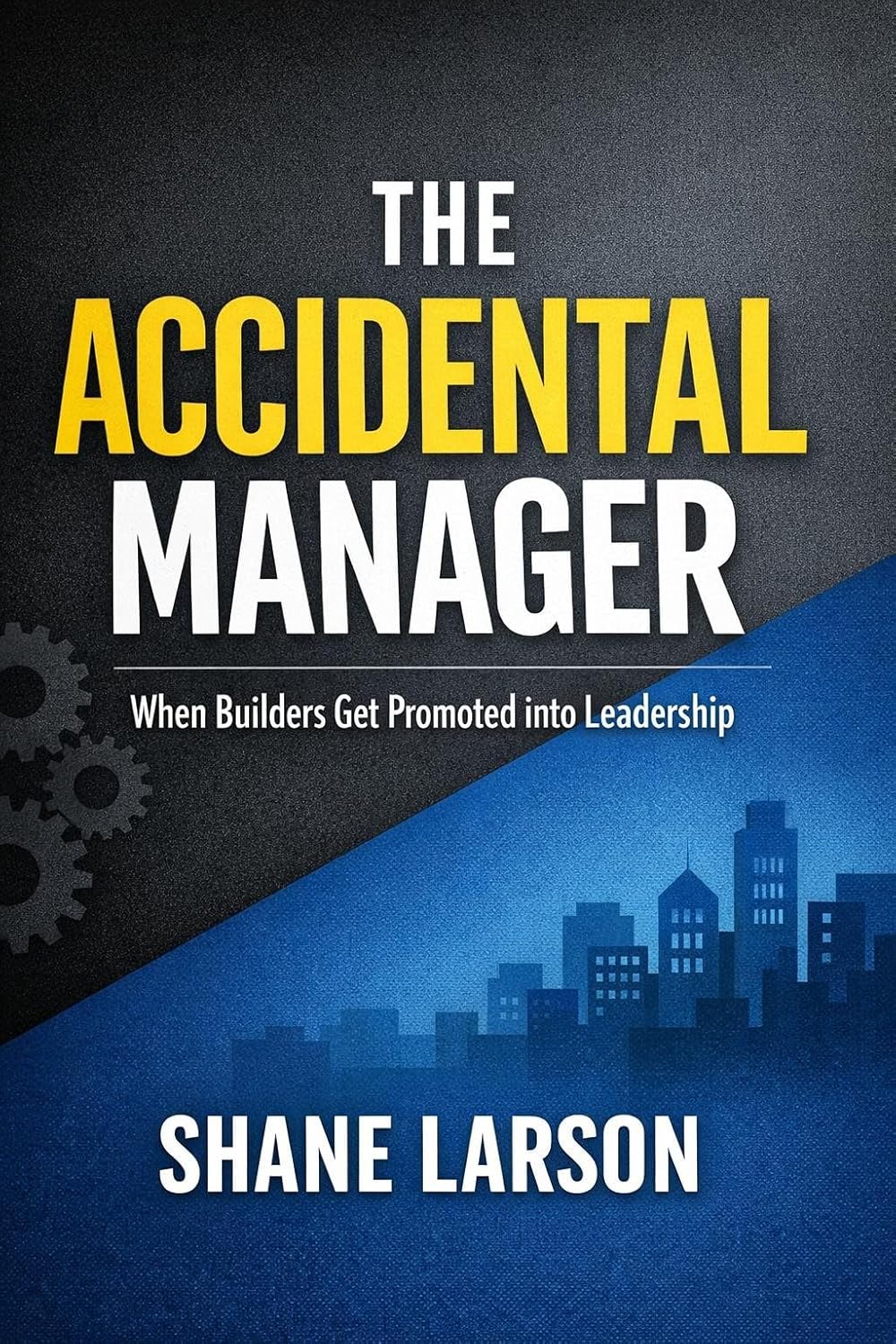
The Accidental Manager
Senior individual contributor tracks — staff, principal, distinguished, whatever a given company calls them — exist at most large technology companies specifically because the industry noticed it was losing its best engineers to a job they were not suited for. Those levels can pay comparably to engineering management for a long stretch.
The genuine divergence tends to come much higher up, where the number of executive roles is small and the competition is severe. If you are taking a first-line management job primarily for the money, you are making a bet on a tournament you have not evaluated.
There is also a flexibility question that rarely gets raised. Engineering skills transfer between companies and countries with relatively little friction. Management effectiveness is more contextual — it depends on relationships, organisational knowledge, and trust that does not travel with you. Changing companies as a manager frequently means rebuilding from something close to zero.
How to Tell Misfit From Learning Curve
The first year is difficult for everyone, which makes the important question hard to answer: is this hard because it is new, or hard because it is wrong for me?
Some rough discriminators.
A learning curve gets easier in identifiable places. Three months in, the one-on-ones are less awkward. Six months in, you can run a planning cycle without dread. If nothing is getting easier at all, that is information.
A misfit shows up in what drains you rather than what you are bad at. Being bad at something new is expected. Finding the core activities of the job depleting — every conversation costing something you do not get back — is different, and it does not improve with competence.
And the clearest signal: notice what you do when you get an unexpected free hour. If you reach for the work — clearing a blocker for someone, thinking about how to structure the team — you are probably in the right job. If you reach for the codebase every single time, you have already answered.
Going Back Is Allowed
The part that keeps people stuck is the belief that the move is one-way, and that returning to an individual contributor role is a public demotion.
That belief is much weaker than it used to be and it was never as strong as people feared. The senior IC tracks exist. People move back. In organisations with any sense, someone returning to engineering after two years of management is a more valuable engineer than they were before — they understand why decisions get made, how to communicate upward, and what the organisation actually needs.
The real cost of the belief is that it keeps people in a job they dislike for years, doing it adequately, while a team lives with a manager whose heart is not in it. That serves nobody, and the person paying most of the cost is not you.
The best builders in the industry keep getting handed a different job as a reward. Taking it is a legitimate choice. So is declining it, and so is taking it and changing your mind — and only one of those three is treated as an admission of something.
The Accidental Manager: When Builders Get Promoted into Leadership covers the reality of the work, the trade-offs, the compensation question honestly, surviving the first ninety days, the conversations that matter, how to tell misfit from learning curve, and how to go back if you want to.
The Accidental Manager
New posts and releases, straight to your inbox. No spam, unsubscribe anytime.