Add Up Your Sprint Ceremonies. It's Most of a Working Day Every Two Weeks.
August 5, 2026 · 5 min read
The promise of agile was that you would stop wasting time on bureaucracy and start delivering. Small teams, short cycles, fast feedback.
Do the arithmetic on an actual two-week sprint.
Planning: two to four hours, sometimes a full day. Standups: fifteen minutes times ten days, except standups are rarely fifteen minutes, so call it three to five hours. Backlog grooming: one to two hours. Sprint review: an hour or two with preparation on top. Retrospective: an hour, plus the preparation nobody does.
That is somewhere between one and two full working days per person, per sprint, spent on the process rather than the work. On a team of six, a fortnight of engineering capacity goes into coordinating a fortnight of engineering capacity.
The overhead became the job.
The Ceremonies Were Solving Something Real
The reflex response is to cut the meetings, and that reliably makes things worse. Worth being precise about why the ceremonies exist before touching them.
Planning exists because a team that starts a sprint without shared understanding of scope will build the wrong things and discover it late. Standups exist because work gets blocked and nobody notices for three days. Reviews exist because the gap between what stakeholders expected and what got built needs to close before it becomes a quarter of wasted effort. Retrospectives exist because teams repeat mistakes indefinitely if nothing forces reflection.
Every one of those problems is real. Teams that abolish the ceremonies rediscover the problems within two sprints.
But look at what the ceremonies are actually made of, mechanically. Almost all of it is the same three activities: collecting information that already exists somewhere, restating it in a format someone else can use, and synchronising several people's understanding of a shared state.
That is a description of the work — not of the judgment.
Where the Time Actually Goes
Take planning apart. The genuinely valuable part is a handful of decisions: what are we committing to, what are we deliberately not doing, and which of these is riskier than it looks. Those decisions take maybe twenty minutes of real discussion.
The other three hours are breaking stories into tasks, writing acceptance criteria, finding dependencies, and arguing about estimates. All of that is necessary and none of it requires six people in a room. It requires someone to do it and everyone to check it.
Standups are the starker case. The format is each person reporting status in turn, which means each person is engaged for their ninety seconds and passively waiting for the other twelve minutes. The value is not in the reporting. It is in the blockers — and the blockers occupy a small fraction of the time.
Retrospectives are the worst offender because they fail at their own purpose. The sticky notes say the same things sprint after sprint: communication could be better, we need more testing time, requirements weren't clear. Everyone nods, action items are recorded, nothing changes, and the same complaints appear next time.
That is not a failure of honesty. Teams generally know what is wrong. It is a failure of analysis and follow-through — the format surfaces complaints without exploring causes, and nobody checks afterwards whether anything happened.
The AI-Powered Sprint
What Changes
The useful reframe is that these ceremonies have a preparation problem, not a duration problem. Most of the time is spent doing the prep work live, in a room, at the most expensive possible moment.
Story breakdown and first-pass acceptance criteria can be drafted from the ticket and the codebase before anyone meets, then reviewed and corrected — which is a fundamentally different meeting, because arguing with a concrete draft is fast and generating one from nothing in a group is slow.
Standup status can be assembled from what actually happened: commits, ticket transitions, pull requests, build results. Then the meeting is about blockers and decisions rather than narration, and it genuinely takes five minutes.
Sprint review preparation — the demo script, the summary of what shipped, the mapping back to what was committed — is compilation work that currently eats a senior person's afternoon.
Retrospectives are where the biggest gain is, and it is not about the meeting. It is about having something to bring to it: what actually happened over the sprint, which estimates were wrong and in which direction, where work sat waiting, and — most valuably — which issues raised in this retro also appeared in the last six. That last one is what breaks the loop. A complaint appearing for the seventh consecutive sprint is a different kind of fact than a complaint appearing once, and no team remembers that unaided.
The Trap
There is an obvious failure mode here, and it is worth naming because it is the likely outcome if you approach this carelessly.
If you automate the production of sprint artifacts, you can end up producing more artifacts rather than fewer meetings. Beautifully generated stories nobody reads. Comprehensive retro analyses nobody acts on. Status summaries that replace one form of noise with a more polished one.
The measure of success is not better documents. It is hours returned to the people doing the work, and decisions made with better information. If the ceremony still takes three hours but the inputs are prettier, nothing has been gained and something has been lost, because now there is tooling to maintain as well.
The other trap is deleting the human parts. The twenty minutes of real discussion in planning, the moment in a retro when someone says the thing everyone was avoiding, the standup where a junior engineer admits they have been stuck for two days — none of that is overhead. It is the entire point, and it is the part that gets squeezed when the mechanical work expands to fill the slot.
The Actual Goal
Cut the ceremony overhead roughly in half and put the recovered time into the work. Keep every conversation where a person exercises judgment or says something uncomfortable. Remove every minute spent watching someone else read out a status you could have read yourself.
Agile was never supposed to cost a day a fortnight per person. Somewhere along the way the practices calcified into rituals, and the rituals acquired defenders. This is a chance to get the original intent back — but only if the goal is measured in reclaimed hours rather than in the quality of the paperwork.
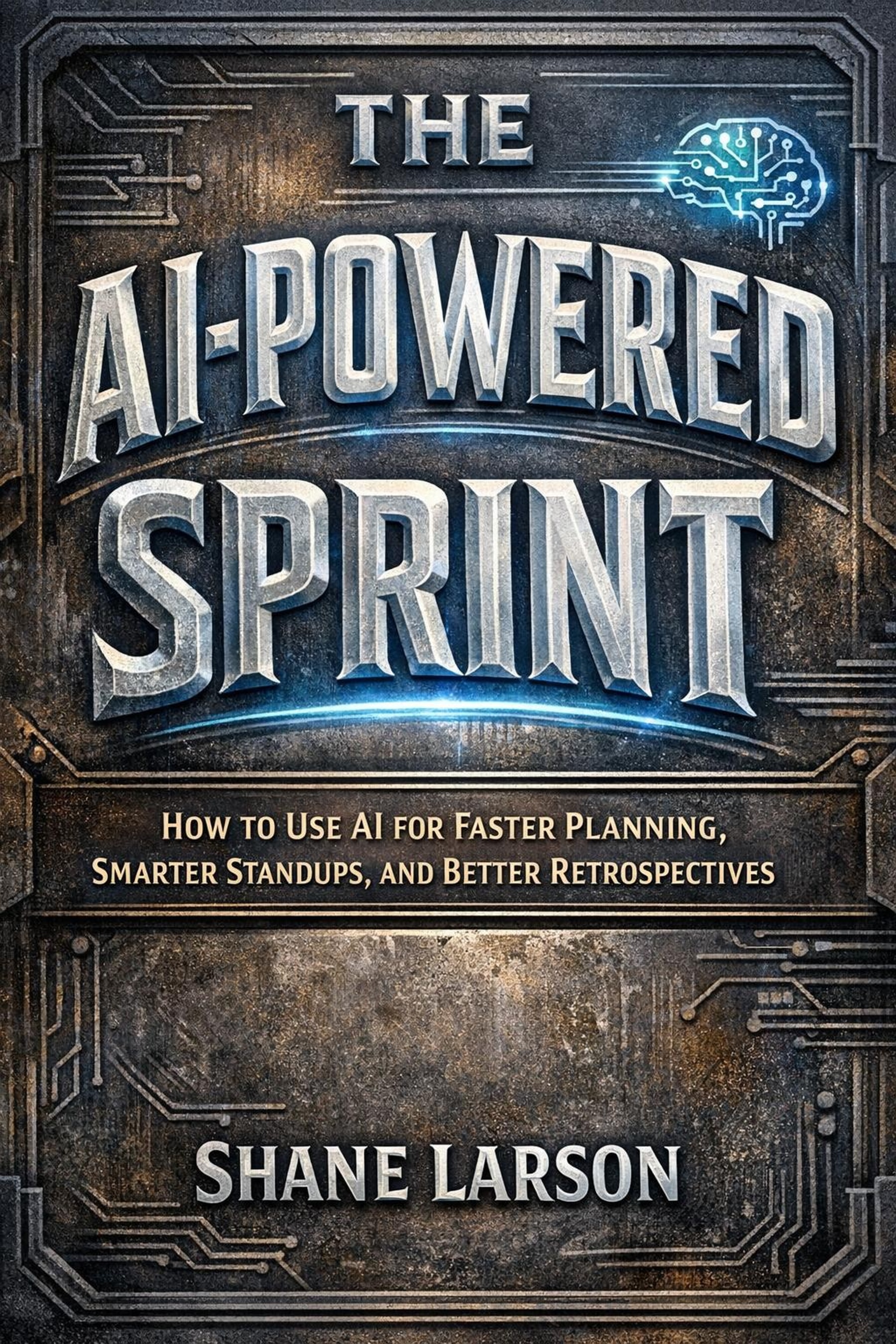
The AI-Powered Sprint: How to Use AI for Faster Planning, Smarter Standups, and Better Retrospectives runs ceremony by ceremony — user stories, backlog grooming, planning, technical design, standups, unblocking, mid-sprint correction, documentation, review prep, and retrospectives that actually change something.
The AI-Powered Sprint
New posts and releases, straight to your inbox. No spam, unsubscribe anytime.