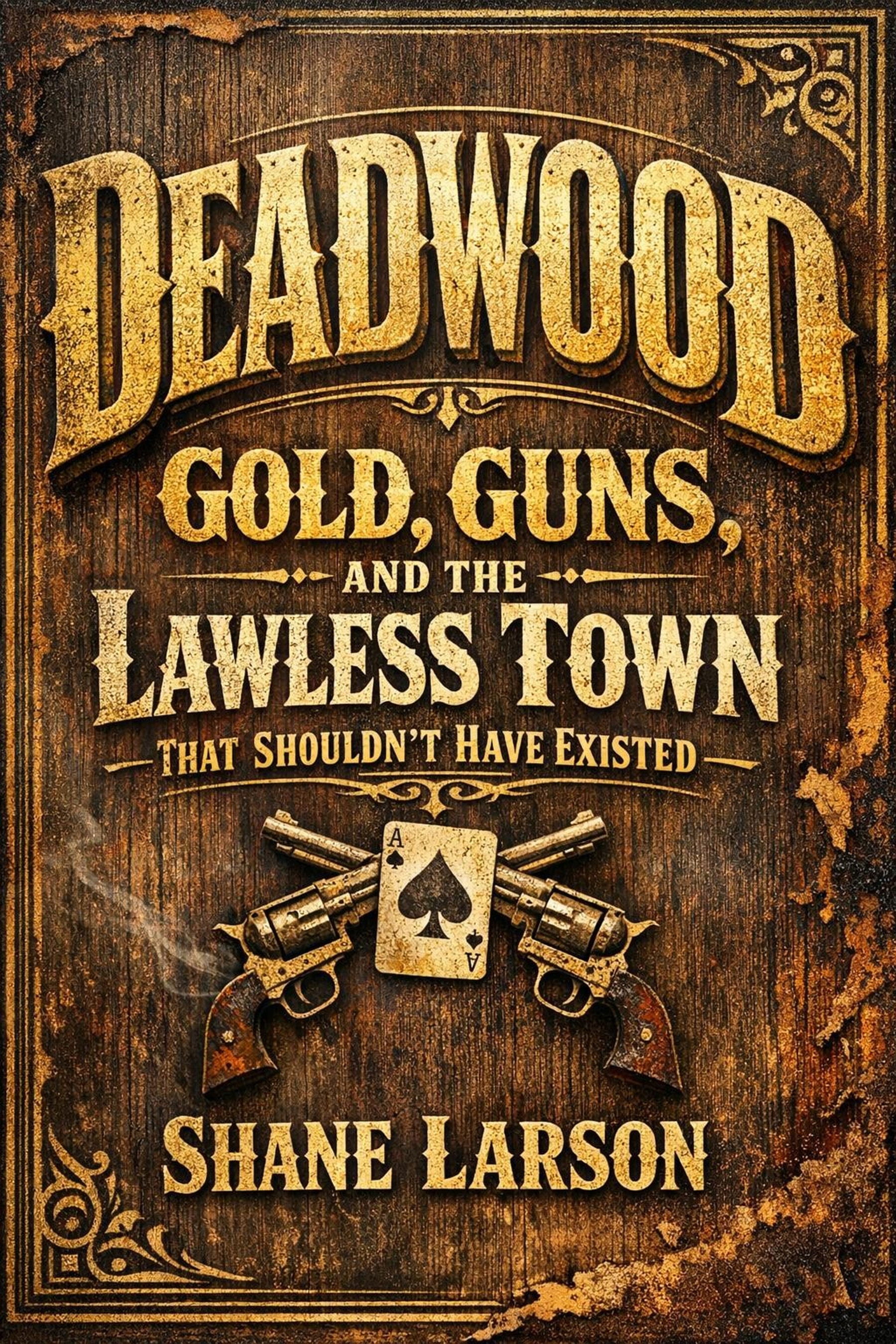
Deadwood
Gold, Guns, and the Lawless Town That Shouldn't Have Existed
By Shane Larson · The Wild West Series (Book 1)
About This Book
There is a crack in the northern Black Hills where two creeks meet, and in the spring of 1876 it was one of the most valuable and least governed places on the North American continent. No sheriff had authority there. No surveyor had platted the lots. No judge could legally hear a case, because the ground itself belonged, by treaty, to someone else entirely. And into that gap poured twenty-five thousand people, wagons, whiskey, gold pans, and guns.
The town they built in the mud had no legal right to exist. Every mining claim staked in that gulch was worthless on paper. Every land title was a fiction. Every killing was a crime that no court had the standing to prosecute. Deadwood was not a frontier town that outran the law — it was a full-blown city that formed entirely outside it, and then had to invent, from scratch, the rules it needed to keep from tearing itself apart. That improvisation is the real story, and it's far stranger than either legend that later grew up around it.
The Real Deadwood, Beneath Two Legends
Most people meet Deadwood twice: once through the dime novels and once through prestige television. Both versions are vivid, and both bury the documented town under invented drama. This book digs it back out.
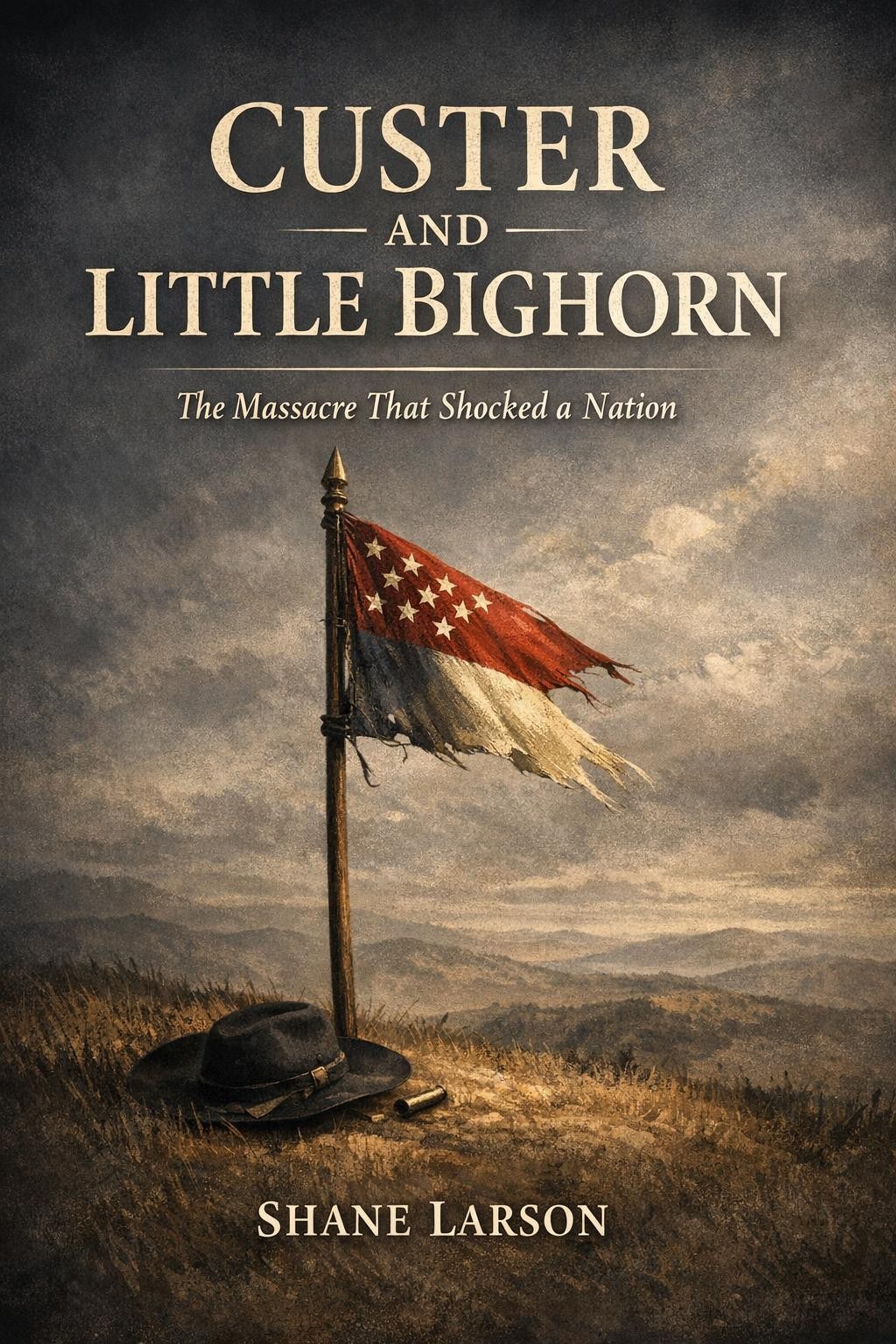
The setup is a jurisdictional impossibility. In 1868, the Fort Laramie Treaty guaranteed the Black Hills to the Lakota Sioux in language that left little room for interpretation. Eight years later, an Army expedition led by George Custer confirmed the rumors of gold, and Washington made the quiet, consequential choice to simply stop enforcing its own treaty. The rush that followed filled a gulch that sat outside any state, outside any organized territory's practical reach, and outside any court's jurisdiction — a functioning society assembling itself in a legal blind spot.
From there the book follows the evidence rather than the folklore. Wild Bill Hickok did die at a Deadwood poker table holding his famous hand — but he'd been in town less than three weeks, a detail the legend inflates into an era. His killer, Jack McCall, really was acquitted by an improvised miners' court and then hanged after a second trial ruled the first one void, because Deadwood, legally speaking, was nowhere. Al Swearengen really did run the Gem Theater for twenty-two years, and the documented record of that operation is bleaker than the charismatic antihero the screen made famous. And the people the legends erase entirely — the Chinese community that built lower Main Street, the women trafficked through the Badlands, and the Lakota whose treaty land the whole enterprise was carved out of — are returned to the center of the account, where the records put them.
What You'll Discover
- The treaty that promised the Black Hills to the Lakota — and the decision in Washington to keep the paper and abandon the enforcement.
- Who actually walked away rich from a gold rush, and why the real fortunes usually left town in a suit rather than on a mule.
- How a town with no legal standing improvised courts, property rights, and self-government out of necessity and consensus.
- Wild Bill Hickok's final three weeks in Deadwood, and the honest evidence behind the "dead man's hand."
- The two trials of Jack McCall — a miners' verdict and a federal one — and what the gap between them reveals about a place caught in legal twilight.
- The documented Al Swearengen and the grim economics of the Gem Theater, set beside the version audiences think they know.
- Calamity Jane, demythologized — the paper trail of Martha Canary against the frontier character she helped invent and sell.
- The Supreme Court decision, a century later, that ruled what everyone in 1876 already knew: the town sat on stolen ground.
Why I Wrote This
I came to Deadwood the way most people do now — through the television series — and then went looking for the sources behind it, which is usually where the trouble starts. What I found was a town that didn't need embellishing. The truth about the miners' court, the void jurisdiction, the two McCall trials, the treaty that was quietly hollowed out — all of it was already more interesting than the invented dialogue and the composite characters.
What kept me writing was the pattern underneath. Deadwood is one of the cleanest natural experiments American history offers: take away every legal institution, drop in thousands of armed strangers chasing sudden money, and watch what they build. The answer is neither the lawless free-for-all of the dime novels nor the tidy morality play of the screen. It's messier, more human, and more revealing about how order actually gets manufactured when there's none to inherit. I wanted a version of Deadwood a reader could trust — legend on one side of the line, evidence on the other, and the line clearly marked.
Frequently Asked Questions
Is this the same Deadwood as the HBO series?
Same town, same real people — Hickok, Swearengen, Calamity Jane, Jack McCall — but this is the documented history, not the drama. If you loved the show and have ever wondered which parts actually happened, this book was written for exactly that question. In several cases the record is stranger than anything the series put on screen.
Do I need any background in Wild West history to follow it?
None at all. The book assumes you're smart and curious, not that you're already an expert. The treaty context, the geography of the gulch, and the cast of characters are all laid out as the story needs them, so you can start cold and still follow every turn.
How accurate is it — is this evidence-based or storytelling?
It's evidence-first throughout. Where the documented record is thin or contested, the book says so plainly rather than papering over the gap with invented color. When it separates the real event from the legend that grew around it, it shows you why the distinction holds.
Does it cover more than the famous gunfighters?
Yes, and deliberately. Alongside Hickok and McCall, the book restores the Chinese community of lower Main Street, the exploited women of the Badlands, and the Lakota whose treaty land the town was built on — the people the popular legends tend to leave out entirely.
Is this part of the Wild West series?
It belongs to the same evidence-first Wild West history line as the individual outlaw and lawman biographies. It works completely on its own, but it also builds the world those figures moved through — the frontier where the law was often something people had to invent as they went.
Is it available on Kindle Unlimited?
Yes. It's available to read through Kindle Unlimited as well as for individual purchase.
If You Liked This, You Might Like
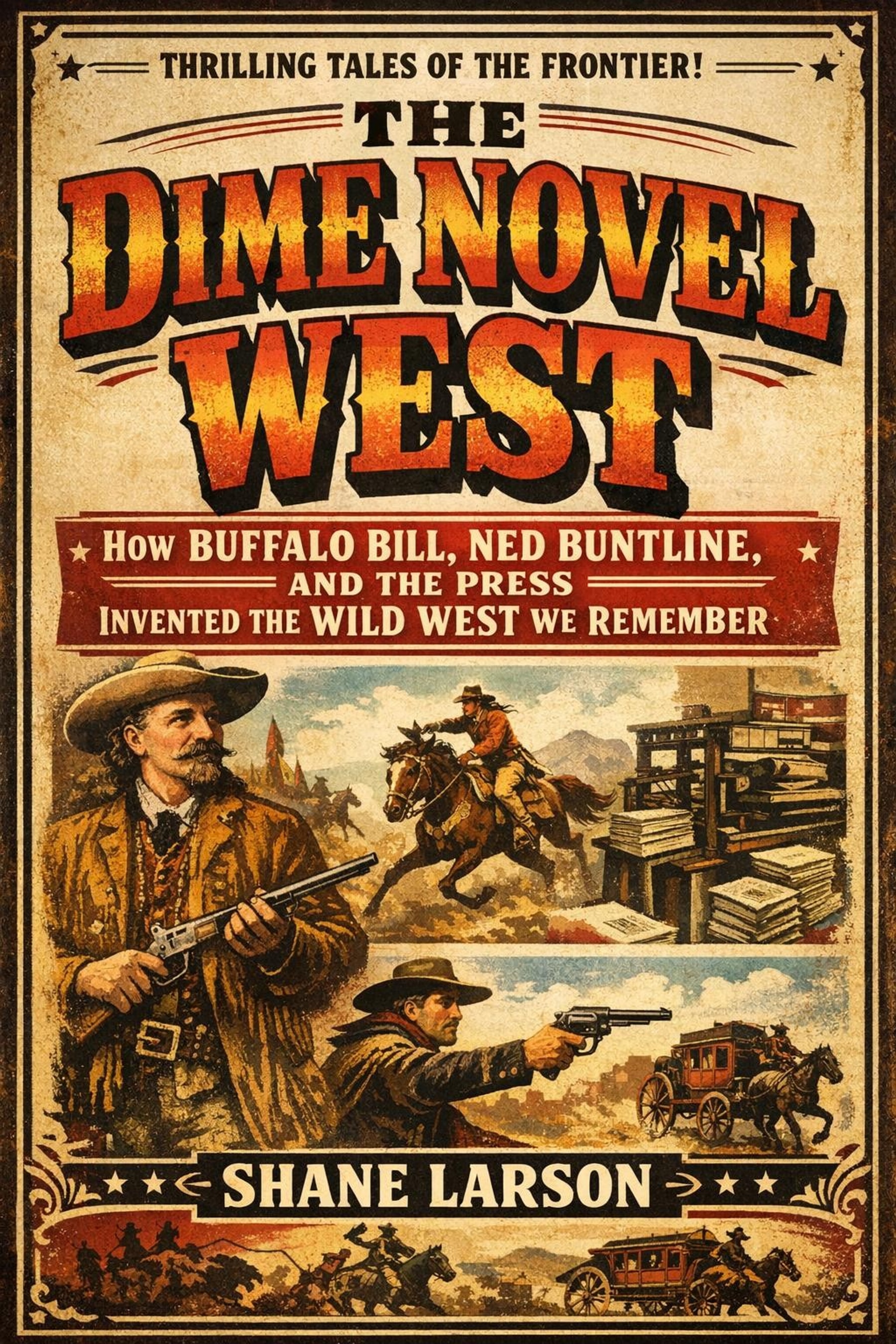
- The Dime Novel West — the companion question to this whole book: how Buffalo Bill, Ned Buntline, and the penny press manufactured the Wild West we think we remember.
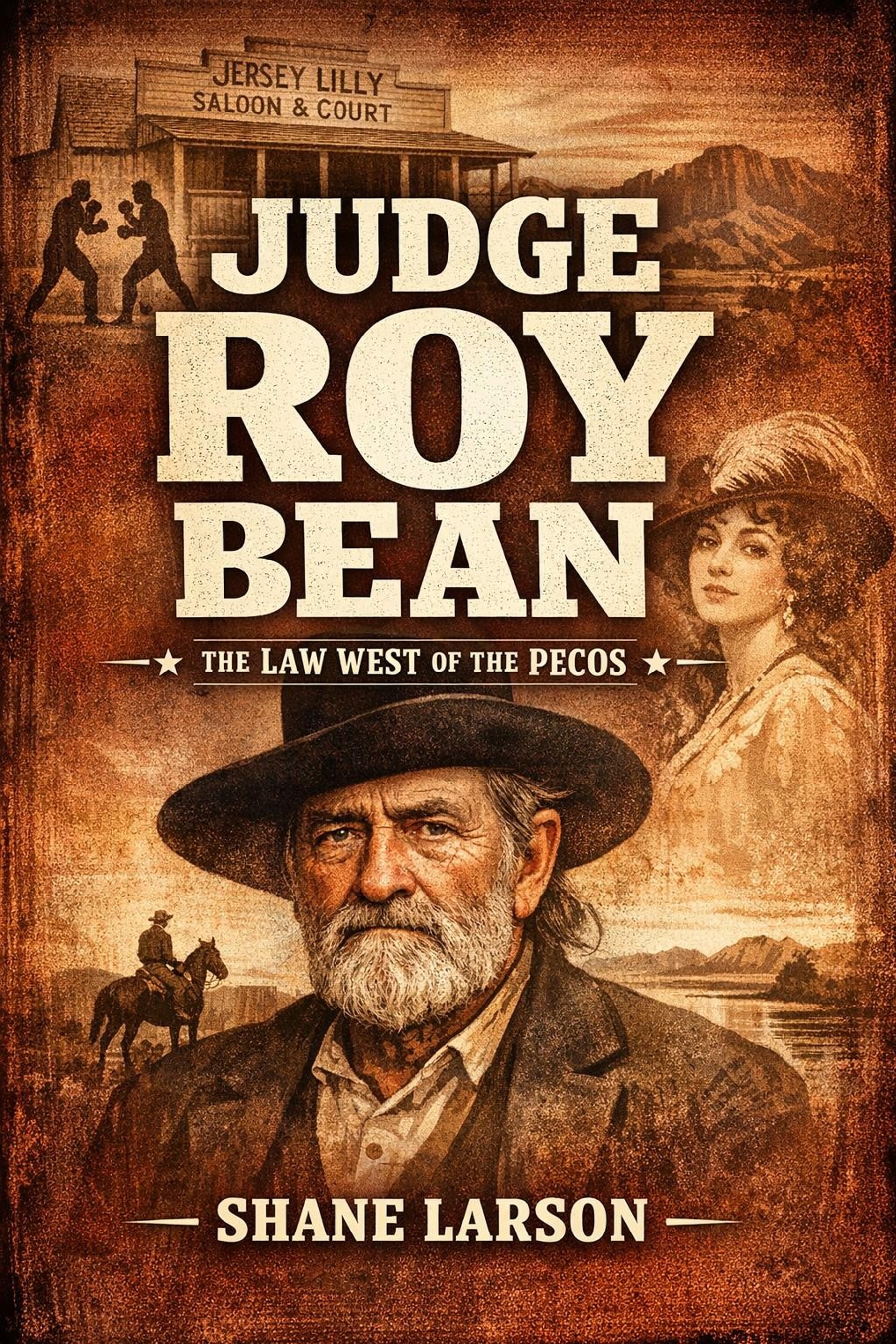
- Judge Roy Bean — "the Law West of the Pecos," another study in improvised frontier justice where the nearest real court was a world away.
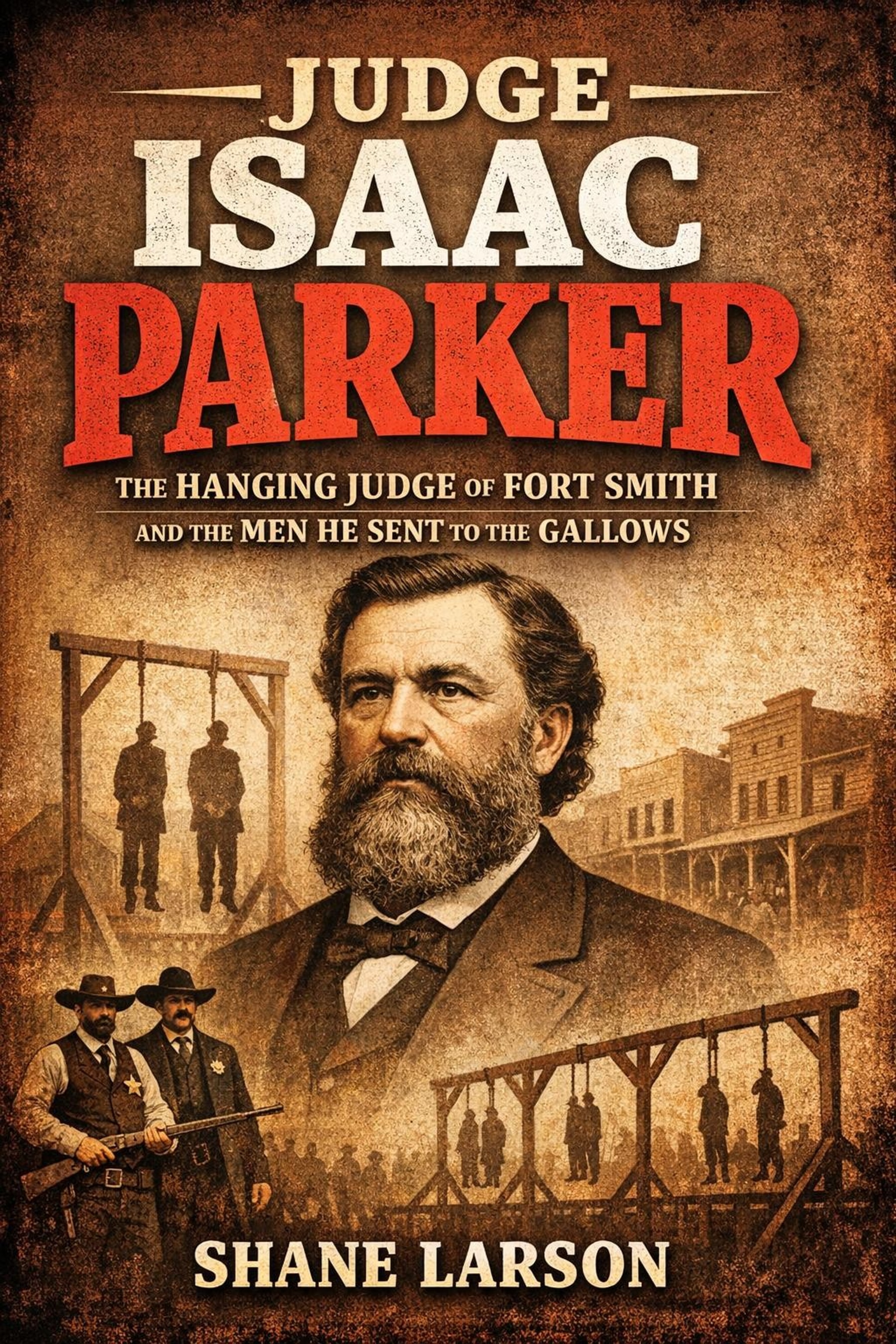
- Judge Isaac Parker — the hanging judge of Fort Smith, and the machinery of federal law arriving to fill exactly the kind of jurisdictional void Deadwood was born into.
The documented Deadwood outruns both of its legends — the printed one and the televised one. This is the town as the records actually left it.
Included with Kindle Unlimited — read it free if you're a member.
New Wild West releases and free chapters — no spam, unsubscribe anytime.
More in The Wild West Series
View series →