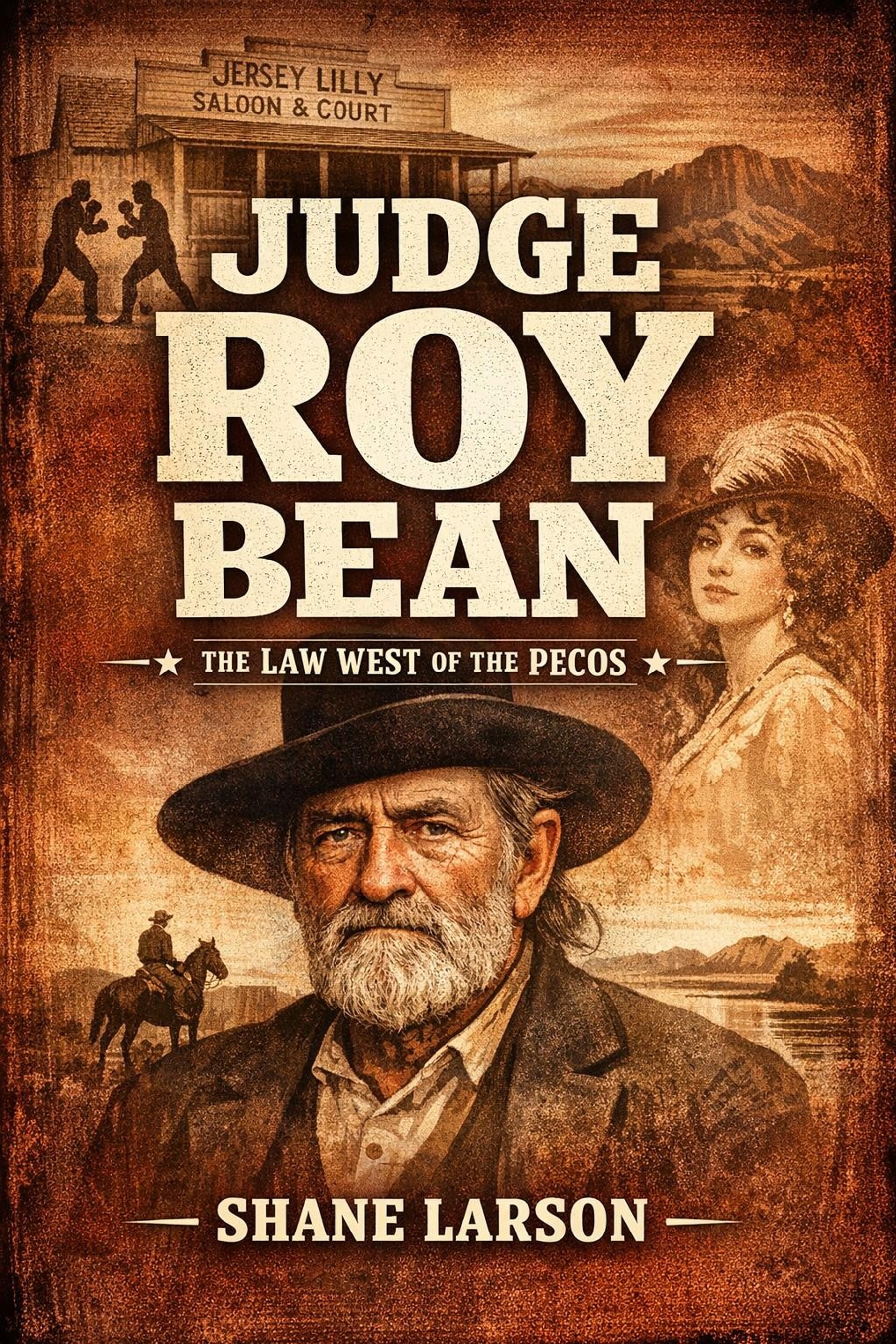
Judge Roy Bean
The Law West of the Pecos
By Shane Larson · The Wild West Series (Book 14)
About This Book
On a February afternoon in 1896, several hundred men filed across a pontoon footbridge onto a sandbar in the middle of the Rio Grande. They had come to watch the heavyweight championship of the world — a fight that was illegal in Texas, illegal in Mexico, and illegal in every U.S. territory in between. On the sandbar, it was legal by default, because the sandbar belonged to nobody. Texas Rangers watched from one bank. Mexican officials watched from the other. Neither could touch it.
The man who dreamed up the whole scheme wasn't a promoter or a politician. He was a seventy-year-old saloon-keeper and small-town justice of the peace who had spotted the one patch of ground on Earth where the fight could happen — and made sure every spectator bought his whiskey on the way. The bout lasted about ninety seconds. The legend of Judge Roy Bean lasted forever.
The Man Behind the Law West of the Pecos
By the time Roy Bean arrived in the railroad tent camps along the Pecos in 1882, he had already lived several lifetimes' worth of trouble. He'd fled Mexico after a shooting, survived a lynching attempt in California that left him with a permanently stiff neck, and spent years scraping by in a San Antonio slum so rough it was nicknamed Beanville. He was pushing sixty, broke, and running out of frontier.
Then the Texas Rangers handed him the strangest second act in Western history. The railroad camps sat two hundred miles from the nearest courtroom, and the Rangers needed someone — anyone — to hold hearings on the spot. Bean got the appointment, one outdated volume of the Revised Statutes of Texas, and a mandate he interpreted very loosely. He set up court inside his own saloon, a clapboard shack he named the Jersey Lilly after Lillie Langtry, an English actress he adored from newspaper photographs and never once met. He named the town for her too.
What followed was two decades of jurisprudence unlike anything else on the frontier. Bean married couples and then divorced them, a power no justice of the peace possessed, on the theory that the man who tied a knot ought to be allowed to untie it. He empaneled juries from his best bar customers and expected them to buy a round when court adjourned. He levied fines for everything — and the fines went straight into his pocket, because Langtry had no other municipal treasury. In the most famous ruling of his life, he searched a dead man found with a pistol and forty dollars, fined the corpse forty dollars for carrying a concealed weapon, and kept the gun as court property.
This book tells that story straight — and then does something the tall tales never do. It checks the record. The "hanging judge" of movies and folklore never hanged anyone; his actual authority ran to fines and minor cases, and he had reasons to keep it that way. Many of the stories that circulate about Judge Roy Bean were invented after his death, and plenty of the rest were invented by Bean himself, who understood earlier than almost anyone that a legend was good for business. The real man is smaller than the myth, funnier than the myth, and considerably shrewder — and the distance between the two turns out to be the most interesting part of the story.
What You'll Discover
- The full, documented story of the corpse fined forty dollars — what actually happened, what the fine was legally worth, and why the ruling made a strange kind of sense on a frontier with no jail and no morgue.
- How a drifter with a shooting in his past talked his way into a judgeship, and why the Texas Rangers were willing to overlook nearly everything about him.
- The inner workings of a courtroom that doubled as a bar, where jurors were drinking customers and every verdict came with a commercial angle.
- Bean's lifelong devotion to Lillie Langtry — the saloon he misnamed for her, the town he named for her, the letters he sent, and her visit to Langtry, Texas, which came ten months too late.
- A blow-by-blow of the 1896 Fitzsimmons–Maher heavyweight title fight on the Rio Grande sandbar, and how Bean outmaneuvered the governments of two nations to stage it.
- Why Bean almost never invoked serious punishment, and how his brand of improvised justice compares to the grim machinery of the federal courts of his era.
- The making of the myth: how dime novels, newspapers, and eventually Hollywood inflated a small-time justice of the peace into the West's most famous judge — with the subject's enthusiastic cooperation while he lived.
Why I Wrote This
Most Wild West figures had their legends built for them. Roy Bean built his own, in real time, and charged admission. That's what hooked me. I kept finding versions of the same stories — the fined corpse, the pet bear, the sandbar prizefight — and every retelling was a little bigger than the last, until I went back to the contemporary accounts and found a man who was less terrifying and far more entertaining than the folklore. He wasn't a hanging judge. He was a businessman who figured out that justice, properly staged, sold whiskey. Writing this one meant constantly separating what the record supports from what Bean wanted people to believe, and I've tried to keep both in view, because the gap between them is the actual subject of the book.
Frequently Asked Questions
Did Judge Roy Bean really fine a dead man?
Yes — this one is documented. A worker was found dead near the Pecos with a pistol and about forty dollars on him. Bean, acting as coroner and judge simultaneously, fined the corpse forty dollars for carrying a concealed weapon and confiscated the gun. The book walks through the incident, the practical logic behind it, and how the retellings grew over time.
Was Roy Bean actually a hanging judge?
No, and that's one of the central myths this book takes apart. His office was justice of the peace, which limited him to fines and minor cases. The Hollywood image of a judge sentencing men to the rope from behind a bar is invention — the real Bean's punishments almost always ended in a fine, which he kept.
Is this a biography or a collection of tall tales?
It's a biography with the tall tales clearly labeled. The book follows Bean's documented life from his early drifting years through his two decades in Langtry, and treats the legends as part of the story — tracking who invented each one, when, and why, rather than repeating them as fact.
Do I need any background in Western history to enjoy it?
None. The book explains the world of the Pecos railroad camps, the role of a frontier justice of the peace, and the legal chaos of 1880s West Texas as it goes. If you've never read a word about the period, you can start here.
What was the deal with the 1896 prizefight?
Prizefighting was banned in Texas, in Mexico, and in the surrounding territories, which made the world heavyweight title fight between Bob Fitzsimmons and Peter Maher legally impossible to stage — until Bean realized a sandbar in the middle of the Rio Grande sat beyond every jurisdiction involved. The book devotes a full chapter to the fight, the pontoon bridge, the Rangers watching helplessly from the bank, and the whiskey receipts.
Is this book available on Kindle Unlimited?
Yes. Like the rest of the Peak Grizzly catalog, it's enrolled in Kindle Unlimited, so subscribers can read it at no additional cost.
If You Liked This, You Might Like
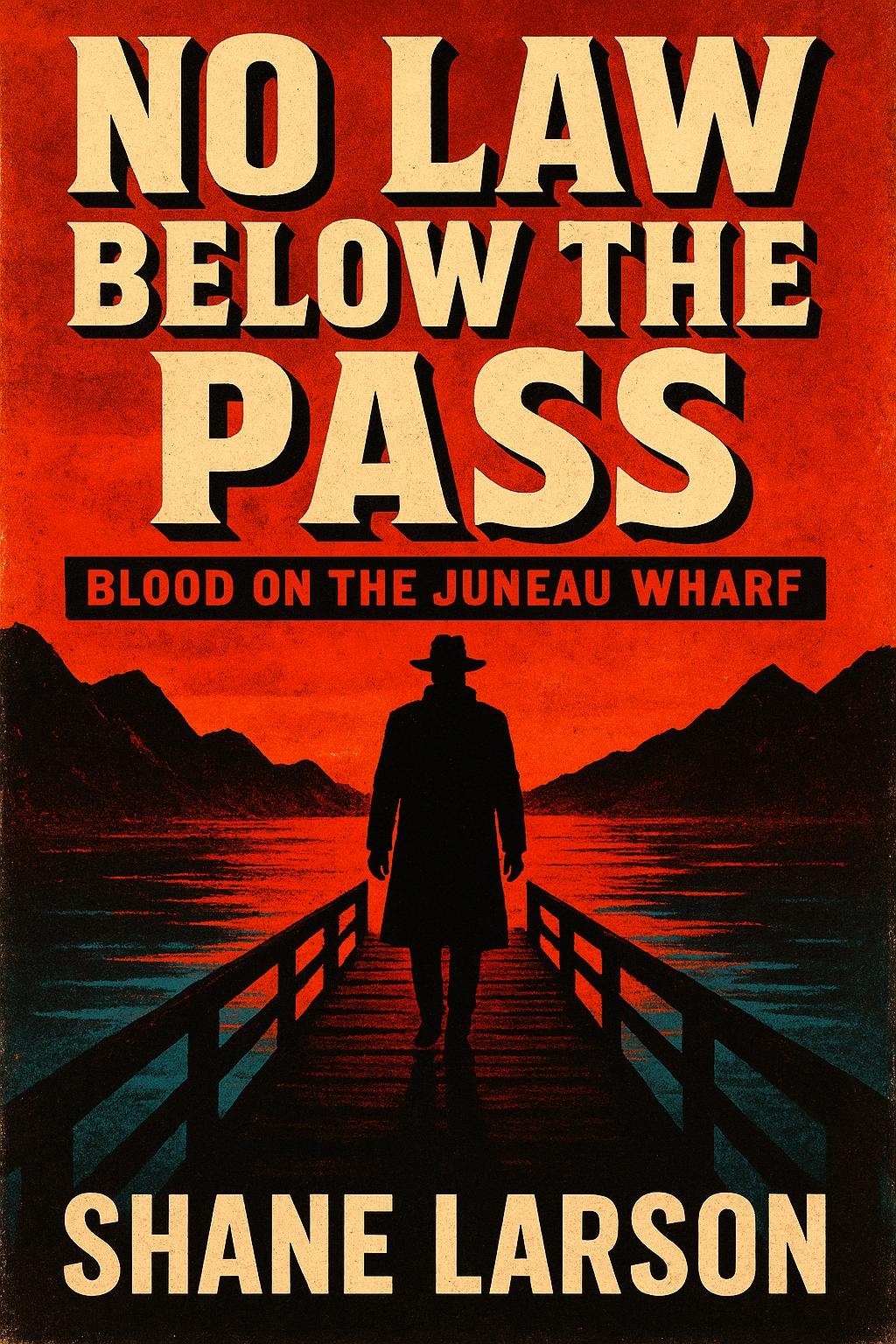
- No Law Below the Pass — a frontier thriller set in the same lawless West that Bean turned into a business opportunity.
- Digital Outlaws — outlaws of a different century: the early hackers who, like Bean, operated in territory the law hadn't reached yet.
- Spartacus — another figure whose legend outran the record, and another book about closing that gap.
Judge Roy Bean was never the hanging judge of the movies. He was something rarer: a showman who made himself the law, ran a courtroom out of a saloon, and understood that on the frontier, the performance of justice could be worth more than justice itself.
Included with Kindle Unlimited — read it free if you're a member.
New Wild West / American Frontier History releases and free chapters — no spam, unsubscribe anytime.
More in The Wild West Series
View series →


More in This Genre
View all →