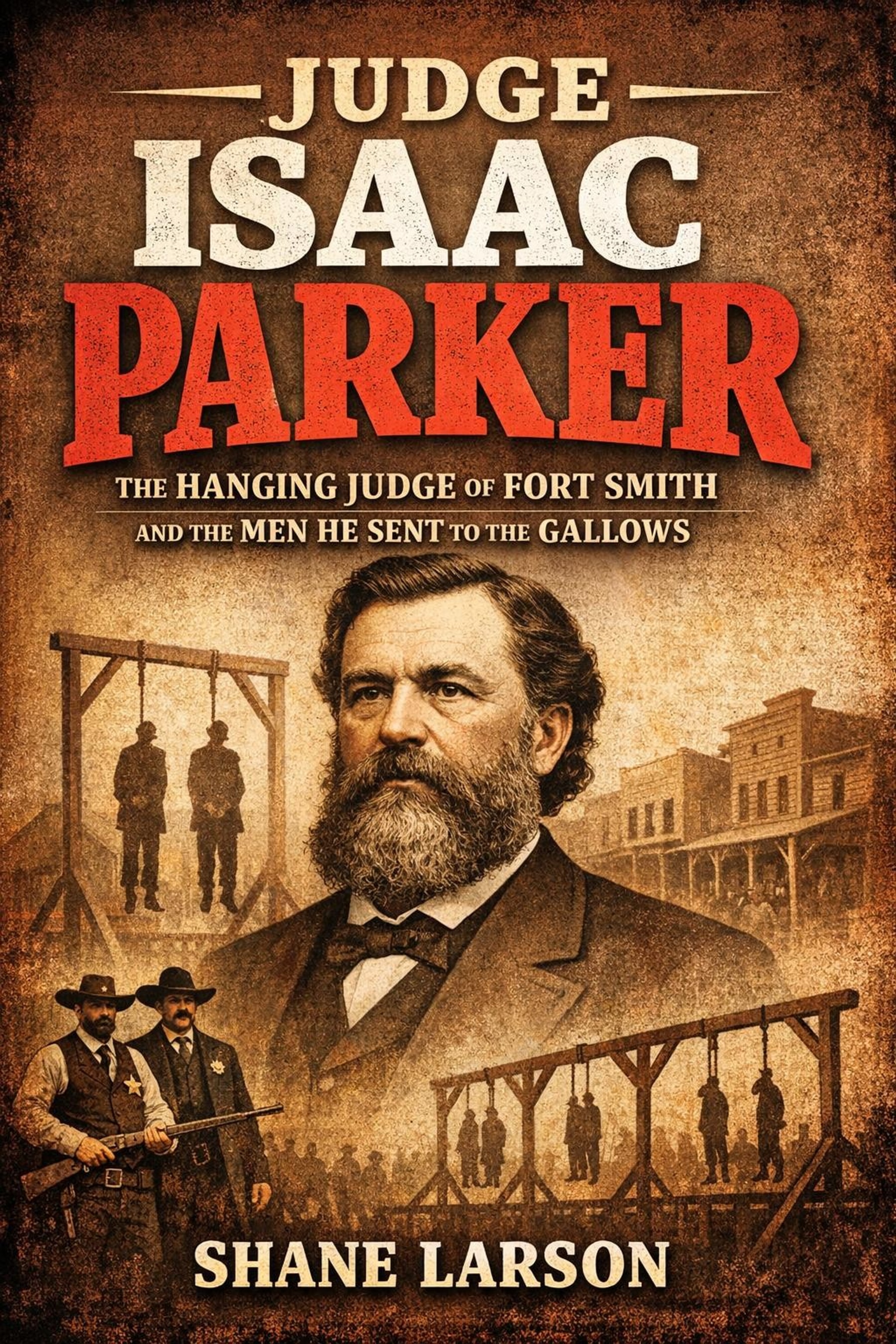
Judge Isaac Parker
The Hanging Judge of Fort Smith and the Men He Sent to the Gallows
By Shane Larson · The Wild West Series (Book 18)
About This Book
He spent twenty-one years sending men to the gallows, and his last months watching the Supreme Court take his power apart, one reversal at a time. When Congress finally carved away his jurisdiction in 1896, Isaac Parker was already dying. He outlived his court by only weeks — as if the man and the institution were never really separate things.
History remembers him as the Hanging Judge, and the arithmetic behind the nickname is real: 160 death sentences, 79 executions carried out on the Fort Smith gallows. But the arithmetic is where most accounts stop, and it's exactly where the more interesting story begins. Because the documented Isaac Parker — the one in the court records, the correspondence, and the newspaper wars of his final years — is stranger and more conflicted than the frontier caricature ever allowed.
This book follows Parker from his appointment to the U.S. District Court at Fort Smith, Arkansas in 1875 through the slow constitutional dismantling of everything he built. It is a portrait of a man who held near-absolute power over a lawless expanse, used it without hesitation, and then — quietly, privately — began to doubt it.
The Court at the Edge of the Law
Fort Smith sat on the border of Indian Territory: roughly 74,000 square miles where tribal courts governed tribal citizens and no local law reached anyone else. For outsiders — fugitives, whiskey runners, killers on the move — it was the closest thing America had to a legal vacuum, and they poured into it for precisely that reason. Parker's federal court was the only authority that could follow them in.
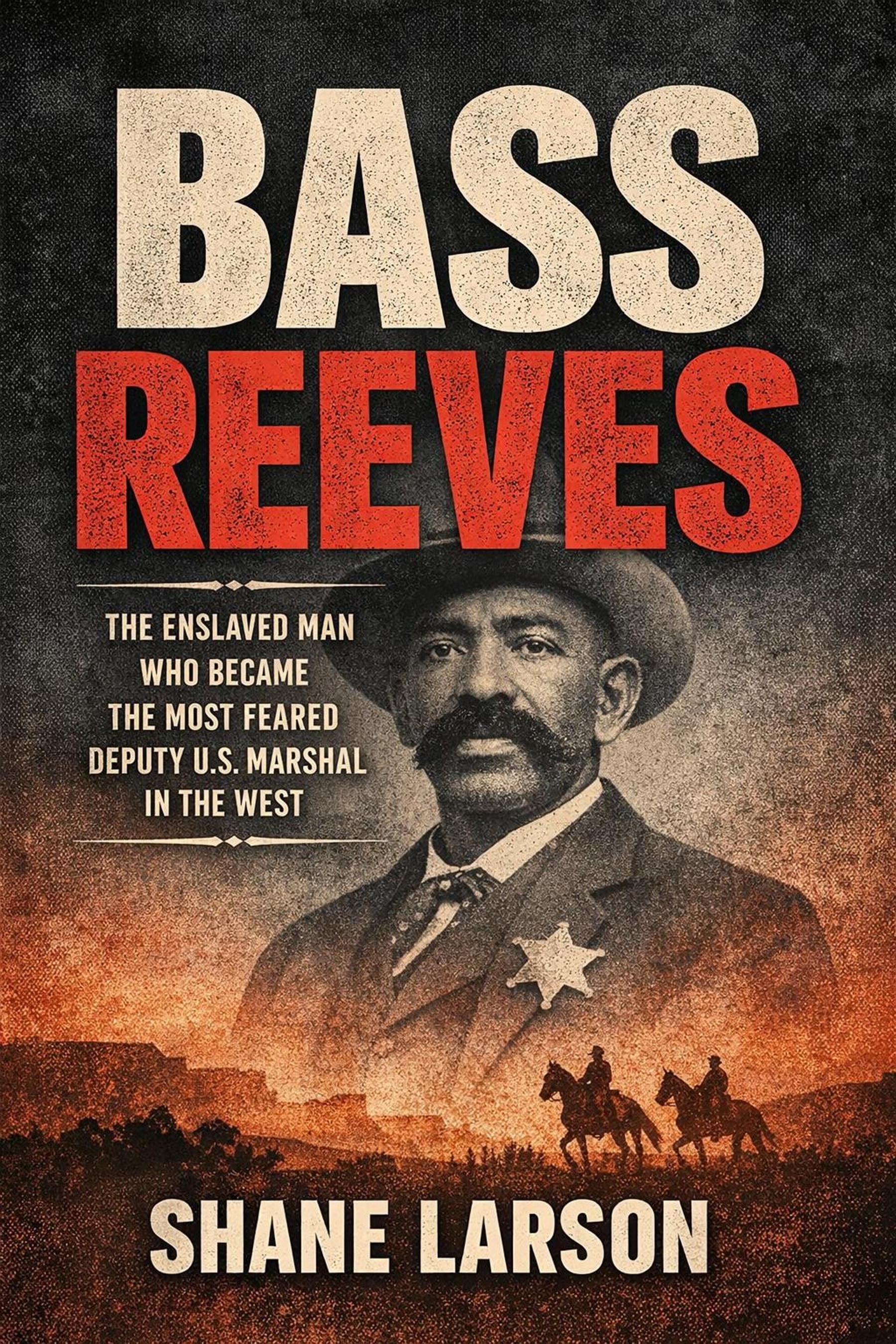
To enforce his warrants, Parker built a force that grew to around 200 deputy U.S. marshals, including Bass Reeves, arguably the greatest lawman of the American frontier. The work was staggeringly dangerous: sixty-five of those deputies died serving the court. Back in Fort Smith, the machinery of punishment ran with unsettling professionalism. George Maledon, a soft-spoken German immigrant the press dubbed the Prince of Hangmen, hand-built his ropes and tested each one with sandbags before it ever touched a condemned man's neck. Beneath the courthouse, prisoners rotted in a basement jail so notorious it earned the name "Hell on the Border."
And for fourteen years, there was no appeal. None. Whatever Parker decided in that courtroom was final — a concentration of judicial power with almost no parallel in American history.
Then, in 1889, Congress opened a path of appeal to the Supreme Court, and the reckoning began. The justices started reversing Parker's convictions, sometimes in scathing language, faulting his jury instructions and his narrow reading of self-defense. Parker did something almost no sitting judge would dare: he fought back publicly, in the press, accusing the Court of coddling murderers from a marble building two thousand miles from the territory he policed. The final years of his court became an open war between frontier necessity and constitutional due process — and due process won.
What You'll Discover
- Where the famous numbers actually come from — what the 160 sentences and 79 hangings rest on, and what the totals obscure
- The mass execution of September 1875 that made Parker's name national news within months of his arrival
- How a 200-man deputy marshal force — Bass Reeves among them — policed a jurisdiction the size of a small country, and the price they paid in blood
- The craftsman's grim precision of George Maledon, the executioner who treated hanging as a trade to be perfected
- Life inside "Hell on the Border," the basement jail that shocked even hardened frontier observers
- Parker's little-known record as a defender of Native sovereignty, pushing back against federal encroachment even as his own court absorbed tribal authority
- The appeal-era reversals, reconstructed case by case, that stripped his power away
- The private doubts about capital punishment that Parker confessed near the end — and why the legend erased them for over a century
Why I Wrote This
I came to Parker sideways, through Bass Reeves. You can't write about Reeves without writing about the court that employed him, and the deeper I went into the Fort Smith records, the less the "Hanging Judge" label held together. Here was a man executing people by the dozen while privately questioning the death penalty, and defending tribal courts while running the federal machine that was swallowing them. That kind of contradiction is usually a sign that the popular version of a story was built for convenience rather than accuracy. I wanted to write the inconvenient version — the one where the numbers are real, the doubts are real, and neither cancels the other out. Parker doesn't need rehabilitating or condemning. He needs to be read straight.
Frequently Asked Questions
Do I need to read the Bass Reeves or Rufus Buck Gang books first?
No. Each volume in the series stands alone. This book covers the court itself — Parker, the marshals as an institution, the gallows, and the appeals — so it works as an entry point just as well as a continuation. If you've read the other volumes, you'll recognize the shared world from the judge's side of the bench.
Is this a biography or a legal history?
Both, deliberately. The spine of the book is Parker's life at Fort Smith, but the most dramatic material in his story is legal: fourteen years without appellate review, then a running battle with the Supreme Court over jury instructions and self-defense doctrine. The legal chapters are written for general readers — no law degree required.
Does the book take a side on whether Parker was a monster?
It takes the side of the record. Parker sentenced 160 people to die, and he also voiced doubts about capital punishment and defended Native jurisdiction against Washington. The book presents both without flattening either into a verdict. Readers who want a villain or a folk hero will be frustrated; readers who want a real person won't be.
How does this compare to the Parker of True Grit?
The fictional Parker of Charles Portis's novel and its film adaptations is a background presence — stern, remote, mostly offstage. The historical Parker was louder, more political, and far more conflicted. If True Grit is your only exposure to Fort Smith, this book will feel like walking through a door the fiction only pointed at.
Does it cover Indian Territory and the tribal courts?
Extensively. Parker's jurisdiction only existed because of the legal gap surrounding Indian Territory, and the book treats the tribal court system as a central subject rather than scenery — including Parker's genuinely surprising advocacy for tribal judicial authority even as federal expansion dismantled it.
If You Liked This, You Might Like
- Bass Reeves — the deputy marshal's-eye view of the same territory this book sees from the bench.
- The Rufus Buck Gang — one of the most notorious cases ever to pass through Parker's courtroom, told in full.
- The Fall of Rome — a very different era, the same question: what happens when a system of law meets a frontier it can't fully control.
The gallows made Isaac Parker famous. The record makes him worth understanding. This is the judge behind the nickname — power, doubt, and the Constitution that finally caught up with him.
Part of the Peak Grizzly frontier justice series.
Included with Kindle Unlimited — read it free if you're a member.
New Wild West / American Frontier History releases and free chapters — no spam, unsubscribe anytime.
More in The Wild West Series
View series →









More in This Genre
View all →