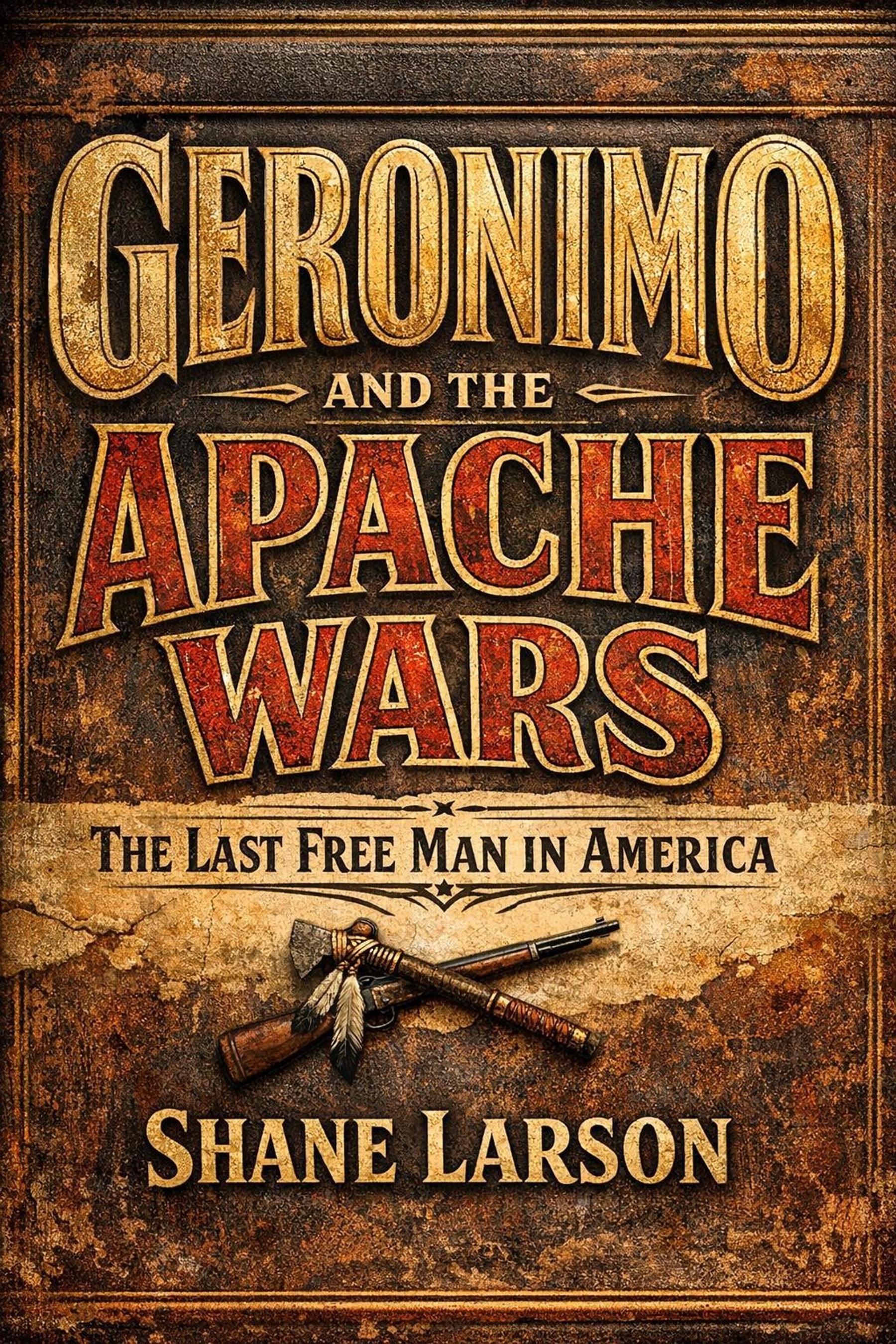
Geronimo and the Apache Wars
The Last Free Man in America
By Shane Larson · The Wild West Series (Book 23)
About This Book
In the fall of 1904, an old man in his seventies sat behind a booth at the St. Louis World's Fair, signing his name on photographs of himself for a dollar or two apiece. When business was good he would snip the buttons off his coat and sell those too, then sew new ones on by lamplight that night to sell again the next day. Fairgoers lined up for hours. He was, by a wide margin, the most recognized Native American alive — and he was there under armed military guard, a prisoner of war who had not been allowed to set foot on the land of his birth in eighteen years, and never would again.
Both of those facts were true at the same time, and the distance between them is the whole subject of this book. The man at the booth was Goyaałé, a Bedonkohe Apache whose name most Americans never learned, because the world knew him instead by a word Mexican soldiers had shouted at him in battle: Geronimo. He was never a chief — he said so himself, plainly, more than once. He was a fighting man and a spiritual leader whose power, other Apaches believed, let him sense danger before it arrived. The newspapers made him a monster. Later generations made him a poster. Neither one was a person.
This is the person, assembled from the documented record — including the account Geronimo dictated himself late in life, and the testimony of the Apaches who fought beside him and survived to speak.
The Argument
Strip away the dime-novel villain and the twentieth-century icon, and what remains is a man born into a war that was already old. The Apache had been raiding and being raided across what is now the Arizona–New Mexico–Sonora borderland for generations before Geronimo drew a breath. Mexican states paid bounties for Apache scalps by the piece. In 1851, Mexican soldiers killed his mother, his wife, and his three children while the men were away trading. He came back to the bodies. Everything he did afterward — decades of it — grew out of that afternoon.
The tragedy compounds because the war had no single enemy and no single border. The Apache moved between two nations that were themselves often at war, treated a boundary line that meant everything to the armies as though it meant nothing, and were hunted by both sides. Into that came the Americans: the Bascom Affair, where a young lieutenant's misjudgment lit a decade of open war; the reservation system and the poisonous confinement of San Carlos; and promises made in good faith by some officers and broken wholesale by the government behind them. Nearly every breakout in the record traces back to a specific, documentable betrayal, not to restlessness or savagery.
The book tells that arc without flinching and without taking sides on behalf of anyone. Atrocities were committed by Apaches, by Mexicans, and by Americans; they are reported here plainly and glorified nowhere. The pursuit of 1885–86 — a small band of roughly three dozen people, more than half of them women and children, evading a quarter of the U.S. Army plus thousands of Mexican troops for five months — is one of the strangest military episodes in American history, and it ended not in capture but in a negotiated surrender the government dishonored almost before the train had left Arizona. What came after the surrender is the part most tellings skip, and it is the part this book insists you see.
What's Inside
- The Apache world on its own terms — how bands, leaders, and kinship actually functioned, and why the single word "chief" gets nearly everything about it wrong.
- The scalp-bounty economy of northern Mexico and the 1851 massacre at Janos that turned a grieving husband into a lifelong fighter.
- The Bascom Affair, in which a green army lieutenant hanged the wrong men and detonated a war that ran for more than ten years.
- San Carlos and the "concentration" policy — the deliberate crowding of rival Apache groups onto malarial bottomland, and why the reservation itself manufactured the breakouts.
- Two generals, two standards: George Crook, who negotiated in something like good faith, and Nelson Miles, who took the surrender and then let the terms be broken one by one.
- The 1886 pursuit at ground level — heliograph signal stations, hundreds of Apache scouts hunting other Apaches, and the exhaustion that finally brought the band in.
- Skeleton Canyon, betrayal by betrayal — the surrender terms Geronimo was given, and the order in which the government abandoned each one.
- Twenty-three years as a famous captive — the World's Fairs, the ride in Theodore Roosevelt's inaugural parade, Roosevelt's refusal to let him go home, and the regret Geronimo carried to his deathbed in 1909.
Why I Wrote This
Geronimo is a word before he is a man. American paratroopers shout it when they jump. The military borrowed it as the code name for the operation that killed Osama bin Laden. Kids yell it off diving boards. The name is everywhere, attached to almost nothing accurate.
I wanted to know who was underneath it, and I did not want the answer filtered through a newspaper trying to sell copies or a movie trying to sell tickets. What pulled me in was learning that Geronimo had dictated his own life story, and that a good deal of Apache testimony survives — that we do not actually have to guess. So much frontier history is written as if the Native side left no record. This one did. Reading it, the man who emerges is neither the demon nor the saint; he is harder and sadder and more human than either. Getting that man onto the page, without romance and without contempt, felt like a debt worth paying.
Frequently Asked Questions
Was Geronimo actually a chief of the Apache?
No, and the book spends real time on why that matters. He led war parties and held spiritual authority, but the Apache did not organize themselves around chiefs the way the popular story assumes. Calling him a chief imports a hierarchy that wasn't there and quietly distorts every decision he made.
Does the book take the Apache side or the Army's side?
Neither. The approach is to report what the documented sources — Apache, Mexican, and American — actually say, including the violence committed by all three. Where the record shows broken promises, it says so; where it shows Apache raids that killed civilians, it says that too. The goal is the record, not a verdict.
Is this a dry academic history or a narrative?
It's narrative history built on documented sources. It reads as a story with a beginning, a middle, and an end, but it doesn't invent dialogue or motives, and it tells you when the sources disagree or fall silent.
How much of the book is about the years after his surrender?
More than most accounts give. Nearly half of Geronimo's remaining life was lived as a prisoner of war and public curiosity, and the book follows that stretch closely — the fairs, the parade, Roosevelt's refusal, and the long homesickness — because that is where the gap between the legend and the man is widest.
Is this part of a series?
Yes. It belongs to The Wild West, a set of standalone frontier histories that each pull one figure or event loose from the myth around it. You don't need to have read any of the others first.
If You Liked This, You Might Like
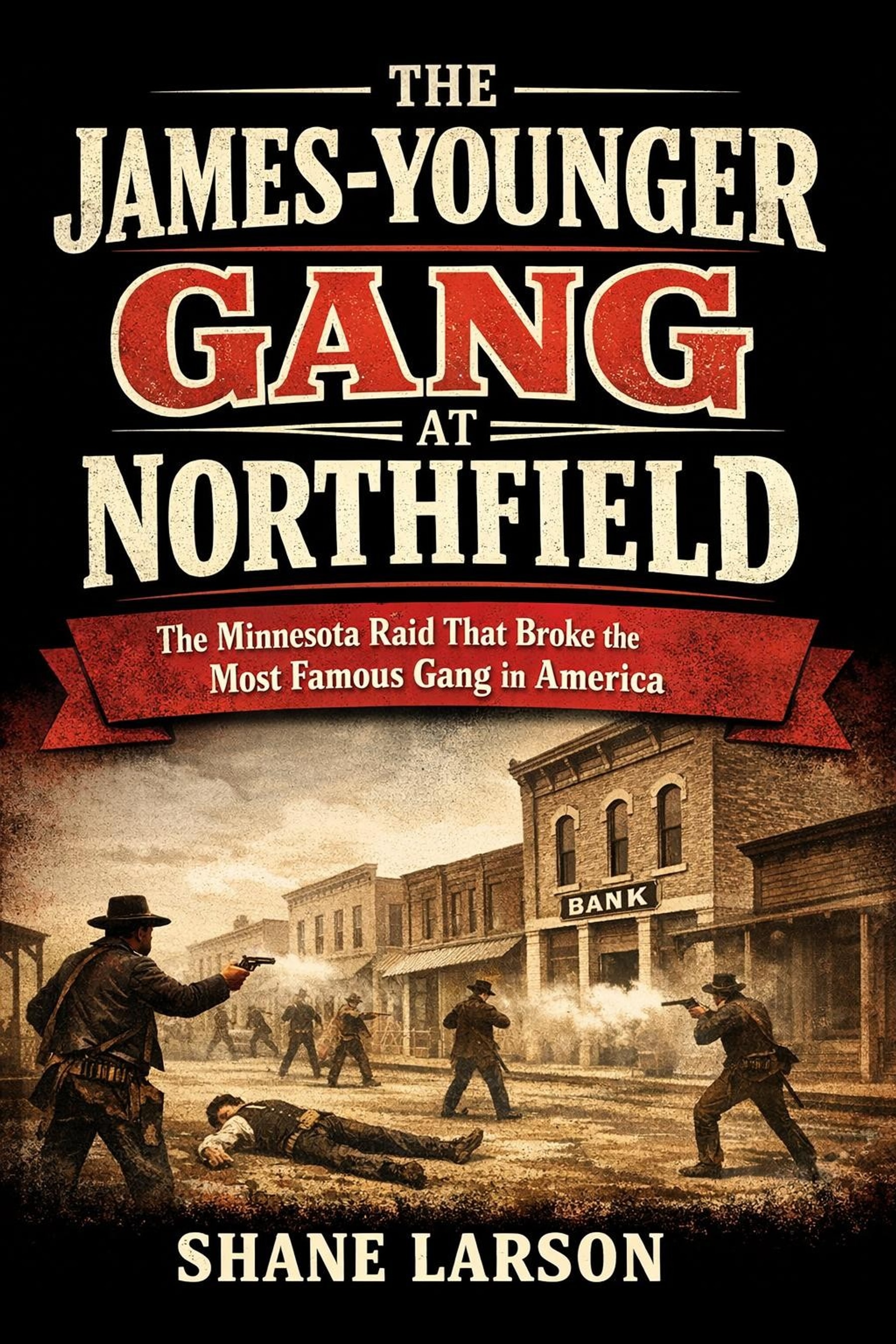
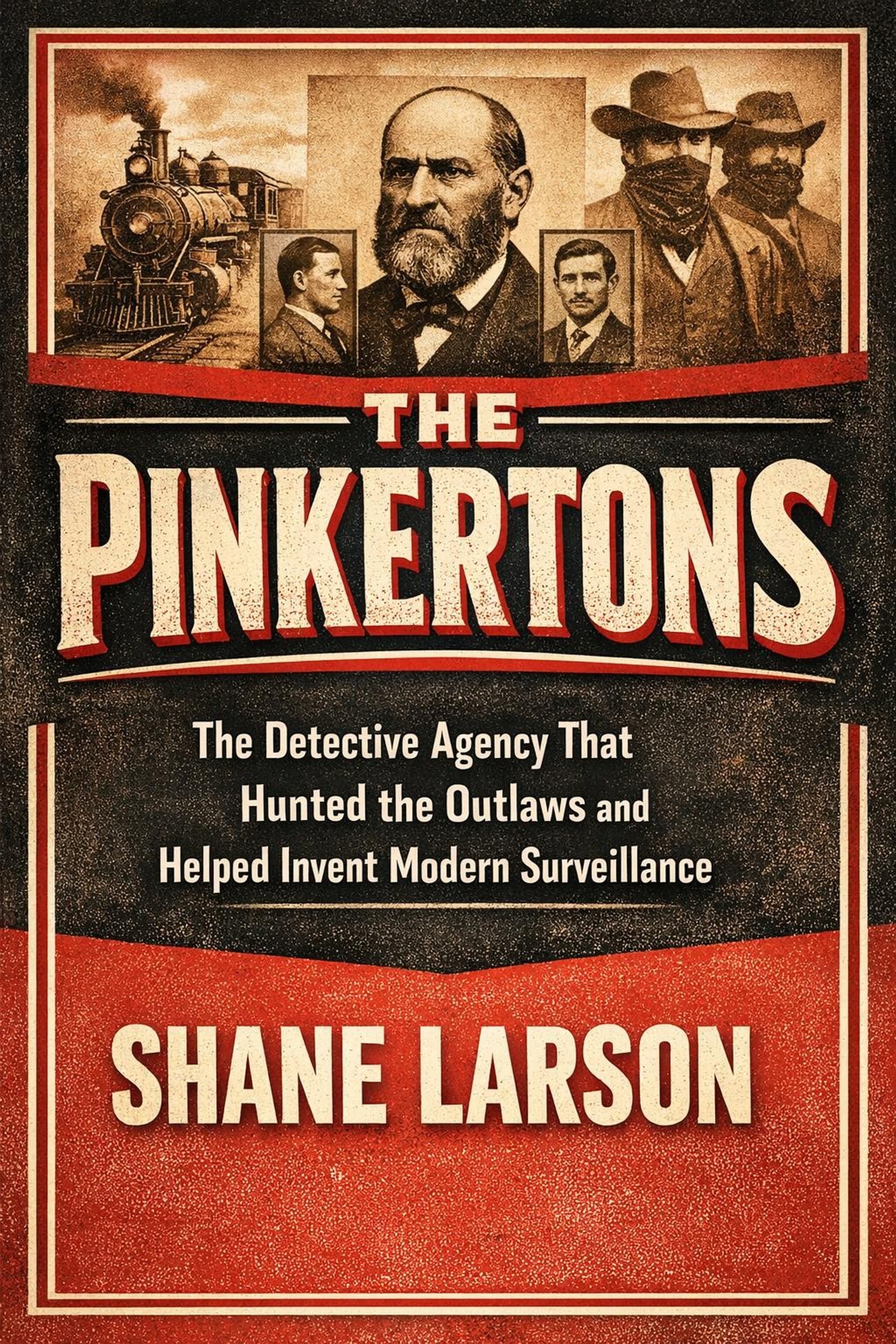
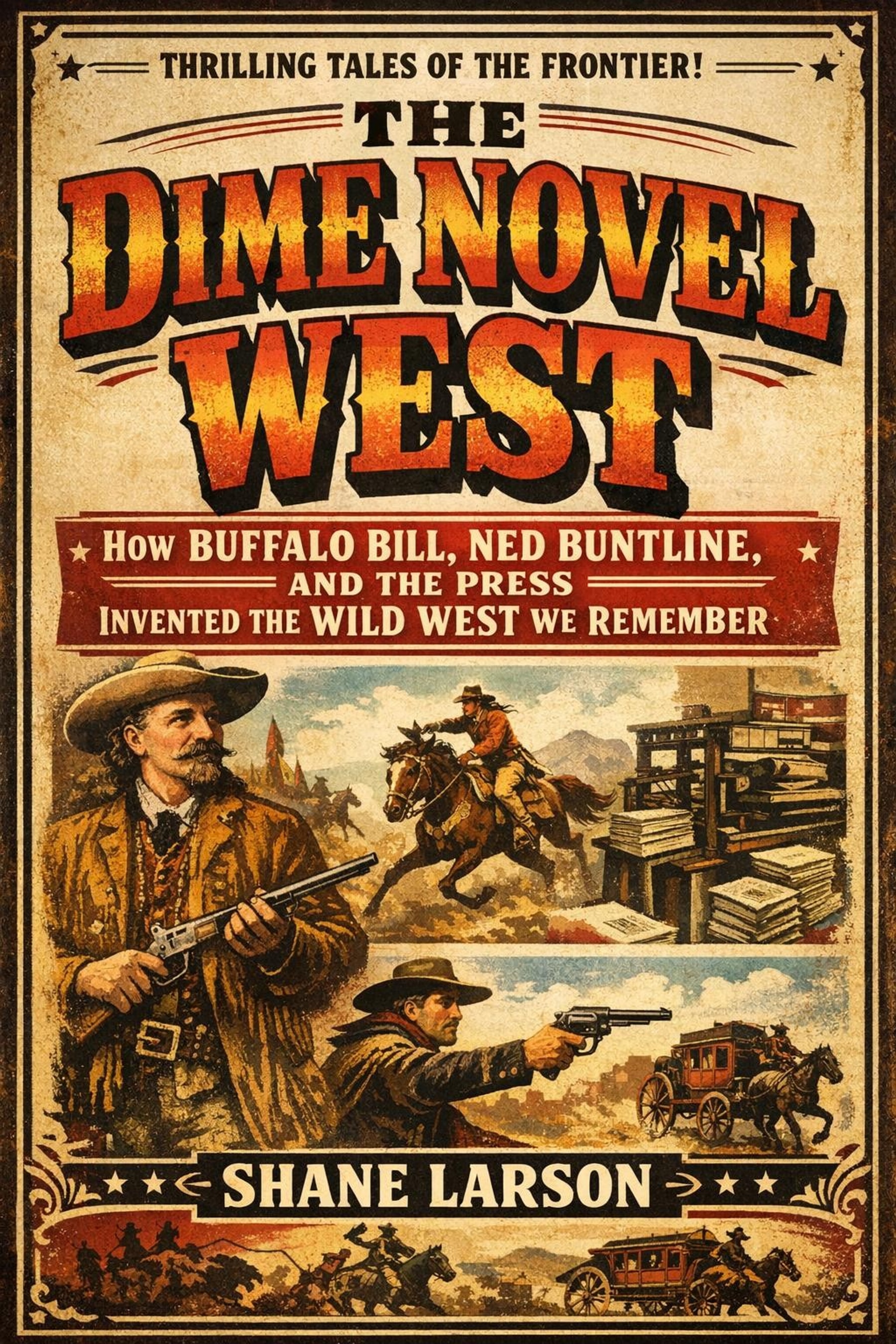
- The Dime Novel West — the exact machinery that turned Geronimo into a monster and then a mascot, traced through Buffalo Bill, the penny press, and the arena shows that put Sitting Bull on tour while the wars were still being fought.
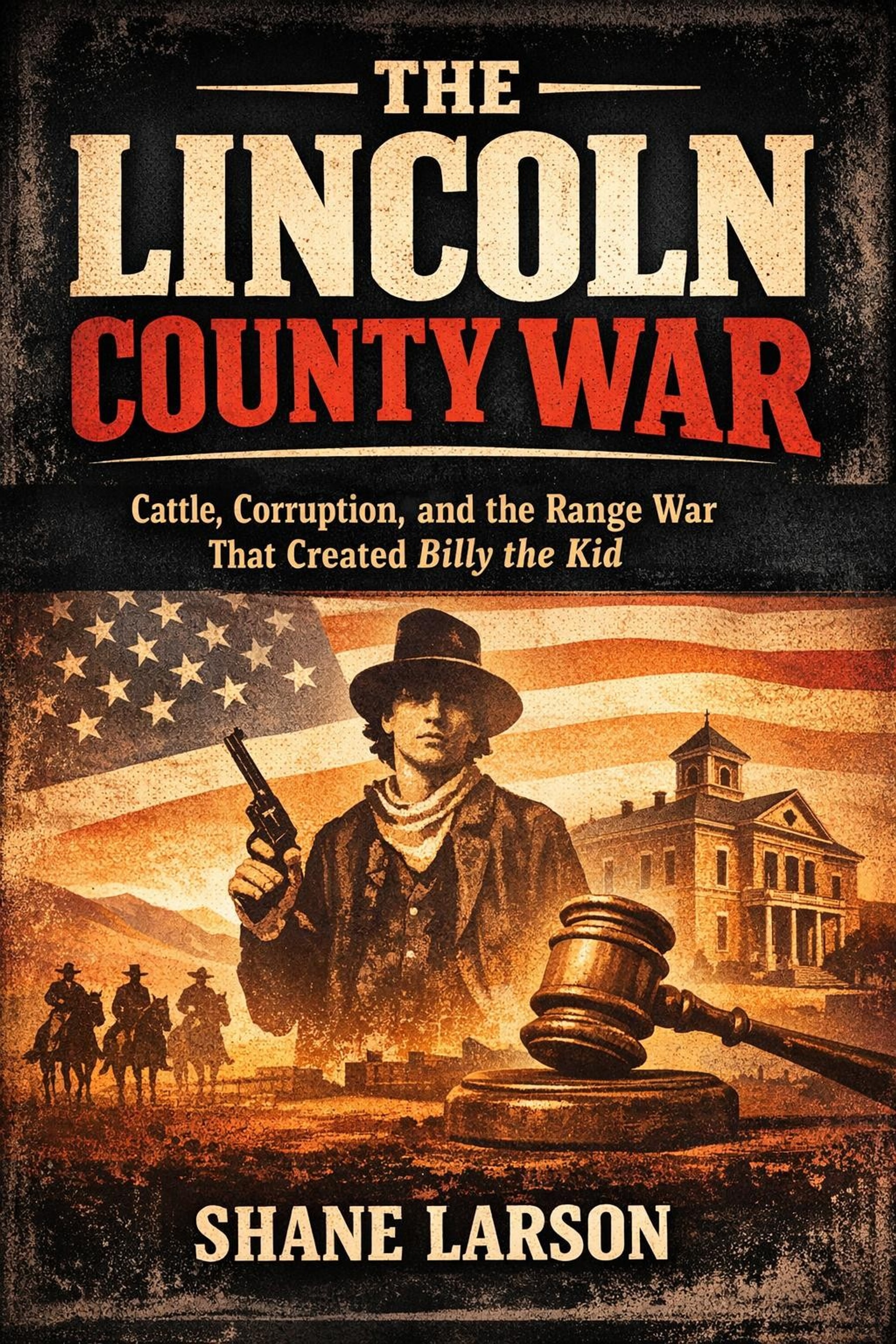
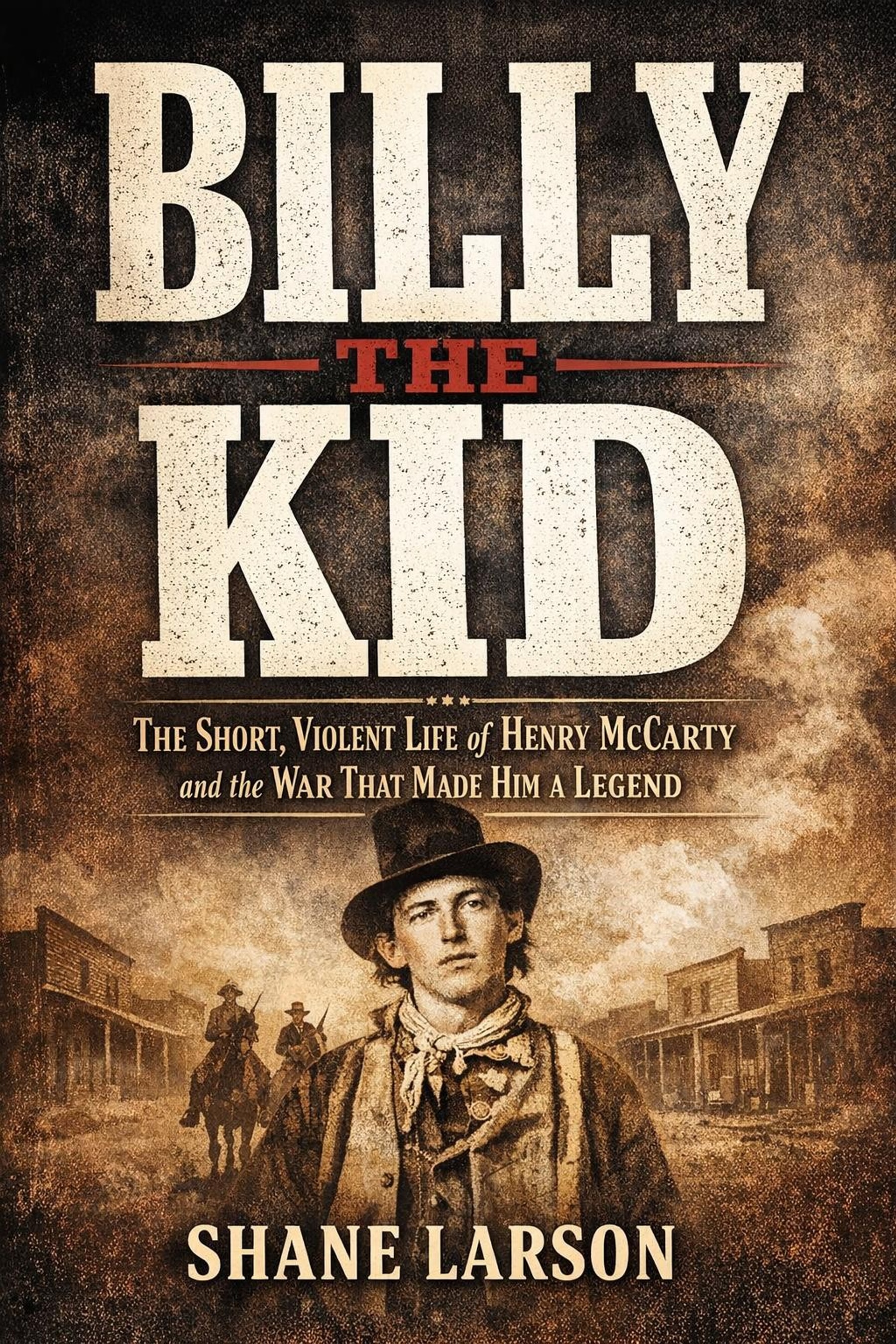
- The Lincoln County War — the same territory and the same decade, and another case of the U.S. Army walking into a Southwestern conflict and making it worse instead of ending it.
- Digital Outlaws: The Rise of Early Hackers — a wholly different century running the identical pattern: the hunted man, the manhunt, and a press that turns the fugitive into a folk hero and sells the legend back to the public.
The Geronimo of the newspapers never existed. The one in the documented record is more difficult to look at, and far harder to forget.
Part of The Wild West series from Peak Grizzly Publishing — frontier history that respects your intelligence.
Included with Kindle Unlimited — read it free if you're a member.
New Wild West releases and free chapters — no spam, unsubscribe anytime.
More in The Wild West Series
View series →