Optionality Is the Only Career Advice That Survives Contact With Reality
August 5, 2026 · 5 min read
You have the senior title, the salary that would have astonished you ten years ago, and a company people recognise when you say the name.
And Monday morning feels like something you brace for.
The uncomfortable part is that nothing is wrong. There is no villain, no crisis, no obviously bad decision to point at. Everything went according to plan and the plan turned out to have a defect in it.
The System Was Not Designed for This
The career structure most technology professionals are inside was not built with sustainability as a goal. It was built to extract high output from capable people during the years they can sustain it, and it works — for a while, for most people, and then progressively less well.
The mechanism is not villainous. It is a set of individually reasonable arrangements: compensation weighted toward equity that vests over years, prestige attached to intensity, promotion tied to visible availability, and a norm that treats declining work as a signal about commitment.
Stack those and you get a system in which the rational move at every point is to absorb more, and in which the accumulated cost is invisible until it is substantial.
The standard advice for people in this position falls into two useless categories. The first is work harder and be more disciplined, which is the thing that produced the problem. The second is find your passion, which assumes the issue is job selection when it is usually structural.
Neither engages with the actual mechanism, which is that you have no choice.
Why Choice Is the Whole Variable
Here is the reframe that makes the rest of it tractable.
The difference between a demanding job that is sustainable and one that is corrosive is frequently not the workload. It is whether you could leave.
The same eleven-hour day feels categorically different depending on whether you are doing it because you find the problem interesting and could stop, or because your mortgage, your visa, your unvested equity, and your family's health insurance all depend on this specific employer continuing to want you.
That is not a mindset difference. It is a real difference in your situation, and it changes what the work does to you. Constraint without exit is the condition that produces the particular kind of exhaustion that a holiday does not fix.
So the useful target is not a better job. It is optionality — enough accumulated choice that staying is a decision you keep making rather than a state you are in.
What That Actually Requires
Four things, in rough order of leverage.
Financial buffer, understood correctly. Not retirement. Not extreme frugality or quitting to travel. Simply the number of months you could go without income and be fine. That number is the single largest determinant of how much you have to tolerate, and most people in high-income roles have a smaller one than their salary would suggest, because expenses expanded alongside earnings. Every increment of buffer purchases a corresponding increment of ability to say no.
Refactoring Your Career
Skills that are portable rather than positional. Some of your value is genuinely yours and travels; some of it is knowledge of one organisation's systems, politics, and history, and evaporates when you leave. Long tenure quietly shifts the mix toward the second without anyone noticing. Doing work that keeps the transferable part current is a direct investment in your ability to leave.
Awareness of the actual alternatives. People stay because they believe the choice is this job or a large step down. Frequently untrue. Platform and infrastructure work, technical writing, developer relations, fractional and advisory roles, consulting, smaller companies with different intensity norms — these are real jobs with real compensation, and they are invisible from inside a track that only shows you the next rung.
Physical regulation, treated as infrastructure. Not a wellness app. The unglamorous mechanics — sleep, movement, and specific practices for down-regulating a stress response that has been elevated for years. This belongs on the list not because it fixes the situation but because every other decision on it gets made badly by someone who is chronically depleted. Judgment is the first casualty, and judgment is what you need to change anything.
Preventative, Not Recovery
The most important structural point is about timing.
Almost everything written on this subject is recovery advice, aimed at people who have already hit the wall. That advice is necessary and it is expensive, because by then the options have narrowed: you are negotiating from a position of visible difficulty, your savings may have taken damage, and your capacity to plan is impaired by the thing you are planning about.
The same interventions, applied two years earlier, cost a fraction and work considerably better. Building a buffer while you have a high income is easy. Building one while burnt out and considering resignation is not.
Which means the audience for this is not people in crisis. It is people for whom things are broadly fine and who have noticed a trajectory.
If Monday feels like a threat and nothing is actually wrong, that is not a sign to push harder. It is early information, arriving while you still have the resources to act on it.
The goal is not to escape work. Most people in this position like the work and would keep doing it. The goal is to arrange your situation such that continuing is a choice — because the version where you cannot leave is the version that eventually breaks, regardless of how much you enjoy the job.
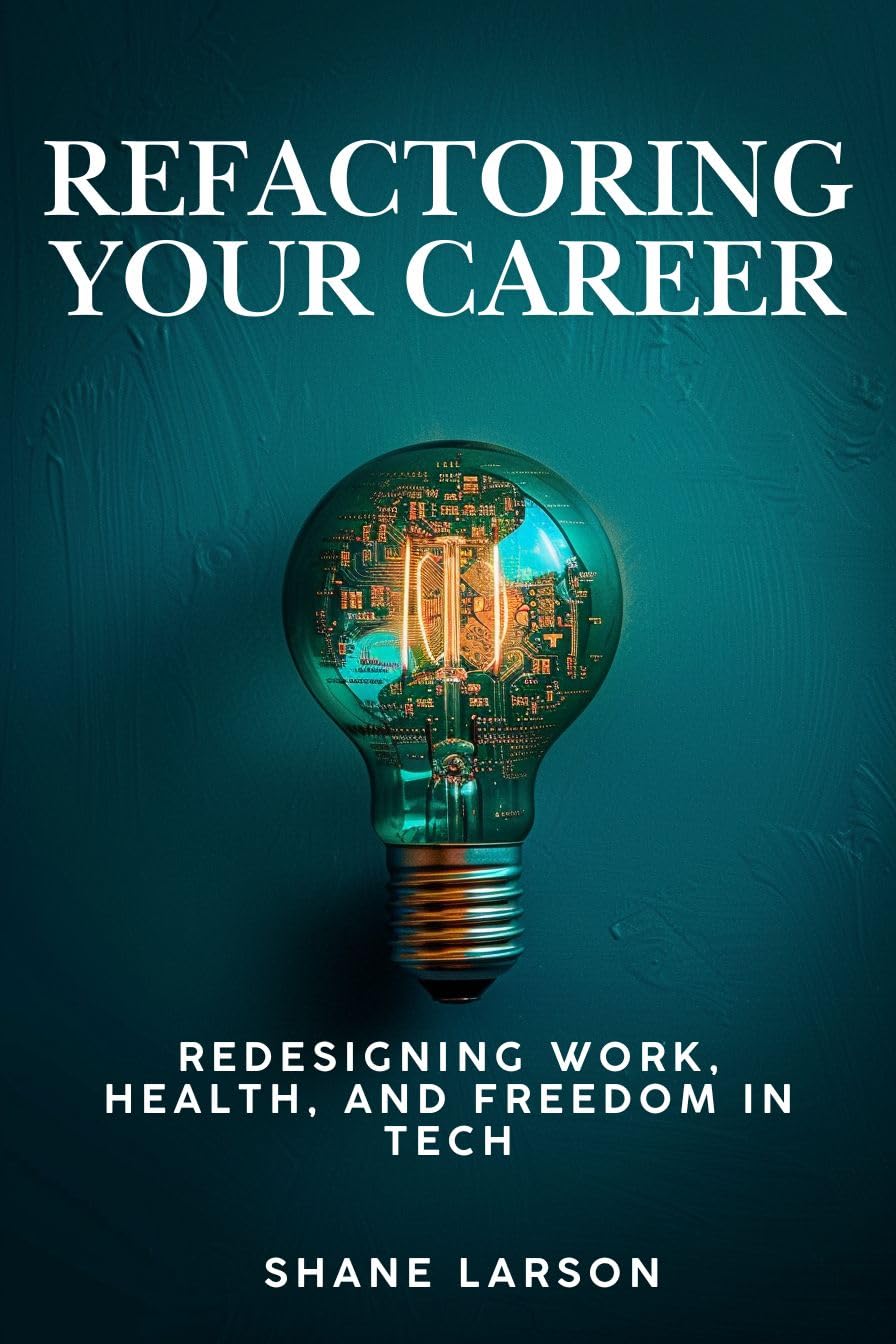
Refactoring Your Career: Redesigning Work, Health and Freedom in Tech is about building enough optionality that you choose your work instead of enduring it — the financial mechanics, the alternative paths, the physical foundations, and a preventative framework you can implement while still employed.
Refactoring Your Career
New posts and releases, straight to your inbox. No spam, unsubscribe anytime.