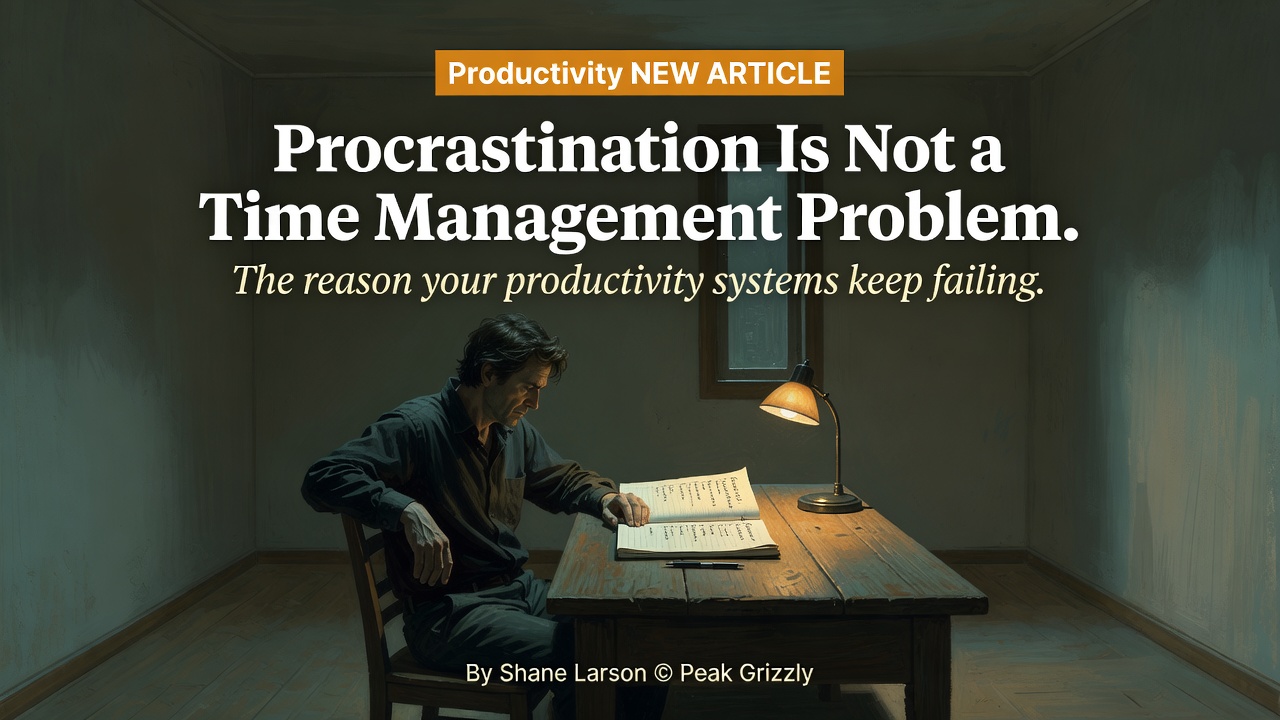
Procrastination Is Not a Time Management Problem
August 5, 2026 · 6 min read
You are reading this later than you meant to.
That is fine. It was written later than planned too.
The useful thing to know about procrastination is that it is not what you have been told it is. It is not laziness, weakness, poor discipline, or a defect in your character. It is also — and this is the part that matters — not a time management problem.
You know how to make a list. You have made hundreds. The list is not the issue. You have tried the paper notebook, the shared spreadsheet, the colour-coded calendar, and the app that sends you gentle reminders at 7 a.m. None of those tools created the gap between intention and action; they only recorded it.
What It Actually Is
The research consensus that has emerged over the last two decades frames procrastination as a problem of emotional regulation, not of scheduling. Studies tracking students, office workers, and creative professionals have repeatedly found that the delay is rarely about misunderstanding deadlines or underestimating effort. Instead, the behaviour serves to regulate an immediate emotional state.
The mechanism is straightforward once stated. A task carries some negative feeling — boredom, anxiety, resentment, confusion, the fear of doing it badly, the sense that it will expose you. Avoiding the task removes the feeling, immediately and reliably. That relief is a genuine reward, delivered instantly, and behaviour that produces instant relief is very effectively reinforced.
You are not failing to manage your time. You are successfully managing your mood, at the cost of your time.
Which explains something that otherwise makes no sense: people procrastinate hardest on the things they care most about. If it were laziness, you would avoid the boring tasks and do the important ones. Instead most people can clear a whole afternoon of admin while avoiding the one piece of work that actually matters — because the important thing is the one that carries the risk of not being good enough. The quarterly strategy document sits untouched while the inbox gets emptied because the former invites judgment and the latter does not. The tasks you avoid are frequently a map of what you are afraid to do imperfectly.
Why the Systems Keep Failing
This is also why every productivity system you have adopted worked for about three weeks.
There is an enormous industry built on this, and it is worth being clear-eyed about what it sells. It is not productivity. It is hope — the belief that this app, this method, this morning routine will finally convert you into the person who does the thing. New frameworks appear every year with fresh vocabulary, yet the adoption curve stays the same: initial enthusiasm, visible progress on the setup phase, then quiet abandonment once the emotional friction of the actual work reappears.
The systems are not fraudulent. Most of them are perfectly sensible ways to organise work. They fail because they are solutions to an organisational problem, applied to an emotional one.
If you avoid the report because you are afraid it will be judged, then a better task manager does not touch the cause. It gives you somewhere more attractive to put the task you are still going to avoid. And the initial burst of energy when adopting a new system is real — it comes from novelty and from the pleasant feeling of having Addressed The Problem — which is exactly why it wears off on the same schedule every time. The tell is that you have a system now, it is not the problem, and you know that.
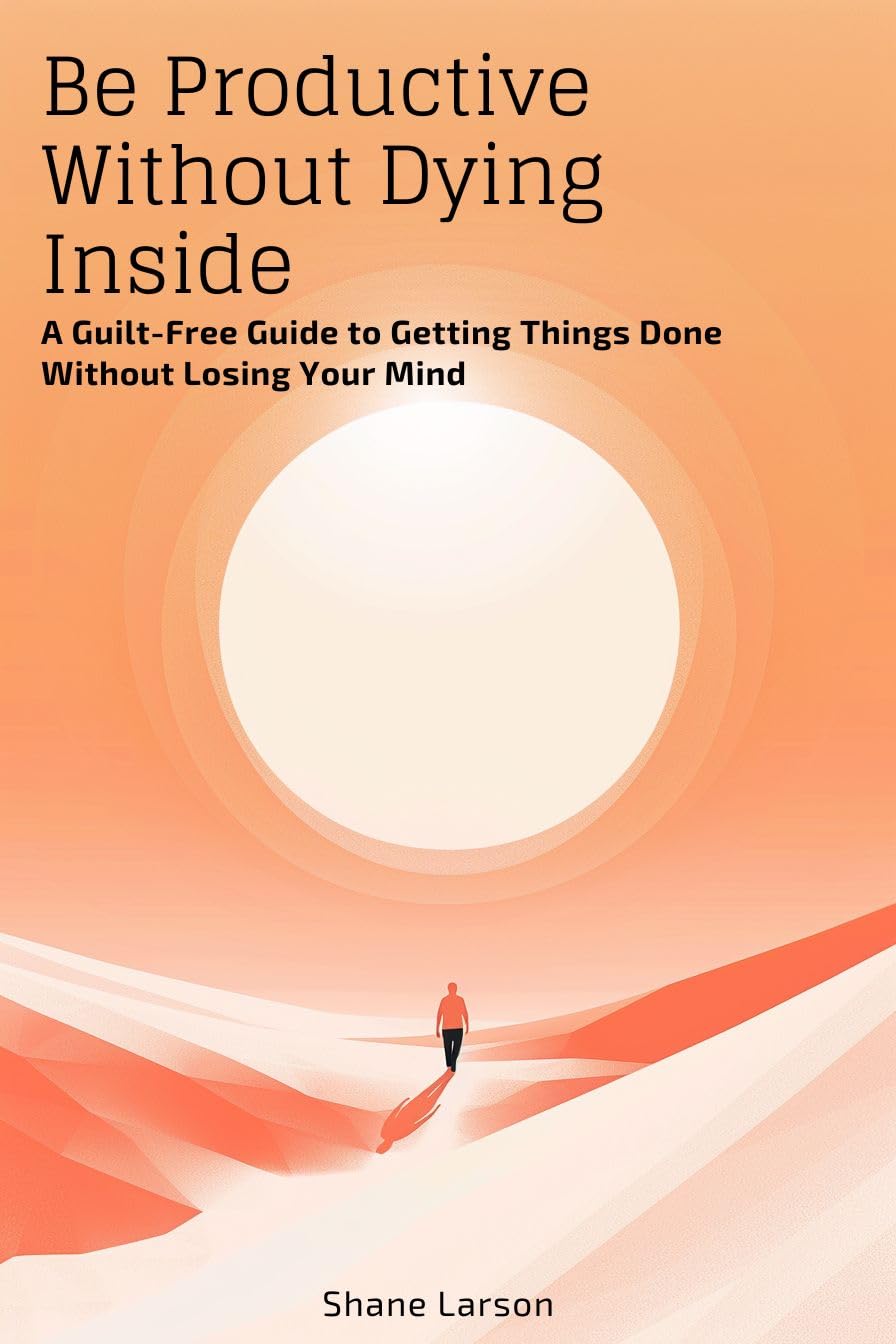
Be Productive Without Dying Inside
What Actually Helps
Three things, and none of them are apps.
Identify the feeling. Before reaching for a technique, ask what specifically is unpleasant about this task. Is it ambiguous, so you do not know where to start? Is it going to be evaluated? Is it tedious? Does it require a conversation you are dreading? Each of those has a different fix, and applying the wrong one accomplishes nothing. Someone who dreads evaluation needs a different adjustment than someone who is simply bored by repetition. Treating both as “lack of motivation” keeps the real obstacle untouched.
Ambiguity is the most common answer by a distance, and it has the easiest remedy: the task is not “write the proposal,” it is “open a document and write the three bullet points I already know.” Almost all resistance lives at the start, and almost all of that is because the first action was never defined. Once the opening move is concrete and visible, the rest of the work becomes possible to approach.
Make the first step embarrassingly small. Not small in the motivational-poster sense — small enough that refusing feels absurd. Two minutes. One paragraph. Open the file and read it. The point is not that two minutes of work is valuable. It is that starting is the entire obstacle, and once you are in the task the emotional charge usually collapses, because anticipating something unpleasant is reliably worse than doing it. People often discover, five minutes in, that the dread was attached to an imagined version of the work that never actually appears.
Stop waiting to feel like it. This is the one people resist. Motivation is not a prerequisite for action and does not reliably precede it. It generally arrives after you start, as a consequence of momentum, which means treating it as an entry requirement guarantees you are permanently waiting for a thing that only appears once you have stopped waiting. The functional version is to decide in advance and remove the negotiation. You do not ask whether you feel like it. You already decided at a moment when you were not under the emotional load.
And Be Suspicious of All of This
Including this article.
Any advice about productivity has an obvious failure mode, which is that reading about how to work is more pleasant than working, and consuming it produces the sensation of progress with none of the cost. It is possible to spend years optimising a process and never ship anything, and the people doing that are not lazy either — they have found a way to procrastinate that looks exactly like diligence. The same relief that comes from postponing the report can come from rearranging the folders that will eventually hold the report.
So the honest version of the pitch is narrow. There is no system that makes you into a different person. There is a set of small, unglamorous adjustments that make the work slightly less unpleasant to start, and starting is the whole game.
If you take one thing: the next time you cannot make yourself begin something, do not open a new app. Ask what you are actually avoiding. The answer is usually specific, usually smaller than the dread suggests, and occasionally it is that the task should not be done at all.
Be Productive Without Dying Inside: A Guilt-Free Guide to Getting Things Done Without Losing Your Mind covers the hustle myth, the productivity industry, why your brain is not a computer, perfectionism, minimum viable routines, energy management, bad days, and what sustainable actually means.
Be Productive Without Dying Inside
New posts and releases, straight to your inbox. No spam, unsubscribe anytime.