The Vikings Didn't Just Terrorize the Medieval World. They Built It.
March 23, 2026 · 8 min read
New Release · Ancient History · March 2026
Introducing The Viking Expansion — the full story, without the horned helmets
In 793 AD, Norse warriors crossed the grey waters of the North Sea and struck the monastery at Lindisfarne. The raid shocked Christendom, not just because of the violence but as a stark reminder of how exposed the edges of the known world had become. Monks were killed, relics looted, buildings burned, and the event reverberated through the ecclesiastical networks of Europe, prompting widespread fear and reflection. The scholar Alcuin, serving at the court of Charlemagne, called it a sign of divine punishment, linking it to moral failings in society. Yet, in truth, this wasn't merely an act of destruction; it was a beginning, marking the start of an era where Norse seafarers would challenge and reshape the medieval landscape through their ambition and adaptability.
Over the three centuries that followed, those raiders evolved into traders, settlers, founders, and kings, blending warfare with commerce and exploration in ways that transformed societies. They pushed west to North America five hundred years before Columbus, establishing temporary outposts that hinted at a broader world beyond Europe, as evidenced by archaeological finds like the Norse settlement at L'Anse aux Meadows. They pushed east along the great rivers of Russia, such as the Volga and Dnieper, forging trade routes that connected the Baltic to the Black Sea and beyond, where they exchanged furs, slaves, and amber for silver and luxury goods. They besieged Paris in 885-886 AD, forcing Charles the Fat to pay a massive ransom, which not only weakened the Carolingian Empire but also led to the establishment of Normandy as a Viking duchy. They conquered Sicily in the 11th century, blending with local populations to create a multicultural society that influenced Mediterranean trade for generations. They founded Iceland in the late 9th century, establishing a society based on assembly and law that endured isolation in the harsh North Atlantic. They colonised Greenland around 985 AD, adapting to Arctic conditions with farming and hunting techniques that sustained communities for centuries. And they served as the personal bodyguard of Byzantine emperors, with the Varangian Guard becoming a elite force that protected figures like Basil II and facilitated cultural exchanges between Scandinavia and the East. Their descendants, under William the Conqueror, secured England in 1066, merging Norse influences with Norman governance to alter the course of British history.
"The Vikings didn't just terrorize the medieval world. They built it."
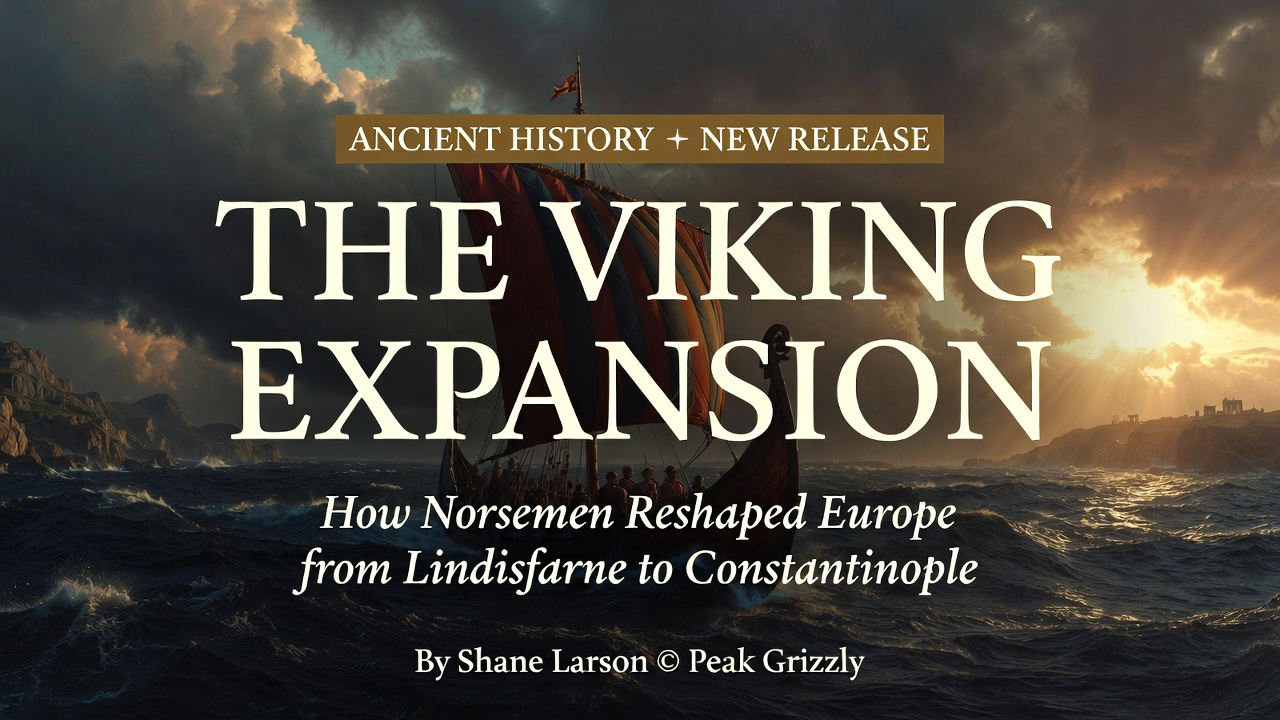
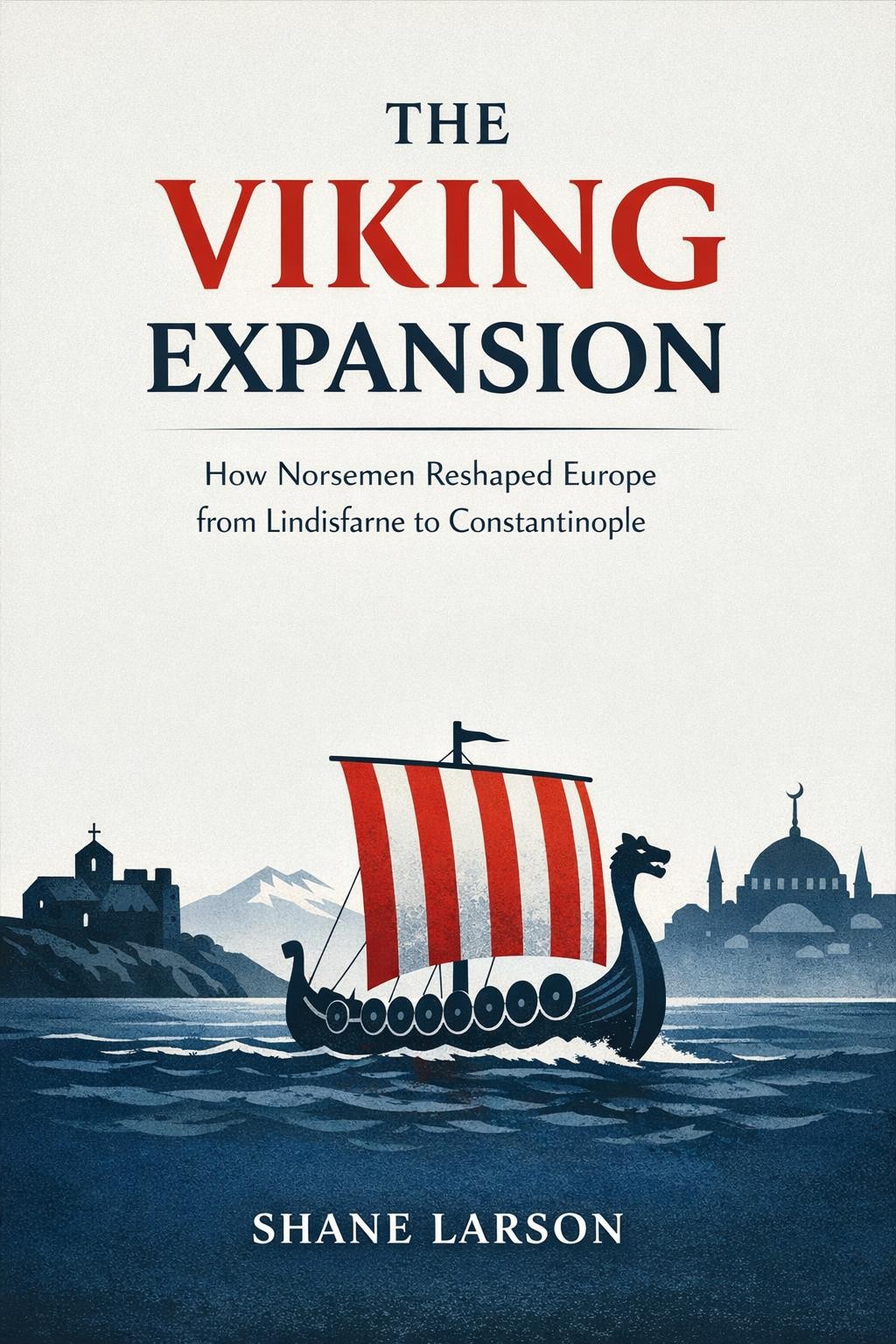
That's the argument at the heart of The Viking Expansion: How Norsemen Reshaped Europe from Lindisfarne to Constantinople — the newest title in the Peak Grizzly ancient history catalog. And it's a case that's long overdue to be made properly, drawing on sources like sagas, runestones, and contemporary chronicles to reveal the Norsemen as innovators who didn't just raid but integrated, traded, and governed.
Beyond the Berserker Mythology
Popular culture has done the Vikings no favors, reducing them to caricatures that miss the depth of their achievements. Horned helmets, which never appeared in any historical depictions and were likely invented for 19th-century operas, symbolize this oversimplification, while portrayals of mindless savagery ignore the strategic brilliance behind their campaigns. A fixation on Valhalla, the warrior's afterlife, paints them as bloodthirsty, but in reality, their society valued poetry, law, and exploration just as much. The result is that most people have a vague sense of "Vikings = raiders" and nothing more, overlooking how these seafarers were driven by environmental pressures like overpopulation in Scandinavia, which pushed them to seek new lands and opportunities.
What that caricature erases is one of the most dynamic civilizations of the medieval world, where innovation and adaptability were key to survival. The Norse were extraordinary navigators and shipbuilders, mastering the stars, currents, and winds to traverse vast distances with precision. The longship — shallow-drafted for river forays, clinker-built with overlapping planks for strength and flexibility, and equipped with a single square sail for open-ocean voyages — was a technological breakthrough that made everything else possible, akin to how the caravel later enabled European exploration. For instance, its design allowed Vikings to launch surprise attacks inland or conduct peaceful trade missions, as seen in the Dnepr River expeditions. Without it, there is no Rus, the loose federation of Slavic and Norse peoples that emerged from Swedish traders establishing outposts along eastern rivers, eventually evolving into the Kievan Rus' state. Nor would there be the Varangian Guard, a corps of Norse mercenaries who traveled overland to Byzantium, integrating into the Byzantine military and influencing imperial tactics for over two centuries. And the Norman Conquest of 1066, led by descendants of Vikings who had settled in France, might never have happened without the mobility that longships provided, which allowed for the rapid assembly of forces across the English Channel. The Viking Expansion starts with that technology and follows it wherever it led, exploring how it enabled cultural diffusion, from the spread of Norse art and mythology to the adoption of new agricultural practices in colonized regions. Each chapter covers a distinct theater of Norse expansion — the British Isles, the North Atlantic, the Eastern Rivers, Byzantium — and traces both what the Norsemen did and what they left behind, such as legal systems and trade vocabularies that persist today.
The Viking Expansion
What's Inside
- The longship revolution — the technology that made everything else possible, with its innovative construction techniques allowing for both warfare and commerce, as evidenced by finds from ship burials like Gokstad, which show how these vessels facilitated the Norse reach from the fjords of Norway to the gates of Constantinople.
- The assault on the British Isles — from the initial raid on Lindisfarne to the establishment of Cnut's North Sea Empire in the 11th century, where he ruled as king of England, Denmark, and Norway, creating a unified domain that promoted trade and reduced raiding through political alliances.
- The siege of Paris and the birth of Normandy — how Vikings became French through the Treaty of Saint-Clair-sur-Epte in 911, when Rollo was granted land that evolved into a duchy, blending Norse military prowess with Frankish customs and laying the groundwork for future conquests.
- Iceland's Althing — the world's oldest parliament, founded in 930 AD in the middle of the Atlantic as a response to the need for dispute resolution in a harsh, resource-scarce environment, where free men gathered annually to debate laws and settle conflicts, influencing modern democratic ideas.
- Greenland and Vinland — Leif Erikson and the colonies at the edge of the known world, with Erikson's voyages around 1000 AD involving the establishment of farms in Greenland and exploratory trips to North America, where they encountered indigenous peoples and attempted to build sustainable settlements despite the challenges of climate and distance.
- The Rus — Swedish Vikings who traveled the eastern rivers and founded the state that became Russia, starting with figures like Rurik in the 9th century, who established trading posts that grew into cities like Novgorod and Kiev, fostering a mix of Norse and Slavic cultures that shaped Eastern European history.
- The Varangian Guard — Norse warriors at the heart of the Byzantine imperial court, serving from the 10th century onward as loyal protectors who not only fought in battles but also acted as cultural bridges, bringing Scandinavian runes and stories into the Byzantine world while adopting Greek Orthodox influences.
- Trade networks stretching from the Arctic to Baghdad — vast exchanges that involved goods like walrus ivory and furs from the north meeting silks and spices from the east, with Viking traders using river systems to connect disparate economies, which helped spread technologies like ironworking and boosted urban growth in places like Birka.
- The coming of Christianity and the forces that ended the Viking Age — how conversions, such as Harald Bluetooth's in Denmark around 965 AD, shifted Norse societies toward integration with Europe, combined with factors like climate change and internal conflicts, gradually phasing out the raiding lifestyle by the 11th century.
- The lasting legacy — Norse words in everyday English, like "sky" and "window," place names across three continents, such as Normandy and Russia, and influences on legal systems, demonstrating how Viking expansions left an enduring imprint on global culture and language.
Who This Book Is For
If you've ever wondered how a handful of Scandinavian chieftains managed to reshape the political map of three continents in the space of three centuries, this book is your answer, delving into the motivations behind their journeys — from fleeing famines to seeking wealth — and showing how their interactions with other cultures created hybrid societies. The writing is direct and narrative-driven, weaving in primary sources like the Anglo-Saxon Chronicle or Ibn Fadlan's accounts to bring history alive, making it accessible for readers who want the story, not a textbook, without overwhelming them with jargon. It fits naturally alongside other titles in the Peak Grizzly ancient history series, such as Sparta: The Warrior State, which explores how militaristic societies evolved, or The Fall of Rome, which examines the complexities of imperial decline; readers who've enjoyed those will find the same approach here: rigorous research, clean prose, and an argument that actually goes somewhere, challenging common myths with evidence from artifacts and texts.
A Note on Kindle Unlimited
Like the rest of the Peak Grizzly catalog, The Viking Expansion is available to Kindle Unlimited subscribers at no additional cost, offering an easy way to access in-depth histories without the financial barrier, especially for those building their collection of ancient world stories.
The Viking Expansion joins a growing catalog of titles spanning the ancient and medieval worlds — Sparta, Rome, Persia, the Bronze Age, and now the Norse. Each book is written to the same standard: the full story, the real context, no mythology required, drawing on multidisciplinary evidence to paint a fuller picture of how past societies influenced our own. If you pick it up, let us know what you think, as reader feedback helps refine future releases and ensures we're covering topics that resonate. Reviews on Amazon make an enormous difference for independent authors, and every one is read.
$3.99 — Get it on Amazon
Free for Kindle Unlimited subscribers
The Viking Expansion
New posts and releases, straight to your inbox. No spam, unsubscribe anytime.