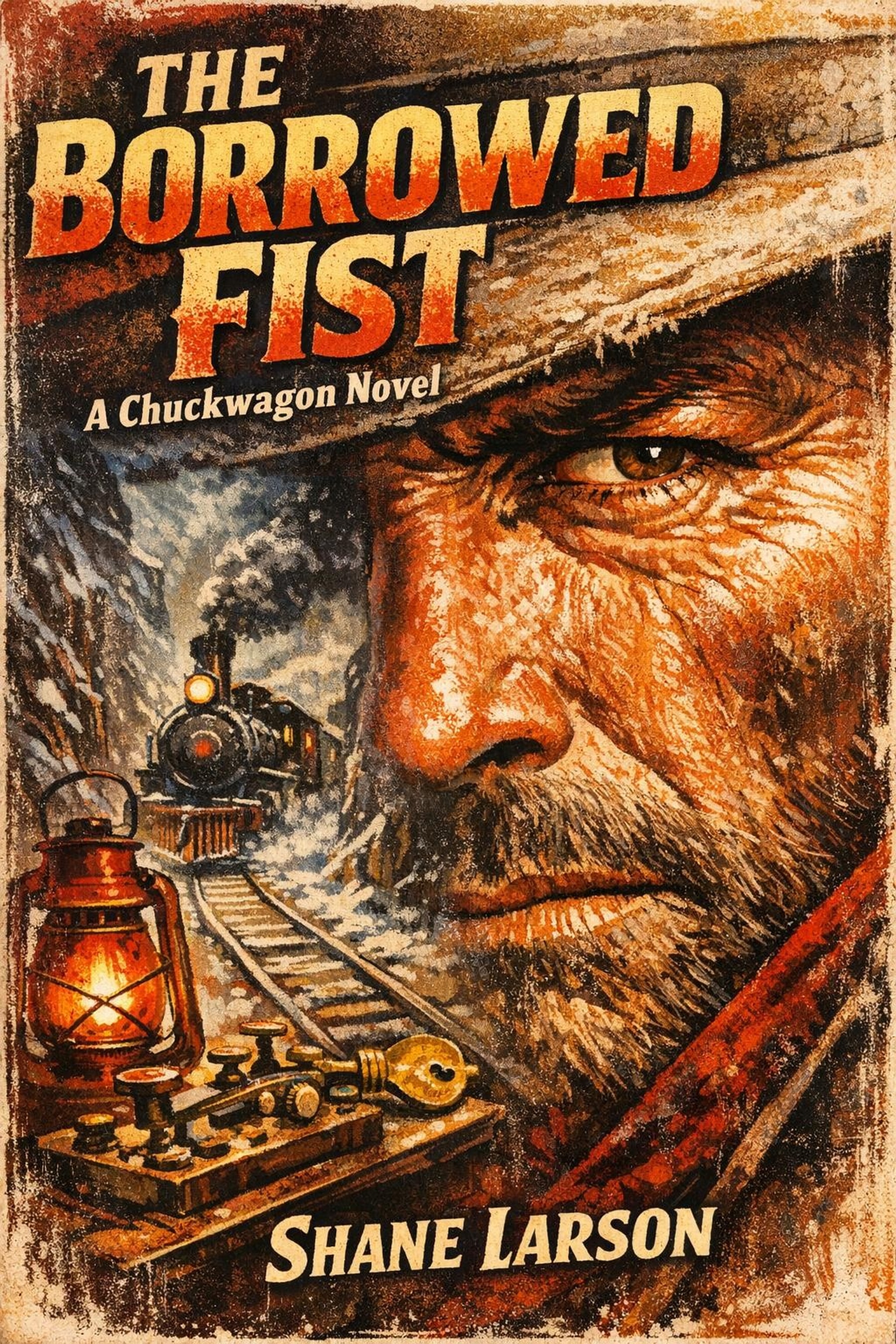
The Borrowed Fist
Every liar has a rhythm.
By Shane Larson
About This Book
At a quarter past ten on the night of 28 January 1882, in a stone depot building on the Denver & Rio Grande, a man with a ruined left hand stops writing in the middle of a train order.
Nothing about the order is wrong. The form is right. The procedure is right. It opens with Bitter Tank's call and it carries Bitter Tank's operator's name at the bottom, and Amos Wren has copied four thousand orders exactly like it. What stops his pencil is the rhythm — the spacing between the marks, the weight on the dashes, the small involuntary hesitation a particular man makes before every figure he sends and has never once heard himself make. It isn't there. Somebody has ironed it out.
A telegrapher's fist is the one signature he cannot polish, disguise, or lend. It is the man himself, laid out on forty-six miles of wire. And the hand sending this order does not belong to the man signing it.
The Story
The order is a murder weapon, and it is a single sheet of paper.
It gives a westbound passenger special and a loaded coal drag the same eleven miles of single track through Fetterlock Canyon — no siding anywhere in it, a two percent grade, and a curve at the bottom where a headlight cannot be seen until it is four hundred yards away. Read quickly, the order appears to protect both trains. That is the trick. It only kills if you know what a loaded drag can actually do on that grade in a blizzard, and the man who wrote it knew exactly.
Amos cannot send a warning, and the reason is structural rather than dramatic. The division telegraph is a single party circuit: every office hangs on one wire, everyone hears everything, and the only thing identifying a sender is a two-letter call and a rhythm. Anything Amos transmits is heard instantly by the man who forged the order, who sits one floor above him and can countermand it in a signature nobody will question. His own crippled sending is the slowest and most recognizable on the division. He cannot even warn anonymously.
So he does the thing available to a man with no standing: he reports it. He takes it to his trainmaster with the only evidence he has, which is his own ear, and watches it entered in a leather book — not as a report of a forgery, but as a question about whether the night operator's hearing can be relied upon. Filed, in his own name, in ink, before midnight.
What breaks the case open is not the ear at all. It is a clerk named Delphine Rusk, nine years on the train sheet, who does the arithmetic on the order and proves it is not merely false but impossible — and impossible in a direction that only intent explains.
And what saves the train, in the end, is neither of them being believed. It is eleven miles up a two percent grade in the dark on a section man's hand car, and two tin torpedoes bent onto a railhead, and a lamp burning red in blowing snow — the last things left on a railroad that need no signature at all.
Why I Wrote This
I got into this sideways, reading about how nineteenth-century operators identified each other. Long before anyone thought about authentication, telegraphers could tell who was on the far end of a wire purely by rhythm — the way you know a friend's footsteps on a staircase. They called it a man's fist, and it was so reliable that it was effectively an identity system nobody had designed on purpose.
What caught me was the corollary. If your fist is your identity, then a good enough imitator is you. And there is no way to prove otherwise, because the evidence exists only as sound, in one listener's memory, for about a second and a half.
That's a modern problem wearing a wool coat, and I wanted to write it without saying so anywhere in the book. The other thing I wanted was a hero whose competence buys him nothing. Most thrillers reward the man who is right. I was more interested in what happens to someone who is right, and correct, and careful, and gets filed anyway.
Frequently Asked Questions
Do I need to read the earlier Chuckwagon books first?
No. This is a completely standalone novel with a different cast, a different setting, and a self-contained plot. The Chuckwagon books are siblings rather than a sequence, and reading The Unread Confession or The Widow's Debt first only adds a little resonance. The Unread Confession is the closest kin: both are about a piece of paper that decides who lives.
Is there a romance subplot?
There is not. Amos and Delphine are colleagues and their partnership is professional to the last page. If you have been burned by westerns that stop dead for a love story, this one does not.
How violent is it?
Barely at all, by the standards of the genre. There is one brief, ugly, entirely non-heroic physical struggle. Nobody is shot. Nobody dies during the events of the novel. The tension is a clock and a grade, not a body count.
Do I need to understand telegraphy or railroading to follow it?
No, and you are never lectured. The vocabulary is used the way characters would use it and the meaning arrives from context. Readers who do know the period will find the procedure correct down to how a torpedo is fixed to a rail.
How long is it, and how fast does it move?
About 51,000 words across fifteen chapters — one night, told close to real time, roughly 205 pages in paperback. It is built to be read in two or three sittings.
Is this based on a real wreck?
No. The railroad geography is deliberately fictional, and there is no real wreck, no real official, and no real named lawman anywhere in it. The method is the historically grounded part.
If You Liked This, You Might Like
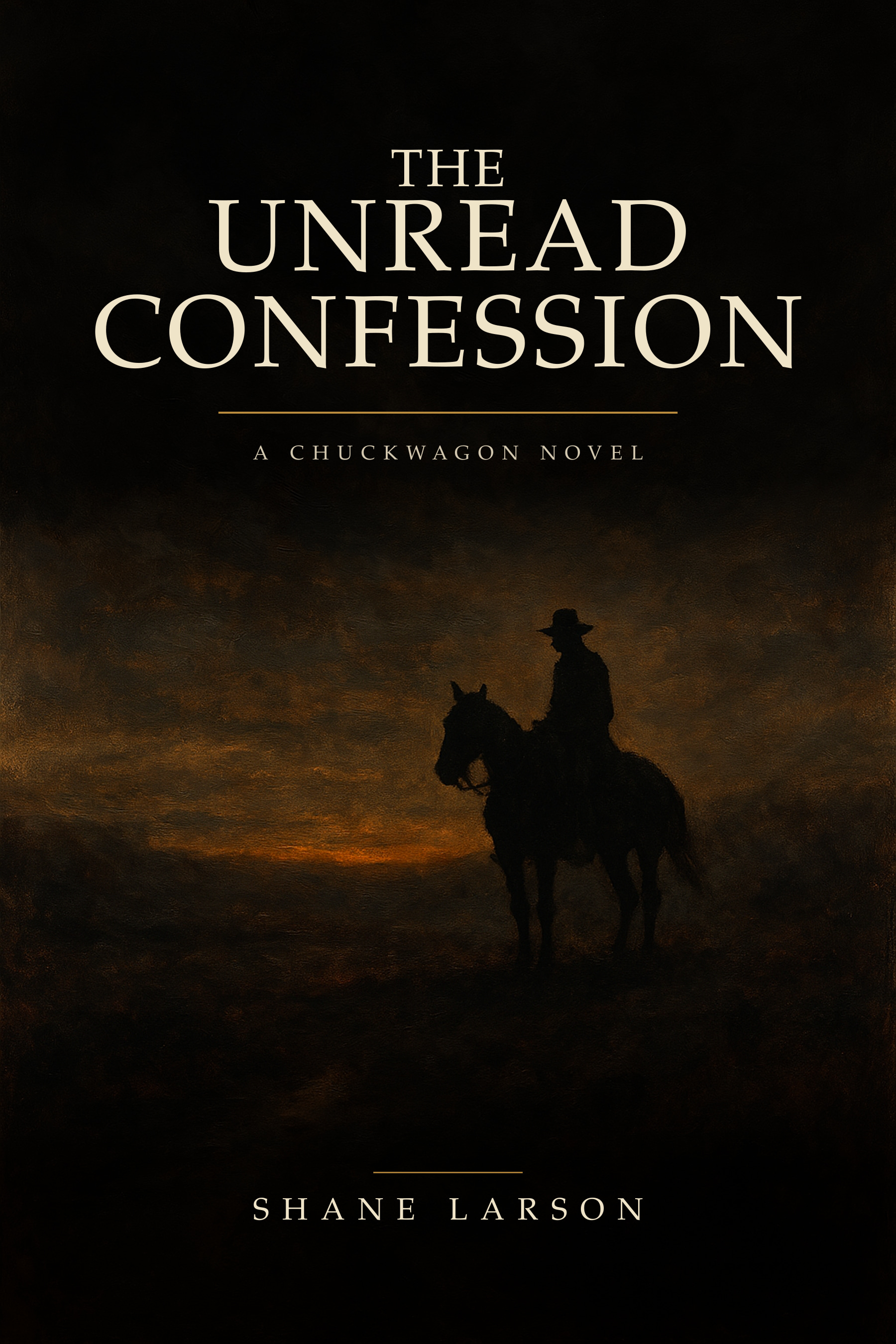
- The Unread Confession — Chuckwagon Book One, and the same idea run in reverse: a man who cannot read a word carries the sealed letter everyone around him can.
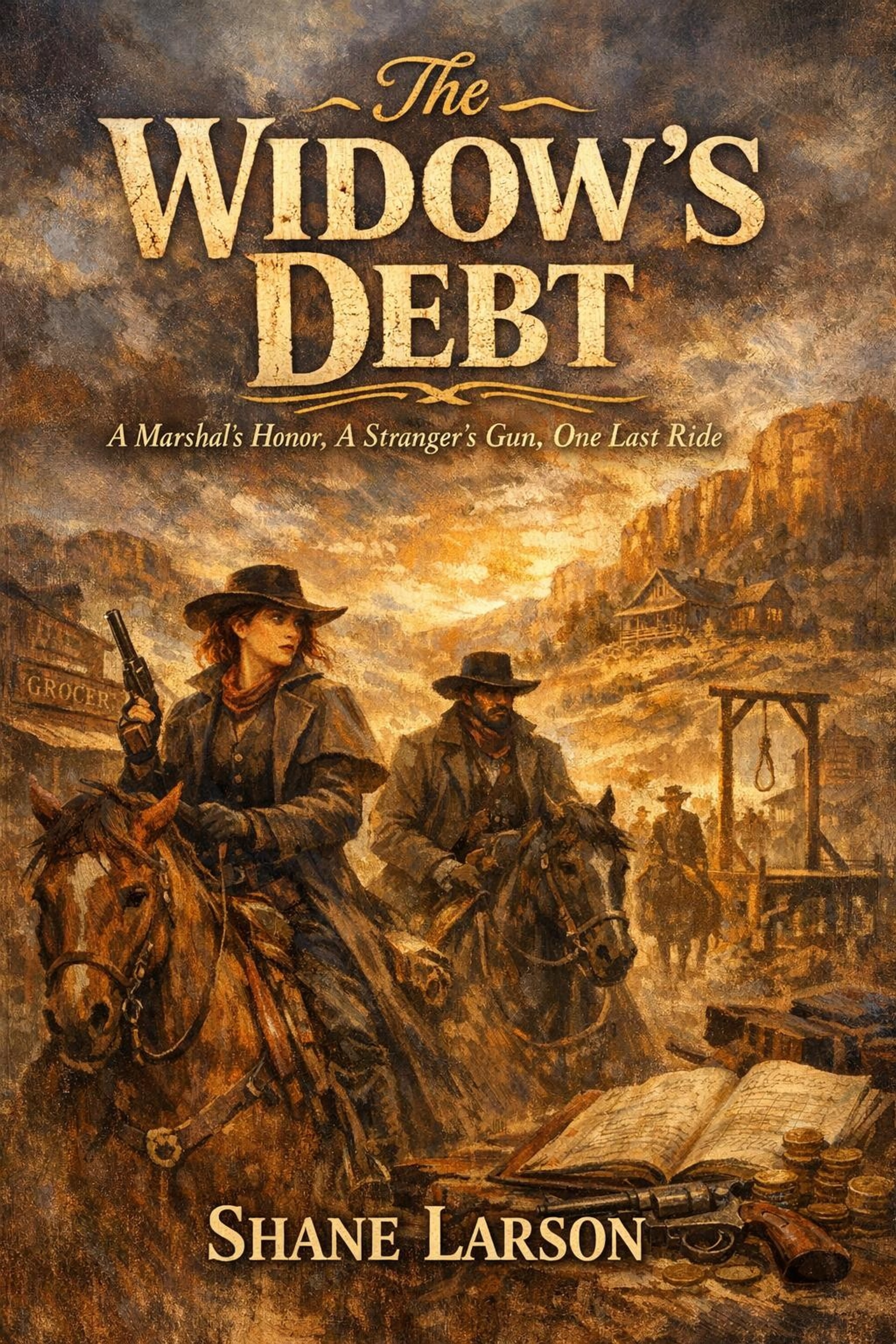
- The Widow's Debt — Chuckwagon Book Two: a disgraced marshal, an outlaw prisoner, and forty-five miles of Montana badlands between her and the rope.
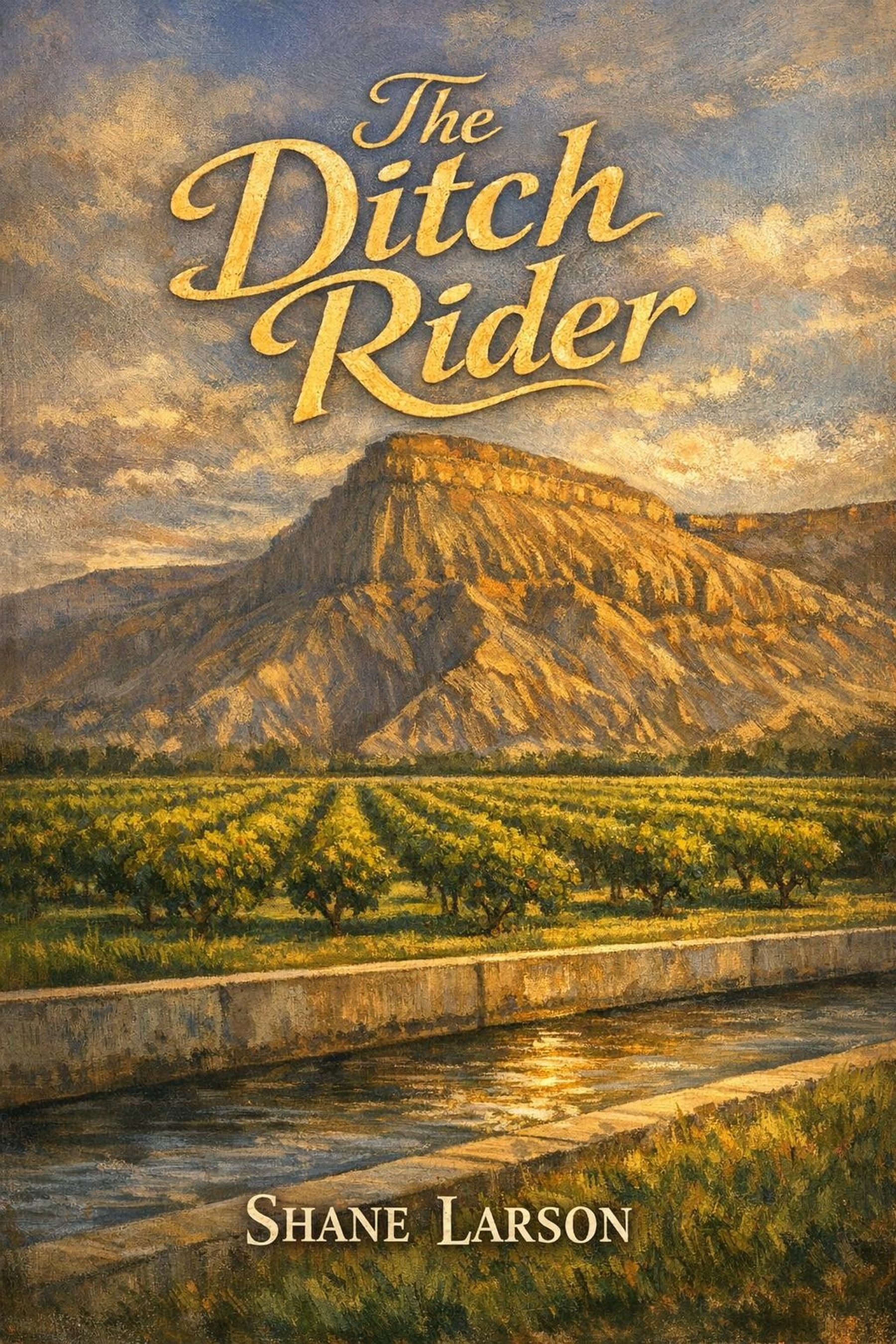
- The Ditch Rider — another frontier thriller where the deadly thing is an entry in a ledger, this time a water right in a dry year.
- The Pinkertons — the nonfiction counterpart to Amos's problem: how nineteenth-century America went about proving who a man was, and what that machinery did once it existed.
Amos Wren saves ninety people with two tin capsules and a red lantern, and the record shows a track obstruction of unknown origin. This is a book about the distance between those two sentences.
Book Three of the Chuckwagon novels.
What You'll Learn
- A thriller whose weapon is paperwork. No gunfight, no showdown, no chase on horseback. The murder is committed with a form, a signature, and an accurate knowledge of grades — and it very nearly works twice.
- A hero whose skill is genuinely useless to him. Amos can identify any man on his division inside four words of Morse. That ability produces no document, no witness, and no evidence, which is the whole engine of the book.
- The procedure is real and it is the point. Train orders, clearance cards, the dispatcher's train sheet, a torpedo crushed under a driver wheel. None of it is explained to you and none of it is decoration; the plot is made out of it.
- A villain who is simply good at his job. Harlan Pike is eleven years on a key, courteous, tired, and doing this for money. He never threatens anyone and never touches a gun. He is what the hero is, aimed somewhere else.
- A moral centre that costs something. Roughly two thirds through, Amos is offered a faster way out that would almost certainly work. He knows the forger's method well enough to use it himself. The book is about why he doesn't, and the argument he makes for refusing is the best writing in it.
- An ending that refuses to reward anybody. Nobody is arrested. Nothing is proved. The one honest mark left in the record explains nothing about why.
- Nobody dies on the page. The body count of this novel is a wreck that does not happen — and a brakeman named Kell, killed three weeks before chapter one by the same method, whose file stays closed precisely because this one was stopped.
New Historical fiction / frontier thriller (Western) releases and free chapters — no spam, unsubscribe anytime.
More in This Genre
View all →