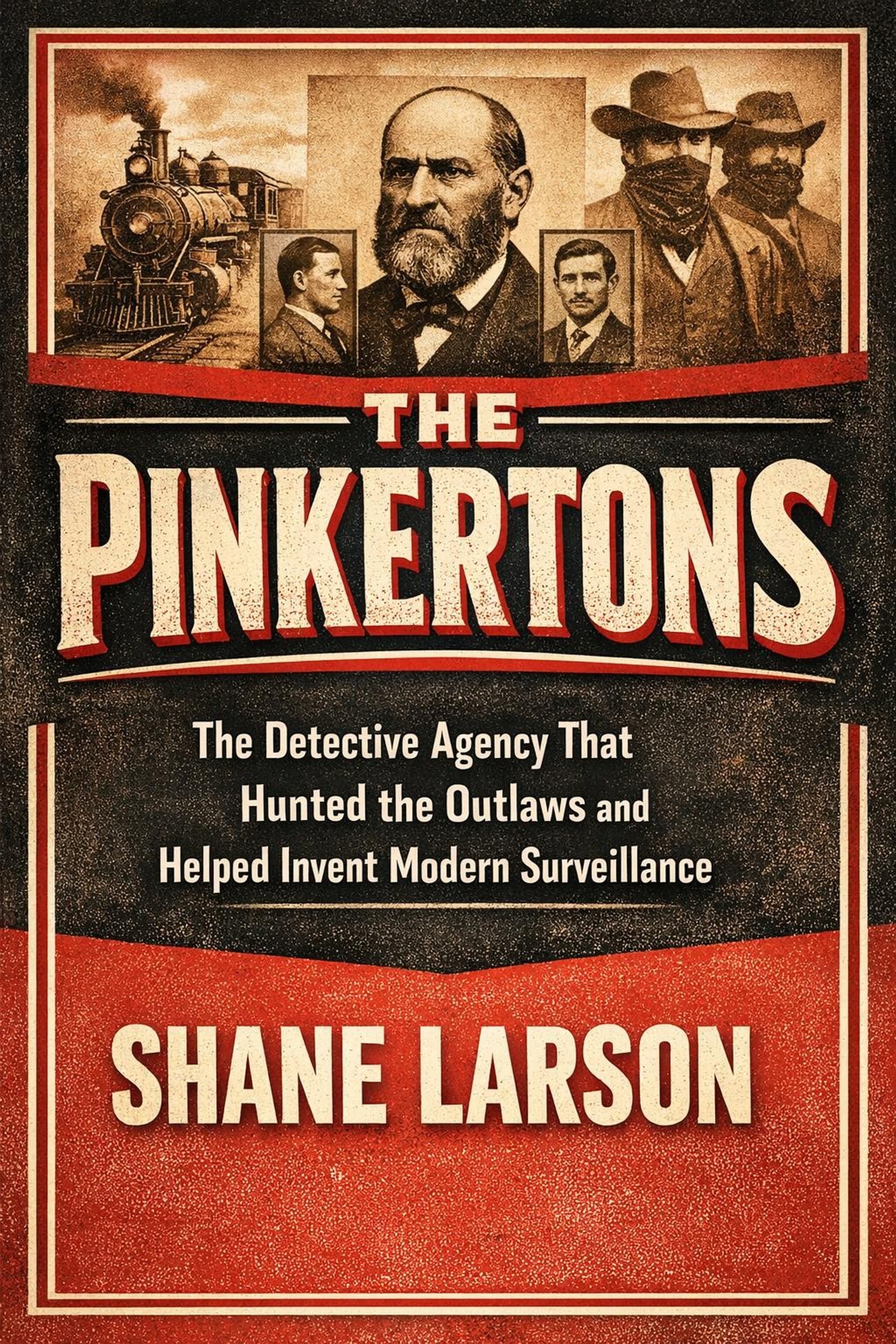
The Pinkertons
The Detective Agency That Hunted the Outlaws and Helped Invent Modern Surveillance
By Shane Larson · The Wild West Series (Book 13)
About This Book
For most of the nineteenth century the United States had no FBI, no federal detective bureau, and across most of its territory no professional police worth the name. A crime committed in one state by a man who then rode into the next was, in practical terms, a crime no government could pursue. Into that vacuum walked a private company whose trademark was a single wide-open eye and whose motto read "We Never Sleep." It answered to whoever paid the bill. For half a century it was the nearest thing the country had to a national police force, and it was a business the entire time.
That should sit uneasily, and it sat uneasily with plenty of the people who lived under it. Picture a corporation holding files no court could subpoena, running informants inside union halls, keeping photographs of faces the law had never charged, and prepared to load three hundred armed men onto a barge and send them upriver. This was not a public institution accountable to voters. It was a vendor, and the product was investigation, infiltration, and, when the contract called for it, force.
The Pinkerton National Detective Agency built the machinery of the modern manhunt and, with the same hands, hired that machinery out to the richest men in America. Both things are true, and this account keeps them in the same frame instead of choosing the flattering half.
The Argument
Allan Pinkerton was a Scottish cooper and political radical who landed in Illinois around 1850 and discovered, almost by accident, that he had a gift for catching counterfeiters. The agency he founded grew because it filled a hole nobody else was filling. There was no science of criminal identification, so the Pinkertons assembled one: a rogues' gallery of photographs, physical descriptions filed and cross-referenced, and eventually one of the world's first working criminal databases. They perfected undercover infiltration as a discipline. They put a woman, Kate Warne, into the field as a detective years before any American police department would consider it. The very phrase private eye comes from that unblinking logo.
The other face is inseparable from the first. The same investigative reach that ran down train robbers was rented to railroads and steel mills to spy on their workers and crush their strikes. At Homestead in 1892 the agency's men fought an all-day gun battle with locked-out steelworkers, and the name Pinkerton became a slur in the labor movement that outlived the company. And the founder who built all of it was also a tireless self-promoter who sold ghostwritten detective "memoirs" that mixed real casework with invention, shaping how the public understood his agency and how it has been remembered since.
This book, The Pinkertons: The Detective Agency That Hunted the Outlaws and Helped Invent Modern Surveillance, works from court transcripts, congressional testimony, and the agency's own surviving records to pull the documented history back out from under the legend the Pinkertons manufactured about themselves. It follows a single thread from a Chicago detective's card file to the data-driven watch-state we live inside now.
What's Inside
- The vacuum that made them possible — why a country with almost no police and no federal investigators handed its detective work to a private firm, and what that bargain cost.
- Kate Warne, hired in 1856, and how the first female detective in America worked cases no male operative could touch, including the plot to kill Lincoln in Baltimore in 1861.
- The forensic toolkit they invented — the mug shot before the word existed, the rogues' gallery, the descriptive filing system that became a criminal database, and the undercover method that outlived them all.
- James McParland's years living undercover inside the Molly Maguires, the testimony that sent men to the gallows, and the lasting fight over how much of it was justice and how much was manufactured.
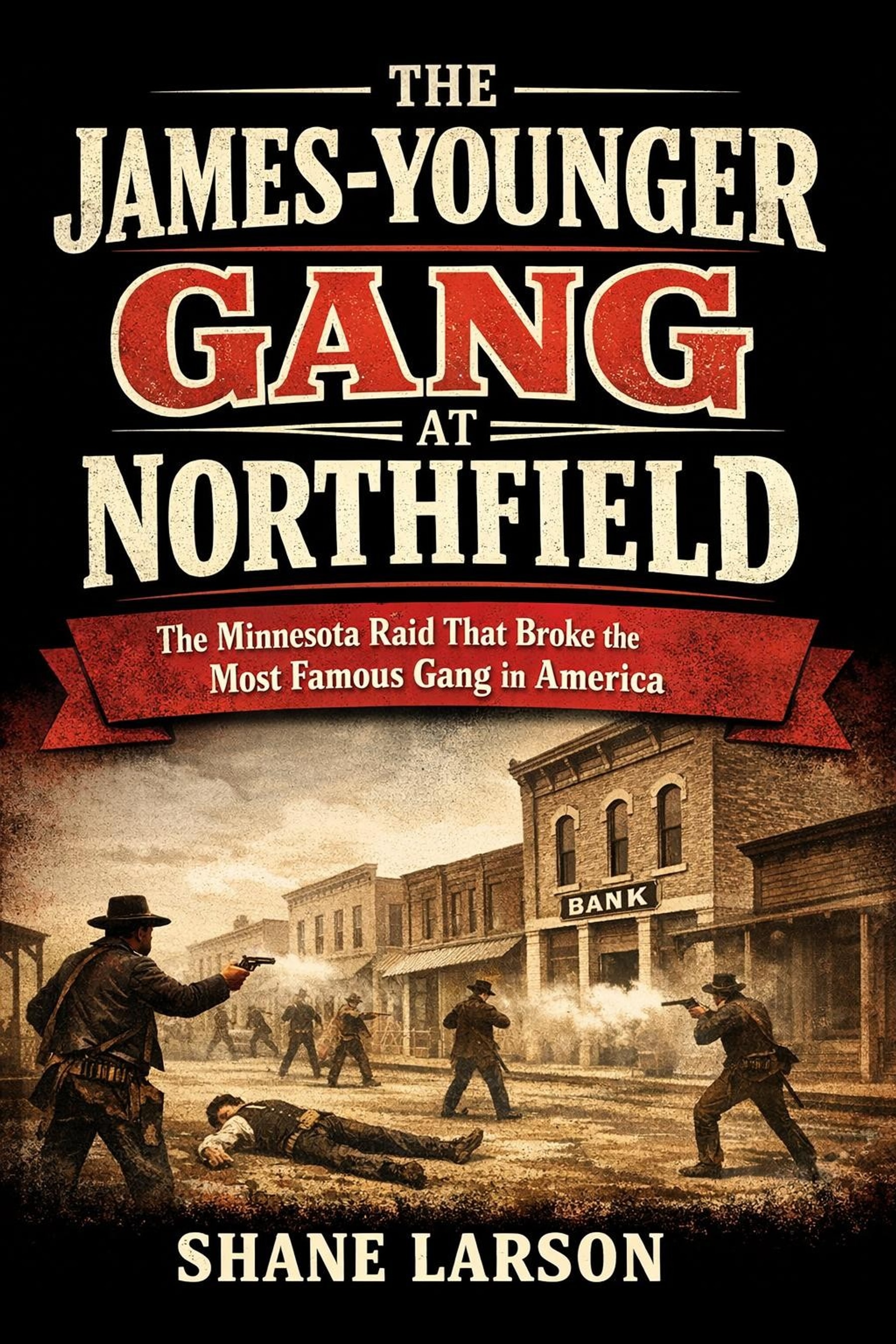
- The James raid that backfired — the 1875 firebombing of a Missouri farmhouse that killed a child, missed its target entirely, and helped turn Jesse James into a folk hero at the agency's expense.
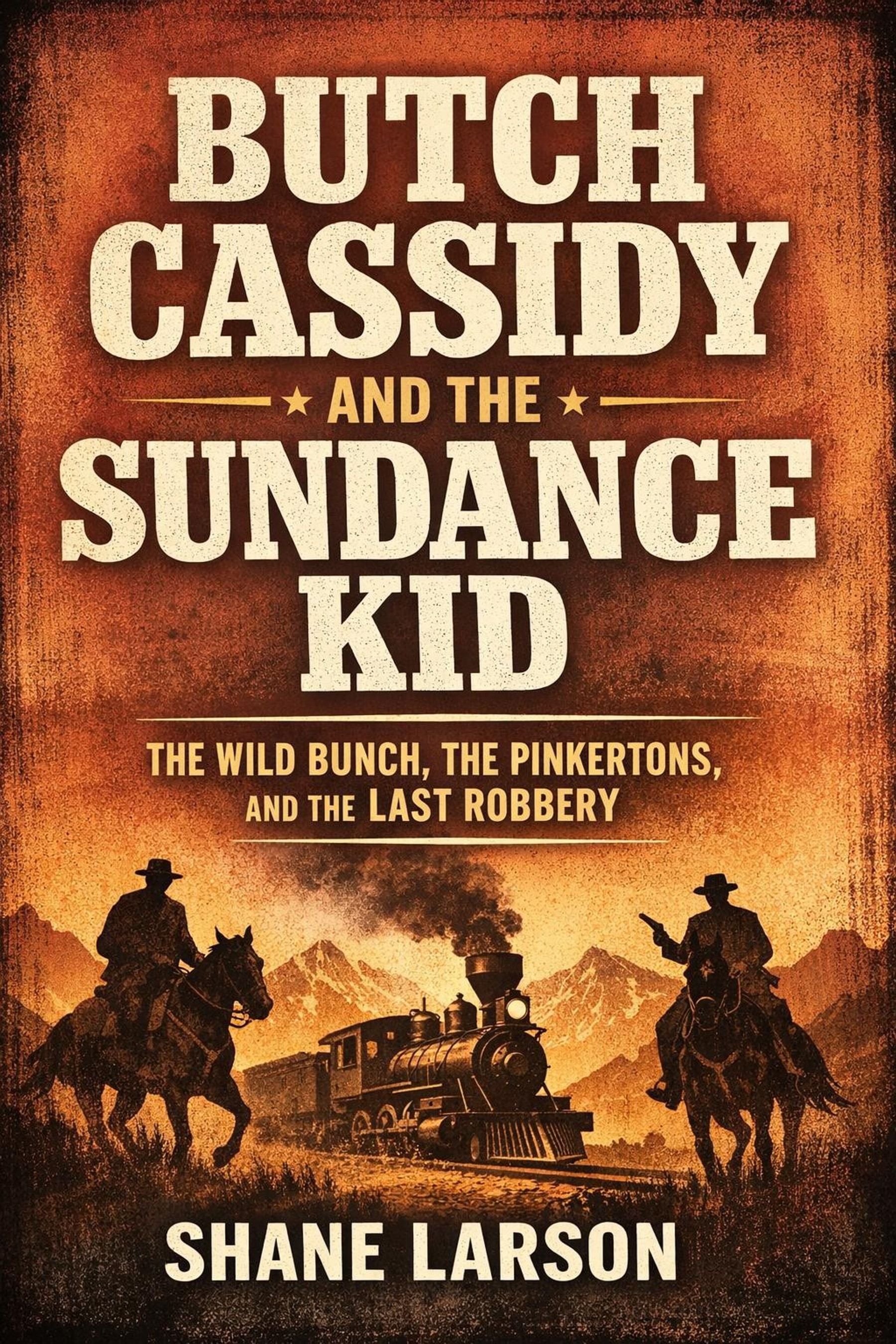
- The transatlantic chase after Butch Cassidy, the Sundance Kid, and the Wild Bunch, pursued by files and photographs all the way to South America.
- Homestead, 1892 — how a labor dispute turned into a pitched battle on the Monongahela and hardened the agency's reputation as the private army of capital.
- The self-mythology machine — the ghostwritten memoirs, the sold legends, and how to read the agency's own account of itself with the skepticism it earns.
- The straight line forward — from "the eye that never sleeps" to the FBI that studied the agency's methods, to the data brokers and surveillance industry that inherited its logic.
Why I Wrote This
I kept running into the Pinkertons in the margins of other frontier stories — the outfit chasing Jesse James, the outfit shadowing Butch Cassidy, the outfit whose operative infiltrated the Mollies — and it struck me that a single private company kept turning up wherever the modern manhunt was being invented. That is a strange thing to be true, and the more I read the stranger it got. Here was a business that assembled the surveillance infrastructure a democratic government would later be careful to bound with law, and it did so with no such limits, on behalf of paying clients. I wanted to trace that lineage honestly, without either lionizing the detectives or reducing them to hired thugs. The through-line from a Chicago card file to the data-broker economy felt too important, and too little known, to leave sitting in the footnotes of other people's books.
Frequently Asked Questions
Is this a true-crime book or a business history?
Both, braided together. It follows the famous cases — the manhunts, the infiltrations, the strikes — but it treats the agency as what it was: a company with clients, incentives, and a bottom line. You cannot understand the casework without understanding who was paying for it.
Do I need to know the Wild West outlaws first?
No. The book explains Jesse James, Butch Cassidy, and the Wild Bunch as they enter the Pinkerton story, so it stands on its own. If you have already read the outlaw histories it will click into place from the pursuers' side, which is a genuinely different vantage.
Does it take the labor movement's side or the company's?
Neither, on purpose. The strikebreaking is documented in detail and told without flinching, and so is the genuine investigative innovation. The point is to hold both without pretending they cancel out.
How much of the popular Pinkerton legend is actually true?
Less than the agency wanted you to believe, and the book shows its work. Allan Pinkerton sold ghostwritten memoirs that blurred fact and fiction for profit, so a good part of the job is separating the documented record from the marketing.
What does a nineteenth-century detective agency have to do with modern surveillance?
More than is comfortable. The filing systems, photographic identification, informant networks, and cross-jurisdictional tracking the Pinkertons pioneered are the direct ancestors of the databases and data brokers that watch us now. The final chapters follow that line into the present.
If You Liked This, You Might Like
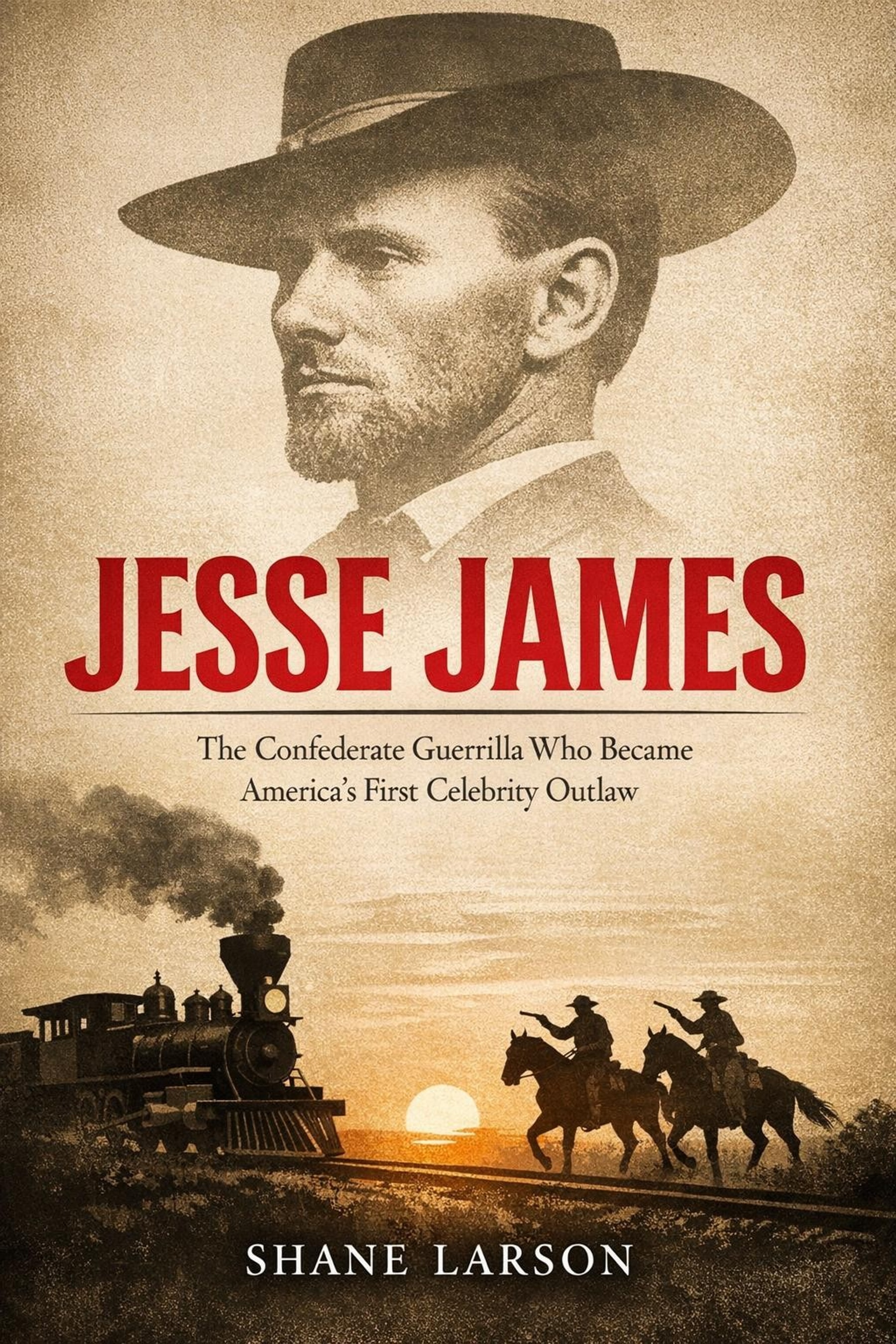
- Jesse James — the outlaw the Pinkertons hunted, told from the other side of the manhunt, including the raid that made him a martyr.
- Butch Cassidy and the Sundance Kid — the Wild Bunch the agency chased across two continents, and the modern detective work that finally ran them down.
- The Accidental Spy Catcher — the surveillance-and-pursuit lineage a century on, when one man tracked an intruder through the digital equivalent of a Pinkerton case file.
The eye that never sleeps did not close when the agency faded. This is the story of where it first opened, and of everything it taught the watchers who came after.
Part of The Wild West series from Peak Grizzly Publishing.
Included with Kindle Unlimited — read it free if you're a member.
New Wild West / American Frontier History releases and free chapters — no spam, unsubscribe anytime.
More in The Wild West Series
View series →