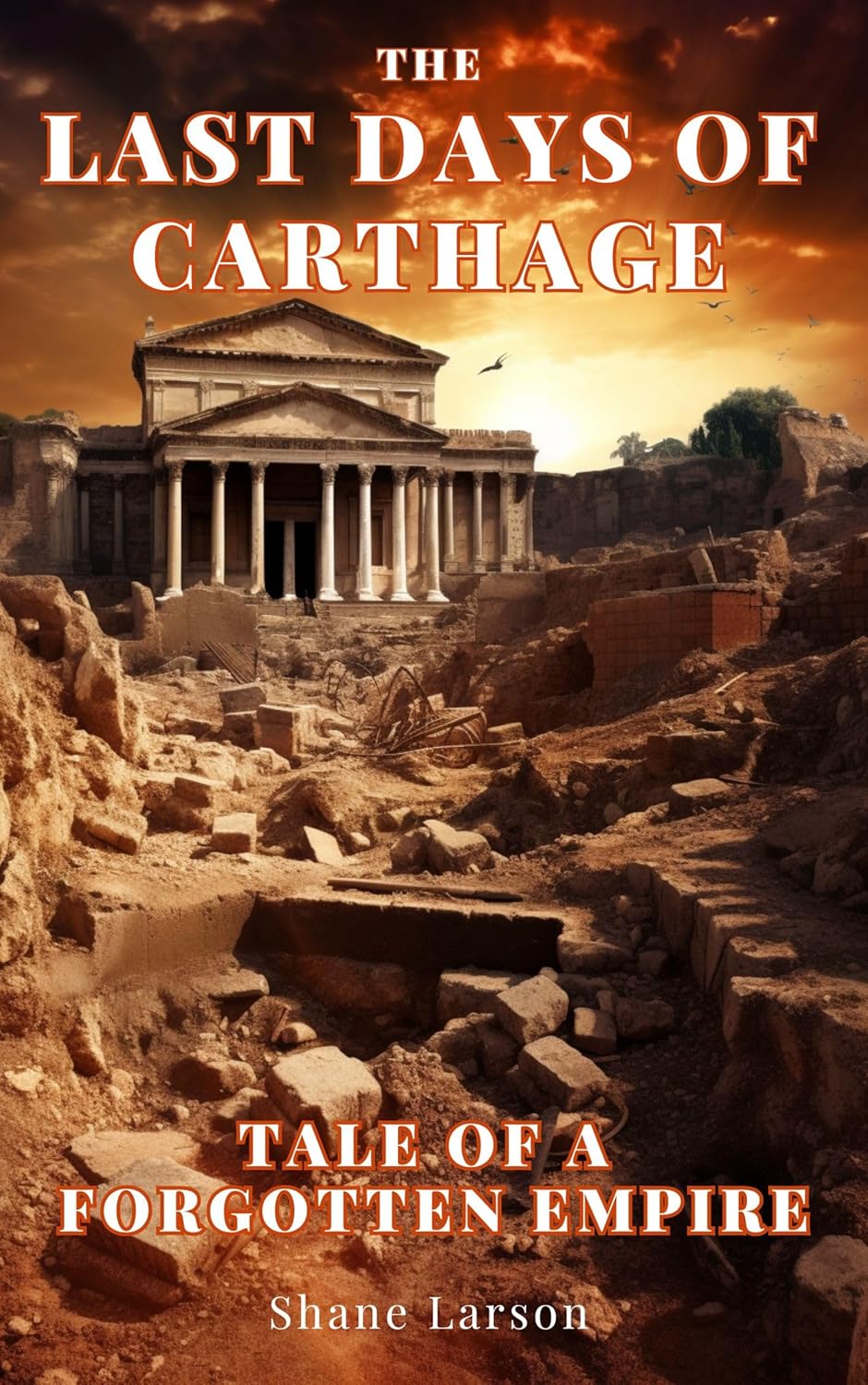
The Last Days of Carthage
Tale of a Forgotten Empire
By Shane Larson
About This Book
Rome didn't just defeat Carthage. It erased it.
In 146 BCE, after seventeen days of street-by-street fighting, Roman soldiers burned the city to the ground. The survivors — fifty thousand people — were sold into slavery. The site was systematically demolished. A civilization that had dominated the western Mediterranean for six centuries, that had produced one of history's greatest military commanders, that had built a commercial empire stretching from Spain to Sicily, was obliterated so thoroughly that we still piece together its history largely from the accounts of its enemies.
This is that civilization's story.
The Last Days of Carthage traces the full arc of Carthaginian history — from its legendary founding by Queen Dido on the North African coast to the three Punic Wars that brought it into collision with Rome, to the final catastrophic siege that ended not just a city but a world. It's the story of a civilization that matched Rome blow for blow for over a century, came terrifyingly close to destroying it, and lost anyway.
What's inside:
- The rise of Carthage from Phoenician trading colony to Mediterranean superpower — its politics, economy, and the commercial genius that made it rich and powerful
- The First and Second Punic Wars — the conflicts that turned a regional rivalry into an existential struggle
- Hannibal Barca — the crossing of the Alps, the annihilation of Roman armies at Trebia, Trasimene, and Cannae, and why the most brilliant campaign in ancient military history ultimately failed
- The Third Punic War and the siege of Carthage — the brutal endgame of a century of conflict
- What Carthaginian civilization actually looked like, stripped of the Roman propaganda that shaped how history remembered it
- Why Rome ultimately decided that defeating Carthage wasn't enough — it had to cease to exist
Six centuries of civilization. Three wars. One catastrophic ending.
The story of the empire Rome was so afraid of, it didn't just conquer it — it erased it from history.
Included with Kindle Unlimited — read it free if you're a member.
New Ancient History releases and free chapters — no spam, unsubscribe anytime.