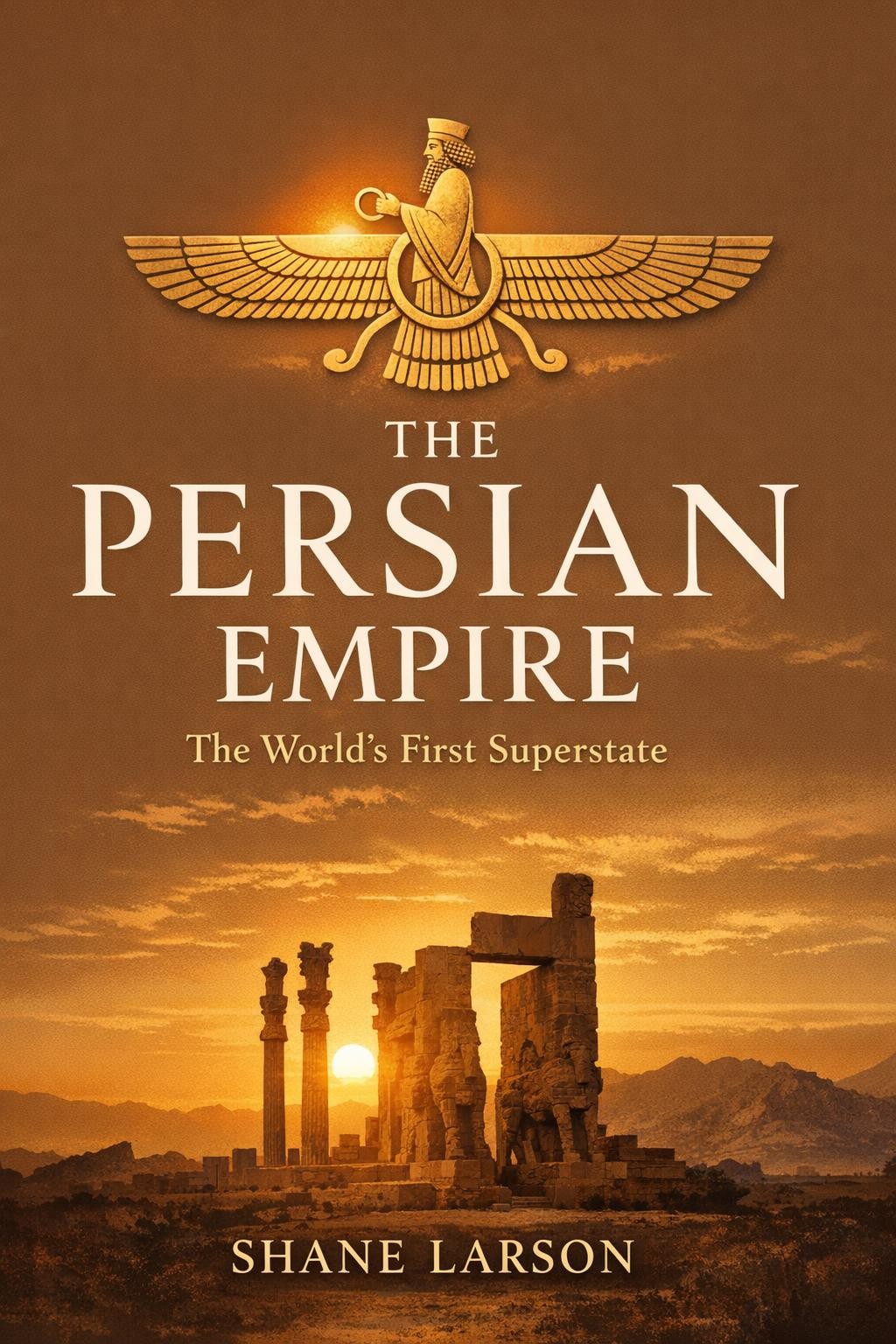
The Persian Empire
The World's First Superstate
By Shane Larson
About This Book
Everything you think you know about the Persian Empire, you learned from the Greeks. The Greeks were not objective reporters.
They were a civilization that had just fought for its survival against a vastly larger power, and they wrote the history accordingly. The Persians who appear in Greek sources are despots, decadents, and barbarians — a convenient enemy for a story about the heroic defense of freedom.
The reality was considerably more complex, and considerably more impressive.
The Achaemenid Persian Empire was the largest political entity the world had ever seen — stretching from Libya to India, governing perhaps forty percent of the world's population at its peak. It was held together not primarily by terror, but by the most sophisticated administrative system the ancient world had yet produced: satrapies, a royal road network, a postal service, standardized coinage, and a policy of religious tolerance so consistent that later empires, including Rome, would study it as a model.
The Persian Empire tells the Persian story from the Persian side.
What you'll learn:
- How Cyrus the Great conquered three empires in rapid succession and governed them through tolerance rather than terror — and why that made him the most celebrated conqueror in the ancient world, even among the peoples he defeated
- How Darius I built the administrative infrastructure — roads, postal system, currency, provincial governors — that held a continent together across generations
- The real story of the Persian Wars — Marathon, Thermopylae, and Salamis as the Persians experienced and recorded them, not as Greek legend shaped them
- How Zoroastrianism introduced the concepts of heaven, hell, divine judgment, and resurrection that would profoundly shape Judaism, Christianity, and Islam
- What Persepolis was actually built for — not a capital city, but the ceremonial embodiment of an empire's self-image, designed to make power visible
- How the empire that "lost" to Greece continued to dominate Greek political affairs for another 150 years afterward
- What Alexander's conquest actually destroyed, what it deliberately preserved, and why he became progressively more Persian than Macedonian the longer he ruled
This book is for you if you know the Persian Wars from the Greek side and want the full picture, you're interested in how ancient empires actually governed rather than just conquered, or you watched 300 and suspected you were only getting half the story.
The half you were missing is more interesting than the half you know.
If You Liked This, You Might Like
- The Silk Road — the trade network that made Persia's successors the indispensable middlemen: how the Parthian and Sasanian empires taxed the traffic between Rome and China, and what the ends of the chain finally did to get around them.
- The Sassanids — Persia's second act: the dynasty that spent four hundred years claiming to have restored the empire this book describes, and the war with Rome that finally exhausted both sides.
From the author of Iron Age Dawn, The Hittite Empire, and The Fall of Rome.
Included with Kindle Unlimited — read it free if you're a member.
New Ancient History releases and free chapters — no spam, unsubscribe anytime.