Why AI Is the Best Thing to Happen to Developers Over 40
March 1, 2026 · 6 min read
You are at a conference. The keynote speaker is twenty-six. The startup founder on the panel is twenty-eight. The "senior engineer" they just introduced has four years of experience. You have been building production systems since before some of these people learned to drive, and you are starting to wonder if tech has an expiration date.
Meanwhile, every headline tells you AI is coming for your job. AI writes code faster than any human. AI will replace 80 percent of developers within a decade. If you are over 40 and reading these articles, the combination of ageism and automation anxiety can feel like a pincer movement with no escape route.
Here is what those articles get wrong: AI automates the tasks that junior developers compete on. It leaves almost entirely untouched the skills that senior developers have spent decades building. The result is not a threat to experienced developers. It is a structural shift in their favor.
The Judgment Gap
There is a concept that will define the next decade of software development, and it works directly in favor of anyone with real experience. Call it the judgment gap.
The judgment gap is the distance between what AI can produce and what a production system actually needs. AI can generate code that compiles. But production systems need code that is secure, maintainable, performant under load, compatible with existing systems, compliant with regulations, and resilient to failure modes that nobody anticipated. Closing that gap requires exactly the kind of judgment that you have been accumulating for twenty years.
Ask an AI to design a system architecture and it will give you a textbook answer. Ask an experienced architect and they will ask you forty questions before they start drawing. Those forty questions represent two decades of learning what goes wrong when you skip the context-gathering phase. AI does not know what it does not know. Experienced developers do.
This gap is not closing. As AI-generated code becomes more common in production environments, organizations are discovering they need senior developers more, not less. Someone has to review the AI's output, catch the subtle bugs, make the architectural decisions the AI cannot make, and debug the novel failures that emerge when AI-generated components interact with legacy systems in ways nobody predicted.
The math is straightforward. As AI handles more of the routine coding work, the proportion of a team's value that comes from senior skills — system design, judgment calls, stakeholder navigation, debugging, mentorship — increases. Teams might need fewer people writing boilerplate. They need the same number of people (or more) making the decisions that determine whether the project ships or collapses.
Where Ageism Is Real and Where It Is Not
Before talking strategy, it is worth being honest about the landscape. Ageism in tech is real. A landmark study by the National Bureau of Economic Research found that resumes with older graduation dates received significantly fewer callbacks, even when qualifications were identical. Tech workers over 50 are 36 percent more likely to lose their jobs during layoffs than younger colleagues, controlling for salary.
But ageism does not hit evenly. It concentrates in specific areas:
Early-stage startups have the most pronounced bias. The mythology of the young genius founder creates environments where youth is treated as a qualification and experience is treated with suspicion. If you are fifty and interviewing at a seed-stage company run by a twenty-four-year-old, you are swimming against a strong current.
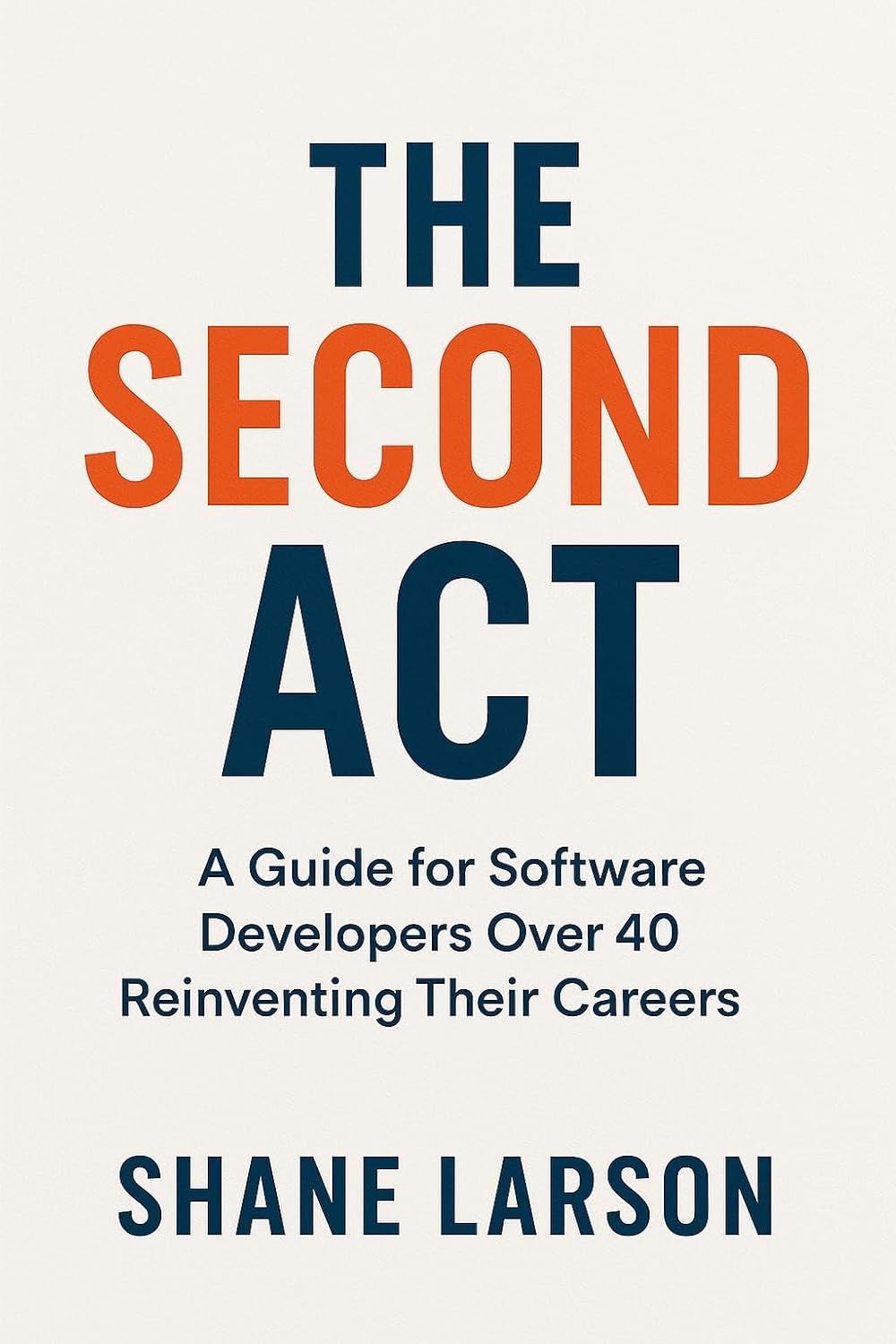
The Second Act
Algorithmic hiring at large companies inadvertently filters out experienced candidates. When an ATS scores based on keyword matches against a list of fifteen specific technologies, the developer with twenty years of deep expertise in four technologies scores lower than the bootcamp graduate who listed everything they have ever heard of.
LeetCode-driven interviews create a structural disadvantage. Not because experienced developers cannot solve these problems, but because they have spent the last decade solving real problems and have not practiced inverting binary trees since college. The format tests interview preparation more than engineering ability.
But there are large, growing parts of the industry where experience is a genuine competitive advantage. Enterprise software, where understanding regulatory and organizational complexity takes years to develop. Infrastructure and reliability, where the developer who has survived three major outages knows things documentation cannot teach. Technical leadership roles — staff engineer, principal engineer, distinguished engineer — that exist specifically because companies need the pattern recognition that only comes from decades of seeing what works and what fails. Regulated industries like healthcare, finance, and government contracting, where domain knowledge and compliance expertise are desperately needed and impossible to shortcut.
A developer who spent twenty years building payment processing systems and worried about career prospects at 45 discovered that every fintech startup and every bank's digital transformation team was desperate for someone who actually understood how money moves through the banking system. His experience was not a liability. It was exactly what the market wanted. He just needed to look in the right places.
The Leverage Play
Here is where the opportunity moves from defensive to offensive. AI does not just protect the value of experienced developers — it amplifies it.
When an experienced developer uses AI effectively, they can prototype in hours what used to take a week. Their architectural vision — the thing AI cannot provide — gets validated faster. They can rapidly prototype multiple approaches and evaluate them against real criteria, making better design decisions because they have more data to judge against. They can offload the tedious work (boilerplate, configuration, documentation) and spend their time on the work that requires judgment and creativity.
Think of AI as a force multiplier for experience. A junior developer using AI becomes a more productive junior developer. An experienced developer using AI becomes something qualitatively different — a professional who can operate at a higher level of abstraction, make better decisions faster, and deliver more impact than was previously possible.
The leverage is proportional to the judgment you bring to the tool. And judgment is the one thing that cannot be acquired quickly.
The practical implication is clear: if you are an experienced developer, the best investment you can make right now is not learning the latest JavaScript framework or grinding LeetCode problems. It is learning to use AI tools effectively as an accelerator for the skills you already have. Use AI for code generation and documentation. Keep the system design, the code reviews, the architectural choices, and the stakeholder navigation for yourself. Build AI evaluation skills — the ability to quickly assess AI-generated code for correctness, security, and maintainability. Your decades of experience give you a calibrated sense for what good code looks like, and that calibration is exactly what is needed to close the judgment gap.
The developers who will thrive in the next decade are not the ones who can write code fastest. They are the ones who know which code should be written at all.
The Second Act
New posts and releases, straight to your inbox. No spam, unsubscribe anytime.