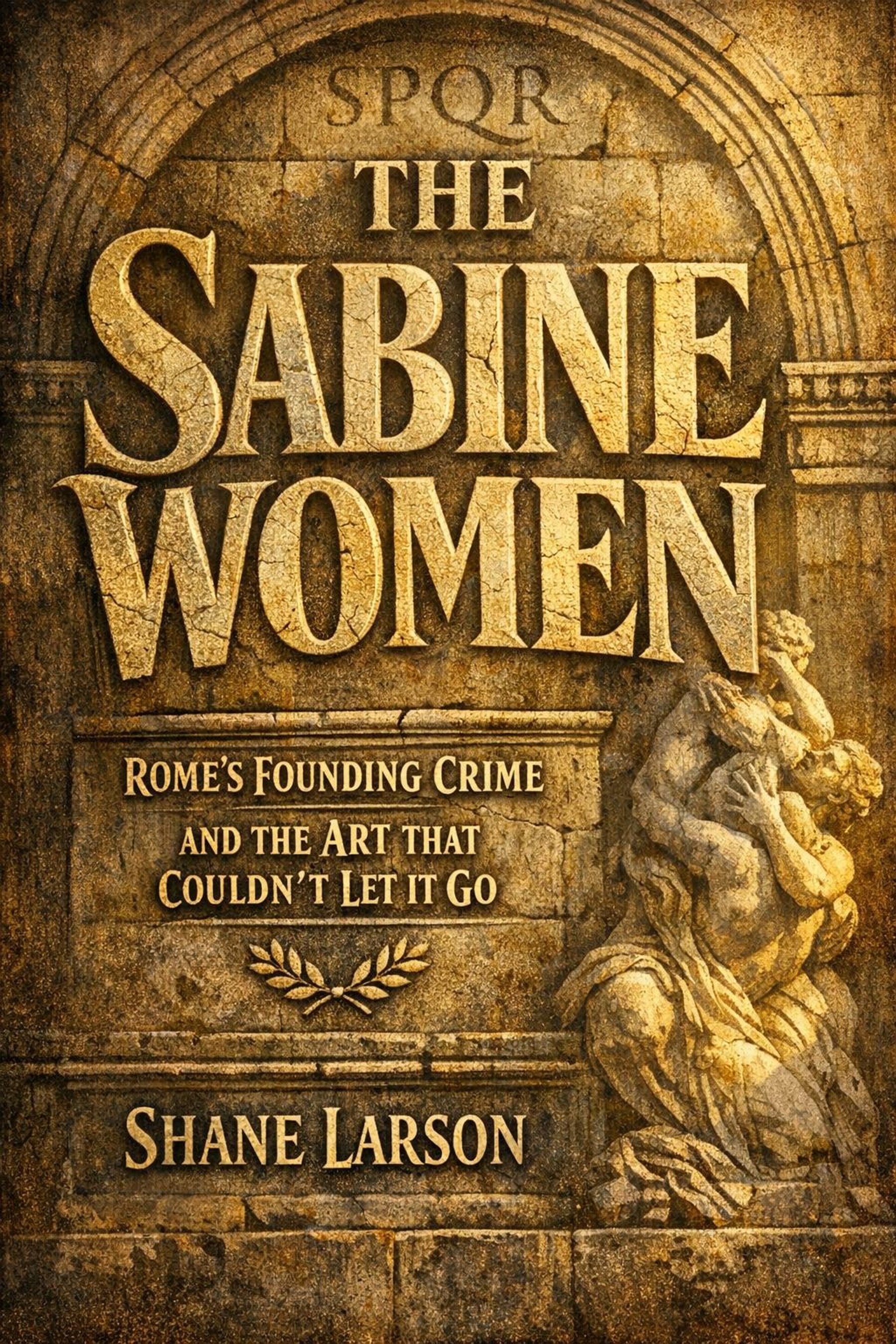
The Sabine Women
Rome's Founding Crime and the Art That Couldn't Let It Go
By Shane Larson · Rome: From Village to Empire
About This Book
A Roman bride never walked through her own front door. On her wedding night she was lifted over the threshold, feet kept clear of the sill, by attendants acting out a custom nobody could quite explain. Earlier that evening the guests had shouted a word — Talassio! — whose meaning the Romans themselves had forgotten. And at some point a bent spear point was used to part her hair. Ask a Roman writer where any of this came from and you got the same answer every time: from the night, back at the very beginning, when the first Romans seized their wives by force at a festival.
That is the strange center of the Sabine women story. Rome did not bury its founding abduction. It rehearsed it — at every wedding, for a thousand years, and said openly that this was what it was doing. Then Europe picked the story up and painted it for five centuries, in marble and oil and finally in Technicolor, and almost nobody stopped to ask why this episode, of all the scenes antiquity offers, was the one nobody could put down.
The Argument
The ancient tradition tells the story in two halves that refuse to fit together. In the first half, a new city full of fugitives and landless men — denied intermarriage rights by every neighboring town — invites those neighbors to a religious festival and takes their unmarried daughters at a signal. In the second half, three years later, the Sabine fathers finally march on Rome to take their daughters back, and the women themselves end the war: they walk into the space between the two armies carrying their children and force both sides to stop. The peoples merge. Two kings share one city. Thirty of Rome's earliest voting divisions take the women's names.
An origin story about violence against women, and the West's most durable image of peacemaking — with the same women at the center of both. That unresolved doubleness, this book argues, is exactly why the story would not die. Cultures kept reaching for whichever half they needed. Renaissance Florence needed a virtuoso block of marble and a civic ornament. Jacques-Louis David, painting his enormous canvas fresh out of a revolutionary prison, needed the women stopping the war — an amnesty argument hung before a paying public that had just survived the Terror. Picasso, working through the weeks of the Cuban Missile Crisis, needed the opposite: he took David and Poussin apart on the canvas and left the reconciliation out entirely. Hollywood, in 1954, needed a barn dance.
The first half of the book does the history properly: what Livy, Dionysius, Plutarch, Ovid, and the other late witnesses actually say, where their accounts collide, what the contested Latin word raptio does and does not assert, and what Rome's own visible discomfort — the over-explaining, the triple justifications — tells us that no single source admits. The second half follows the story out of antiquity and reads each retelling as evidence about its own moment, from wedding chests painted for Renaissance brides to the museum caption debates of the last twenty years.
What's Inside
- A demographic time bomb: why a city of asylum-seekers with no marriage rights saw a mass abduction as state policy, and what conubium — the legal right the neighbors refused — actually governed.
- Five witnesses, seven centuries late: the surviving sources compared honestly, including the earliest records Rome lost to fire and the numbers (thirty women? 683?) that never agree.
- The word itself: how Latin raptio — seizure, carrying-off — narrowed in translation into the English title everyone knows, and why neither excuse nor anachronism survives a close look at the sources.
- Tarpeia: the Roman commander's daughter who opened the citadel to the enemy and was crushed under their shields — the story's deliberate dark twin, told in the same breath in every ancient account.
- The intervention: the one moment in Rome's founding tradition where the violence is stopped by the people it was done to, reconstructed from all the versions we have.
- A wedding built from an abduction: the threshold, the shout, the spear point — the full ritual and legal machinery of Roman marriage traced back to the festival night.
- Ovid's advice: the most disturbing paragraph in the ancient record, in which a fashionable poet recommends the episode as technique — and what his exile says about the Rome he wrote it in.
- Two thousand years of looking: Giambologna's untitled marble, Poussin's geometry, Rubens, David's amnesty painting, Degas's student copy, Picasso's crisis canvases, and the MGM musical that made this the most-watched version of the story ever filmed.
Why I Wrote This
While writing the founding-of-Rome volume of my Rome series, this episode kept overflowing its chapter. What hooked me was not the abduction and not the paintings — it was Livy justifying the whole thing three separate times in a handful of paragraphs. Nobody defends a story that hard unless they know something is wrong with it. Rome kept a founding narrative it visibly could not sit comfortably with, built it into its weddings, and argued with it in public for a thousand years — and then Europe's painters did the same for five hundred more. I wanted one book that took both halves seriously: the history, examined source by source, and the art, read as a record of what each century needed the story to be.
Frequently Asked Questions
Do I need to read The Founding of Rome first?
No. This book stands alone and supplies the founding context it needs in its opening chapters. If you have read The Founding of Rome, this is the deep cut behind its central episode — the two are companions, not a sequence.
Is this an art history book or an ancient history book?
Both, deliberately. Parts One through Three are ancient history: the sources, the Latin, the war, the wedding rituals. Part Four is art history for general readers — Giambologna through Picasso — with every artwork described in prose before it is interpreted, so nothing depends on plates.
What do the ancient sources actually say about the Sabine women?
Less than you would expect, and later than you would hope: the earliest surviving account was written roughly seven hundred years after the events it describes. The book compares Livy, Dionysius of Halicarnassus, Plutarch, Ovid, Cicero, and Propertius point by point, and an appendix lays the comparison out in tables.
Does the book cover Seven Brides for Seven Brothers?
Yes. The 1954 MGM musical descends from this story through a 1926 Stephen Vincent Benét short story, and the final chapter treats it seriously as the most-watched retelling ever made — including what the barn-raising version keeps and what it quietly drops.
Are there images of the paintings in the book?
No, and that is a deliberate choice explained inside: licensing and grayscale print quality would have shortchanged the art. Every major work gets a full prose description before discussion, and a catalogue appendix lists roughly forty works with artist, date, and current location so you can look up each one.
If You Liked This, You Might Like
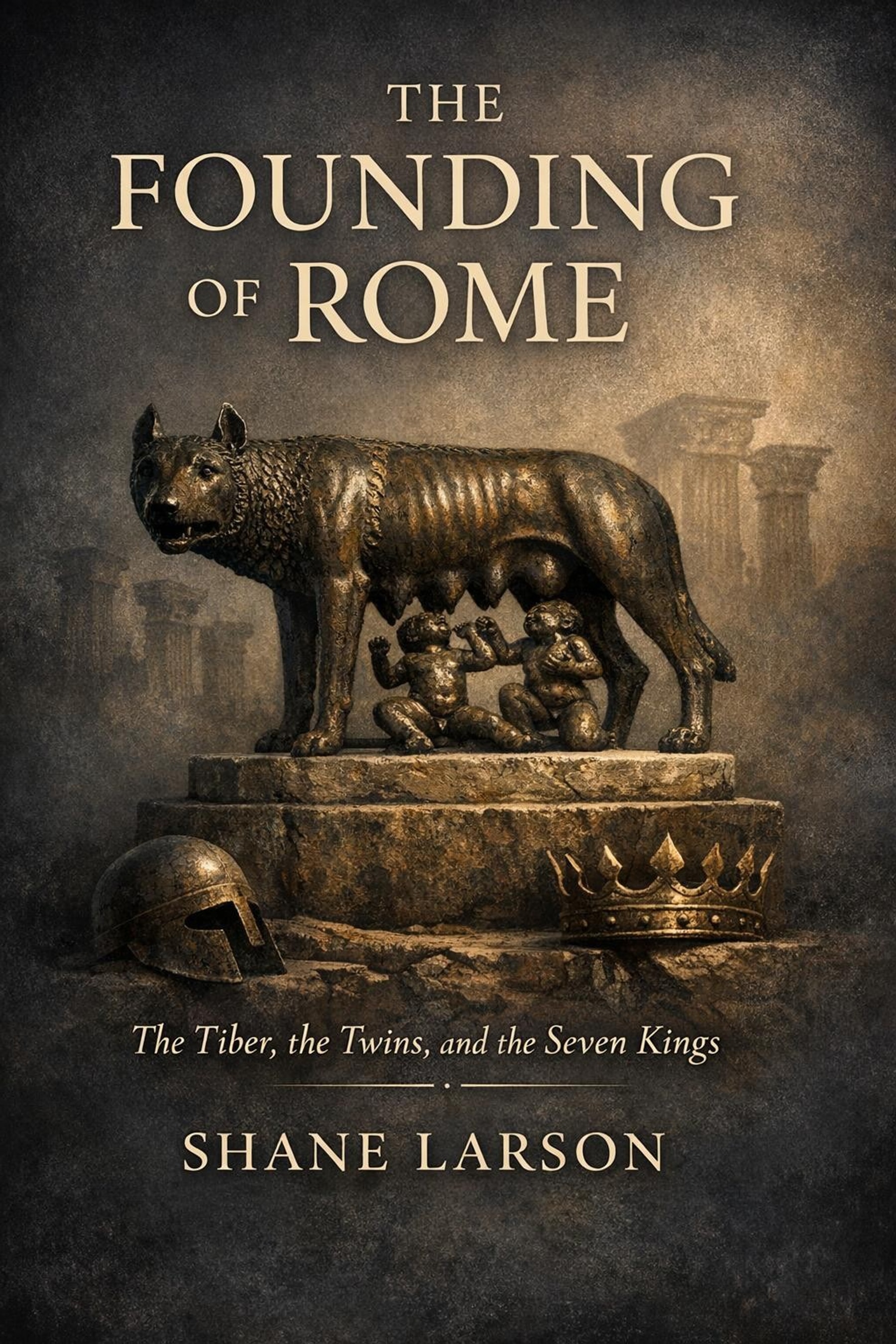
- The Founding of Rome — the companion volume: the full story of Rome's beginnings, in which the Sabine episode first appears in its place among the kings.
- The Etruscans — the neighbors who taught early Rome half of what it knew, from the other side of the same Iron Age Italy.
- Spartacus — another single episode Rome could not tell honestly, and a study in how a civilization curates its own memory.
One story, two thousand years of people unable to look away — this book explains what they were each looking at. A companion volume to the Rome: From Village to Empire series.
Included with Kindle Unlimited — read it free if you're a member.
New Ancient History releases and free chapters — no spam, unsubscribe anytime.
More in Rome: From Village to Empire
View series →