You Do Not Have to Destroy Evidence. You Can Bury It in Copies.
August 5, 2026 · 4 min read
The traditional way to deal with a document you do not want read is to destroy it. This has always been the weak method. Destruction leaves gaps, gaps get noticed, and the fact that something was suppressed becomes evidence in itself.
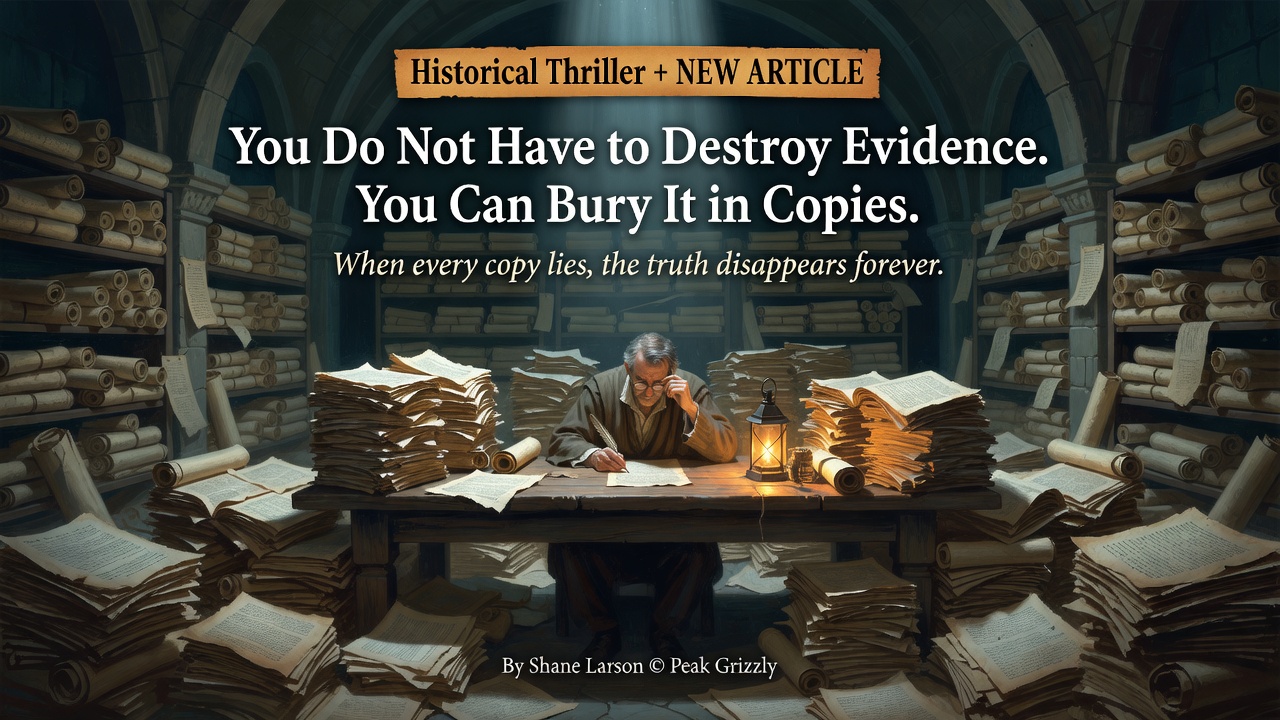
The better method is saturation. Do not remove the document. Produce a thousand near-perfect copies of it, each slightly wrong, and release them into the market.
Now the original still exists and means nothing. Anyone who cites it is citing something indistinguishable from ninety-nine fakes. The scholarship stalls, the provenance becomes unrecoverable, and no one has to burn anything.
That is the premise of The Tyre Manifest, and it is not a device I invented for the plot.
The Antiquities Market Already Works This Way
Forged cuneiform tablets are a genuine and long-standing problem. The material is clay, the techniques are documented, the market pays well for anything with a plausible story, and the supply of authentic unprovenanced material is limited in exactly the way that creates an incentive to manufacture more.
The most publicised recent case involved the Museum of the Bible, which had acquired sixteen fragments presented as pieces of the Dead Sea Scrolls. Independent analysis published in 2020 concluded that all sixteen were modern forgeries — made on genuinely ancient leather, which is the detail that matters, because the forgers had anticipated the obvious test.
That is the whole dynamic in one example. Authentication looks at the substrate; forgers obtain an old substrate. Authentication moves to the ink; forgers adjust the ink. Every published verification method is a specification for what a forgery has to survive.
And the institutions being deceived were not careless amateurs. They were well-funded, motivated to be right, and using the standard checks.
The Trap in Publishing Your Methods
The plot of the novel turns on a mistake the protagonist made in the previous book, and it is the mistake I find most interesting.
She won. She exposed a forgery operation and, believing in transparency, published the verification systems openly so that anyone could authenticate tablets for themselves.
That is the correct instinct and it had a predictable consequence. A published test is a training target. Once a forger knows precisely what will be measured, they can iterate against it — produce, test, adjust, repeat — until the output passes. Open verification methods make honest scholarship possible and make sophisticated forgery achievable, and there is no version of the trade-off that avoids this.
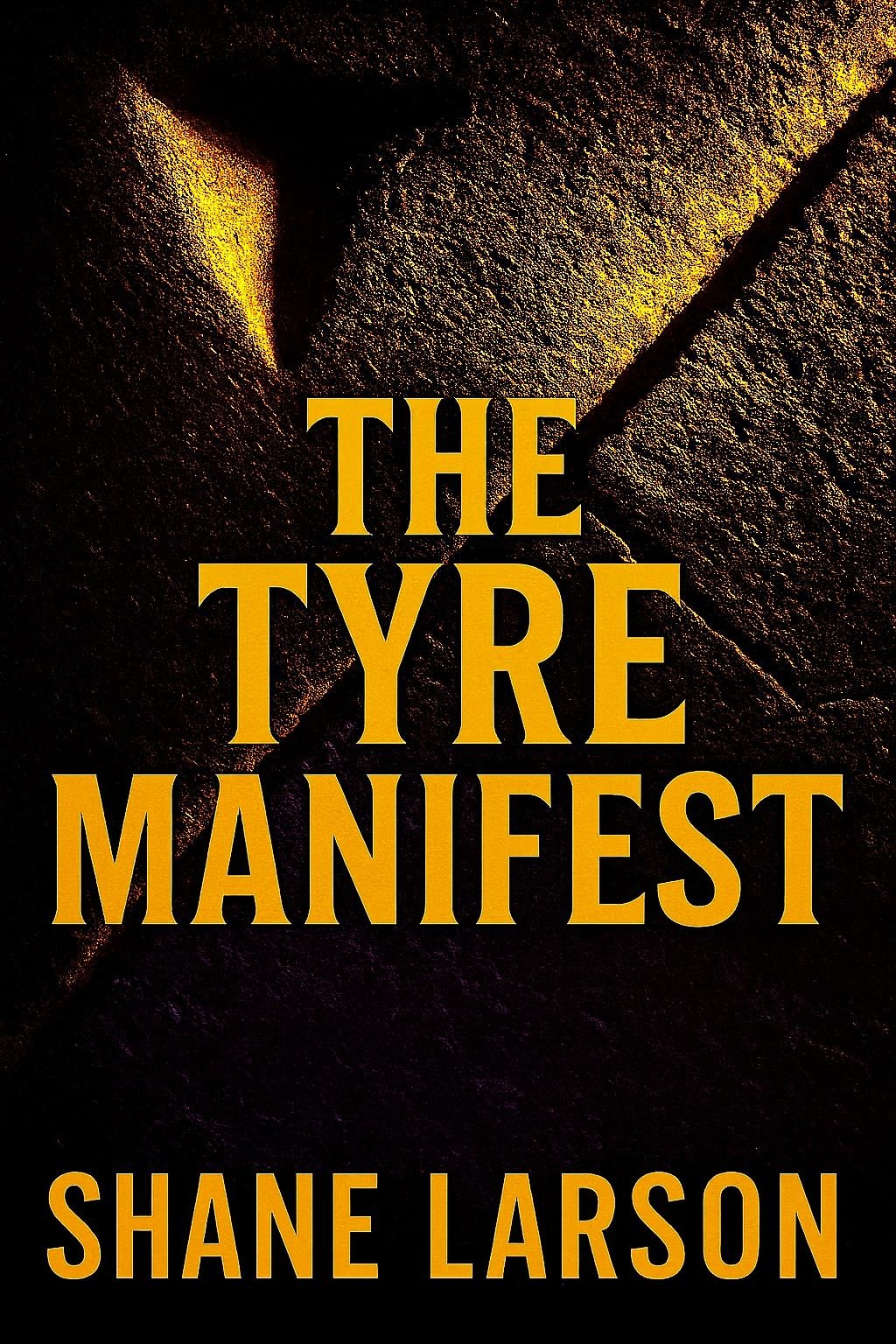
The Tyre Manifest
Anyone who has worked on fraud detection, spam filtering, or content authenticity will recognise the shape. Publish the detector and you have described the thing to defeat. Keep it secret and you have asked everyone to trust an authority they cannot check. Both options are bad and one of them has to be chosen.
Why an Accountant Is the Right Protagonist for the Ancient Half
The book runs two timelines, and the older one belongs to a woman in Iron Age Tyre who keeps ledgers.
That choice is deliberate, and it comes from what actually survives from this world. The Phoenicians wrote on papyrus, which does not survive the Levantine climate, so the civilization that gave the world the alphabet left almost no writing of its own. What tends to survive in the ancient Near East generally is the administrative material — clay, fired hard, recording transactions.
Which means the people we can actually hear across three thousand years are disproportionately the ones who counted things. Not kings, not poets. Bookkeepers.
And a ledger is a surprisingly good place to hide a message. It is a format nobody reads for meaning, in which a small deviation from expected values is invisible unless you are checking arithmetic that nobody has any reason to check. A sequence embedded in accounts is a message written in the one genre that guarantees indifference.
That is the conceit the whole novel hangs on: a woman balancing books in Tyre, encoding a reply into columns of numbers, on the correct assumption that the numbers would outlast everything else she could have written.
What the Book Is Actually About
Verification, and what happens to a society that loses the ability to do it.
The antagonist's strategy does not require anyone to believe the forgeries. It only requires that the truth become unprovable. Once every claim is met with a plausible counter-artifact, the practical result is not that people believe the wrong thing — it is that they stop believing anything is knowable, and go with whichever version suits them.
That is a much more effective outcome than deception, and it is cheaper.
The reason to set it among cuneiform tablets rather than in a newsroom is that the ancient material makes the stakes legible. Nobody has a partisan position on Phoenician accounting practices. It is easier to see clearly what saturation does to truth when the truth in question is three thousand years old and belongs to a woman whose name nobody remembers.
The Tyre Manifest: A Nineveh Variant Thriller runs two timelines — a race against a concrete pour on the Tyre waterfront, and a ledger-keeper in Iron Age Tyre writing a reply she knew would take thirty centuries to arrive.
The Tyre Manifest
New posts and releases, straight to your inbox. No spam, unsubscribe anytime.