The Capital of the World's First Empire Has Never Been Found
August 5, 2026 · 6 min read
Around 2334 BC, a man we call Sargon took the city of Kish, then took the rest of Sumer, then kept going. What he assembled — reaching from the Persian Gulf toward the Mediterranean — is generally counted as the first empire in human history.
Its capital was called Akkad. It gave its name to the Akkadian language, which would be spoken and written across the Near East for the next two thousand years.
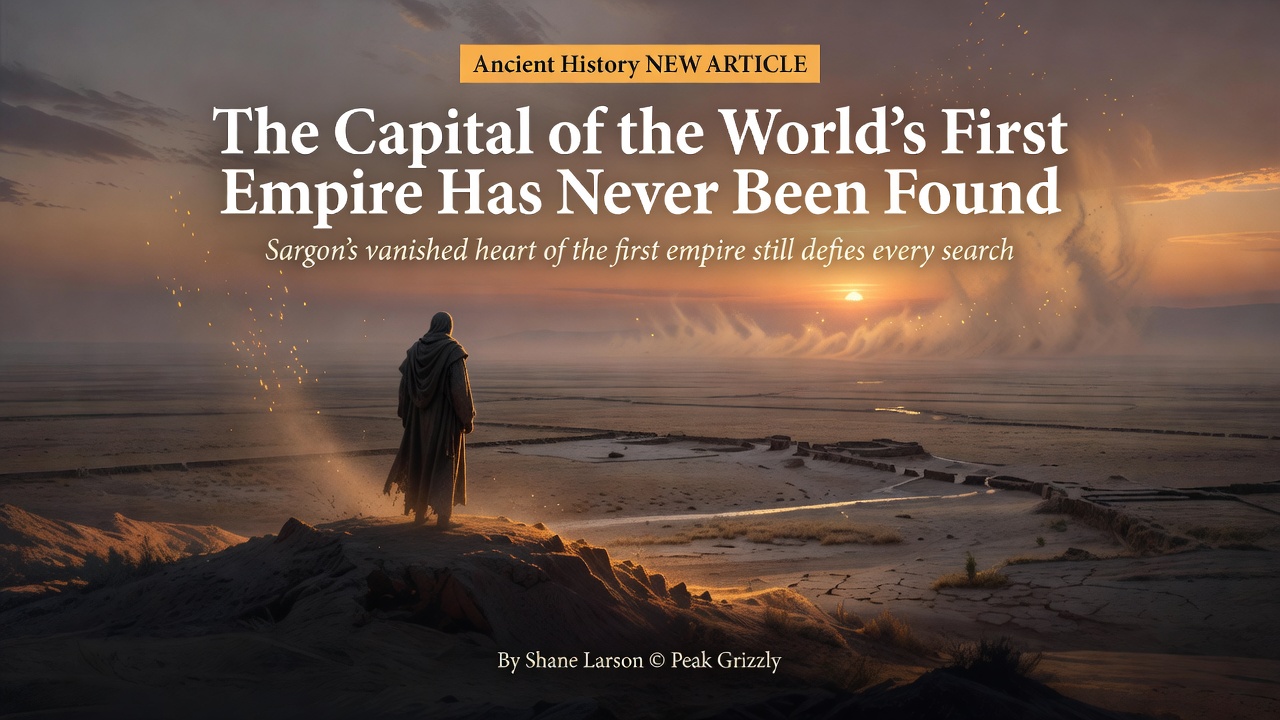
Nobody has ever found it. Despite a century and a half of excavation across Mesopotamia, the location of the capital of the first empire remains unknown — somewhere in central Iraq, probably near where the Tigris and Euphrates run closest together, and that is as precise as anyone can be. Surveys have turned up suggestive mounds and stray Akkadian-period sherds, yet none have produced the dense concentration of royal building inscriptions, palace foundations, or administrative archives that would confirm the site. The rivers have shifted repeatedly since antiquity, and modern towns and farmland now overlie much of the likely zone, so the search remains a matter of narrowing probabilities rather than digging the obvious candidate.
We know an enormous amount about what Akkad did and almost nothing about where it was.
Empire Was a Technology, and It Had to Be Invented
Before Sargon, Mesopotamia was city-states. Uruk, Ur, Lagash, Kish, Umma — each with its own ruler, its own patron god, its own territory. They fought constantly, and the winner of any given war extracted tribute and went home. Conquest meant defeating a city, not absorbing it. The pattern is visible in the Sumerian King List and in the early royal inscriptions, where victories are tallied as one-time events rather than permanent acquisitions.
What Sargon did differently was refuse to go home.
The distinction sounds administrative and is the whole thing. Holding territory permanently requires solving a set of problems that raiding does not, and Sargon's answers became the template that every subsequent empire in the region would use.
A standing army. Previously, armies were levies — farmers called up seasonally, who had to return for the harvest. A permanent professional force can campaign year-round and can garrison. Sargon's inscriptions boast that 5,400 men ate before him daily, which is a statement about payroll rather than appetite: he is telling you he supported a professional military as a permanent institution. Without that core, any attempt to station troops in distant provinces would collapse the moment the seasonal levies went home.
Appointed governors instead of defeated kings. The older practice was to leave a beaten ruler in place under tribute obligations, which reliably produced rebellion the moment attention wandered. Sargon replaced local rulers with his own men — Akkadians, loyal to him personally rather than to the city they administered. This is the invention of the provincial governor, and it is the single most consequential piece of the design. The change removed the local legitimacy that had previously allowed quick uprisings; it also created a class of officials whose careers depended on the center rather than on the cities they oversaw.
A common administrative language. Akkadian became the language of imperial administration alongside Sumerian, which meant records, orders, and officials could move between provinces. An empire runs on the ability of a document written in one place to be understood in another. The shift is visible in the sudden appearance of Akkadian-language tablets in cities that had previously used only Sumerian, allowing tax assessments and labor orders to travel without constant translation.
Standardised weights and measures. Unglamorous and essential. Standardisation makes taxation calculable, trade disputes resolvable, and tribute verifiable across territories that previously used different systems. The empire's adoption of uniform shekel weights and capacity measures appears in both royal inscriptions and the archaeological record of seals and balance weights found at sites across the conquered region.
Religious integration. Sargon installed his daughter as high priestess of the moon god at Ur — the most important religious office in the most prestigious Sumerian city, held by an Akkadian, appointed by the king. This is soft power executed with complete clarity about what it was for. By placing a family member in a role traditionally reserved for local elites, the king tied one of Sumer's most ancient cults directly to the ruling house while still respecting its prestige.
That daughter was Enheduanna, and she wrote hymns that survive. She is, by most counts, the earliest author in human history known by name — the first person we can identify as having composed literature, several centuries before Gilgamesh was written down. She was appointed as an instrument of imperial policy and turned out to be a poet. Her surviving works include temple hymns that praise both Sumerian and Akkadian deities in the same compositions, demonstrating the same blending of traditions that the empire pursued politically.
What the Empire Bought and What It Cost
The Akkadian empire lasted roughly a century and a half. Sargon himself reigned an extraordinarily long time — the sources say fifty-six years — and his inscriptions describe near-constant campaigning and repeated revolts. Later copies of his victory stelae list campaigns against Elam, the mountain tribes to the east, and repeated expeditions into northern Syria, each one framed as the suppression of an earlier conquest that had slipped out of control.
That last detail is worth noticing. The empire was not a settled possession. It was a thing that had to be reconquered continually, and the records of even its most successful rulers are records of putting down rebellions. The administrative machinery made permanent rule possible; it did not make it easy, and the cost of holding the provinces stayed high for the entire life of the state. Each new revolt required the standing army to march, the governors to reassert authority, and the scribes to issue fresh orders in Akkadian.
The end came in the reign of Sargon's descendants, and the Mesopotamians explained it theologically. The Curse of Akkad, written later, attributes the fall to divine punishment after a king desecrated a temple — the gods withdrew, the rains failed, the empire ended. The text describes fields gone barren and canals running dry, a collapse framed as the withdrawal of divine favor from the capital itself.
Modern evidence points at the same event from another direction. Sediment cores from across the Near East record an abrupt and severe aridification around 2200 BC, now generally called the 4.2 kiloyear event. Settlement patterns shift, northern agricultural areas are abandoned, and populations move south. The same layers that show reduced rainfall also contain evidence of increased dust and lower river discharge, conditions that would have cut grain yields across the irrigation-dependent south while simultaneously weakening the northern provinces that supplied troops and tribute.
The Akkadians knew something enormous had happened to them. They reached for the explanation available in their framework, which was divine anger. The physical record suggests a drought severe enough to break an economy that had been operating with no margin. Both accounts are describing the same collapse.
Why the Missing City Matters
That we cannot find Akkad is not merely an unresolved puzzle. It is a reminder about the shape of what we know.
Nearly everything about the first empire comes from texts — royal inscriptions, later copies, administrative tablets from other cities, literature written centuries afterward. We have the empire's own account of itself, and a great deal of secondary material, and no capital to check any of it against. The difference matters because palace archives would contain the day-to-day correspondence between the king and his governors, the actual tax rolls, and the internal debates over policy that the public inscriptions never mention.
Somewhere under the alluvium of central Iraq, probably beneath metres of river silt or a modern settlement, is the administrative heart of the state that invented the idea of an empire. Its palace archives would rewrite the period.
The first empire in history is, in the most literal sense, still lost.
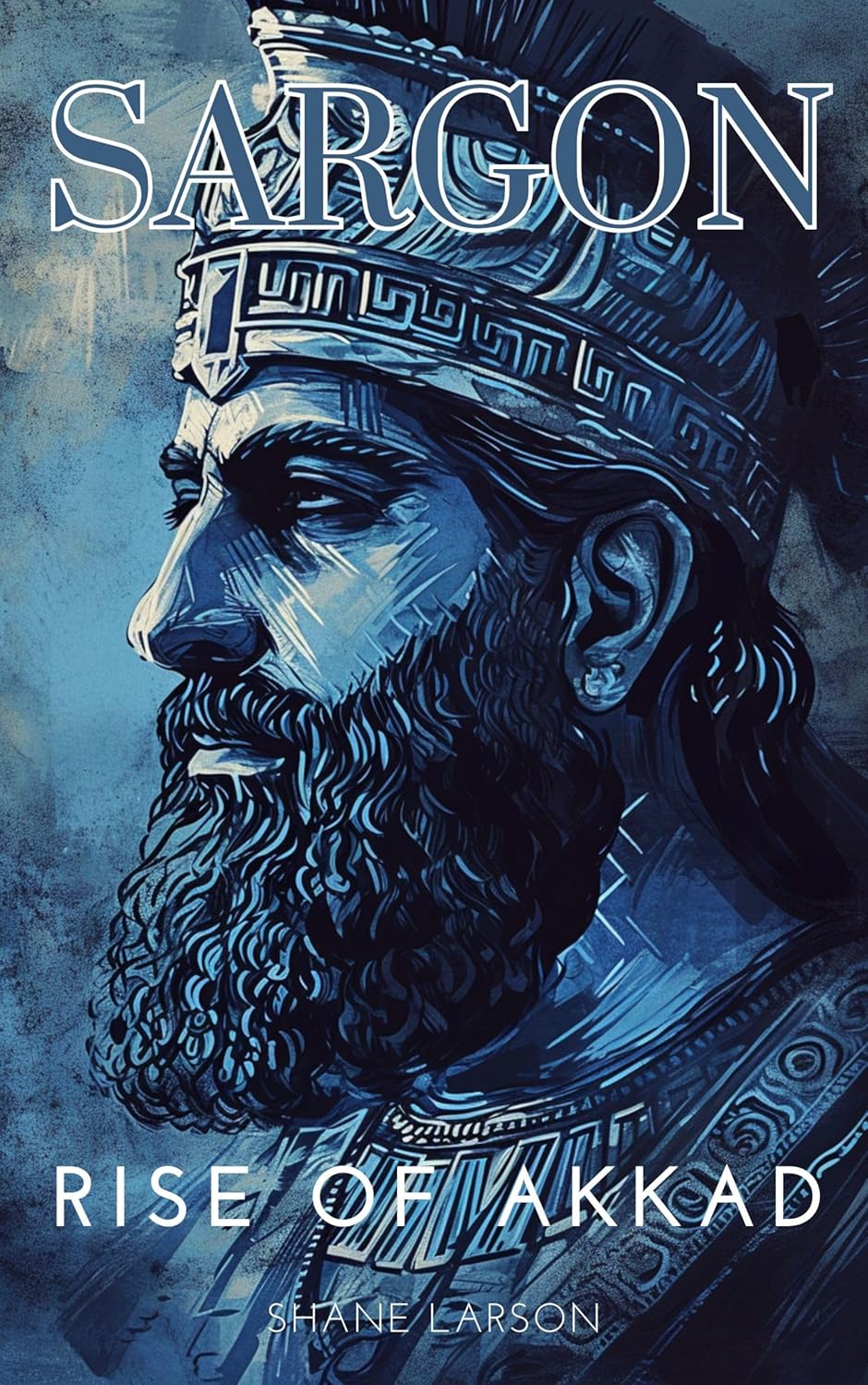
Sargon: Rise of Akkad covers the world he came from, the ascent, the campaigns, the administrative machinery that made permanent conquest possible, the culture and economy of the empire, and the collapse that ended it.
New posts and releases, straight to your inbox. No spam, unsubscribe anytime.