Egypt Recorded Two Runaway Workers Crossing Its Border. It Never Recorded the Exodus.
November 26, 2026 · 6 min read
Somewhere near the end of the thirteenth century BC, an Egyptian officer on the eastern frontier wrote a short report about a bad few days. He had been sent out from the palace, in the evening, after two workers who had run away. He followed them east to a walled enclosure in a district called Tjeku, where he was told they had gone south. He pushed on to a fortress, and there a man from the desert told him the two had already slipped past the wall north of a watchtower named for the king. He closes by asking his fellow officers to write and tell him everything: who found the tracks, which patrol was on watch, how many men were sent after them.
That is all we know. We do not know the runaways' names, where they came from, or whether they were caught. The report survives because someone, probably a trainee scribe, copied it into a collection of model letters that is now in the British Museum under the name Papyrus Anastasi V.
It is a very small document. It is also one of the most argued-over pieces of paper in the whole debate about the Exodus, because of what it shows and because of what it sits next to.
What the papyrus shows
Take the plain facts first. In the reign of Seti II, about 1200 BC, Egypt's eastern border was a controlled line. There were forts along it, there were patrols, and there were desert scouts who read tracks. People did run away from Egyptian service, at least in ones and twos, and they ran east into Sinai. When they did, an officer was sent after them, and the chase was written down.
The place names matter as well. Tjeku is the Egyptian name for the Wadi Tumilat, the long valley that runs from the eastern Delta toward the lakes of the isthmus. Many scholars connect the name with the biblical Succoth, the first stopping place on the route out of Egypt in the Book of Exodus. The watchtower in the report is a migdol, a Semitic word for a tower that the Egyptians had borrowed, and a place called Migdol appears on the same biblical route a few verses later.
A companion papyrus in the same collection, Anastasi VI, comes from the eighth year of the pharaoh Merneptah. It is a border official's report that a group of Shasu, herdsmen from Edom, had been allowed through the fort at Tjeku to the pools of Per-Atum to keep themselves and their flocks alive. Per-Atum, the "house of Atum", is the name behind the biblical Pithom, one of the two store-cities the Israelites are said to have built.
A third document, Papyrus Leiden 348, belongs to the reign of Ramesses II. It is an order to issue grain rations to the soldiers and to the 'Apiru who are dragging stone for a great pylon of the king. The 'Apiru were a class of outsiders and dependants known all over the ancient Near East. Whether their name has anything to do with the word "Hebrew" has been argued for more than a century without a settled answer.
So within a few decades around 1200 BC, Egyptian scribes recorded foreign labourers hauling stone for Ramesses, Semitic herdsmen crossing the eastern border with permission, and two workers crossing it without.
What it does not show
None of those documents mentions Israel, Moses, plagues, or a mass departure. That is the other plain fact, and it has to be given the same weight.
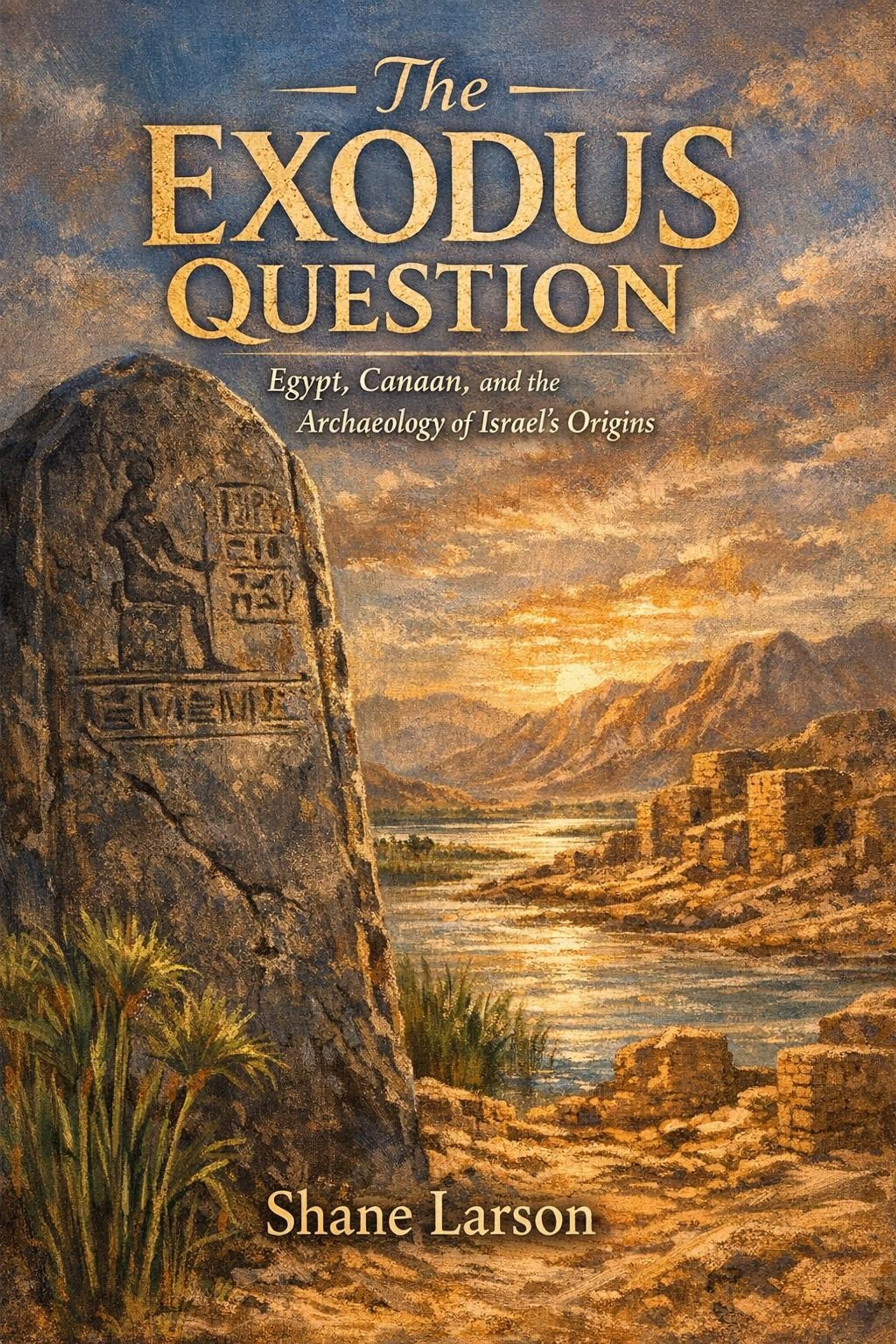
The Exodus Question
Egypt wrote a great deal down. It recorded the rations of work gangs and the days individual workmen took off. If its frontier officers filed a report on two runaways, a reader may fairly ask why no report survives of thousands of people leaving at once, with their livestock, pursued by the king's chariots. For many historians that silence is the single strongest reason to doubt that an exodus on the biblical scale took place.
The reply is also fair, and it comes in two parts. First, the reports we have are an accident of survival. Anastasi V and VI are school copies that happened to be preserved in the dry south. The working archives of the eastern Delta, where any original report would have been filed, were written on papyrus and kept in one of the wettest parts of Egypt, and essentially nothing of them remains. Second, Egyptian royal inscriptions were not written to record setbacks. A king's monuments told of his victories. The loss of a labour force and a chariot unit is not the kind of event a pharaoh carved on a temple wall.
Both sides of that exchange are true at once. The silence is real evidence. It is also weak evidence, because we would expect much the same silence whether the event happened or not.
What both sides do with it
Scholars who think the Exodus story preserves a real memory point to the runaway report as a miniature of the narrative: unfree workers, an escape eastward through Tjeku, pursuit by an officer of the crown, a tower called Migdol. They do not claim it is the Exodus. They argue that the story's setting is authentic, that its writers knew how the frontier worked and what the places were called, and that this is easier to explain if a real escape lies somewhere behind the tradition. Some go further and suggest that the event was small, a few hundred or a few thousand people, which is a scale Egypt might well never have recorded and Sinai would never show.
Scholars who doubt a historical exodus read the same papyrus the other way. Two runaways are two runaways. The frontier forts show how hard it would have been for a large body of people to leave unnoticed or unopposed, and the place names in Exodus could have been known to a writer centuries later, since several of them were still in use. On this reading the papyri show what ordinary movement across the border looked like, and the biblical account is something else: a founding story written long afterwards, drawing on a general memory of Egypt.
Each reading is held by serious people, and neither can be ruled out from this one document.
Why a small document matters
It would be easy to dismiss Anastasi V as trivia. I think it is the right place to begin, because it shows the shape of the whole problem in a few lines. The setting of the Exodus story is well attested: Semitic labourers in the Delta, a guarded frontier, a road east through Tjeku, people who wanted to leave and sometimes did. The event itself is not attested at all. Everything in the debate lies in the space between those two statements, and where a reader ends up depends on how much weight an authentic setting can bear.
That is the question my book *The Exodus Question* works through, from the stele on which Merneptah names Israel to the hill villages of Canaan, with each side's case made as its own defenders would make it. It does not end with a verdict. It ends with a list of what is established, what is probable, and what nobody knows, and the two runaways of Tjeku are on that list under the first heading. They existed. Somebody went after them. More than three thousand years later, we still do not know whether he caught them.
The Exodus Question
New posts and releases, straight to your inbox. No spam, unsubscribe anytime.