Istanbul, Ephesus, Aphrodisias and Pamukkale in 13 Days: The Route We Took Through Türkiye
November 1, 2026 · 7 min read
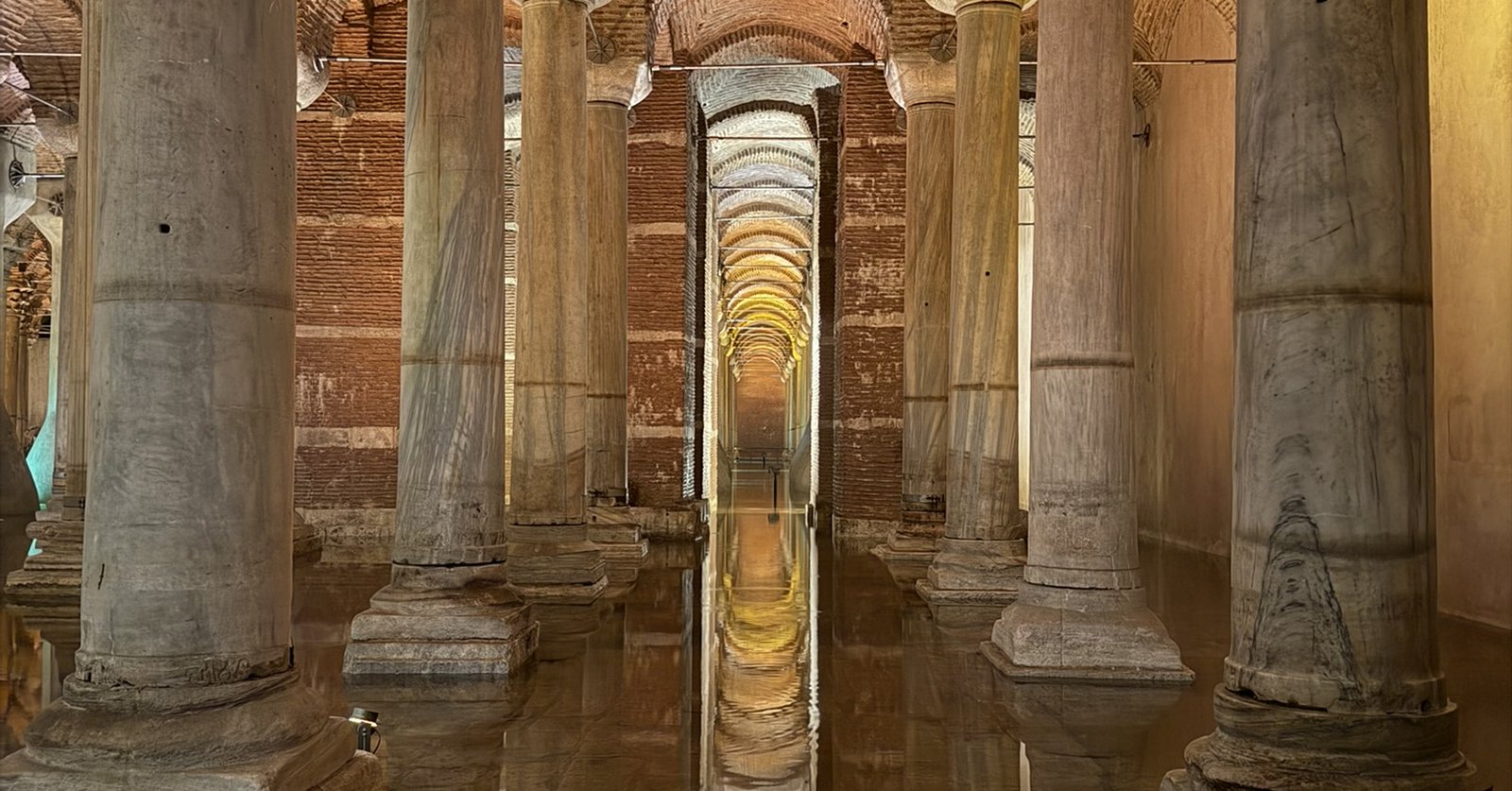
A little before eleven on the morning of 13 October, my wife and I walked down a flight of stairs a few steps from Hagia Sophia, and the noise of Istanbul disappeared behind us. At the bottom was the Basilica Cistern: a sixth-century reservoir, a hall of marble columns standing in still water, lit from below so that every column glows amber and has a twin hanging upside down in the reflection. We had seen photographs. They did not prepare us for it.
That was day three of a thirteen-day trip through Türkiye, and it set the tone for the rest of it. This post is the route we took, day by day, with what worked and what we would tell anyone planning the same loop. Everything here comes from the trip itself: the photographs, with their times and places, are the record of what actually happened, and that record became a book.
The shape of the trip
The route is a simple loop that covers two very different Türkiyes:
- Istanbul, 11–15 October. Topkapı Palace, Hagia Sophia, the Blue Mosque and the Hippodrome, the Basilica Cistern, the Grand Bazaar, Süleymaniye, and a trip across the Bosphorus to Kadıköy.
- Selçuk, 16–17 October. A flight south to İzmir, a rental car, and the hill of Ayasuluk with the Basilica of St John, plus the Ephesus Museum and an afternoon on the coast at Kuşadası.
- Ephesus, 18 October. The ancient city itself.
- Aphrodisias, 19 October. Inland into the hills of ancient Caria.
- Pamukkale and Hierapolis, 20 October. The white travertine terraces and the Roman spa town above them.
- Back to Istanbul, 21 October onward. The car went back at Denizli, and we flew north for the last days of the trip.
I drove the whole Aegean section myself. A car gave us the freedom to arrive early, stay late and change plans when the weather changed, which it did.
Istanbul: plan for more than you think
We gave Istanbul five days and could have used more. The old city stacks three empires on top of each other. In a single day we walked from the private rooms of the Ottoman sultans in the Topkapı Harem into the galleries of Hagia Sophia, which was a cathedral for nine hundred years before it became a mosque, and then across the old Roman racecourse to the Blue Mosque.
A few things we would tell a first-time visitor:
Go up into Hagia Sophia's galleries. The upper galleries hold the great Byzantine mosaics, among them the Deesis, Christ between the Virgin and John the Baptist. Up close, the faces are built from tiny tilted cubes of glass and stone so carefully graded that from a few feet away they look painted. Seeing them was one of the most moving moments of the trip.
Do the Cistern early. We were there before eleven, and the quieter it is, the more the silence and the reflections work on you. The columns are usually counted at 336, in twelve rows, and they do not match: the builders took columns and capitals from older buildings, so the place is a museum of the ancient city that nobody meant to build. Look for the two Medusa heads at the far end, one set on its side and one upside down.
Expect the "where are you from?" routine. Around the bazaars and the big sights, everyone seems to be selling something that looks like a luxury brand and is not. The friendly opening question is usually the start of a sales pitch. It is harmless, but it helps to know the script.
Take the metro to Asia. We went to Kadıköy, on the Asian side, by metro under the Bosphorus, tapping through the gates with an İstanbulkart, the rechargeable card that works on the trains, trams, buses and ferries. It was quick, clean and a lot of fun, and Kadıköy is a good antidote to the tour-group crush of Sultanahmet.
Weather happens. A huge storm swept over Istanbul while we were there and flooded part of the Grand Bazaar while we were inside it. Around us, people carried on selling, sweeping and stepping around the water. There is no better word for it than bizarre.
Marble, Light & Water
And eat simply. We had Turkish çay at every meal, in small tulip-shaped glasses. The döner and kebap were wonderful, and so was a small shop near our hotel that served chicken with rice pilaf and vegetables.
Selçuk: the base for Ephesus
Selçuk is a small town, and it is the right place to stay for Ephesus. Its hill is crowned by the walls of Ayasuluk Castle and the ruins of the great church the emperor Justinian built over the traditional tomb of St John the Apostle. The Ephesus Museum in town holds many of the faces and statues found at the site, and it is worth seeing before you walk the ancient city, not after.
Rain on the coast moved our Ephesus day back by one. Build a spare day into this part of the route if you can.
Ephesus: arrive at opening time
We reached the Library of Celsus at about nine in the morning, before the crowds, and spent nearly four hours walking the city: up to the high end first, then down Curetes Street past the Temple of Hadrian, through the Terrace Houses with their painted rooms and mosaics, and back to the library at noon.
By eleven, the street was full from side to side with people moving downhill, and with the temperature in the seventies Fahrenheit and the marble throwing the heat back, it was the warmest and busiest hour of the visit. If you can only change one thing about an Ephesus visit, go early.
Aphrodisias: the one people skip
Aphrodisias, a city named for the goddess of love and built from the marble of its own quarries, gets a fraction of Ephesus's visitors, and that is part of its magic. It has the Sebasteion with its relief panels, the rebuilt Tetrapylon gate, the Temple of Aphrodite, and the best-preserved stadium of the ancient world.
We spent our anniversary there. It was the third anniversary of our first date, and the city of Aphrodite seemed like the right place for it. The best moment of the whole trip came there: we walked the top rim of the stadium all the way around, along one side, around the curved end, back along the other side, with the whole arena opening beneath us. It takes a while. Do not hurry it.
Pamukkale: bare feet and a long view
At Pamukkale, hot springs have spent thousands of years building a hillside of white travertine terraces. The rule on the white stone is simple: no shoes. Everyone climbs barefoot, with their shoes in their hands. We waded the terraces but did not swim in the ancient pool at the top.
Above the terraces lie the ruins of Hierapolis, a Roman spa town with a theatre whose stage building has been rebuilt stone by stone. Walk past the theatre and out across the plateau. The crowds thin out quickly, and far fewer people make it out there than wade the terraces below.
How we planned it
We planned the whole trip with the help of AI tools and kept asking them questions on the road: what is this building, what does this sign say, what is on this menu. The plan was a starting point, not a script. The weather moved things, and the photographs, not the plan, record what really happened.
The book
Nearly fifteen hundred photographs came home with us. When we sat down to sort them, they turned out to tell a story, so I wrote it.
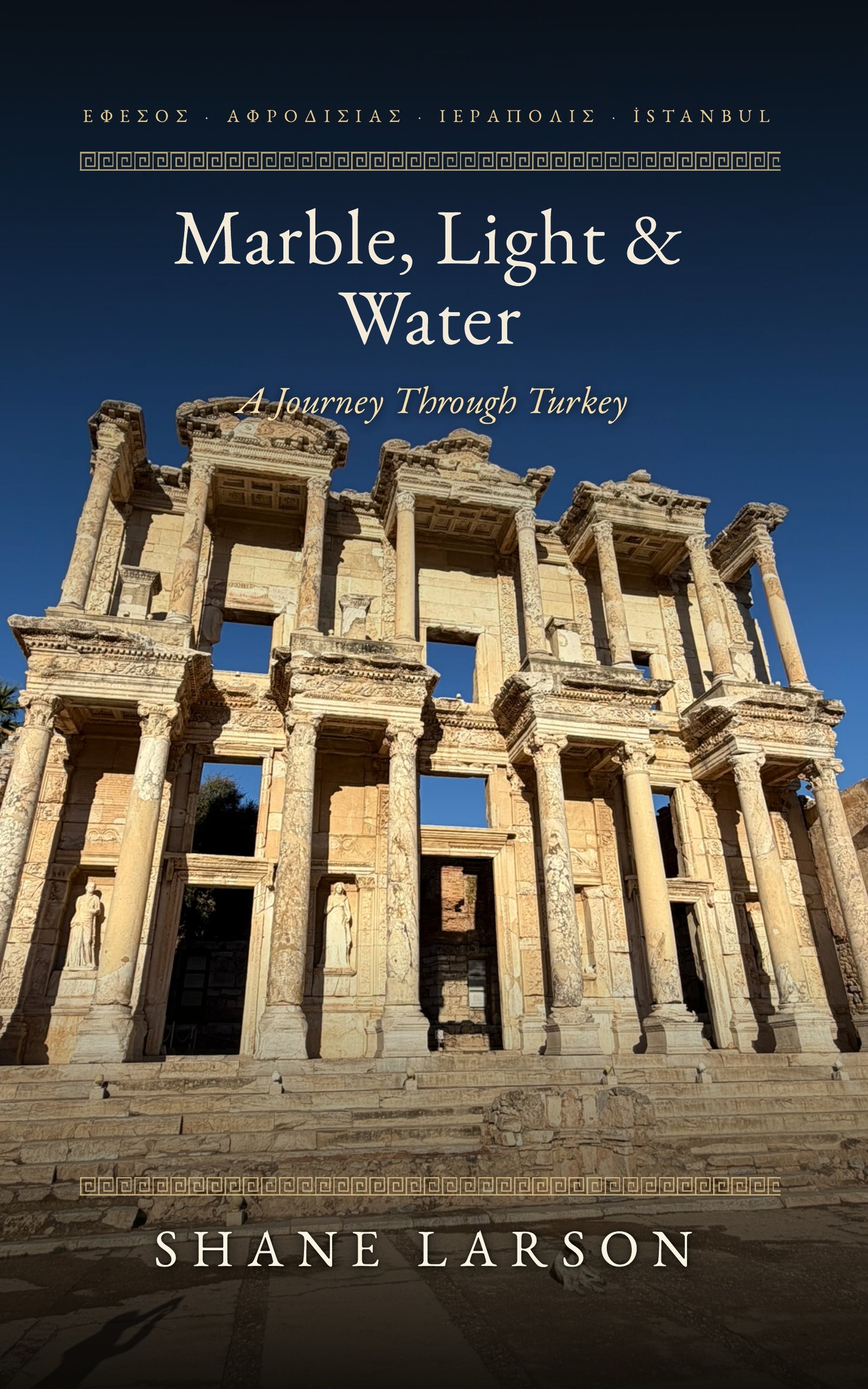
*Marble, Light & Water: A Journey Through Turkey* follows this route in fourteen chapters and about 250 photographs. Each chapter covers one place, usually in one day, arranged hour by hour in the order we walked it, with the history drawn from the information panels at each site and museum. It includes a route map, a historical timeline and an index.
It is not a guidebook. It is a record of what two curious travellers saw over thirteen days, for anyone who has walked these places, is planning to, or would like to walk through them for a while from an armchair. The ebook is available now on Kindle and in Kindle Unlimited, with the paperback and hardcover to follow.
Marble, Light & Water
New posts and releases, straight to your inbox. No spam, unsubscribe anytime.