Why I Paid Off $122,000 in Debt Starting With the 0% Interest Loan (And Why It Was the Right Call)
March 21, 2026 · 5 min read
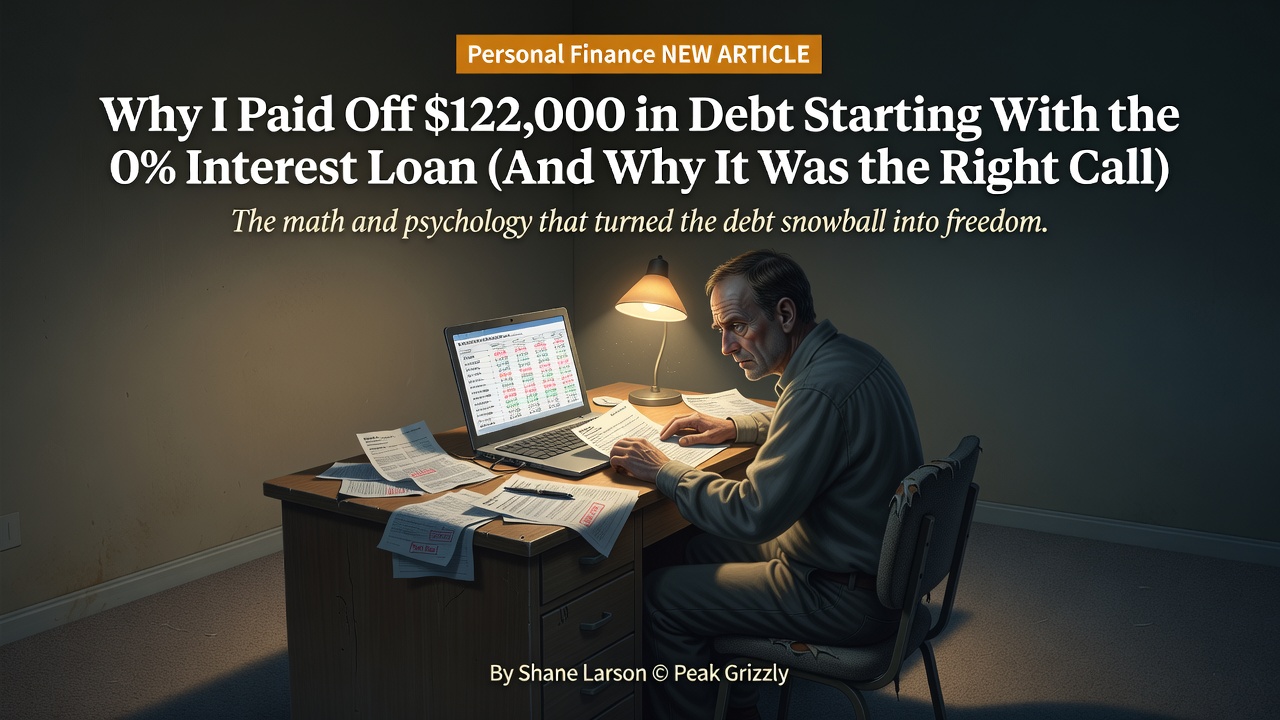
In fall 2018, my marriage ended and I sat down with a blank spreadsheet for the first time in years. Not the rough estimates I had been telling myself. The real numbers. Every credit card. Every loan. Every balance to the penny.
The total was $122,000 in consumer debt. A $42,000 truck loan, $25,000 in credit cards at 15-22% interest, $20,000 in student loans, a $15,000 HELOC, a $10,000 furniture loan, and a $10,000 personal loan. Minimum payments: $2,292 per month. That is what it cost just to keep the debts from growing. Just to tread water. Just to stay in exactly the same hole.
I was a software engineer pulling a solid salary. I owned two properties. On paper, I looked like the picture of middle-class success. In practice, I was one bad month away from not covering my obligations. Net worth and cash flow are two very different things, and you cannot pay your credit card bill with home equity.
After staring at the spreadsheet long enough, I picked the debt snowball method and started with the $10,000 furniture loan — the one with 0% interest. The debt avalanche crowd would call this the worst possible choice. They are mathematically correct and practically wrong.
The Psychology That Math Cannot Capture
There are two ways to pay off debt, and the internet will never stop arguing about which is better. The avalanche says pay the highest interest rate first. The snowball says pay the smallest balance first. The avalanche is mathematically optimal. The snowball is psychologically optimal.
The difference in total interest paid between the two methods is typically somewhere between $500 and $5,000 over the life of the payoff. That is real money. But it is not the difference between success and failure. The difference between success and failure is whether you stick with the plan for two to three years without giving up. That is a psychological question, not a mathematical one.
Dave Ramsey, who popularized the snowball, puts it bluntly: "If we were doing math, we wouldn't have gotten into debt in the first place." He is right. My $122,000 was not a math error. It was years of emotional decisions — buying things to feel better, borrowing because it was available, avoiding the balance sheet because looking at it was uncomfortable. The solution had to address the same emotional machinery that created the problem.
I needed wins. I needed to feel progress. I needed the dopamine hit of paying something off completely, crossing a line through a debt and never thinking about it again. The avalanche would have had me grinding away at credit card debt for a year and a half before I could cross anything off. I am honestly not sure I would have lasted.
So I lined up my debts smallest to largest: furniture loan ($10,000 at 0%), personal loan ($10,000 at 9%), HELOC ($15,000 at 6.5%), student loans ($20,000 at 5.8%), credit cards ($25,000 at 15-22%), and the truck ($42,000 at 4.5%). Every extra dollar went at the smallest balance. Minimums on everything else.
The Snowball in Action
Through voluntary hardship — cutting every expense I could find, living well below my means on purpose — I freed up about $1,200 per month on top of the $2,200 in minimum payments. That $1,200 plus the $275 furniture loan minimum meant I was throwing $1,475 a month at a $10,000 balance.
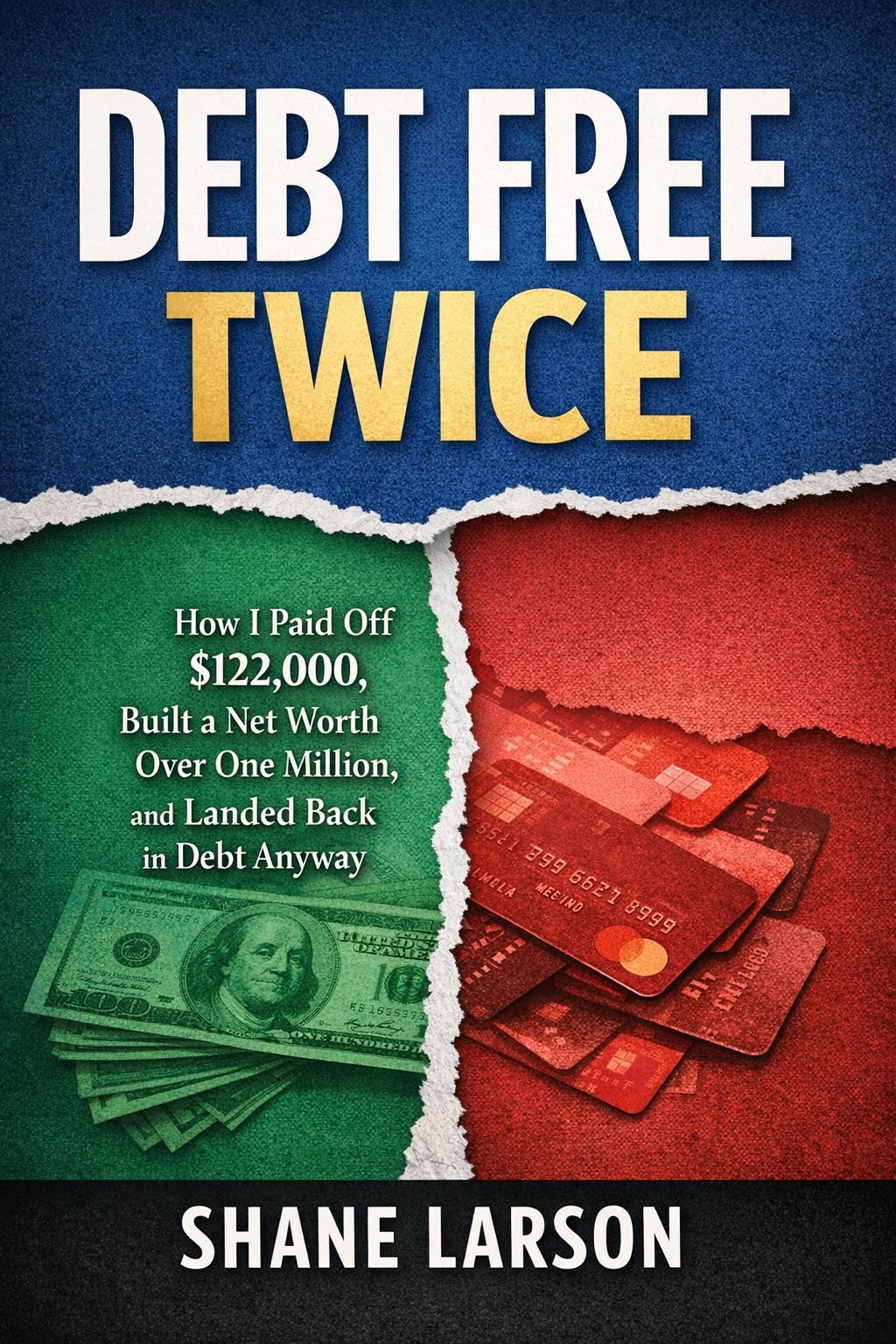
Debt Free Twice
Seven months. By late summer 2019, the furniture loan was gone.
The day I made the final payment, I felt something I had not felt in years. Not happiness exactly. Relief. The kind you feel when you take off a heavy backpack you have been wearing so long you forgot it was there. One debt down. Five to go.
Here is where the snowball works its magic. That freed-up $275 minimum payment rolled into the attack on the next debt. My monthly surplus jumped from $1,200 to $1,475 without earning a single extra dollar. The money was always there — it was just trapped in minimum payments.
The personal loan ($10,000 at 9%) took about six months with the larger snowball. Two debts gone in thirteen months. $20,000 eliminated. Monthly surplus had grown from $1,200 to $1,695 — a 41% increase in firepower.
Each debt I killed freed up more ammunition for the next one. The snowball accelerates. By the time I reached the credit cards and the truck — the biggest, most expensive debts — I was attacking them with nearly $2,000 a month in surplus on top of the minimums. The debts that would have taken years to pay off at minimum payments fell in months.
Two years after that spreadsheet night, every dollar of consumer debt was gone. All $122,000 of it.
The Part Other Debt Books Leave Out
Then I spent four years pouring $4,000 a month into investments. Net worth climbed past one million dollars. I was the success story. The guy who clawed his way out.
And then in 2025, life happened. I got married. Bought a car. Bought more land. Woke up with $26,000 in new consumer debt.
This is the part that most personal finance books skip. They end with the victory lap — debt-free, financially independent, problem solved forever. The truth is messier. Getting out of debt is not a one-time achievement. It is a skill you practice for life. The same forces that created the original $122,000 — the available credit, the lifestyle inflation, the way large purchases feel manageable when you spread them across monthly payments — do not stop operating just because you hit zero once.
The second time, I knew what to do. I had the system, the muscle memory, the emotional toolkit. The $26,000 is a fraction of what the original balance was, and I know exactly how to kill it because I have done it before.
That is the real lesson. Not that you can get out of debt if you try hard enough. But that the trying is ongoing. The spreadsheet is not a one-time exercise. The voluntary hardship is not a phase you graduate from. It is a practice — a set of habits and reflexes that you maintain because the alternative is waking up one morning and adding it all up again.
If you are reading this and you are in debt, stop and do what I did. Open a spreadsheet. List every debt. Every balance. Every interest rate. Every minimum payment. Do not estimate. Do not round. Look up the actual numbers. That spreadsheet will not change a single balance. But it will transform your problem from a shapeless cloud of dread into a concrete challenge with specific parameters. And anything you can quantify, you can plan for.
Debt Free Twice
New posts and releases, straight to your inbox. No spam, unsubscribe anytime.