Scarcity Thinking Is Not a Character Flaw. It Is a Measurable Cognitive Tax.
August 5, 2026 · 4 min read
The "abundance mindset" is one of the most oversold ideas in personal finance, and it is usually sold in a form that is close to insulting: your finances are bad because you believe the wrong things, and if you thought about money more expansively, money would arrive.
There is a version of this that is empirically grounded, and it is almost the opposite of the motivational version.
The Study Worth Knowing
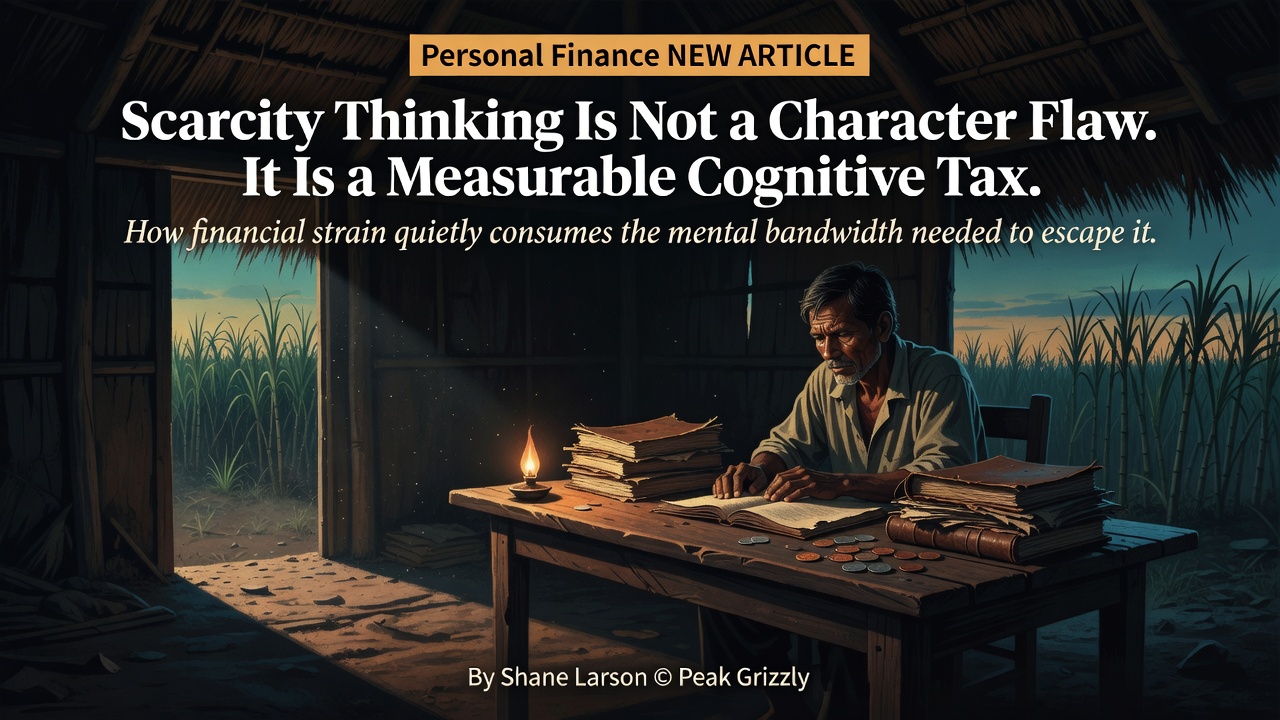
Researchers studying sugarcane farmers in India had an unusually clean natural experiment available. These farmers receive most of their annual income at once, at harvest. So the same people are financially squeezed before the harvest and comfortable after it — same individuals, same intelligence, same education, different financial pressure.
They administered cognitive tests at both points.
The farmers performed substantially better after harvest than before. Not slightly. The gap researchers reported was large enough to be compared, in the coverage of the work, to a meaningful difference in IQ points — the same people, months apart, differing only in whether money was tight.
The interpretation that follows is the important part. Financial scarcity does not reveal that someone is less capable. It consumes capability. Worrying about money is cognitively expensive, it runs continuously in the background, and it occupies the same limited attention you would otherwise use for planning, judgment, and self-control.
The researchers behind this line of work call it a bandwidth tax, and it explains a great deal that moralising does not.
What It Explains
Once you have the mechanism, a set of behaviours that look like poor character resolve into something else.
Short time horizons. Someone under financial pressure discounts the future heavily and takes the expensive-but-immediate option. That is not impatience as a personality trait. When the next thirty days are genuinely uncertain, attending to year three is not prudent — it is a luxury good.
Avoiding the numbers. People in debt frequently stop opening statements, which looks like denial and functions as bandwidth protection. The information is distressing and the distress has a cost, so the mind economises.
Missing obvious opportunities. Not because they are invisible, but because evaluating an opportunity takes attention, and attention is what is in deficit.
Bad decisions under pressure that the same person would never make when comfortable. Which is precisely what the farmer study demonstrates.
All of these are usually described as failures of discipline. They are more accurately described as the predictable output of a system operating with insufficient spare capacity — which is the same finding you get from studying overloaded organisations, understaffed teams, and any other system with no slack.
The Abundant Investor
Why the Motivational Version Is Backwards
This is where most books on this subject go wrong, and it is worth being blunt.
If scarcity imposes a real cognitive cost, then telling someone to adopt an abundance mindset is asking them to solve a bandwidth problem with more bandwidth. It is advice that works best for people who least need it, and it quietly relocates responsibility for a structural condition onto the person experiencing it.
The reverse causation matters. Wealthy people do think about money more expansively — because they have room to. Reading that as the cause of their wealth rather than a consequence of it is a straightforward error, and it is an error that sells extremely well.
The Version That Actually Helps
What survives is more useful and considerably less inspiring.
Reduce the bandwidth tax before trying to make better decisions. Anything that removes a recurring financial worry — an emergency buffer, automated payments, a consolidated balance, one fewer account to track — frees capacity that then improves every subsequent decision. The order matters. Trying to make sophisticated financial choices while under maximum pressure is doing the hardest task in the worst conditions.
Make important decisions when you are not squeezed. If your income is irregular, decide your policies in the good weeks and follow them in the bad ones. This is the same principle as deciding in advance rather than negotiating with yourself in the moment, and it works for the same reason.
Automate what you can, to remove it from attention entirely. The value of automation here is not convenience. It is that a handled thing stops consuming background processing.
Recognise the state rather than judging it. Noticing I am making this decision under scarcity conditions and my judgment is currently degraded is genuinely actionable. It tells you to defer, to check with someone, or to apply a rule you set earlier.
And treat slack as an investment rather than idle money. A buffer's return is not the interest. It is the decision quality it restores across everything else you do.
The Honest Summary
There is something real underneath the abundance-mindset genre, and it is not that belief attracts money.
It is that financial pressure is cognitively expensive, that the expense causes the behaviours we then blame people for, and that the way out runs through reducing the pressure rather than through thinking more positively about it.
Which is a less exciting claim, and it has the advantage of being supported by evidence and of not implying that anyone's difficulties are a failure of attitude.
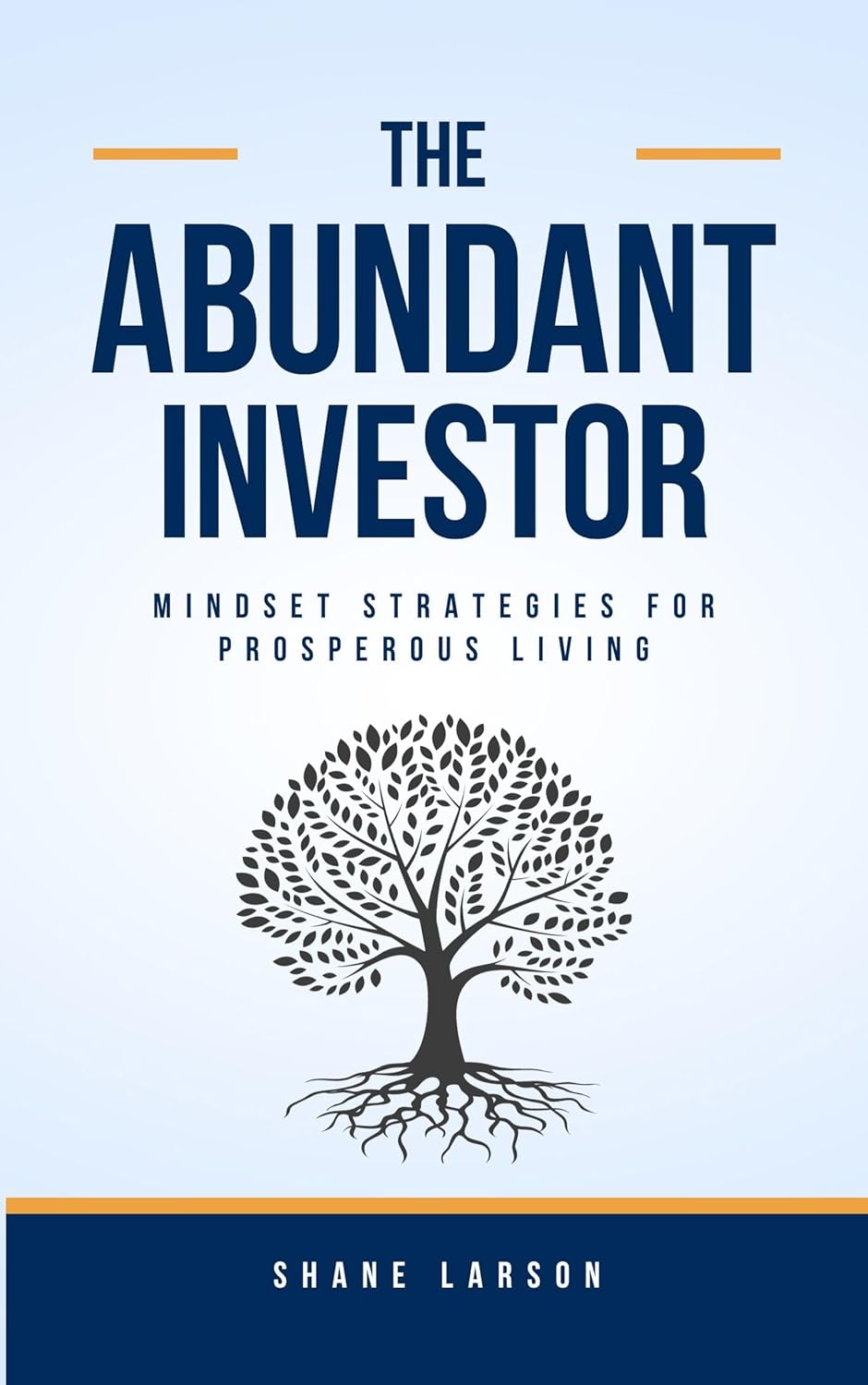
The Abundant Investor: Mindset Strategies for Prosperous Living works through the psychology of financial decision-making — how scarcity thinking forms, what it costs, and the practical habits that shift it.
The Abundant Investor
New posts and releases, straight to your inbox. No spam, unsubscribe anytime.