Practising Poverty on Purpose Is the Only Money Advice That Changed Anything for Me
August 5, 2026 · 6 min read
The mechanics of getting out of debt are not complicated and you already know them. Spend less than you earn. Put the difference against the balances. Repeat for a long time. Most people can recite this sequence without prompting, yet the repetition rarely happens because the immediate pressures of life keep interrupting the plan.
The reason that is insufficient is that debt is not primarily an arithmetic problem. It is a problem of time horizon.
What Debt Actually Does to You
When you are far enough in, every decision collapses to the immediate.
You cannot evaluate whether a job is good for your career, only whether it pays this month. A role that offers training or connections becomes irrelevant if the first paycheck arrives too late to cover rent. You cannot consider whether a purchase is worthwhile, only whether the minimum payment fits. The question shifts from “Do I need this?” to “Can I spread the cost across three statements without it bouncing?” You cannot take a two-year risk that would pay off enormously, because you do not have two years of margin. The horizon on which you are able to think shrinks to about thirty days, and it stays there.
That is what makes the situation feel like a wilderness rather than a spreadsheet. You are not lost because you cannot do the maths. You are lost because you cannot see far enough ahead to choose a direction, so every move is a reaction. A friend once described it as walking through fog with a flashlight that only reaches the next step; the map exists, but you cannot lift your head long enough to read it.
And the psychological load is its own accelerant. Constant low-grade financial fear degrades exactly the judgment you would need to fix it, which is why people in debt make decisions that look obviously wrong from outside and are entirely explicable from inside. The same person who knows a higher-interest loan should be paid first will still throw money at the smallest balance simply to feel one account close. The relief is real even when the arithmetic says otherwise.
The Exercise That Works
The Stoics had a practice they called something like practising poverty, and it is the most useful financial idea I have encountered.
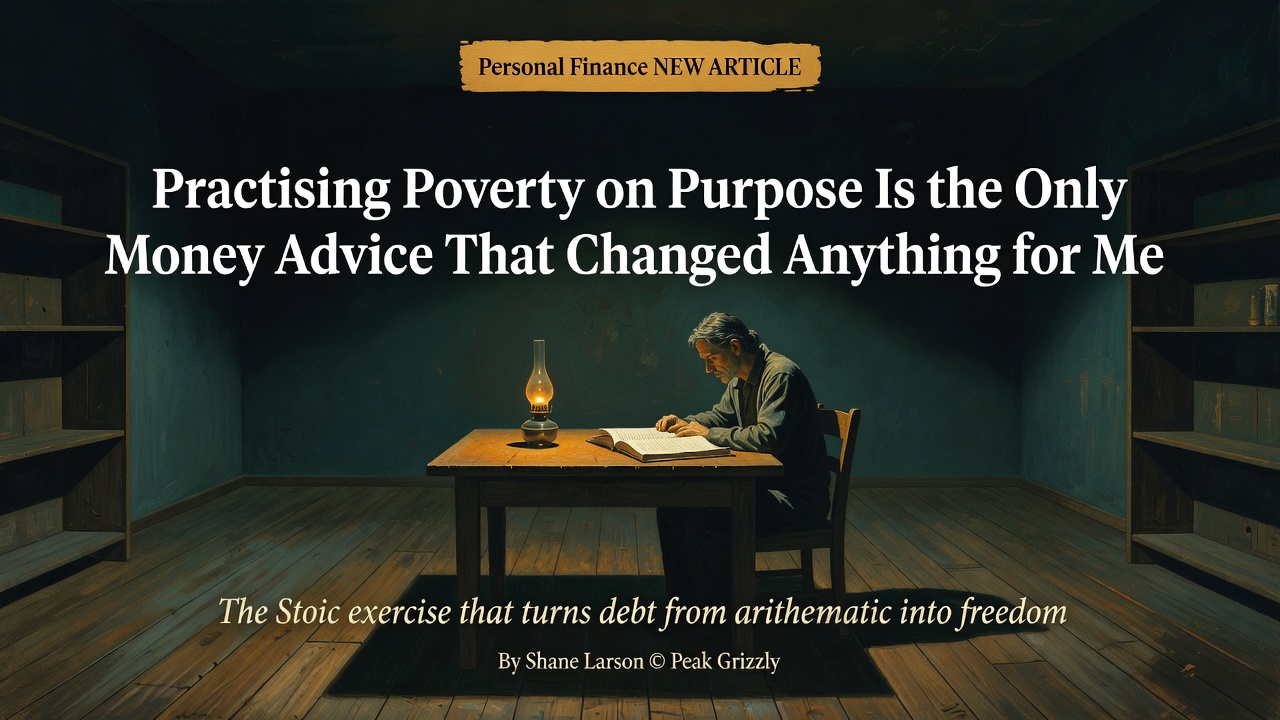
The instruction is simple. For a defined period — a few days, a week — deliberately live well below your means. Eat plainly. Do not spend on anything optional. Be slightly cold, slightly bored, slightly inconvenienced. Do it while you still have the option not to. Cook the same lentils and rice for three evenings. Turn the heating down two degrees and wear an extra layer. Leave the phone on the charger instead of refreshing delivery apps out of habit. The point is not saving money, though you will. The point is that you find out what the bottom actually feels like, on your own terms, while nothing is forcing it.
And what you almost always discover is that it is fine. Not pleasant. Fine. The thing you have been organising your life around avoiding turns out to be a mild inconvenience you can tolerate indefinitely. The evenings feel longer, the meals less varied, the rooms a little chillier, yet none of these conditions produce the catastrophe the mind had pictured. That single realisation changes the calculation on everything else.
The Debt Wilderness
Why It Beats Budgeting
A budget is a set of rules you impose on yourself, and rules break under pressure because they are external to how you actually feel. You budget, you hold for six weeks, something difficult happens, you spend, and then you feel the specific shame that makes people stop opening their banking app. The failure feels personal rather than mechanical.
Voluntary hardship works differently, because it changes the underlying fear rather than restraining the behaviour it produces.
Most financial anxiety is not about numbers. It is about a projected future in which you cannot afford things and that state is unbearable. Once you have visited a version of that state deliberately, and found it survivable, the projection loses its force. You are no longer negotiating with a catastrophe. You are considering a scenario you have already been in and did not much mind. The next time an unexpected bill arrives, the question becomes “Which corner do I trim this month?” rather than “How do I avoid this feeling entirely?”
That has direct practical consequences. You can decline work that is bad for you, because the downside is a condition you have tested. You can leave a job, take the pay cut, refuse the client, walk away from the negotiation. Your horizon extends, because you are no longer required to protect a standard of living you have discovered you do not need.
The Honest Caveats
Two, and they matter.
This is a tool for people who have a choice. Deliberately experiencing scarcity when you can stop at any moment is a fundamentally different thing from actual poverty, and anyone who conflates the two is not being serious. The exercise works precisely because it is voluntary. That is not a flaw in it; it is a limit on who it applies to. Someone already choosing between utilities and food each week gains nothing from being told to simulate the same choice for fun.
It does not replace the arithmetic. You still have to increase the gap between income and spending, still have to pick an order to attack the balances in, still have to do it for however long it takes. The exercise makes the arithmetic possible to sustain. It does not do it for you.
And there is a genuine risk of the whole thing curdling into a personality — the person who is loudly frugal, for whom austerity has become an identity rather than a tool. That is its own trap, and it is not freedom either.
What It Is Actually For
The reason to get out of debt is not that being debt-free is a virtue. It is that debt costs you optionality, and optionality is the thing that determines what your working life feels like.
The clearing on the other side is not primarily about money. It is that you can think in years again — take the risk, make the change, refuse the thing you should refuse — because nothing is pinning you to the next thirty days.
What voluntary hardship buys is early access to that state. You do not have to wait until the last balance is cleared to stop being afraid. You can find out now, in a controlled way, that the floor is closer than you think and is made of solid ground.
The number on the statement takes years. The change in what you are willing to risk takes about a week.
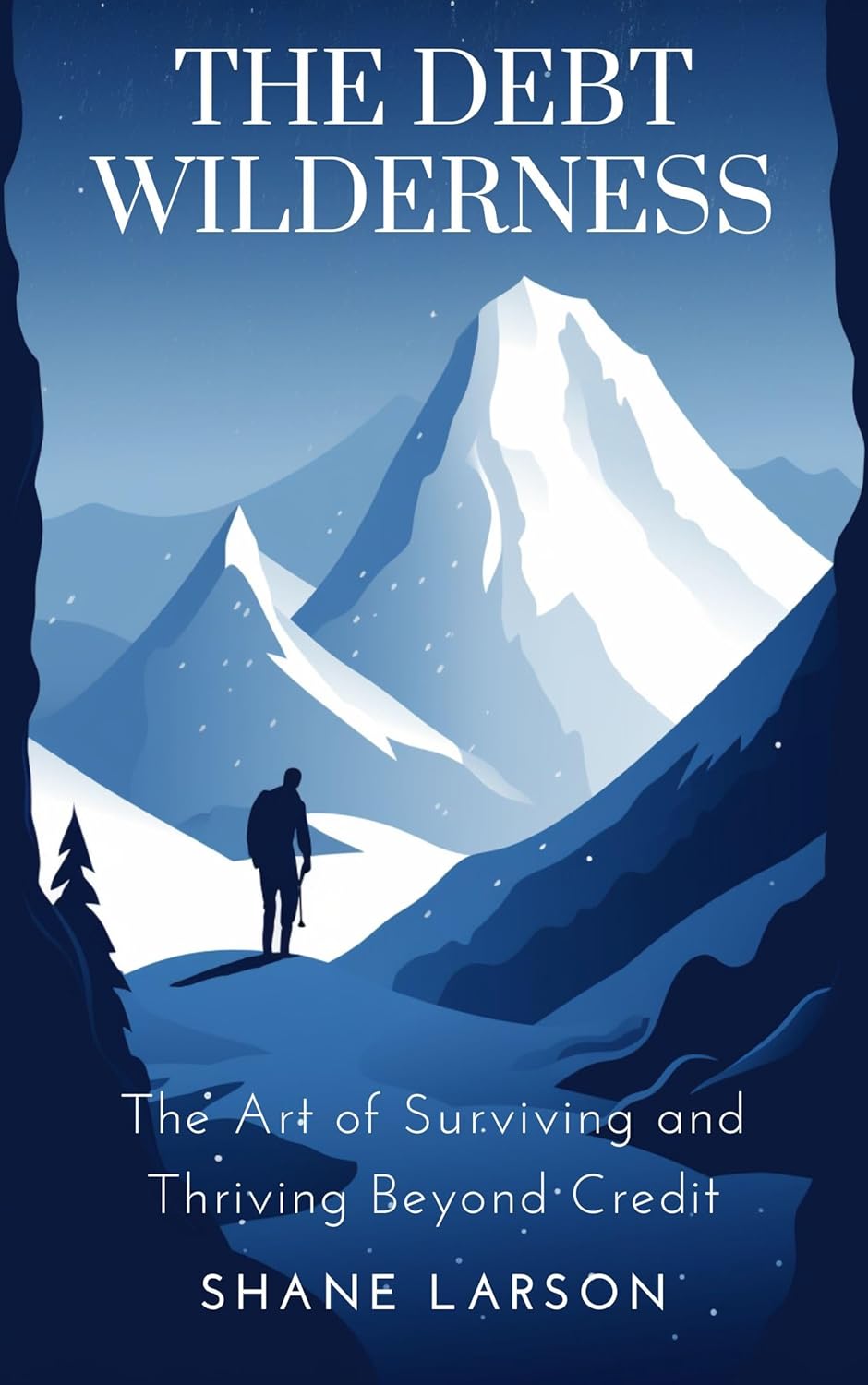
The Debt Wilderness: The Art of Surviving and Thriving Beyond Credit is the account of working out of six figures of debt — the survival strategies, financial stoicism, the practical path out, and what the clearing on the other side actually looks like.
The Debt Wilderness
New posts and releases, straight to your inbox. No spam, unsubscribe anytime.