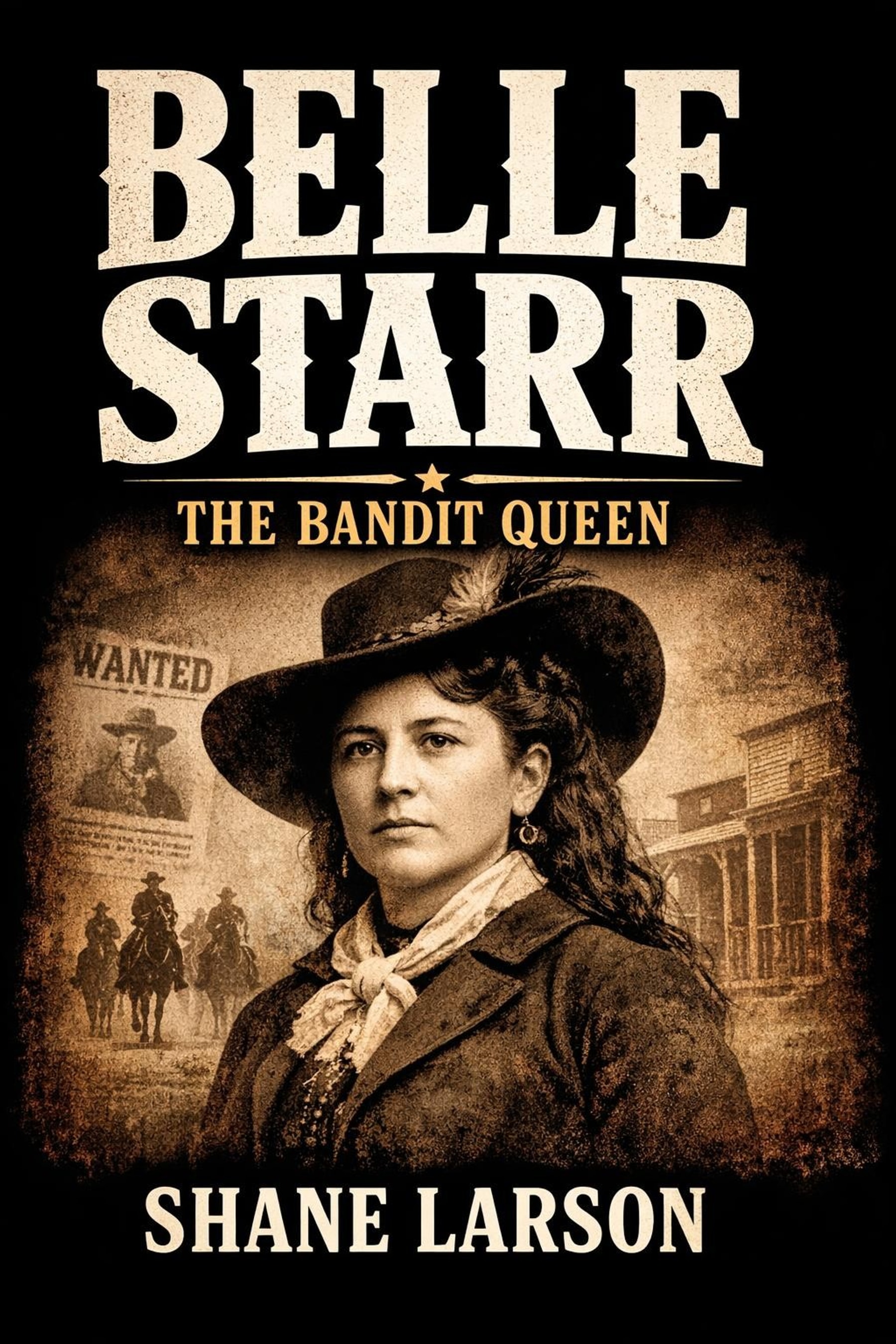
Belle Starr
The Bandit Queen
By Shane Larson · The Wild West Series (Book 19)
About This Book
There is a road in what used to be the Choctaw Nation where, on a wet February afternoon in 1889, a woman rode toward home and never arrived. A shotgun spoke from behind a rail fence. Myra Maybelle Shirley Starr went off her horse into the mud of the Canadian River bottoms, two days short of her forty-first birthday. The man who pulled the trigger was never named in a courtroom. The case is still open.
What happened next is the part most people actually know — except it isn't true. Within weeks, the penny papers had a heroine: "Belle Starr, the Bandit Queen," a velvet-clad Amazon on horseback with a revolver on each hip, ruling a private kingdom of horse thieves and killers. She robbed trains. She led a gang. She was, the editors agreed, the most dangerous woman in the West. None of it could be checked, because the woman it was written about was already in the ground.
This is the documented life underneath that invention — and the documented life of the invention itself. Because the legend has its own biography: a birthplace in the columns of the National Police Gazette, a birthdate in 1889, and a clear commercial motive. A woman, a frontier, guns, sex, and a sensational unsolved murder made an irresistible product, and the people who built it knew exactly what they were selling.
The Woman and the Myth, Side by Side
Strip away the dime-novel varnish and the real Myra Maybelle Shirley is a smaller, sadder, more human figure — and a more interesting one. Born in 1848 in Carthage, Missouri, she came of age inside the Border War that scorched the Kansas–Missouri line and radicalized a generation of young men, the Jameses and the Youngers among them. Her family was ruined by that war. The men in her orbit drifted into the guerrilla underground and then into outlawry, and she drifted with them into Indian Territory, the jurisdictional gray zone where federal, tribal, and state authority overlapped just enough to leave the cracks wide open.
Her actual criminal record is almost anticlimactic: one conviction, for horse theft, in the Fort Smith courtroom of Judge Isaac Parker — the "Hanging Judge" — followed by roughly nine months in a Detroit prison. That is the whole of it. The train robberies, the gang command, the matched pistols, the reign of terror: all of it was assembled by newspaper editors and a lurid 1889 novel after her death, when she could no longer correct the record.
So Belle Starr tells two stories at once and lets the reader watch them diverge. One is the life of an unlucky woman in a lawless seam of the country. The other is the manufacture of her legend — how editors, dime novelists, Wild West showmen, and eventually Hollywood each rebuilt her in the image their era wanted to buy. This book treats the legend not as a distortion to be brushed aside but as a historical event with a traceable author and a datable origin, worth examining as closely as the woman herself.
What You'll Discover
- How the National Police Gazette and an 1889 dime novel conjured the "Bandit Queen" out of an ordinary, tragic life — and why the timing, just after her death, was no accident
- The real web connecting her to Cole Younger, Jim Reed, and the Missouri guerrilla network forged in the Border War
- What actually happened in Judge Parker's Fort Smith court, and why a single horse-theft conviction became the seed of an empire of fiction
- Younger's Bend: the no-man's-land along the Canadian River where fugitives sheltered because no single authority could reach them
- The 1889 ambush itself — the wet road, the fence, the missing trigger man — and the tight circle of suspects who each had reason to want her gone
- How a quarrelsome tenant, a violent son, and a handful of local grudges make this one of the West's most genuinely unsolved killings
- The way each successive era — pulp pages, traveling Wild West shows, then the movies — reinvented her to match its own appetites
Why I Wrote This
I kept running into Belle Starr sideways, in the footnotes of other people's stories, and the figure in those footnotes never matched the woman in the records. The gap bothered me. Most outlaw legends inflate a real career — they take a man who robbed six banks and make it sixty. Belle's legend is stranger, because there was almost no career to inflate. The "Bandit Queen" is very nearly a thing built from nothing, and you can name the people who built it and the year they did it.
That turned out to be the book I actually wanted to write: not a takedown of the myth, but a study of how the myth was made — who profited, what raw material they had to work with, and what an ordinary, hard-luck life looks like once you scrape the legend off it. I wanted to give the woman her own size back, and to treat the legend as the deliberate, dated, authored thing it was.
Frequently Asked Questions
Is this a biography or a true-crime book?
Both, braided together. Half of it is the documented life of Myra Maybelle Shirley — her family, her marriages, her one real conviction, her years in Indian Territory. The other half is the true-crime story of her unsolved murder and the parallel story of how her legend was manufactured after she died.
Does the book solve the murder?
No — and it's honest about that. The 1889 ambush was never solved and remains open. What the book does is lay out the evidence and the closed circle of suspects clearly enough that you can weigh the case yourself, without pretending to a certainty the record doesn't support.
Do I need to know much about the Old West to follow it?
Not at all. The book supplies the context as it goes — the Border War, Indian Territory's tangled jurisdictions, Judge Parker's court — so a reader new to the period can follow every thread, while readers who know the era will find the familiar names placed in their real relationships.
How is this different from the Belle Starr of the movies?
The movies inherited the dime-novel version: the glamorous gunwoman, the gang, the velvet. This book separates that figure from the documented one and shows exactly where the screen version came from, treating Hollywood as the last in a long line of storytellers who remade her for profit.
Is it part of a wider series on the West?
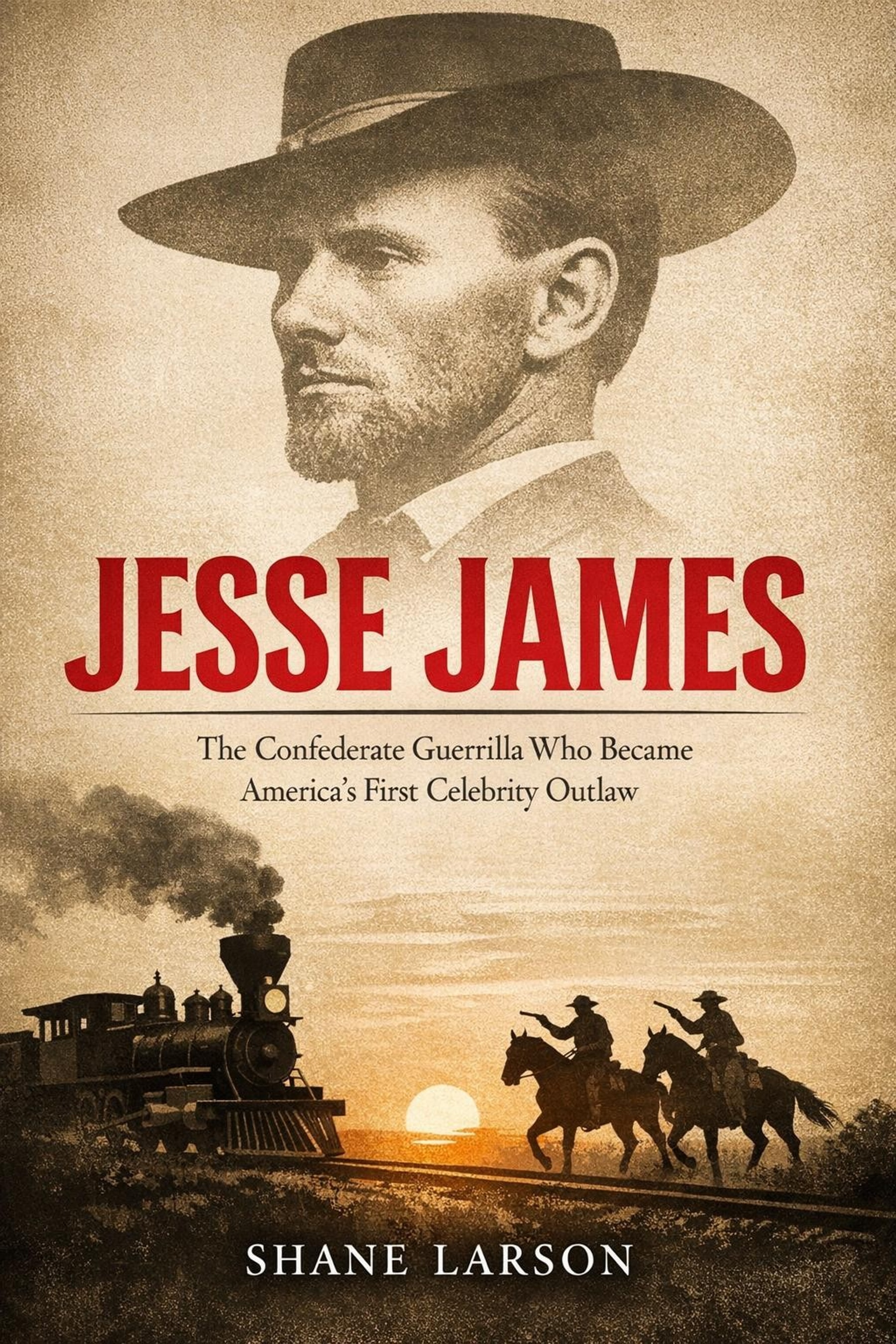
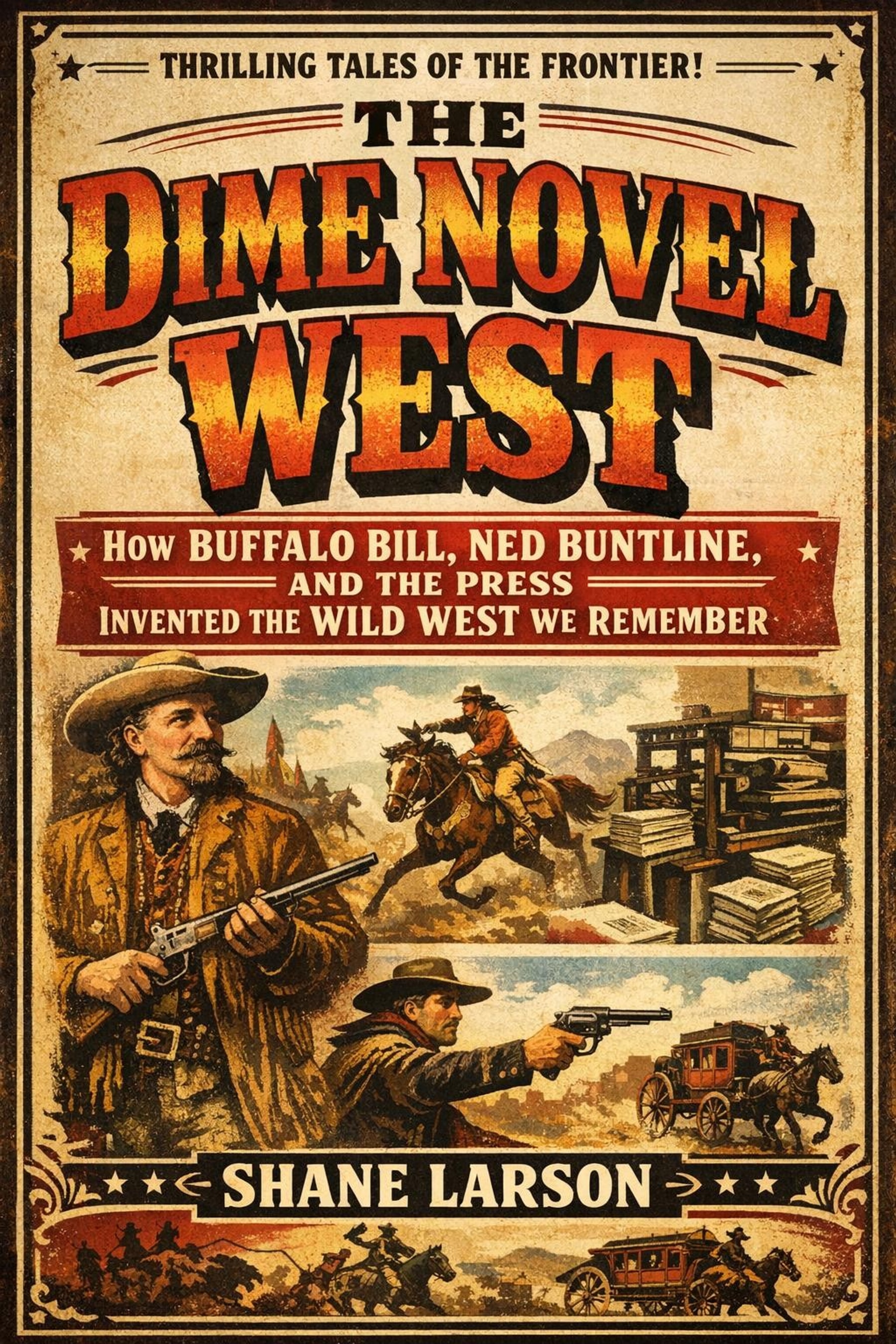
It belongs to the same body of work as the author's other frontier histories, including a study of the Jesse James legend and The Dime Novel West, which examines the publishing machine that produced figures like Belle in the first place. Each stands on its own, but they share a method: separating the real frontier from the one that was sold.
Is it available on Kindle Unlimited?
Yes. Like the rest of the Peak Grizzly history catalog, it's enrolled in Kindle Unlimited, so KU subscribers can read it at no additional cost.
If You Liked This, You Might Like
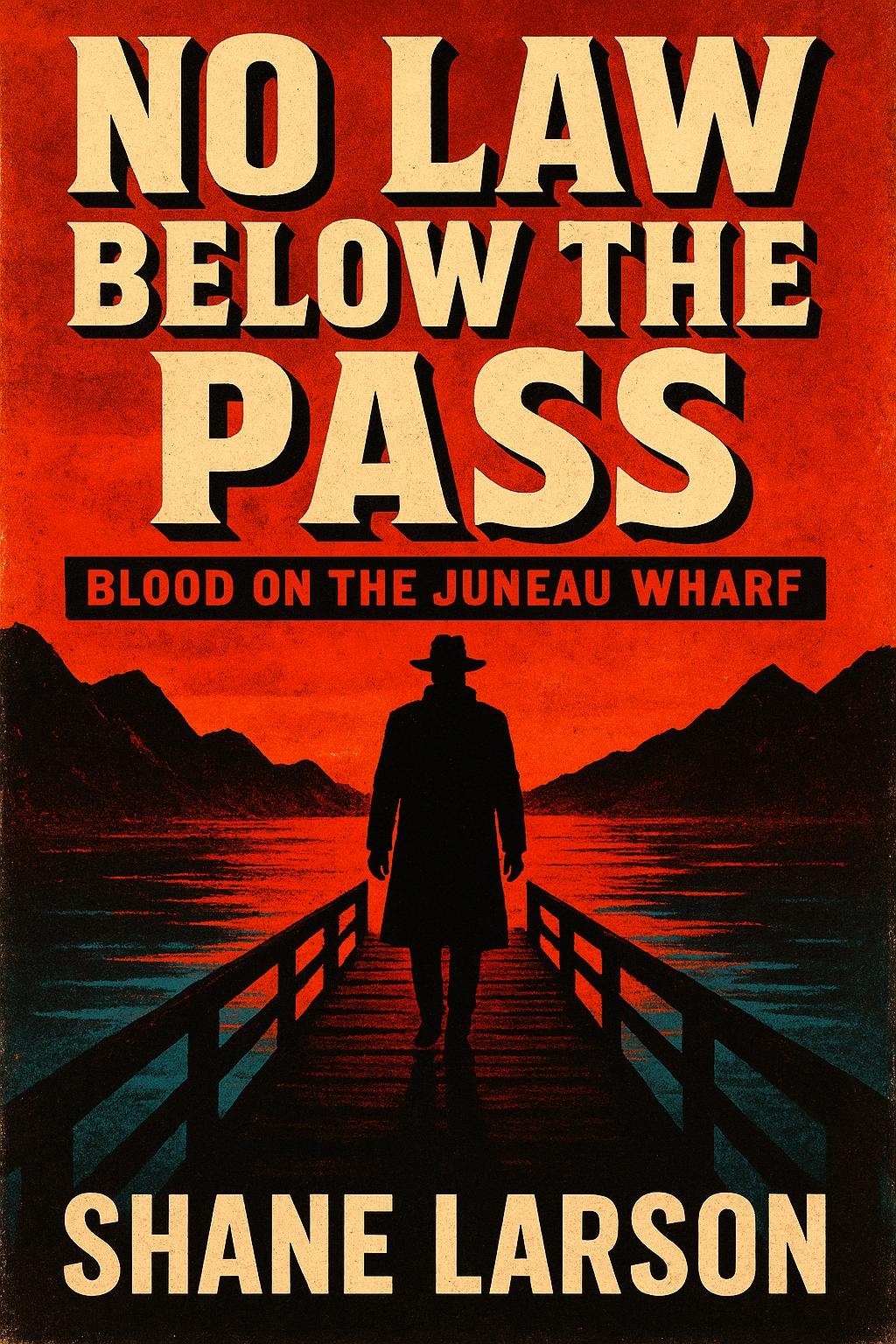
- No Law Below the Pass — a frontier thriller set in the same kind of lawless gap in authority that made Belle Starr's world possible, told as fiction rather than history.
- Digital Outlaws: The Rise of Early Hackers — a very different century, the same human pattern: how the press turns lawbreakers into folk heroes and sells the legend back to us.
- American Inventors: Pioneers of Progress — the other side of the nineteenth-century American story, where ambition built reputations on achievement rather than gossip and gunsmoke.
Meet the real Myra Maybelle Shirley — smaller, sadder, and more human than the Bandit Queen who was invented to replace her, and finally told apart from the legend that buried her.
Included with Kindle Unlimited — read it free if you're a member.
New Wild West / American Frontier History releases and free chapters — no spam, unsubscribe anytime.
More in The Wild West Series
View series →
More in This Genre
View all →