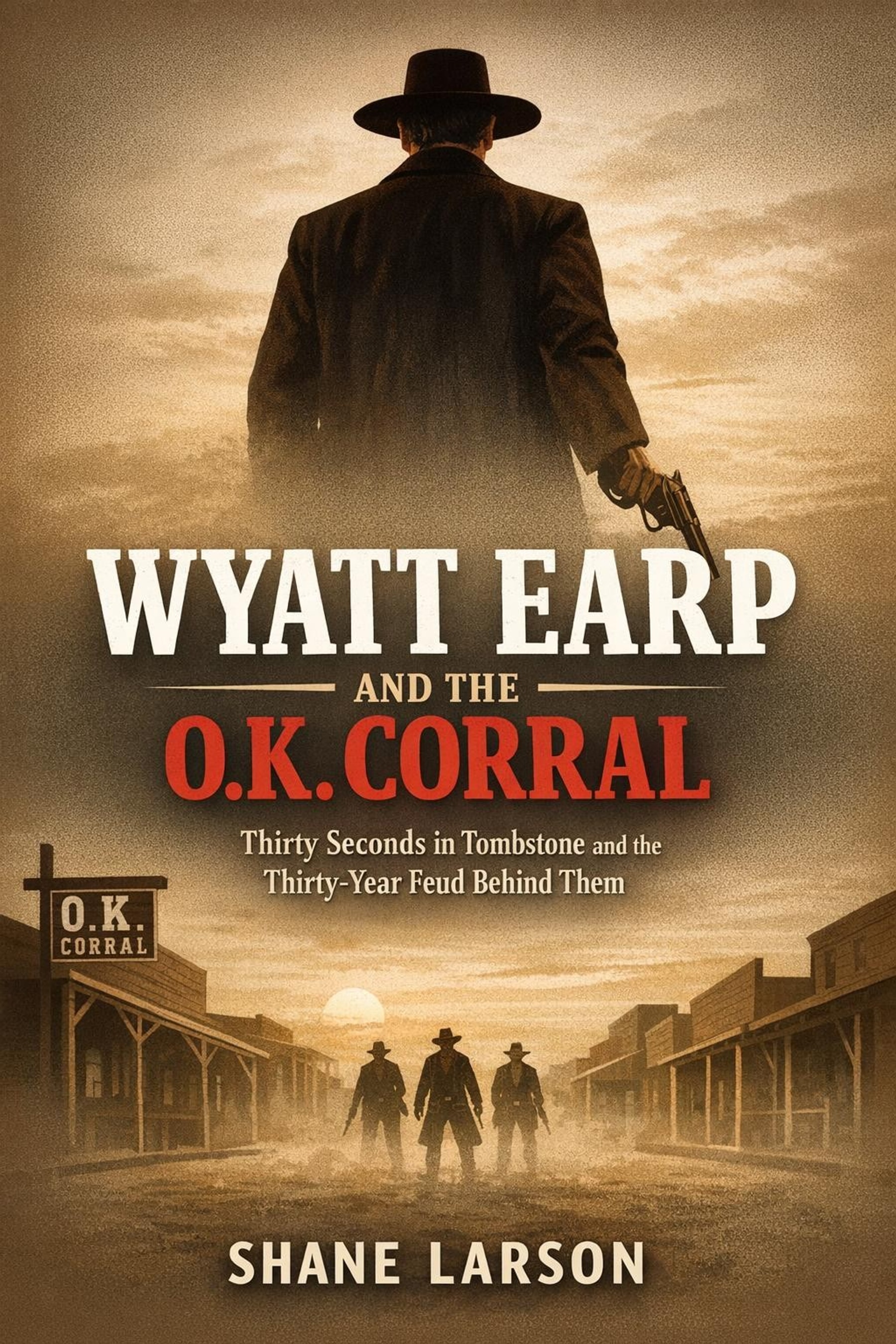
Wyatt Earp & the O.K. Corral
Thirty Seconds in Tombstone and the Thirty-Year Feud Behind Them
By Shane Larson · The Wild West Series (Book 2)
About This Book
On the night of March 18, 1882, Morgan Earp was leaning over a billiard table in a Tombstone saloon when a bullet came through the glass of the back door and struck him in the spine. He was dead within the hour. A few months earlier his brother Virgil had been ambushed on a dark street and left with an arm he would never use again. Neither shooting happened in the middle of a famous gunfight. Both happened afterward, in the dark, fired by men who had been legally cleared of any crime — and that is the part of the Tombstone story the movies are always in a hurry to leave.
Everyone knows the thirty seconds. Eight men, a narrow lot, roughly thirty shots at a range where you could reach out and touch the man trying to kill you. When it ended, three of the Cowboys were down and only Wyatt Earp had come through without a scratch. It is the most retold half-minute in the history of the American West. It is also, on its own, almost meaningless — a single violent spasm inside a slow, grinding feud that had been building for two years and did not end for months after the shooting stopped.
This book puts the famous half-minute back where it belongs: in the middle of the story, not at the end of it. And it starts by correcting the detail everyone gets wrong, including the title of every film ever made about it. The gunfight did not take place inside the O.K. Corral.
The Argument
Tombstone in 1881 was a silver boomtown, and like every boomtown it was really an argument about money and power wearing the costume of law and order. On one side stood the town's business establishment and its federal appointees — the Earps among them. On the other stood a loose rural network of Texas-born ranchers, some of whom rustled cattle and robbed stagecoaches, whom the newspapers lumped together as "the Cowboys." Between those two factions ran everything worth fighting over: cattle, stage money, county offices, and the genuinely lucrative job of collecting the county's taxes. The feud that produced the gunfight was political and financial long before it was personal, and by October 1881 it had become all three at once.
The fight itself was provoked, in large part, by a man who then ran from it. Ike Clanton spent the night before drunk and loudly promising to kill the Earps; the next afternoon, when the shooting he had invited finally started, he fled the lot unarmed. What followed the gunfight is what makes the story more than a Western. The Earps were cleared of murder at a month-long hearing whose sworn testimony survives as the single best source we have. Then the Cowboys answered the verdict with the ambushes — Virgil crippled, Morgan killed — and when the courts proved unable to convict anyone, Wyatt stopped waiting on the courts.
The Earp Vendetta Ride was a three-week extrajudicial manhunt conducted under color of a deputy U.S. marshal's badge. Wyatt and a small posse hunted down the men they believed responsible and killed them, from a Tucson rail yard outward into the hills, then rode out of Arizona ahead of murder warrants sworn against Wyatt himself. He never stood trial for it. He drifted for the next forty-seven years and died in bed in Los Angeles in 1929, quietly advising the makers of early Western films — two years before a biographer named Stuart Lake published the book that turned a controversial frontier gambler into the folk hero the whole country would remember.
What's Inside
- The real location of the gunfight — an empty lot off Fremont Street, not the corral the legend named it for — and a minute-by-minute reconstruction of who stood where and who fired first.
- The economics underneath the feud — silver money, the sheriff's tax commission, and the jurisdictional tug-of-war between town, county, and federal authority that set the two factions against each other.
- Ike Clanton's night of threats and his unarmed flight from the fight he spent twelve hours provoking.
- The Spicer hearing — how nearly a month of sworn, cross-examined testimony became the closest thing we have to a transcript of the event, and how to read it.
- The ambushes the films skip — the maiming of Virgil and the assassination of Morgan, the crimes that turned a cleared lawman into a hunter.
- The Vendetta Ride reconstructed killing by killing, and the exact moment a peace officer crossed into vigilante.
- Wyatt's long afterlife — the decades of wandering, the Hollywood friendships, and how a single 1931 biography manufactured the hero we inherited.
Why I Wrote This
I grew up on the movie version — the slow walk down the street, the coats, the righteous lawman and the cartoon villains — and like most people I assumed it was roughly true. It isn't, and the gap turned out to be more interesting than the myth. What hooked me was the Spicer hearing: an actual month of sworn testimony, taken within days of the event, sitting right there in the record while a century of screenwriters ignored it in favor of a cleaner story.
I didn't want to flip the legend inside out and make the Earps villains instead of heroes, because the record doesn't support that either. I wanted to sit in the ambiguity the sources actually leave you in — where a man can be legally in the right at three in the afternoon and a murderer by his own hand a few weeks later, and where you genuinely cannot be sure who fired the first shot. Frontier history is better when nobody gets to be a cartoon.
Frequently Asked Questions
Did the gunfight really not happen in the O.K. Corral?
Correct. It happened in a narrow vacant lot near Fremont Street, roughly six doors down from the corral's rear entrance. The "O.K. Corral" name stuck because it was a memorable local landmark, and the movies cemented the error. The book walks the actual geography.
Are the Earps the good guys in this telling?
The book doesn't hand out that label. They were federal and town officers up against men who really were rustling and robbing, but the Vendetta Ride was extrajudicial killing, and Wyatt fled his own murder warrants. The account lays out what the sources support and lets the ambiguity stand rather than inventing a verdict.
How do we actually know what happened in thirty seconds?
Mostly from the Spicer hearing, a month of sworn testimony taken within days of the shooting, plus contemporary newspaper coverage from both of Tombstone's rival papers. The book leans on those primary sources and flags the points where the witnesses flatly contradict each other.
Do I need to read the other Wild West books first?
No. This is Book 4 of The Wild West series, and every volume stands completely on its own. If you've read the Doc Holliday or Bat Masterson entries, you'll recognize shared events from a different vantage, but no prior reading is required.
Does it cover what happened to Wyatt after Tombstone?
Yes, at length — the forty-seven years most accounts compress into a sentence. The wandering, the failed ventures, the Hollywood years, the 1929 death, and the 1931 biography that built the myth all get their due.
If You Liked This, You Might Like
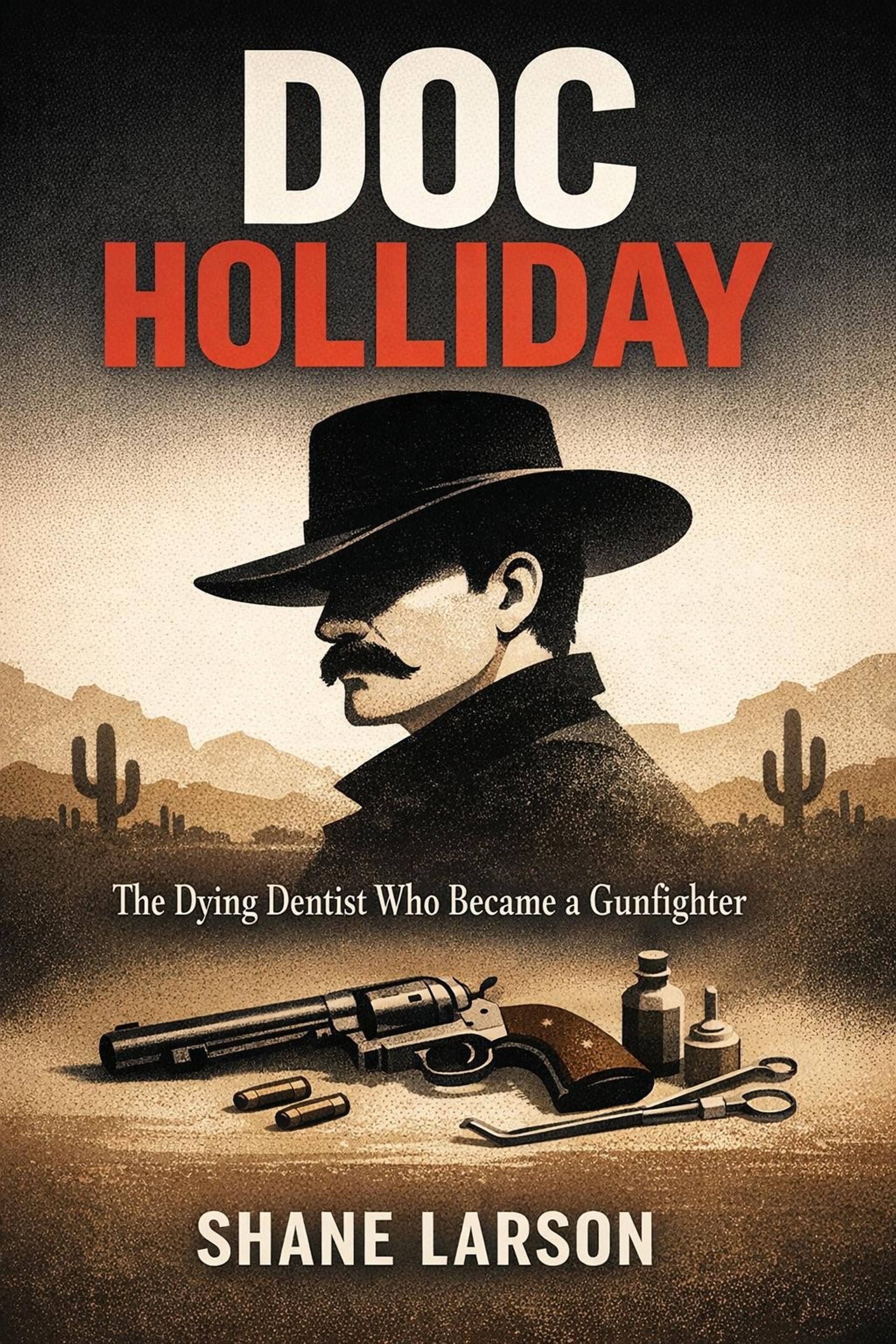
- Doc Holliday — the dying, drunken, loyal dentist who stood in the lot beside Wyatt, told from his own point of view; the natural companion volume to this one.
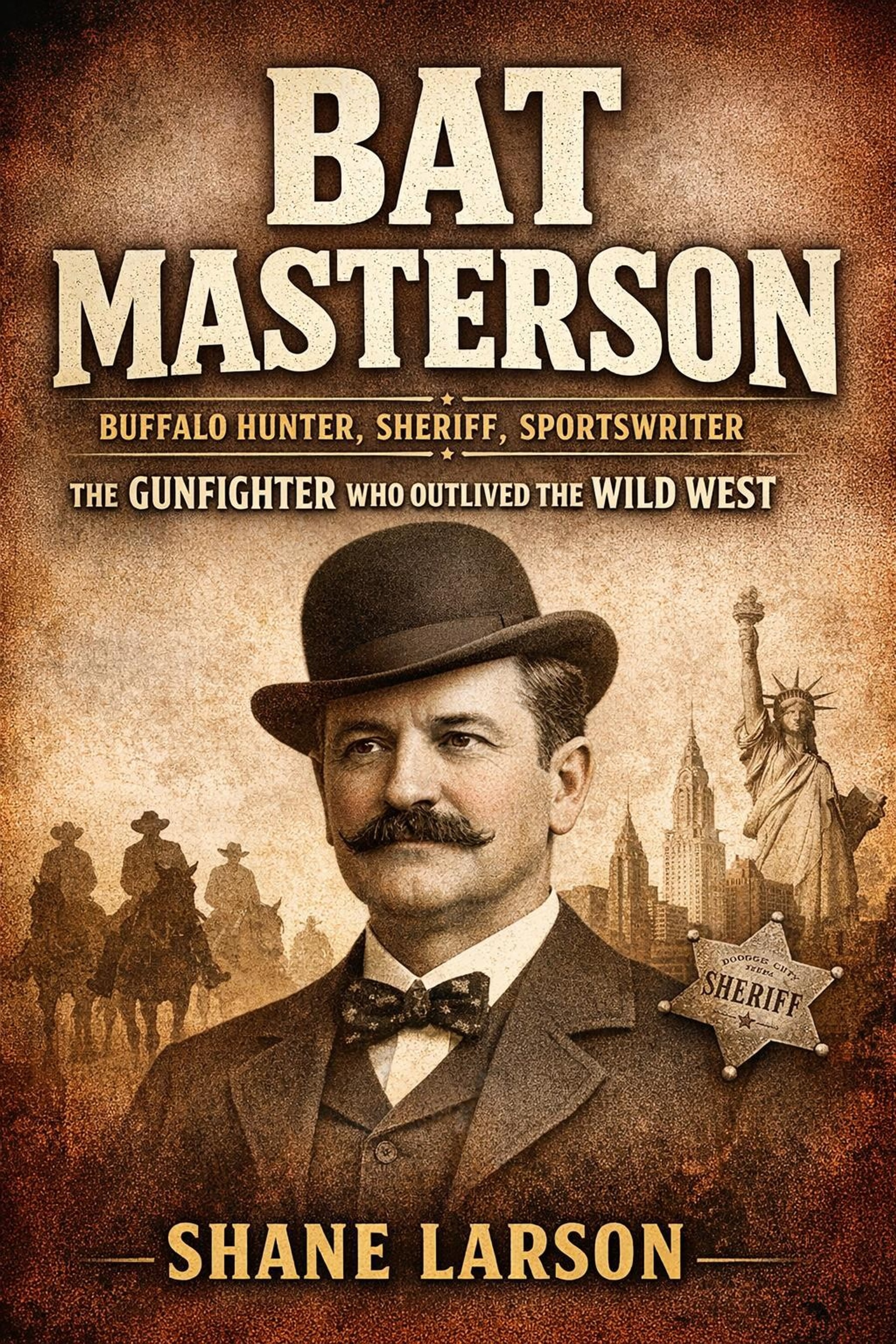
- Bat Masterson — Wyatt's friend and fellow lawman, who lived long enough to trade his six-gun for a typewriter and outlast the whole frontier that made him.
- The Dime Novel West — how the myth machine that Stuart Lake's biography fed worked in the first place, turning living gunmen into folk heroes while they were still alive.
- Digital Outlaws: The Rise of Early Hackers — a century later, another set of men take the law into their own hands when the courts can't reach the people they're after.
Thirty seconds made the legend. The two years around it — the money, the feud, the ambushes, and the ride that followed — make the history.
Book 4 of The Wild West series.
Included with Kindle Unlimited — read it free if you're a member.
New Wild West / American Frontier History releases and free chapters — no spam, unsubscribe anytime.
More in The Wild West Series
View series →