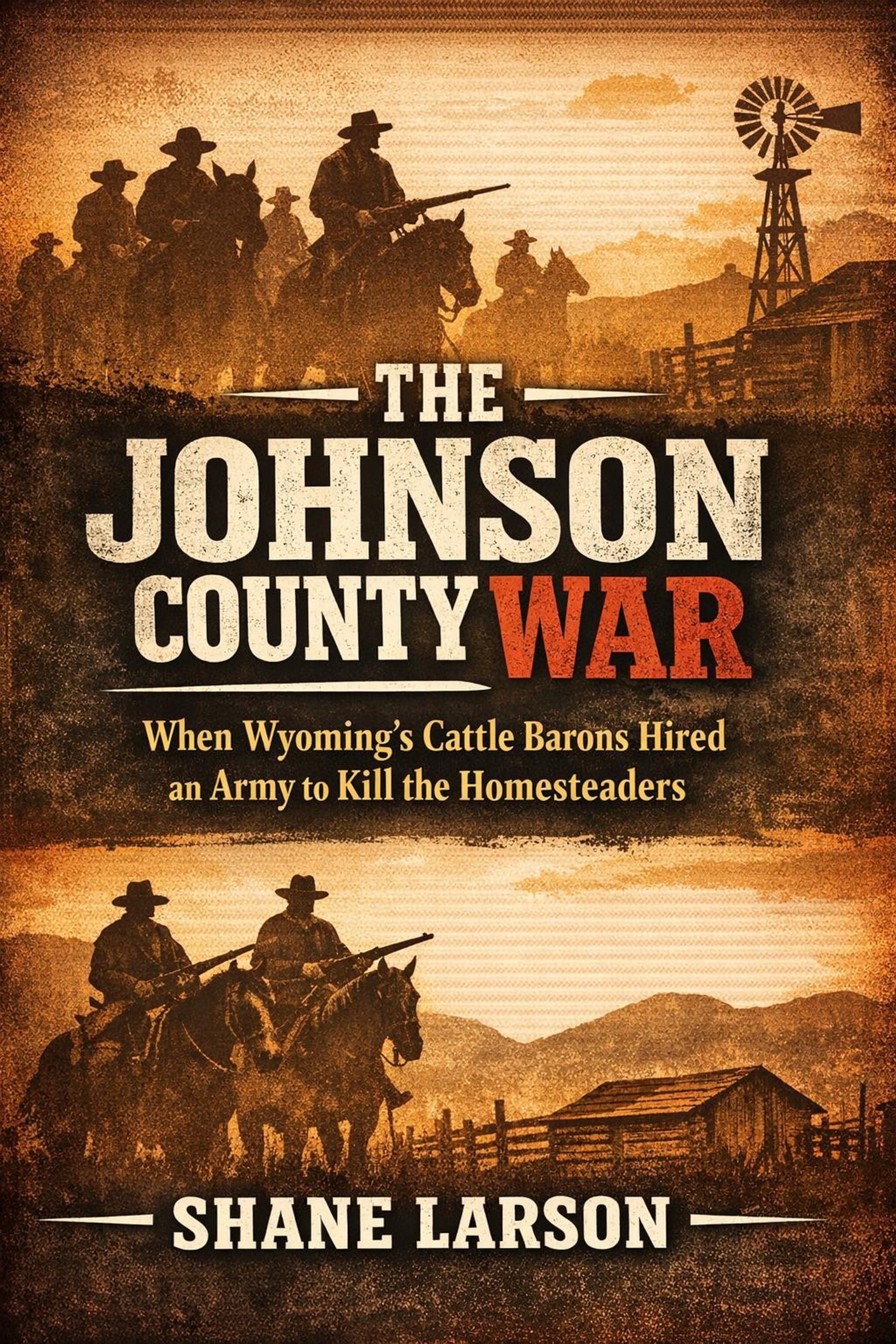
The Johnson County War
When Wyoming's Cattle Barons Hired an Army to Kill the Homesteaders
By Shane Larson · The Wild West Series (Book 16)
About This Book
A cowboy named Nate Champion spent the last day of his life writing. Fifty armed men surrounded his cabin at the KC Ranch, and between rifle volleys he kept a diary on a scrap of paper — noting who had been shot, how the light was fading, and that the house was starting to burn. His final entry ends with a goodbye. When the men who killed him searched his body, they found the diary, and within weeks it was reprinted in newspapers across the country. The gunmen had brought two reporters along to write their version of events. Champion, dying alone, wrote a better one.
The men outside that cabin were not a posse and not a gang. They were an expedition financed by the wealthiest cattlemen in Wyoming — members of the Wyoming Stock Growers Association, men who dined with senators and summered in Europe — riding with a paid army of Texas gunfighters and a list of neighbors marked for death.
The Johnson County War is often filed under frontier lore, one more range dispute in a violent decade. It was something rarer and more disturbing: a class war fought with rifles, in which the losing side had the money, the governor, and eventually the U.S. Cavalry on its side — and still could not defeat an aroused county of small ranchers and homesteaders.
The Story
For twenty years the Wyoming Stock Growers Association ran the territory as a private estate. The Association controlled the open range, decided who could legally brand a maverick, dominated the legislature, and enjoyed a friendly press. Then the homesteaders came — small operators claiming land under federal law, stringing fence, and building herds of their own. To the barons, every small rancher was a presumptive thief. To the juries of Johnson County, made up of those ranchers' neighbors, the theft charges the Association kept bringing looked like what they were: an attempt to criminalize competition. Acquittal followed acquittal.
The Association's answer escalated in stages. First came the lynching of Ella Watson and Jim Averell in 1889 — a settler woman and her partner hanged over a land dispute, then posthumously slandered as "Cattle Kate," a fictional rustler-prostitute invented for the newspapers. No one was punished. Then came assassinations of individual "troublemakers." And when none of it broke Johnson County's resistance, the barons organized an invasion: a special train out of Cheyenne in April 1892 carrying gunmen, ammunition, dynamite, a surgeon, and a death list of some seventy names.
The invasion collapsed almost immediately. Champion's daylong stand at the KC Ranch cost the invaders their schedule and their secrecy. Sheriff Red Angus raised Johnson County, and within days hundreds of armed citizens had the barons' army pinned inside the TA Ranch, digging in behind fortified walls as a homemade siege engine — an ark of dynamite on wagon wheels — rolled toward them. What saved the invaders was not force of arms but a telegram chain running from Cheyenne to the governor to Washington, ending with President Benjamin Harrison ordering the Sixth Cavalry to ride to their rescue.
What followed the surrender was, in its way, more damning than the invasion itself: venue changes, evaporating witnesses, a prosecution deliberately priced beyond what Johnson County could afford, and finally the quiet dismissal of every charge. The men who financed an armed invasion of their own state went back to their clubs. This book follows the money, the politics, and the paper trail — Champion's diary, the cavalry's reports, the court record — to reconstruct how it happened and why nobody paid.
What's Inside
- The rise of the Wyoming Stock Growers Association and how a private club came to control a territory's land, laws, and newspapers
- The maverick question — why the legal definition of an unbranded calf became the fault line of a war
- Ella Watson and Jim Averell: the 1889 double lynching, and the anatomy of the "Cattle Kate" smear campaign that rewrote a murder as frontier justice
- Why Johnson County juries kept acquitting, and what that pattern reveals about law when a community stops consenting to it
- The invasion itself, hour by hour — the secret train, the cut telegraph lines, the death list, and the plan that began unraveling at the first stop
- Nate Champion's stand at the KC Ranch, told through the diary he kept under fire
- The siege of the TA Ranch, the go-devil dynamite wagon, and the forty-eight hours in which the invaders became the besieged
- The telegram chain to the White House, the cavalry rescue, and the legal burial that let every invader walk free
Why I Wrote This
I kept running into the Johnson County War in the footnotes of other Western stories and noticing that the shorthand never held up. It gets called a range war, which implies two roughly matched sides fighting over grass. It wasn't that. One side had the capital, the state government, the Associated Press wire, and eventually the U.S. Army. The other side had numbers and a jury box. What hooked me was Champion's diary — the fact that the most powerful men in Wyoming brought journalists to script their invasion, and the historical record ended up belonging to a cowboy writing in pencil while his roof burned. That inversion felt worth a whole book. I wanted to tell it from the documents rather than the movies, and let the reader watch how completely money bent every institution it touched — every institution except one stubborn county.
Frequently Asked Questions
Is this a narrative history or an academic study?
Narrative history. The book moves chronologically and reads as a story, but it's built on primary sources — Champion's diary, military correspondence, trial filings, and contemporary newspaper coverage — with the sourcing kept visible rather than buried.
Do I need any background in Western history to follow it?
No. The opening chapters explain the open-range cattle system, homestead law, and the maverick dispute from scratch. If you've never heard of the Wyoming Stock Growers Association, you'll be fully oriented before the shooting starts.
How does this differ from the movie versions, like Heaven's Gate?
The films compress, invent characters, and generally soften the politics. This book stays with the documented record — the real names on the death list, the actual sequence at the KC and TA Ranches, and the legal maneuvering afterward, which no film has seriously touched.
Was anyone ever punished for the invasion?
No — and the book treats that outcome as part of the story rather than a footnote. The final chapters follow the prosecution's collapse in detail: the venue fight, the missing witnesses, and the financial strangulation of Johnson County's case.
Is this part of a series?
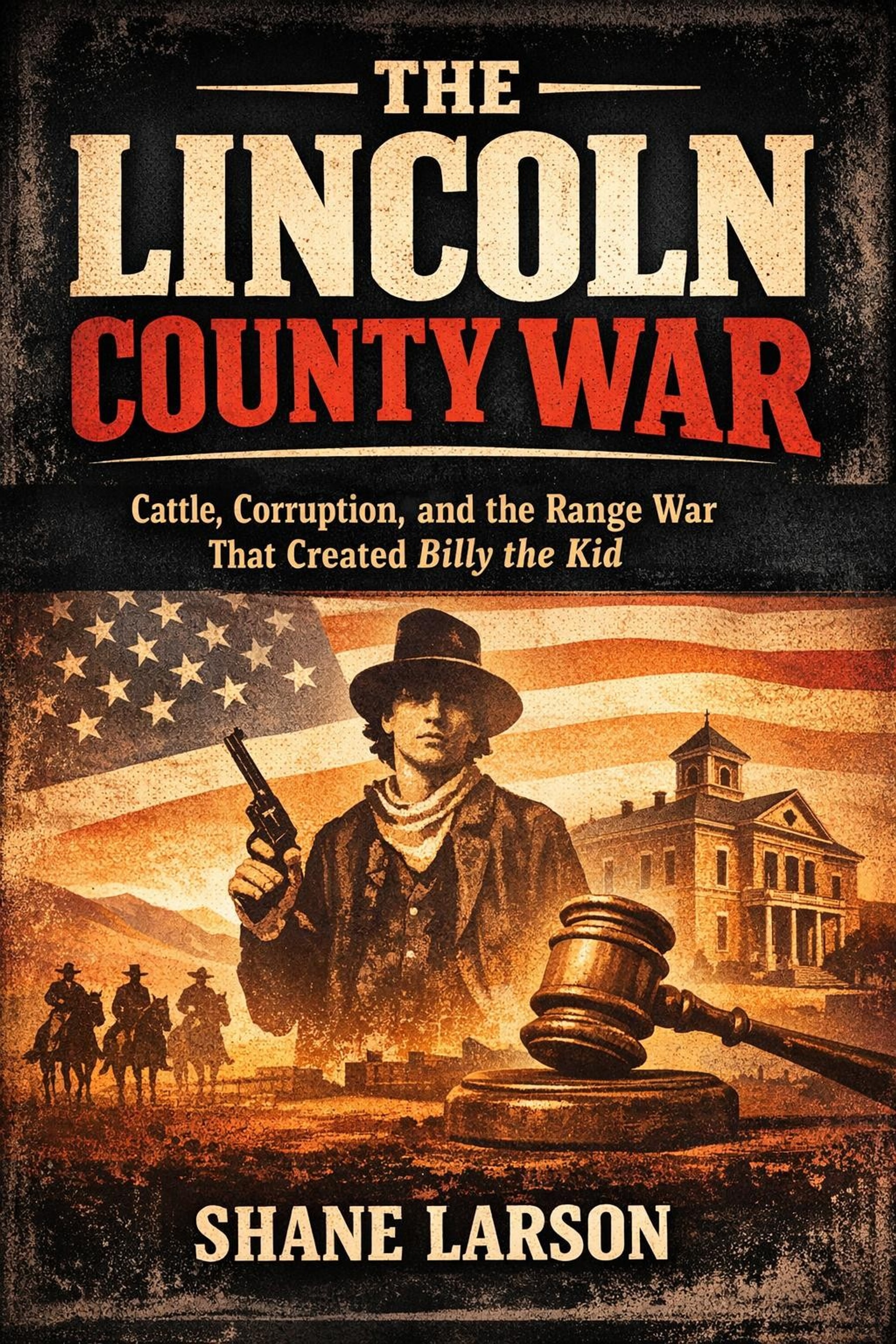
Yes — it's Book 19 of The Wild West series from Peak Grizzly Publishing. Each volume stands alone. It pairs naturally with the series' companion volumes on the Lincoln County War, the other great range conflict, and on Tom Horn, the Association enforcer whose career grew directly out of this world.
Is the book available on Kindle Unlimited?
Yes. Like most Peak Grizzly titles, it's enrolled in Kindle Unlimited, so subscribers can read it at no additional cost.
If You Liked This, You Might Like
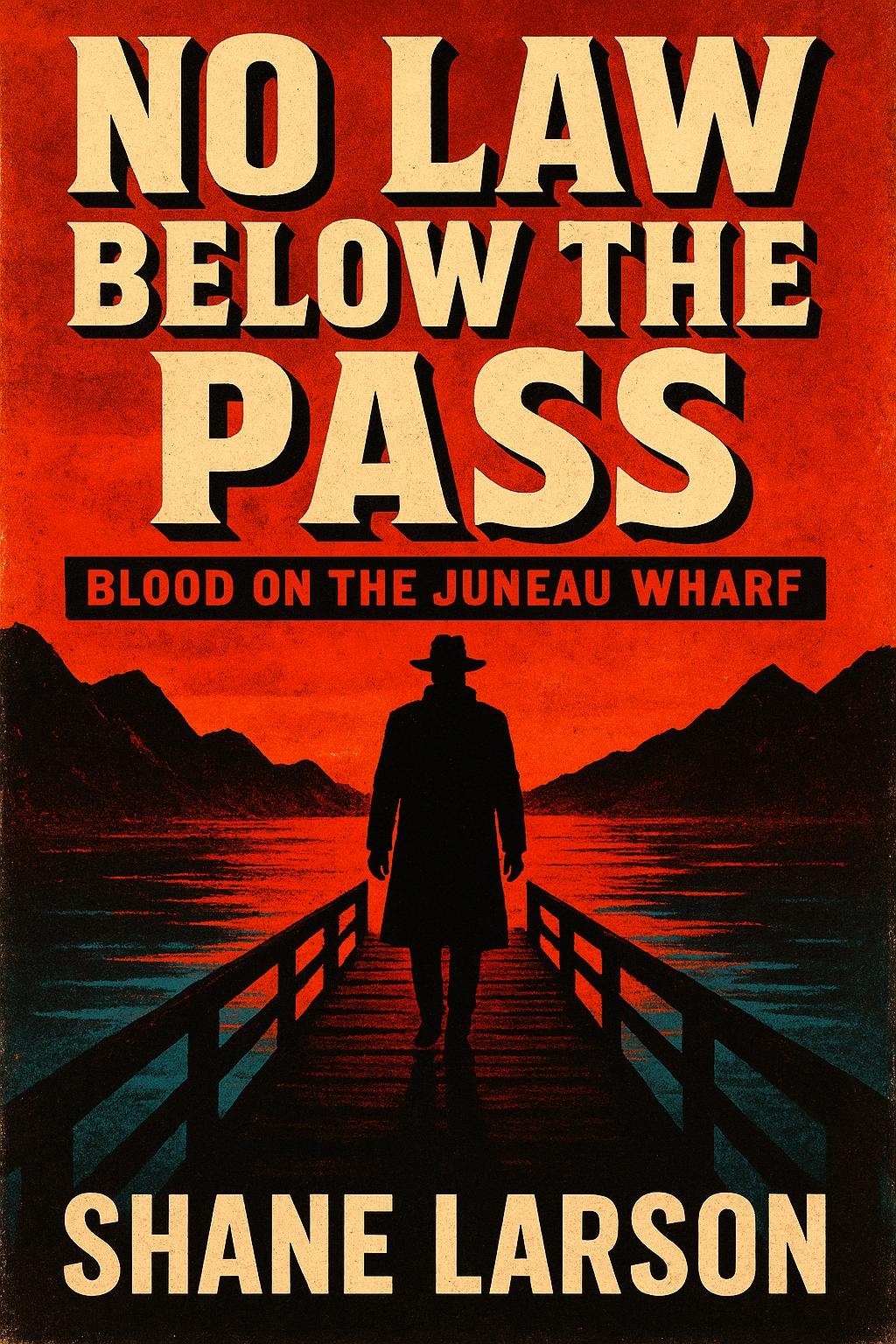
- No Law Below the Pass — a frontier thriller set in the same lawless West, where justice is whatever the men with guns say it is.
- The Institutional Collapse Pattern — the analytical companion to this story: what happens when courts, press, and government stop being trusted by the people they govern.
- Spartacus — another documented uprising of the powerless against organized wealth, two thousand years earlier and with the same lesson about who writes the record.
The Johnson County War is what the frontier looked like when the myths are set aside: organized capital deciding the law no longer served it, and one county deciding otherwise. The paper trail survived. This book follows it.
Book 19 of The Wild West series.
Included with Kindle Unlimited — read it free if you're a member.
New Wild West / American Frontier History releases and free chapters — no spam, unsubscribe anytime.
More in The Wild West Series
View series →