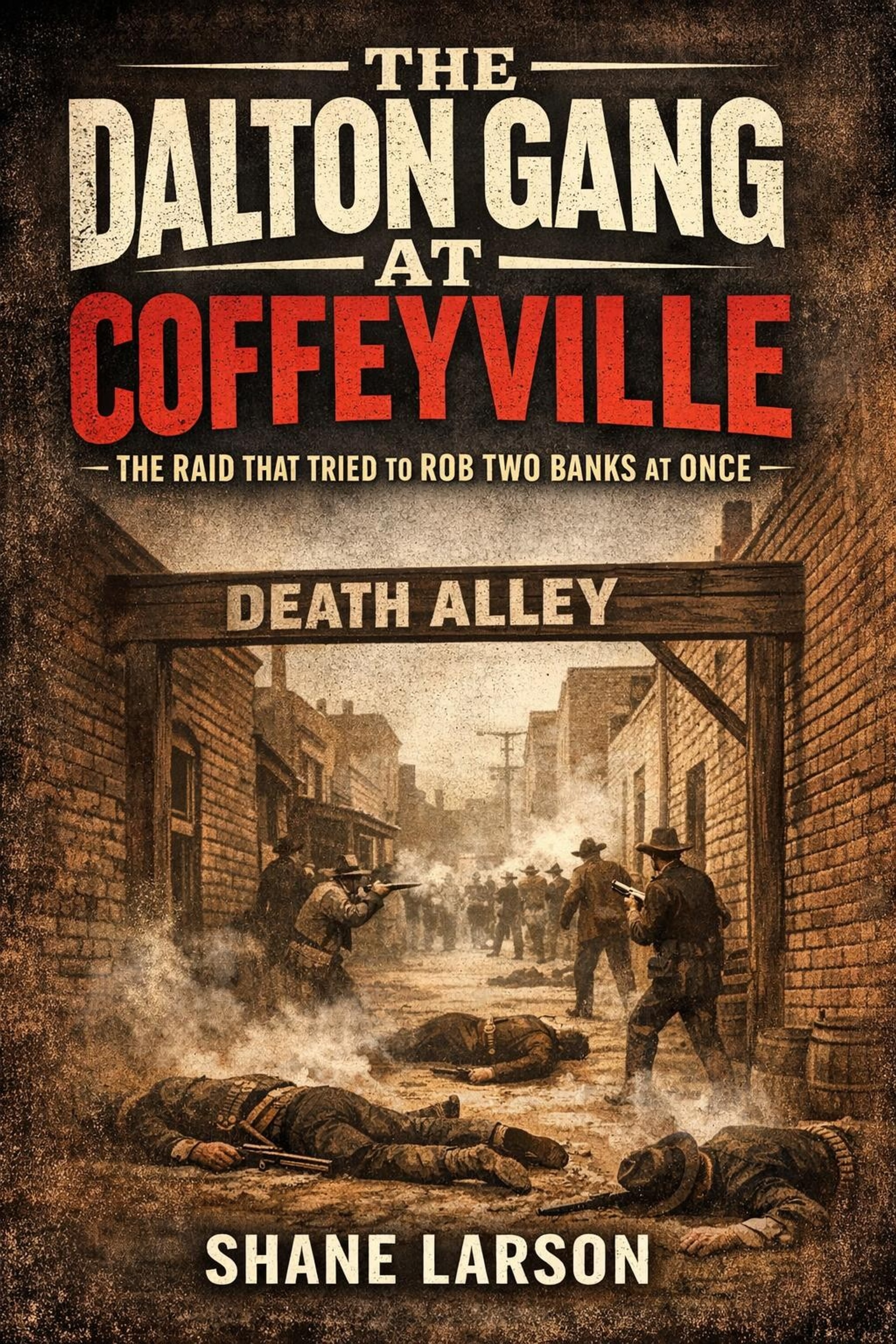
The Dalton Gang at Coffeyville
The Raid That Tried to Rob Two Banks at Once
By Shane Larson · The Wild West Series (Book 4)
About This Book
The bookkeeper looked at the man pointing a Winchester at him and told a lie that would kill four outlaws. The vault's time lock, he said, wouldn't open for another few minutes. It was already open. Grat Dalton — standing in a bank in the town where everyone knew his face, wearing a false beard that fooled no one — decided to wait.
Outside, Coffeyville, Kansas was arming itself. Word had moved down the plaza faster than the gang had crossed it, and hardware store owners were handing rifles and shotguns over their counters to clerks, merchants, and anyone else willing to shoot. The Daltons had planned to be gone before the town understood what was happening. Instead, they had left their horses in a narrow alley a block away — the hitching rail they'd counted on had been torn out for street repairs — and every one of those minutes the bookkeeper bought was a minute the citizens of Coffeyville spent loading.
It was the morning of October 5, 1892. In roughly ten minutes, the most ambitious bank robbery ever attempted in the American West would be over, and so would the era that produced it.
The Story
The Dalton Gang should never have existed. The Daltons were a lawman's family — older brother Frank died wearing a deputy U.S. marshal's badge in the service of Judge Parker's famous Fort Smith court, and Bob, Grat, and Emmett all rode as lawmen in Indian Territory before anything went wrong. This book traces how three brothers crossed from one side of the badge to the other: unpaid fees, horse theft charges, whiskey-running, and finally a string of train robberies across two territories that made the Dalton name notorious by 1891.
But notoriety wasn't the goal. Bob Dalton wanted legend. The family was distantly connected to the Younger brothers, and Bob measured himself against the James-Younger Gang — the most famous outlaws America had produced. His answer to their legacy was audacity itself: rob two banks, the C.M. Condon and the First National, in the same town, at the same hour. Not just any town. Coffeyville — where the Daltons had grown up, where the neighbors knew their walks and their voices, where cheap false beards were never going to be enough.
What happened next is one of the best-documented gunfights in frontier history, and this book reconstructs it nearly minute by minute: the alley that became a killing ground, the citizens firing from doorways and second-story windows, the town marshal dying in the street, and the final tally — Bob Dalton, Grat Dalton, Bill Power, and Dick Broadwell dead, alongside four townsmen who fell defending their banks. Only Emmett Dalton came out alive, carrying more than twenty wounds, beginning a second act nobody could have scripted: a life sentence, a pardon, reinvention as a reformed man, and a strange final chapter on the edges of early Hollywood, selling the story of the raid that killed his brothers.
Throughout, the documented record — bank ledgers, the coroner's findings, newspaper accounts filed within hours, trial transcripts — is held up against the dime-novel version that began forming almost before the bodies were photographed. The gap between the two is where the real story lives.
What You'll Discover
- Why a family that produced a deputy U.S. marshal also produced three of the West's most wanted outlaws — and what pushed Bob, Grat, and Emmett off the lawman's path they started on
- The psychology behind robbing your own hometown, and why Bob Dalton believed the double-bank raid would put the gang above Jesse James in the outlaw pantheon
- How two small accidents of circumstance — a hitching rail removed for street repairs and a bookkeeper's invented time lock — dismantled the plan before a shot was fired
- A near minute-by-minute reconstruction of the fight in Death Alley, drawn from eyewitness testimony and physical evidence rather than legend
- The uncomfortable truth the raid revealed: it wasn't a lone gunfighter who ended the gang era, but an ordinary town with rifles behind its store counters
- Emmett Dalton's improbable survival and stranger afterlife — prison, pardon, real estate, and Hollywood
- Where the documented record and the dime-novel myth part ways, and how the legend got built so fast
Why I Wrote This
Coffeyville kept coming up in the margins of other stories I was researching — always as a punchline, the raid that went wrong. What hooked me was how little of the standard version survives contact with the sources. The gang wasn't undone by a heroic lawman or a rival gunfighter; it was undone by street repairs, a quick lie, and shopkeepers. That's a much more interesting story than the myth, and it says something true about how the gang era actually ended — not with a showdown, but with ordinary people who'd simply had enough. The trial records and the newspaper accounts filed within hours of the fight are remarkably rich, and they deserve a book that trusts them over the legend.
Frequently Asked Questions
Do I need to read The James-Younger Gang at Northfield first?
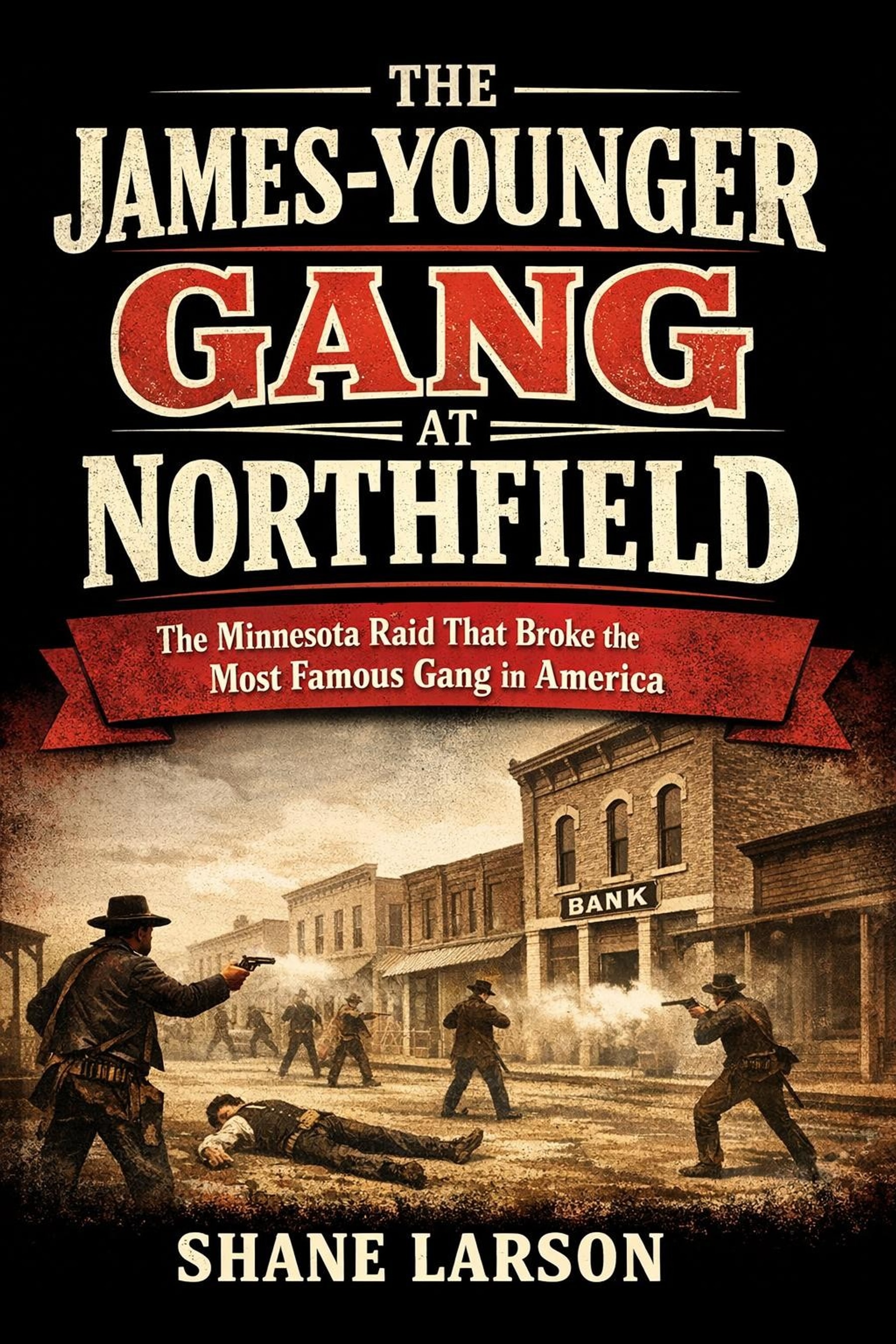
No. Each book stands alone. But the two raids are natural companions — Northfield in 1876 and Coffeyville in 1892 are bookends of the same phenomenon, famous gangs destroyed by armed townspeople rather than lawmen — and reading them together sharpens both stories.
Is this narrative history or an academic study?
Narrative history. It reads as a story — the gang's formation, the plan, the raid, the aftermath — but every scene is grounded in primary sources: coroner's findings, bank records, contemporary newspaper coverage, and trial transcripts. Sources are discussed openly in the text rather than buried.
Did Emmett Dalton really survive more than twenty gunshot wounds?
He did, and his survival is one of the strangest parts of the story. The book follows his full arc: capture, trial, fourteen years in prison, pardon, and his later career trading on the raid's notoriety in Los Angeles, including his connections to early Hollywood.
How much of the popular Dalton Gang legend is true?
Less than you'd think. The dime-novel version began forming within days of the raid, and the book's final chapters deal directly with the mythmaking — what the documented record supports, what it contradicts, and why the legend took the shape it did.
Is this book available on Kindle Unlimited?
Yes. Like the rest of the Peak Grizzly frontier history line, it's enrolled in Kindle Unlimited, so subscribers can read it at no additional cost.
If You Liked This, You Might Like
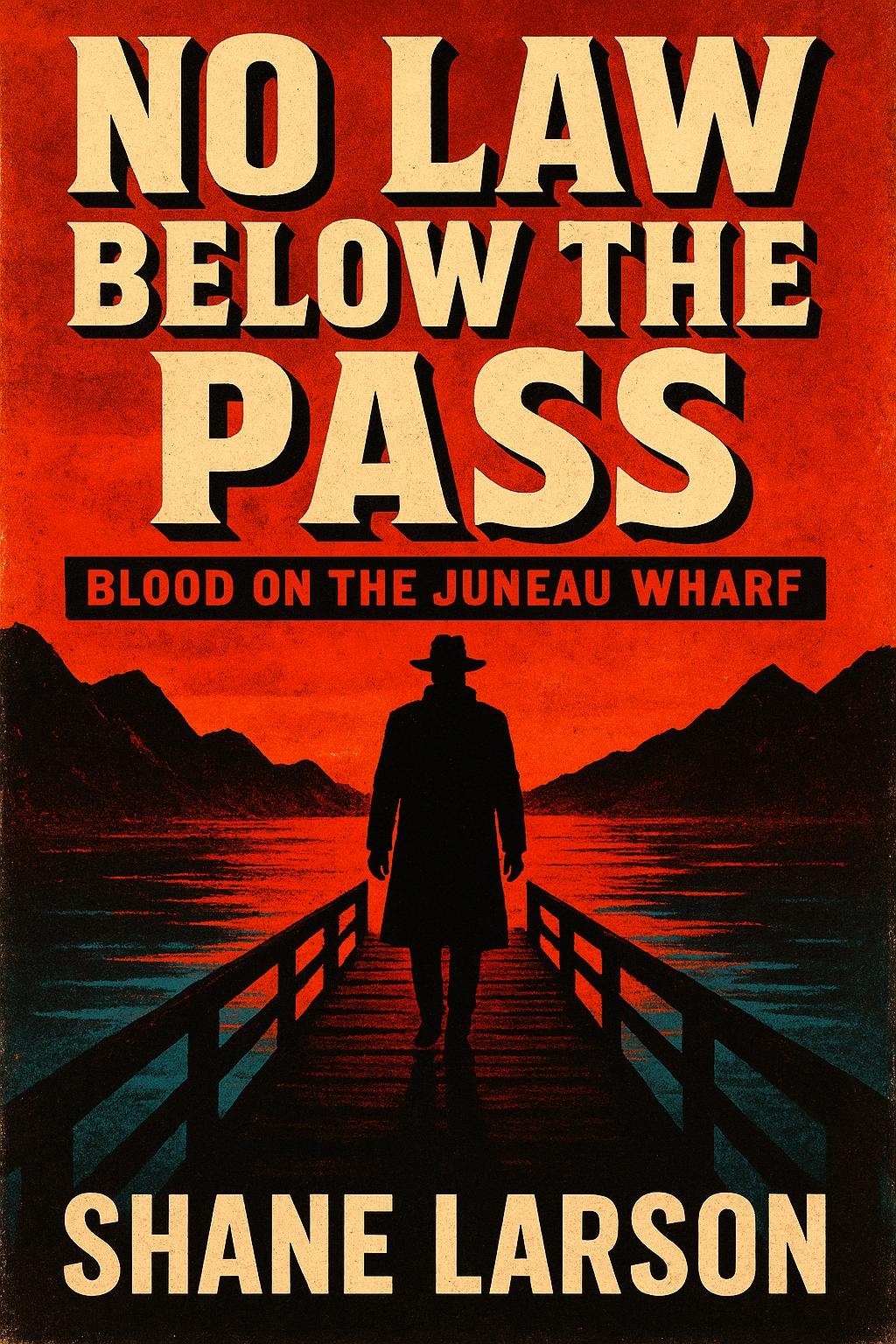
- No Law Below the Pass — a frontier thriller set on the lawless Juneau wharf, for readers who want the gang era's atmosphere in fiction form.
- Digital Outlaws — the same story a century later: ambitious outlaws, overconfidence, and the moment the world stopped tolerating them.
The Dalton raid lasted about ten minutes, and America's outlaw-gang era ended inside them. This is the documented story of how ambition, hometown arrogance, and a torn-out hitching rail brought it all down in a Kansas alley.
Included with Kindle Unlimited — read it free if you're a member.
New Wild West / American Frontier History releases and free chapters — no spam, unsubscribe anytime.
More in The Wild West Series
View series →
More in This Genre
View all →