Rome Destroyed Carthage Because It Had Recovered Too Well
August 5, 2026 · 6 min read
The destruction of Carthage in 146 BC is usually filed as the end of a long war between rivals. That framing makes it comprehensible and it is wrong in a specific way.
By the time Rome moved to destroy it, Carthage was not a rival. It had been comprehensively beaten half a century earlier and had accepted terms designed to keep it beaten permanently. The war that followed was not a contest of equals but the enforcement of a settlement that left no room for recovery.
The Terms After Zama
The Second Punic War ended in 202 BC, and the settlement was not a peace between equals. Carthage surrendered its war fleet, gave up its territory outside Africa, and agreed to pay an indemnity of ten thousand talents over fifty years. That sum was enormous even by Roman standards; it represented years of accumulated wealth extracted from the city's trading networks across the western Mediterranean.
The critical clause was political: Carthage could not wage war, anywhere, without Rome's permission. Not merely against Rome — against anyone. A state that cannot defend itself without asking is not a sovereign state; it is a protectorate that pays. The clause removed any independent foreign policy and placed every military decision under Roman review. Carthage accepted, and then did something that turned out to be its fatal error.
It prospered.
Stripped of empire and military expenditure, the city fell back on the thing it had always been best at — commerce and intensive agriculture — and made a great deal of money. Within a decade it offered to pay the entire remaining indemnity in a lump sum. Rome refused, which is worth pausing on: the recipient of a fifty-year debt declined early settlement, because the annual payment was not really about the money. It was the visible, recurring performance of subordination. The refusal kept Carthage visibly bound to the original terms long after the immediate threat of Hannibal had passed.
The Trap
The clause about waging war contained a mechanism nobody needed to design deliberately.
Carthage's neighbour was the Numidian kingdom under Masinissa, a Roman ally, and Masinissa spent decades taking Carthaginian territory piece by piece. Each time, Carthage did the correct thing under the treaty: it complained to Rome and asked for arbitration. Rome arbitrated, repeatedly, and repeatedly found for its ally. The pattern continued across more than forty years, with boundary disputes settled in ways that steadily shifted fertile farmland eastward. So a city forbidden to defend itself was steadily robbed by a state Rome protected, through a process Rome adjudicated.
Eventually, in the late 150s, Carthage fought back. Militarily it went badly — the Carthaginians lost — but that was beside the point. They had waged war without permission. The treaty had been broken, and Rome now had a legal justification produced by a situation that made compliance impossible. The Numidian encroachments had created an incentive structure in which Carthage could either lose land indefinitely or violate the treaty and supply Rome with the pretext it needed.
Meanwhile, in Rome, Cato the Elder had been ending every speech he gave, on any subject whatsoever, with the same line: Carthage must be destroyed. He is said to have brought fresh figs into the Senate to demonstrate how close and how fertile the place was. The campaign was relentless and it was not a response to danger; it was cultivation of a decision. Cato's figs were not evidence of imminent attack but of Carthage's restored agricultural capacity under the very restrictions meant to prevent it.
The Demands
Rome declared war in 149 BC and then made a sequence of demands, each of which Carthage met.
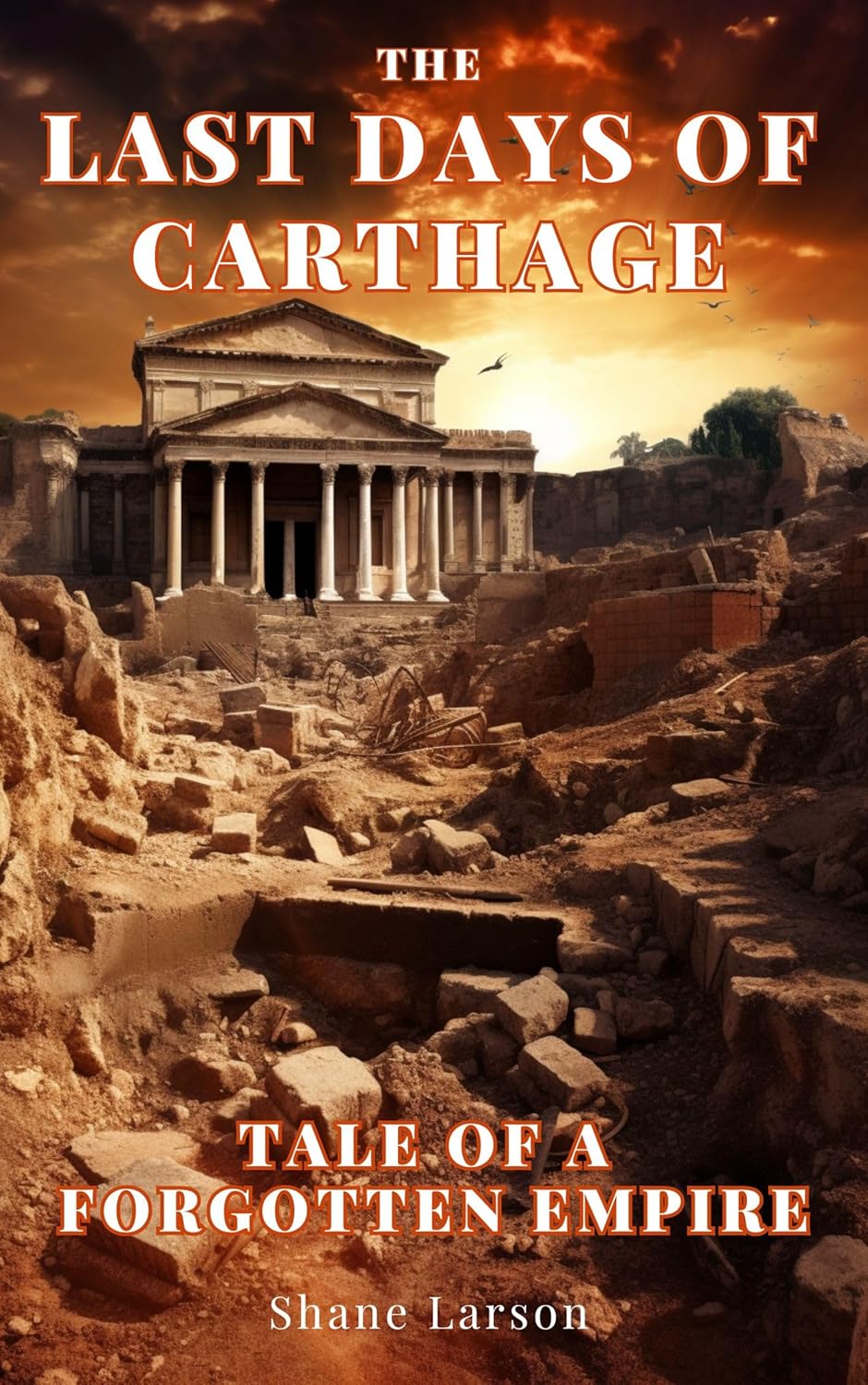
The Last Days of Carthage
Hand over three hundred children of the nobility as hostages. Done. Surrender all weapons and war material. Done — the sources describe an enormous quantity of armour and catapults given up, which is precisely what a city that intends to fight does not do. The surrender included both current armaments and the means to produce more, leaving the population dependent on Roman protection that had already proven unreliable.
Then the final demand: abandon the city entirely and resettle at least ten miles from the coast.
For a merchant city, that is not relocation. It is dissolution — the destruction of the harbour, the trade, the entire basis of existence, with the physical structures left standing as a technicality. The demand removed the economic foundation that had allowed Carthage to pay its indemnity early and recover some measure of wealth. Carthage refused, and fought for three years with almost nothing, having already surrendered its weapons.
What Actually Happened, and What Didn't
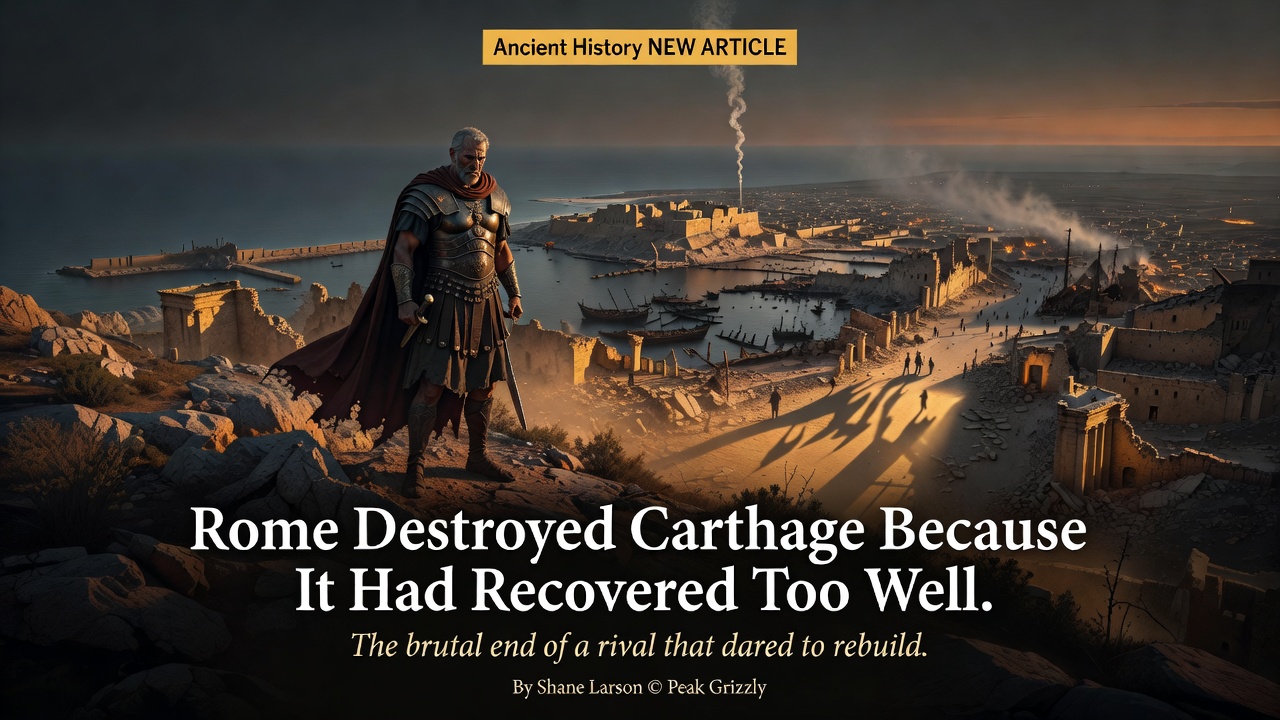
The siege ended in 146 BC under Scipio Aemilianus. The fighting inside the walls went street by street and house by house for days. The city was burned. The survivors — a small fraction of the pre-war population — were sold into slavery.
The historian Polybius was present, as Scipio's associate, and left an account of the moment that has outlasted almost everything else about the war. Watching the city burn, Scipio wept, and quoted a line from Homer about the destined fall of Troy. Asked why, he said he was thinking about Rome, and the day some other power would stand over its ruins. The reflection linked the destruction of Carthage to the fragility of all empires, including the one that had just won.
The most famous detail of the story, however, did not happen. Rome did not sow the ground with salt.
No ancient source says it. Not Polybius, who was there. Not Appian, who gives the fullest surviving narrative. Not Livy. The salting story does not appear in the historical literature until the modern era, apparently as an embellishment that then propagated through textbooks because it is memorable and sounds like something Romans would do. It is also economically absurd. Salt was valuable, the quantity required to sterilise a large territory would have been enormous, and Rome went on to make the region one of its most productive grain-producing provinces. A century later, Roman Carthage was refounded on the site and became one of the largest cities in the empire.
The truth is grimmer than the myth, and less theatrical. Rome did not need to poison the earth. It killed or enslaved the people and took the land.
Why It Matters
The Third Punic War is the clearest ancient case of a state destroying another not because it was dangerous but because it had recovered — and because a faction inside the destroying state had spent years making that outcome the default position.
Carthage's mistake, if it made one, was demonstrating that a beaten enemy could still be prosperous. That prosperity was read in Rome not as evidence that the settlement had worked but as evidence that it had not gone far enough. The early offer to pay the indemnity in full, the renewed agricultural output, and the continued commercial activity all showed that the restrictions had not produced permanent weakness. Once that became visible, the treaty's internal contradictions made conflict nearly inevitable. And the man who carried it out understood exactly what he was participating in, which is why the scene Polybius recorded has lasted. Scipio was not weeping for Carthage.
The Last Days of Carthage: Tale of a Forgotten Empire covers the whole arc — the rise, the three Punic wars, Hannibal and Zama, the long descent under the treaty, the siege, and the aftermath.
The Last Days of Carthage
New posts and releases, straight to your inbox. No spam, unsubscribe anytime.