The Masada Ramp Took Weeks to Build, Not Years
September 27, 2026 · 6 min read
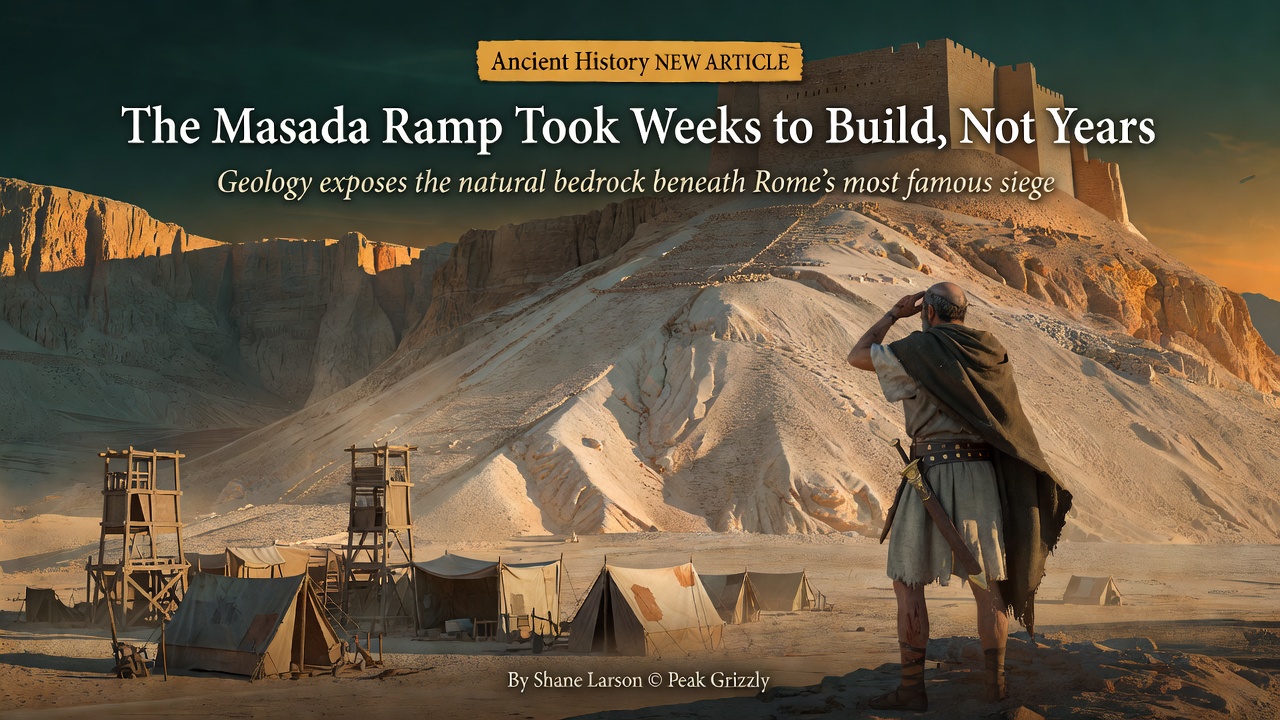
The picture most people carry of Masada's siege ramp is a mountain of hauled earth — a years-long, grinding project, basket by basket, while the defenders on the summit watched their doom rise toward them a few feet at a season. It is a powerful image, and the geology does not support it. The great pale slope that climbs the western side of Masada is mostly not a Roman construction at all. It is a natural spur of bedrock, part of the mountain itself, that the Roman engineers recognized, surveyed, and finished. What the Tenth Legion actually built — a compacted working surface over the spur and a stone platform at the top to carry an ironclad assault tower — was, by modern engineering estimates, a matter of weeks.
That correction is worth more than trivia. It changes the timescale of the most famous siege story in the ancient world, and it is only one of the things the ground at Masada is still able to say. Because here is the remarkable fact about this site: the siege works survive more completely than those of any other siege in antiquity, and they can be measured, dated, and reasoned about without believing a single word anyone ever wrote.
A siege you can read in the ground
When the Romans finally marched away from Masada, they left everything standing, and the Judaean desert kept it. There were no farmers to plow the site under, no later towns quarrying the walls for building stone, and almost no rain. Nineteen centuries later, a wall still runs around the base of the mountain, climbing spurs and dropping into ravines, closing a circuit of well over two miles. At intervals along it sit eight camps, laid out in the tidy rectangles the legions built everywhere from northern Britain to the Euphrates: gates facing the mountain, internal streets crossing at right angles, row after row of low stone footings where the tents stood. Surveyors in the 1930s lettered the camps A through H, and the letters have stuck. Camp F, on rising ground to the northwest, held the command post of Lucius Flavius Silva, the governor of Judaea, who could watch every part of his siege from its gate.
All of it is measurable. The circuit can be walked and its towers counted. The garrison of each camp can be estimated from its area and the spacing of its tent lines, which is how modern reconstructions arrive at a besieging force of several thousand — a full legion, the Tenth Fretensis, plus auxiliary units. The volume of material the ramp required can be calculated, and has been. Troy is a mound, Alesia is a reconstruction from crop marks and excavation, and the siege lines of Jerusalem are buried under the living city. Masada is the one place on earth where an entire siege — problem and solution — sits legible in the landscape.
The spur under the ramp
The ramp is where measurement bites hardest into the story. In the traditional telling, it is the siege's centerpiece and its clock: an immense engineered slope raised against the cliff, implying months or years of labor under the defenders' eyes. Geological work on the western approach found instead that the bulk of the slope was always there — a spur of natural rock running up out of the desert and dying against the cliff, which the engineers exploited exactly as engineers should. The Roman contribution was a capping: fill and timber cribbing to level the spur into a working grade, and the platform at its head for the tower and the battering ram that breached the casemate wall in the spring of AD 73 or 74. (Even the year is argued — it turns on the date of Silva's appointment, known only from fragmentary inscriptions.)
Masada
Reduce the moved volume that far and the labor arithmetic collapses from years to weeks. And the shorter figure fits everything else we can check, because the logistics of this siege ran on a brutal clock of their own. The besieged, sitting on a hundred-year-old royal fortress, had rock-cut cisterns holding an enormous reserve of flash-flood water and storerooms provisioned for years. The besiegers, camped in one of the driest places on earth, had nothing — every day of the siege, water and grain for several thousand men and their animals had to come across the desert on supply lines that were built and garrisoned before the siege could begin at all. In this siege, thirst besieged the Romans. A Roman commander in that position does not choose a slow method when a fast one exists. Silva's whole operation reads as a professional force solving a desert problem at maximum speed, and the ramp's geology now agrees with that reading.
The wall nobody needed
Which leaves the strangest object at Masada: the wall. Circumvallation — sealing a besieged position inside a continuous fortified line — was standard Roman practice where it earned its cost, against a city that might break out in force or a relieving army that might appear behind the besiegers. Caesar's double lines at Alesia faced exactly those threats. At Masada there were no such threats. The defenders numbered a few hundred, they held a summit with effectively one practical route down, and there was no relieving force anywhere in existence; the war had been over, in every meaningful sense, for three years. A ring of picket posts would have sealed the mountain. Rome built a two-mile engineered wall with towers, and eight fortified camps to hold it, in a wilderness where almost no one would ever see the work.
That is the question the engineering forces on you, once the ramp has been cut down to weeks: not how — the how is legible in the stones — but why so much. Jerusalem had fallen in AD 70. The Temple was burned, the triumph had been celebrated in Rome, and mints across the empire were striking Judaea Capta coins. Masada was the last, smallest piece of a finished war, and the empire chose to finish it with a legion, a wall, a ramp, and a fortune in desert logistics — the fastest and most expensive option available, applied to an enemy who could not go anywhere. Siege works on that scale, in that place, at that date, are not well explained as tactics. They are better read as a statement, written in stone at the far edge of a province, that resistance to Rome would be pursued to the last defensible position, at any cost, no matter how little was left of it. The audience mattered less than the record. Armies write messages this way when they intend the ground itself to remember.
And the ground did. It is a strange inversion, and it is the truest thing about the site: the most durable witness at Masada is not the famous story of the defenders' last night — which rests entirely on the account of a single ancient writer, working in Rome, who was not there. It is the Roman engineering, which cannot have been invented by anybody.
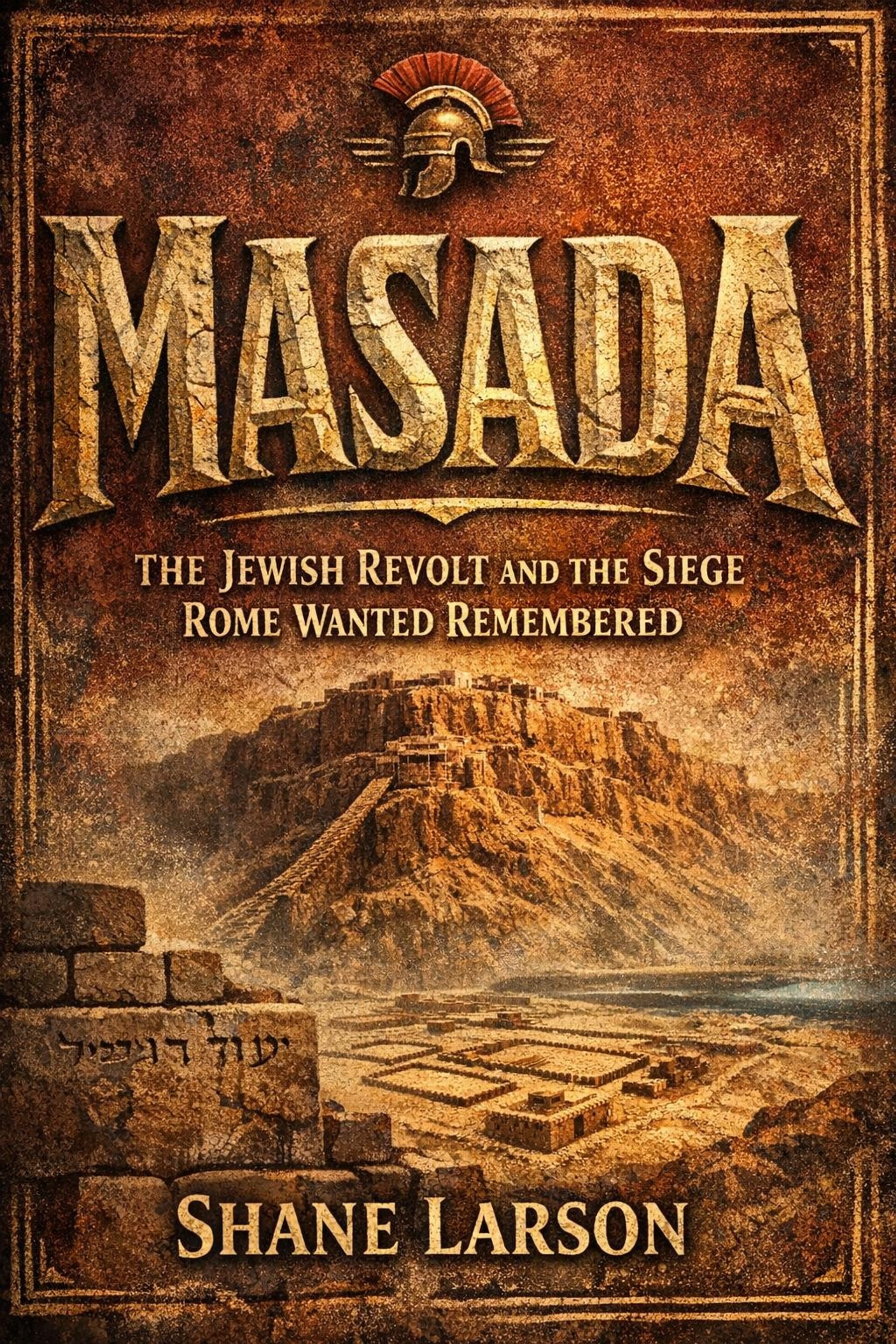
The siege works are one half of Masada; the other half is the story told on top of them, and the two do not quite touch. My book *Masada: The Jewish Revolt and the Siege Rome Wanted Remembered* covers both: the province Rome could not govern, the revolt and the war that destroyed Jerusalem, the siege as the engineering problem the Tenth Legion actually solved — and then the evidence, weighed honestly, for what did and did not happen on the summit. If the ramp's real timescale surprised you, the book holds more of the same: measured facts sitting beside a famous story, and a plain accounting of where each one stands.
Masada
New posts and releases, straight to your inbox. No spam, unsubscribe anytime.