The Story Behind *No Law Below the Pass*
June 24, 2026 · 5 min read
The Story Behind No Law Below the Pass
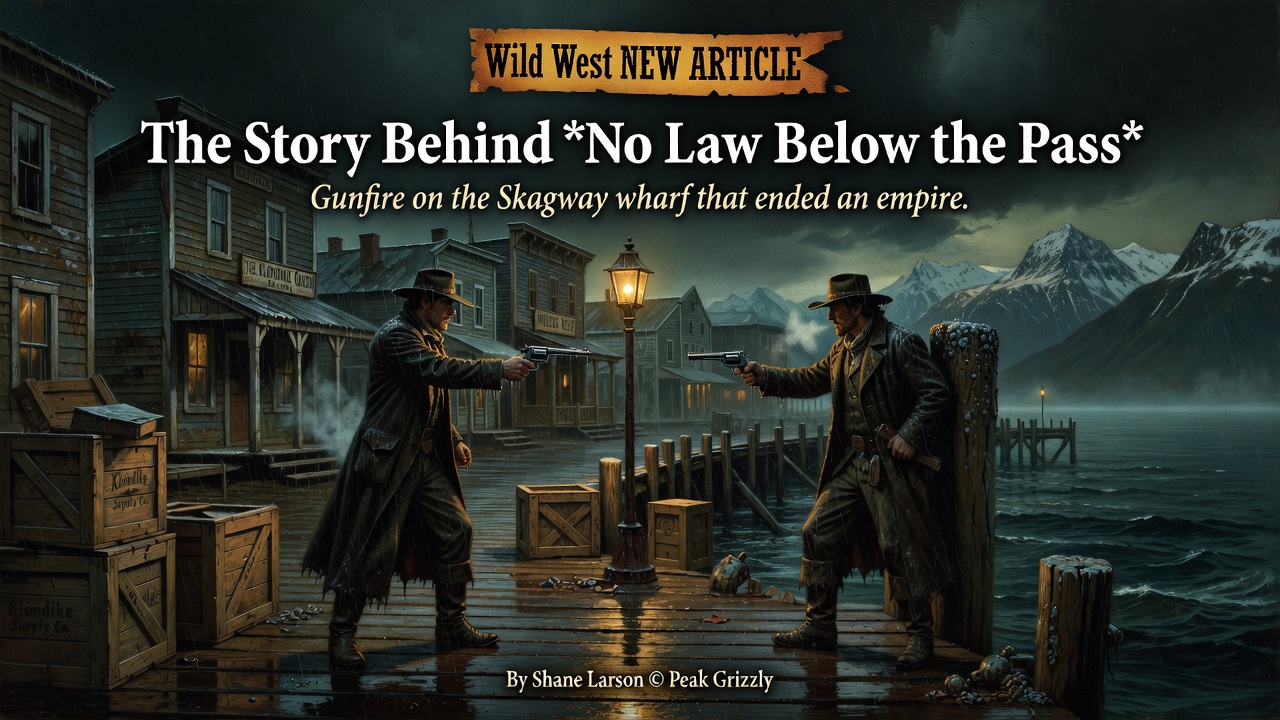
A few years ago I stumbled onto a single, almost unbelievable fact: on the night of July 8, 1898, in a muddy Alaskan boomtown called Skagway, two men shot each other dead on a wharf. One was a con man who had built a criminal empire out of nothing. The other was a town surveyor who decided that empire had to end. Both died for it. And I couldn't stop thinking about them.
The con man was Jefferson Randolph "Soapy" Smith, and what I learned about him only deepened the spell. Soapy didn't just run a few crooked card games. He ran a town. Saloons, gambling halls, a telegraph office whose wires didn't connect to anything—they just took your money to send a message that went nowhere. Fake "information bureaus" greeted stampeders fresh off the boats, all friendliness and helpful advice, and steered them straight into ruin. By the time a man understood what was happening to him, he was already broke, ashamed, and a thousand miles from home. Men arrived with pokes full of dust or cash from selling a farm back home, only to find their "guides" were on Soapy's payroll, their rooms already watched, their next steps mapped out before they even knew the layout of the streets.
That detail—the telegraph to nowhere—was the one that hooked me. It told me everything about the kind of place Skagway was in the spring of 1898. Not a lawless free-for-all, exactly, but something stranger and more sinister: a town that looked like civilization, with offices and clergymen and helpful clerks, and was in fact a single machine engineered to take everything you had. The illusion worked because it mimicked the order men expected from back home—the polite clerk, the official-looking sign—while the real machinery ran underneath.
Finding Caleb
I knew early on that I didn't want to tell this story through Soapy himself, or even through Frank Reid, the surveyor who stopped him. I wanted to tell it through one of the thousands of ordinary men the machine chewed up. So I invented Caleb Ross—a Wisconsin farmer who mortgaged his whole life for a shot at the goldfields, who steps off the boat decent and steady and hopeful, and loses it all in a single night. The choice let me watch the town work on someone who had no prior stake in its power struggles, someone whose only armor was the habits of ordinary decency.
What interested me wasn't Caleb's ruin. It was what comes after the ruin. Because when the law won't help you—and in Skagway there was no law worth the name—a wronged man has to decide what kind of justice he's willing to become. Caleb falls in with the Committee of 101, the real-life body of merchants and citizens who finally rose up against Soapy. And here the book asks the question that kept me writing it: when good people decide to become their own law and their own executioner, where exactly is the line between justice and the next tyranny?
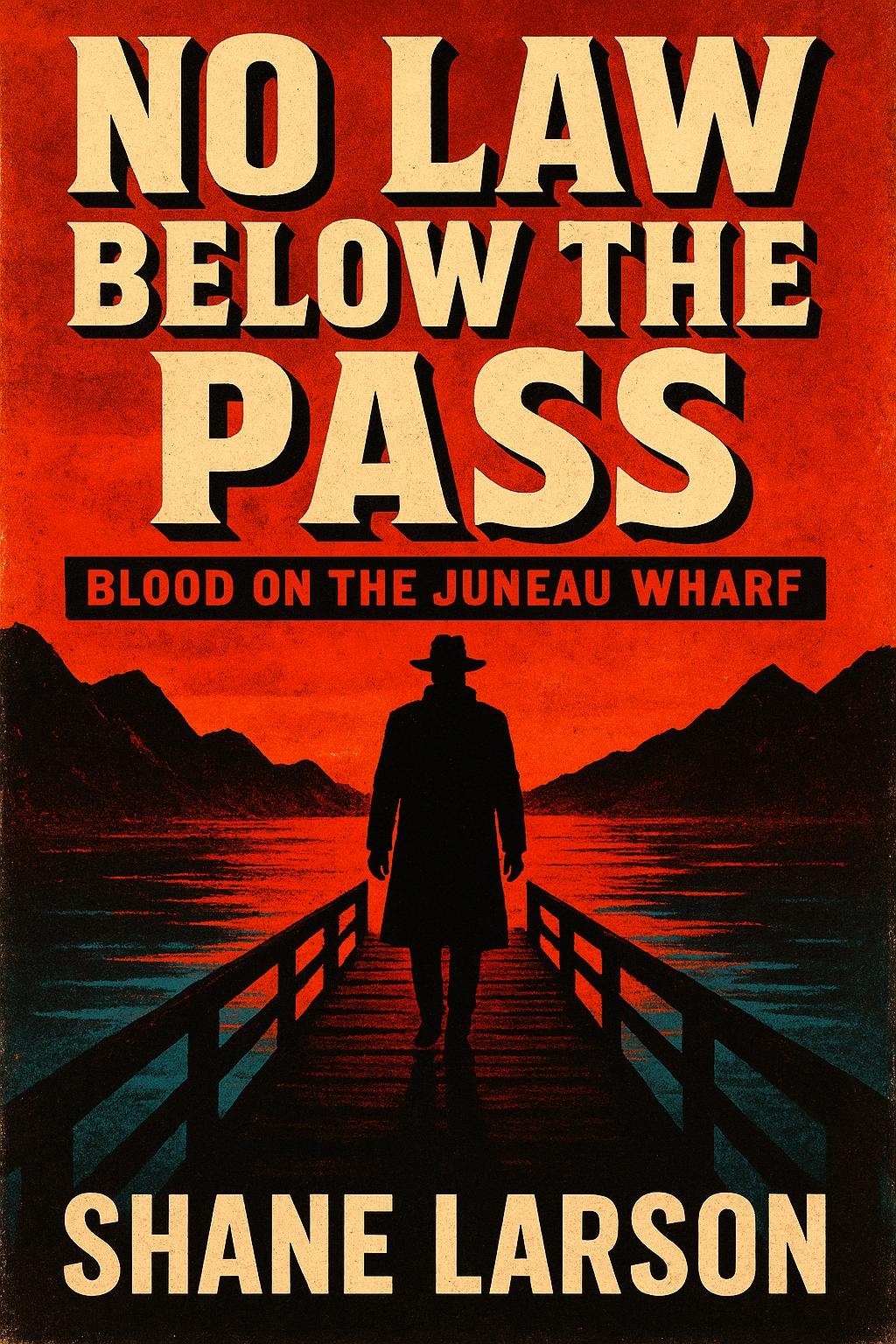
No Law Below the Pass
I didn't want easy answers. Caleb is pulled in two directions by two people. There's Etta Calloway, a widowed boardinghouse keeper who has watched this town devour decent men and distrusts the vigilantes almost as much as she despises Soapy. She sees the pattern repeating—men forming up with good intentions, then letting the power of the group carry them further than any one of them planned. And there's Dolan Pryce, a freighter on the Committee who hungers less for justice than for blood, and who keeps showing Caleb how good rage can feel—and how dangerous that is. Pryce became Caleb's dark mirror, the man he could so easily turn into, the one who makes the vigilante path feel not only necessary but almost pleasurable.
A town tipping toward bloodshed
What I hope readers feel, page by page, is the mounting dread of a place coming apart. Skagway in those months really did split into two armed camps. Threats turned into beatings; beatings into murder. Men who had arrived looking for gold found themselves choosing sides in a conflict that had nothing to do with the Klondike and everything to do with who would control the narrow strip of mud between the docks and the trail. I've tried to honor the true history while giving it the pulse of a thriller—because the history genuinely was a thriller, building to that fated collision on the Juneau Wharf. The real Committee of 101 posted warnings and seized weapons; Soapy's men answered with their own show of force. Every public meeting became a test of how many men each side could gather and whether anyone would be the first to draw.
I won't pretend the book is gentle. There's frontier violence in these pages, and the language of hard men in a hard place. But I worked to keep the violence meaningful rather than gratuitous—it costs something, every time, both for the town and for Caleb's soul. Readers who love richly researched historical fiction will find the world here: the rigged faro tables, the fake offices, the rain and the mud and the gold-fever crowds. Readers who come for the propulsive story of a reckoning will find that too.
If you enjoyed the moral weight and dark texture of The Sisters Brothers, or the lawlessness-and-class world of The Cold Millions, I think you'll feel at home. And if you simply love a good frontier story built on true events, I wrote this one for you.
What it's really about
In the end, this is a book about vengeance—how seductive it is, how easily a crowd of the wronged becomes a mob, and how hard it is to step back from the edge once you've tasted the rage. Soapy and Reid really did die together on that wharf, but the harder question is what happened to the men left standing in the crowd, guns in hand, having to decide who they were going to be when the smoke cleared. Caleb is my answer to that question—or rather, his struggle is. The pull between Etta's caution and Pryce's certainty forces him to test, again and again, whether he can keep his own anger from becoming the very thing he set out to destroy.
I've lived with these people and this town for a long time now, and it's strange and wonderful to finally hand them over to you.
No Law Below the Pass is available now. If you read it, I'd love to hear what you make of Caleb's choice on that wharf—and whether you think the town's reckoning was justice, or just another kind of lawlessness wearing a better coat. Thank you for coming north with me.
No Law Below the Pass
New posts and releases, straight to your inbox. No spam, unsubscribe anytime.