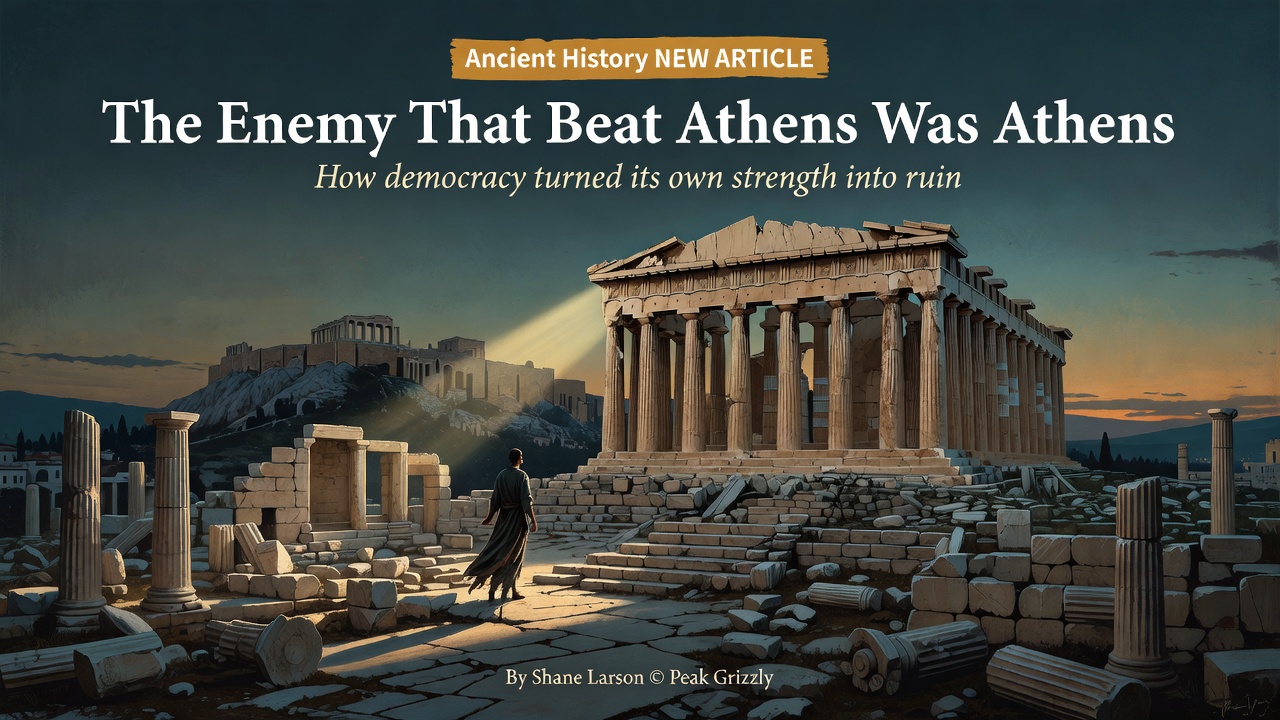
The Enemy That Beat Athens Was Athens
July 16, 2026 · 7 min read
There's a comfortable way to tell the story of the Peloponnesian War, and it goes like this: mighty Athens, the democracy, the golden age, was ground down by grim, militaristic Sparta over 27 brutal years. Culture lost to discipline. The poets lost to the soldiers.
It's a clean story. It's also mostly wrong.
Sparta did not out-fight Athens into submission. For most of the war Sparta could not touch the thing that actually mattered — the Athenian fleet and the empire it protected. What defeated Athens was Athens. Nearly every fatal blow the city absorbed can be traced back to a decision Athens made about itself, usually against the advice of someone in the room who saw it coming. The war is not a tragedy of a strong enemy. It's a case study in how a powerful, sophisticated society under sustained stress can systematically dismantle its own advantages.
That's a more useful story than the tidy one, because it's the one that repeats.
Athens started the war with a strategy built to win
Here's the part people forget: Athens had a plan, and it was a good one.
Pericles, the general and statesman who dominated Athenian politics at the war's outbreak in 431 BC, understood exactly what kind of power Athens was and wasn't. On land, Sparta and its allies fielded the most feared heavy infantry in the Greek world. In a set-piece battle of hoplites, Athens would lose. So Pericles' strategy was simple and disciplined: don't fight that battle.
Instead, Athens would pull its rural population inside the city walls, connected to its port by the Long Walls — a fortified corridor that made the city effectively an island supplied by sea. Let the Spartans march into Attica and burn the fields. It would hurt, it would enrage, but it wouldn't decide anything. Meanwhile the Athenian navy — unmatched, professional, funded by imperial tribute — would raid the Peloponnese, protect the grain routes, and keep the empire's money flowing. Sparta had no answer to a naval power. Time was on Athens' side. Outlast them.
This was not wishful thinking. It was a sober assessment of a genuine structural advantage. If Athens had simply held its nerve and executed the plan, the most likely outcome was a negotiated peace on favorable terms. The city was, in the most literal sense, built to win this war.
The rest of the war is the story of Athens throwing that plan away.
Every disaster was a choice, not an accident
Start with the one thing that wasn't a choice: the plague. In 430 BC, with the population packed behind the walls exactly as the strategy required, an epidemic tore through the crowded city and killed perhaps a quarter of the population — including Pericles himself in 429 BC.
That's fate, not folly. But watch what Athens chose to do next.
With Pericles gone, the restraining hand was gone too. The strategy that required patience fell to leaders who won influence by promising the opposite. And here is where the real argument of the war lives — not in the plague, but in what a democracy under stress does with its decision-making.
Consider Mytilene. In 427 BC the city of Mytilene revolted, was crushed, and the Athenian assembly — furious, frightened, wanting to make an example — voted to execute every adult man and enslave every woman and child. A trireme was dispatched to carry out the order. The next day, having slept on it, the assembly reconvened, reconsidered, and reversed itself. A second ship was sent racing after the first, rowers eating at their oars, and arrived just in time to stop the slaughter. A genocide was averted by roughly a single day of second thoughts.
Read that story one way and it's a story of Athenian mercy. Read it honestly and it's terrifying: this was a system that could vote for mass murder on Monday and repeal it on Tuesday, its judgment swinging entirely on the mood of the crowd and whichever speaker held the floor. The near-atrocity wasn't the exception. It was the machine working as designed.
The Peloponnesian War
Then came Sicily. In 415 BC, with the war roughly balanced, Athens was talked into invading Sicily — a distant, enormous target that offered little strategic value and carried catastrophic downside. The expedition was sold on optimism, ambition, and the ego of its promoters. When it stalled, Athens didn't cut its losses; it sent a second fleet to reinforce the first, doubling its bet on a position already lost. In 413 BC the entire force was annihilated at Syracuse. Tens of thousands dead or enslaved; survivors worked to death in stone quarries. It was the ancient world's definitive sunk-cost disaster — each escalation feeling rational, the whole a catastrophe. Athens lost a generation of fighting men and its fleet's reserves in a war it did not need to fight.
And still it kept finding new ways to wound itself. In 411 BC an oligarchic coup briefly overthrew the democracy. In 406 BC, after actually winning a naval battle at Arginusae, the assembly put six of its own victorious generals on trial and executed them — for failing to recover the bodies of the dead during a storm. In a single vote, Athens killed the competent commanders it could not afford to lose, and made sure the next generation of leaders understood that success was no protection against the crowd's anger.
Notice the pattern. Sparta is barely in these stories. The plague aside, the wounds are all self-administered: the vanity invasion, the executed generals, the coup, the leaders chosen for confidence over judgment. Athens didn't lack intelligence or resources. It lacked the institutional ability to think past the emotion of the moment — and in a direct democracy at war, that turned out to be the fatal deficiency.
The final afternoon — and the hollow victory that followed
The end fit the pattern exactly.
By 405 BC, Athens had somehow survived all of it and still had a fleet in the water. The Spartan commander Lysander, now funded by Persian gold, faced that fleet across the Hellespont. He didn't want a battle; he wanted a mistake. Day after day the Athenians rowed out to offer combat, got no response, and returned to an exposed beach at Aegospotami with no harbor and no supplies, where the crews scattered inland each evening to find food.
The exiled Alcibiades reportedly rode down to warn them the position was suicidal. They ignored him. Lysander simply waited until the crews had dispersed once more, then crossed the strait and took the empty ships on the sand. There was no real fight. The last Athenian fleet was captured on the beach, and thousands of prisoners were executed. A 27-year war ended in a single afternoon, decided not by force but by an exhausted power's routine, avoidable carelessness — and a patient enemy who only had to wait for it.
The Long Walls came down to the sound of flute music. Athens' empire was over.
Here's the twist that should keep the tidy version from ever satisfying you again: Sparta didn't actually win anything worth having. Its victory was hollow. Within a generation, Spartan dominance had overreached and collapsed, and the exhausted, fragmented Greek world — Athens and Sparta both spent — lay open to conquest by a rising power to the north: Macedon. The war that was supposed to decide who ruled Greece instead ensured that neither would. Nobody won. The Greek world, at the height of its powers, took itself apart.
That's why "the enemy that beat Athens was Athens" is more than a clever line. The most dangerous adversary Athens ever faced was its own decision-making under pressure — a system that reliably rewarded confidence over judgment, escalation over restraint, and the mood of the moment over the plan that was actually working. Strip away the togas and the triremes and that failure mode is depressingly familiar. It shows up in boardrooms defending doomed projects, in governments that can't cut a loss, in any organization where telling people the hard truth is a losing move. [I write more about how these ancient decision-failures echo in the modern world over at shanelarson.com.]
Thucydides, who lived through the war and wrote its history, understood this. His account isn't a chronicle of a strong enemy grinding down a weak one. It's an unsparing anatomy of how a great power convinces itself, step by reasonable-seeming step, to destroy the very things that made it great.
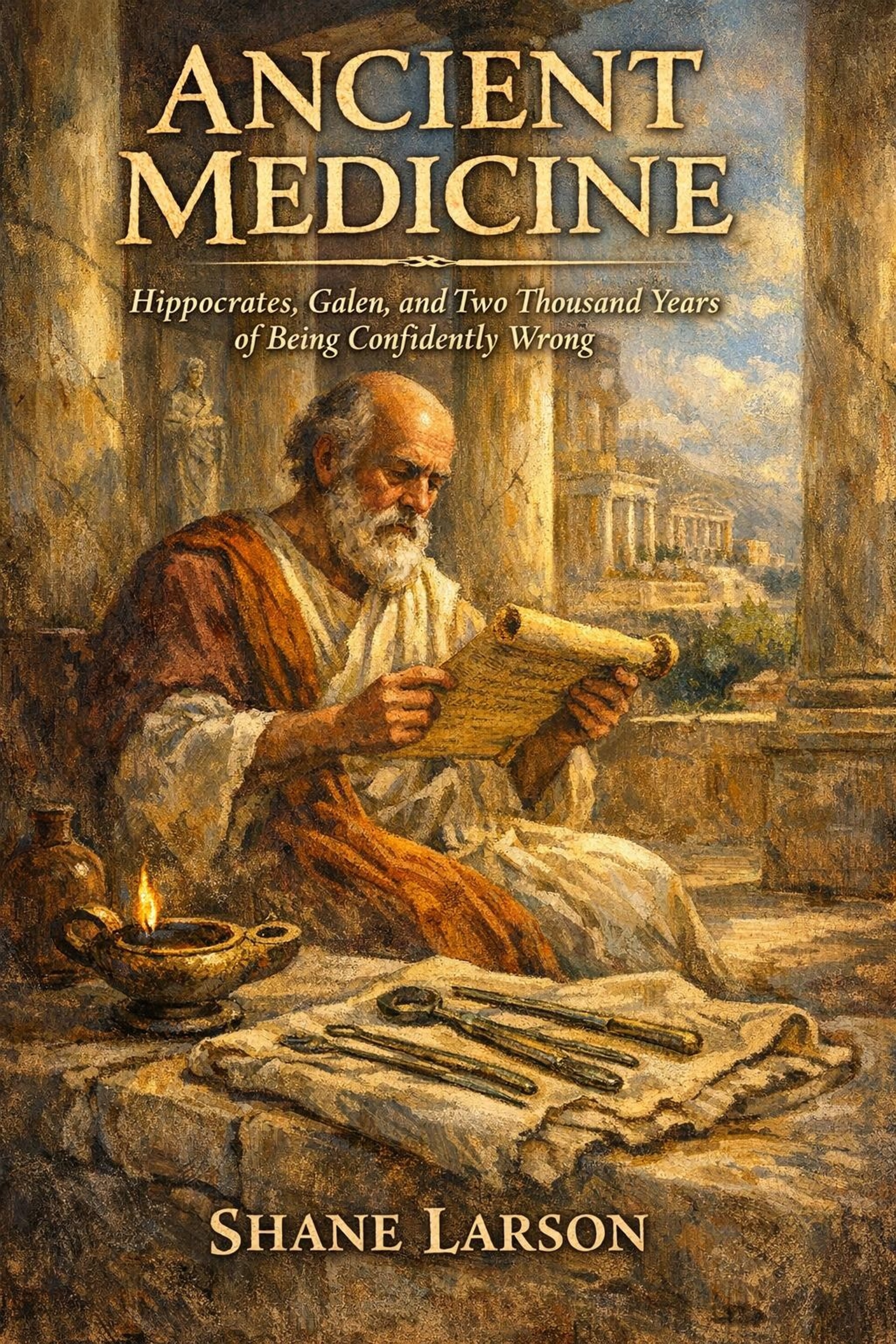
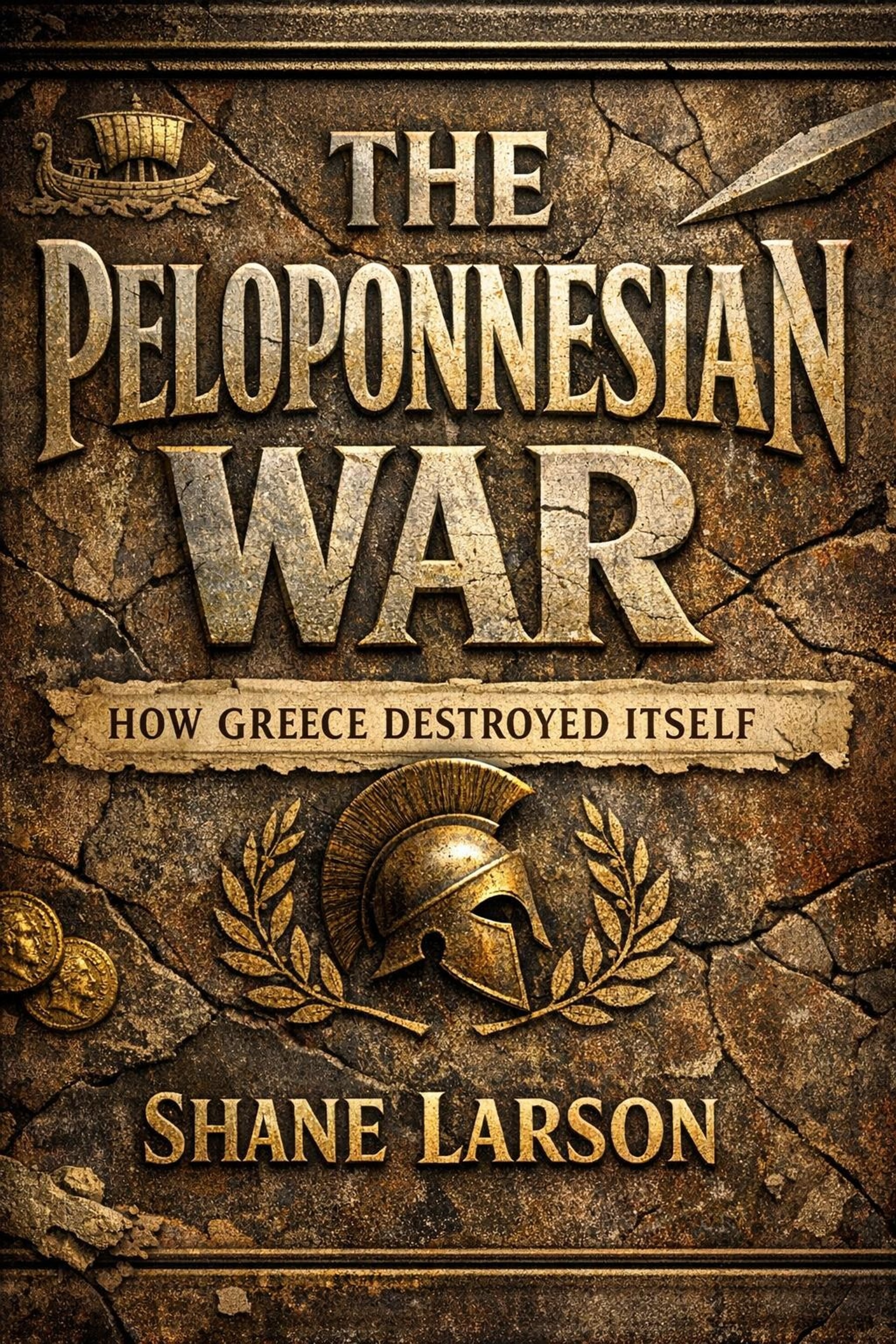
That anatomy is the subject of my new book — the full 27-year arc, from Pericles' strategy to the flute music at the Long Walls, told plainly and without romanticizing either side. If you've read my The Golden Age of Athens or Sparta, this is the story that connects them and, in the end, undoes them both.
The Peloponnesian War
New posts and releases, straight to your inbox. No spam, unsubscribe anytime.