Timur
The Conqueror Who Rebuilt the Mongol Terror and Left Nothing Standing
By Shane Larson
About This Book
On June 19, 1941, a team of Soviet scientists pried open a jade sarcophagus under the turquoise dome of the Gur-e Amir mausoleum in Samarkand. Inside was a skeleton with a fused right knee and a withered right arm — confirmation, after five centuries, that the man in the tomb had earned his name honestly. Timur-i Lang: Timur the Lame. Europe had mangled it into Tamerlane. Local tradition, recorded conveniently after the fact, held that opening the tomb would release a conqueror worse than the one inside it. Germany invaded the Soviet Union three days later.
The skeleton belonged to the most destructive human being of the fourteenth century — a century that also produced the Black Death. In thirty-five years of nearly continuous campaigning he sacked Delhi, Damascus, Baghdad, and dozens of cities whose names survive mostly in the lists of what he did to them. The chroniclers' body counts run into the millions and cannot be verified or dismissed. And yet ask most readers who he was, and the answer is a shrug. Genghis Khan gets the fame. Tamerlane, who was arguably harder to stop, gets a vaguely familiar name and an empty space where the story should be.
This book fills that space — and it is a stranger story than the reputation suggests.
The Story
Timur should not have been possible. He was born around 1336 near Samarkand, a minor chief's son in the wreckage of the Mongol world, with no royal blood and therefore no legal path to a throne. The rules of the steppe said only a descendant of Genghis Khan could be khan. Timur never broke that rule — he hollowed it out, ruling for thirty-five years through puppet khans he enthroned and ignored, marrying a Chinggisid princess so he could call himself the imperial son-in-law. The conquests themselves were partly an answer to the legitimacy he could never have: a man who cannot inherit authority has to keep manufacturing it, one victory at a time.
What he did with the victories is the heart of the book. Every city that resisted him was erased as policy — and every city, resisting or not, was emptied of its craftsmen. Masons from Delhi, glassworkers from Damascus, tilemakers from Persia: all of them marched to Samarkand, where they built the most beautiful city in Asia. The monumental mosque, the ribbed turquoise domes, the tiled madrasas and paradise gardens that still draw travelers to Uzbekistan today are the direct proceeds of the massacres. The towers and the tilework were not a contradiction. They were one policy, seen from its two ends — and that, not the body counts, is what makes Timur worth a book.
The campaigns rearranged the futures of empires he barely cared about. His destruction of the Golden Horde's cities cleared the ground for Moscow's rise. His capture of the Ottoman sultan Bayezid at Ankara in 1402 dissolved the Ottoman state into a decade of civil war and lifted the siege of Constantinople — which got fifty-one more years of existence as a side effect of one man's quarrel with a rival. And in the middle of it all: Ibn Khaldun, the greatest historian of the age, lowered over the wall of besieged Damascus by rope, spending weeks in conversation with the conqueror while the city's fate hung unresolved.
Then Timur died — at sixty-eight, in the winter of 1405, marching to invade Ming China — and the empire detonated. Within a generation everything west of Iran was gone, because he had built an army and a city but never a state. What survived was the other legacy: a grandson who built the finest observatory in the world, a great-great-great-grandson named Babur who founded the Mughal Empire, and a straight line from Samarkand's domes to the Taj Mahal.
Why I Wrote This
I wrote a book about the Mongols, and readers kept asking what happened next. The honest answer — the steppe produced one more conqueror, arguably more destructive than any single Chinggisid, and then never produced another — turned out to have no accessible book behind it. The good biography is twenty years old. What hooked me wasn't the body count. It was standing (on the page, anyway) in the Registan and realizing the most beautiful square in Central Asia was built by kidnapped craftsmen as the deliberate output of the same policy that built the skull towers. I kept waiting for the sources to resolve that into hypocrisy or redemption. They never do. That refusal to resolve is, I think, the most honest thing a history book can offer.
Frequently Asked Questions
Do I need to read The Mongol Storm first?
No. This book stands alone and opens with all the Mongol background you need. If you have read The Mongol Storm, this is its direct sequel: what the steppe did for an encore.
Is Tamerlane the same person as Timur?
Yes. Timur-i Lang — Timur the Lame, from the wounds confirmed by the 1941 exhumation — is the Persian epithet, and "Tamerlane" is what European tongues made of it. Same conqueror, one book.
How graphic is the violence?
The massacres are reported plainly, weighed against the sources, and never dwelt on. The book's consistent question is analytical — what was the terror for? — and it spends more pages on how the numbers were produced than on imagery. If you can read a serious history of the Mongols, nothing here will be beyond you.
What sources is the book based on?
The court histories Timur commissioned, the ferociously hostile biography written by a man he abducted as a child, a Spanish ambassador's eyewitness account, and Ibn Khaldun's memoir of their meeting — read against each other, with an appendix on who wrote each and how to weigh it.
Does the book cover the Mughals and the Taj Mahal?
Yes, in the closing chapter. Babur, the Timurid prince who founded the Mughal Empire in 1526, is the dynasty's real legacy, and the architectural line from the Gur-e Amir's dome to Humayun's tomb to the Taj Mahal is drawn carefully — it is a genuine lineage, not a travel-brochure flourish.
How long is the book?
About 76,000 words — fourteen chapters plus an introduction, conclusion, and three appendices: a campaign-by-campaign reference, a guide to the sources, and a monument-by-monument tour of Timurid Samarkand.
If You Liked This, You Might Like
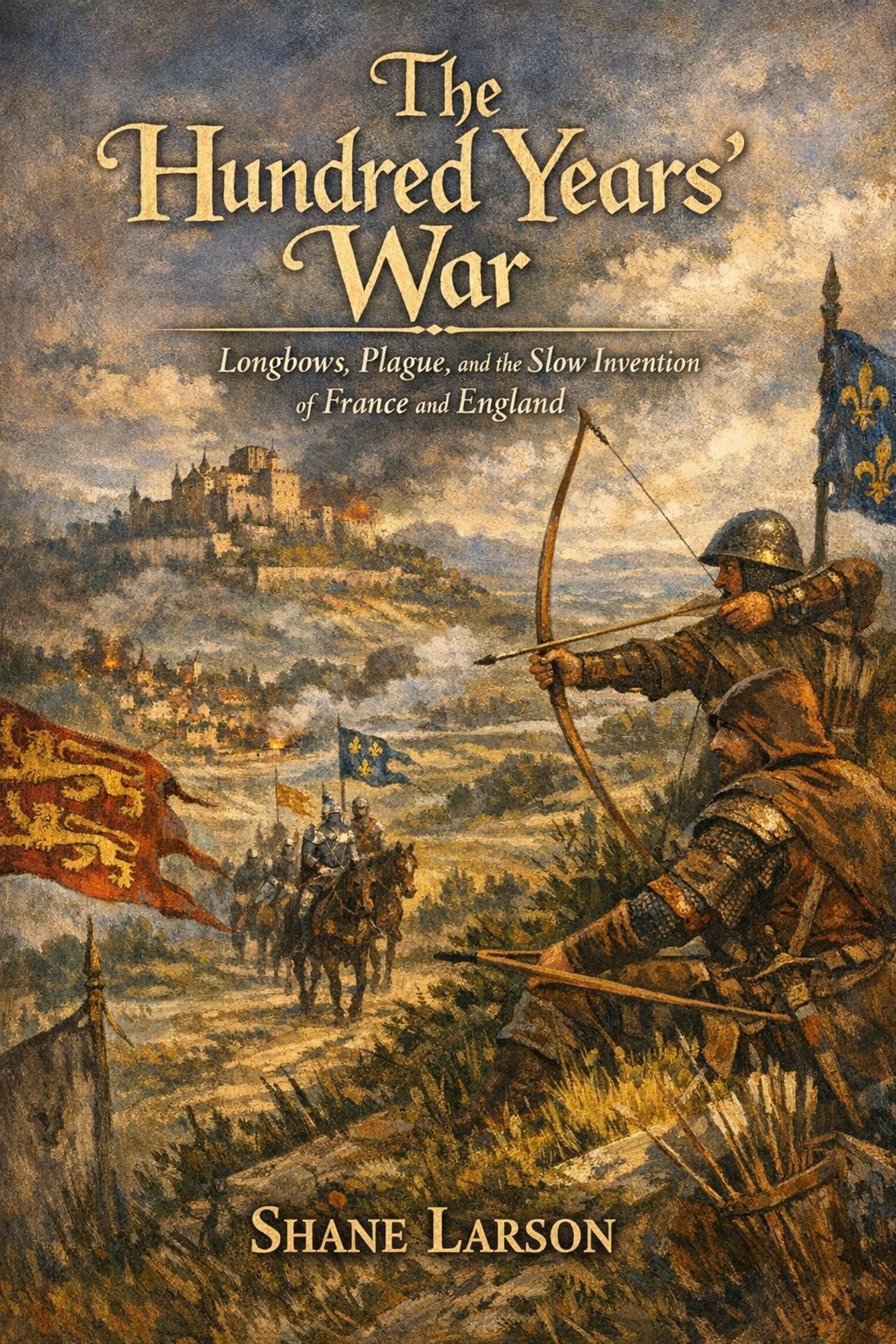
- The Mongol Storm — the world Timur was born into; his entire career happened inside the wreckage of the empire this book explains.
- Suleiman the Magnificent — the Ottoman Empire at the height Timur nearly strangled in its cradle at Ankara.
- The Black Death — the other great killer of Timur's century, moving along the same caravan routes his armies marched.
- Attila — the first great steppe conqueror to terrify the settled world; Timur was the last, and the comparison runs through both books.
The last of the steppe conquerors, the battle that reprieved Constantinople, and the city the massacres paid for — one story, told whole.
What You'll Learn
- **The rise from nothing:** how a wounded ex-raider with no dynastic claim took power in Transoxiana — and why that particular political vacuum was the only place in Asia it could have happened.
- **Terror as a communication system:** what the atrocities were *for*, how the head-quota bureaucracy actually worked, and why the book treats the chroniclers' numbers as claims rather than counts.
- **The war machine:** winter campaigns, five-thousand-mile logistics, siege engineers, war elephants, and the intelligence network that chose the time and place of nearly every battle.
- **The Tokhtamysh wars:** how Timur destroyed his own protégé, burned the Golden Horde's cities, and accidentally made room for Russia.
- **Ibn Khaldun at Damascus:** the full story of history's strangest summit meeting, told from the historian's own memoir — and what happened to the city when the talking ended.
- **Ankara, 1402:** the battle that captured a reigning sultan, suspended the Ottoman Empire for a decade, and reset the fall of Constantinople to 1453.
- **Samarkand itself:** monument by monument, who built it, where they were taken from, and what the tile technology actually was.
- **The afterglow:** Ulugh Beg's star catalogue, the Herat workshops, Babur's road to India, and why the dynasty's culture outlasted its power by four centuries.
New Medieval History releases and free chapters — no spam, unsubscribe anytime.
More in This Genre
View all →