The Gunfighter Who Outlived the Wild West — and Got to Write the Legend
June 27, 2026 · 6 min read
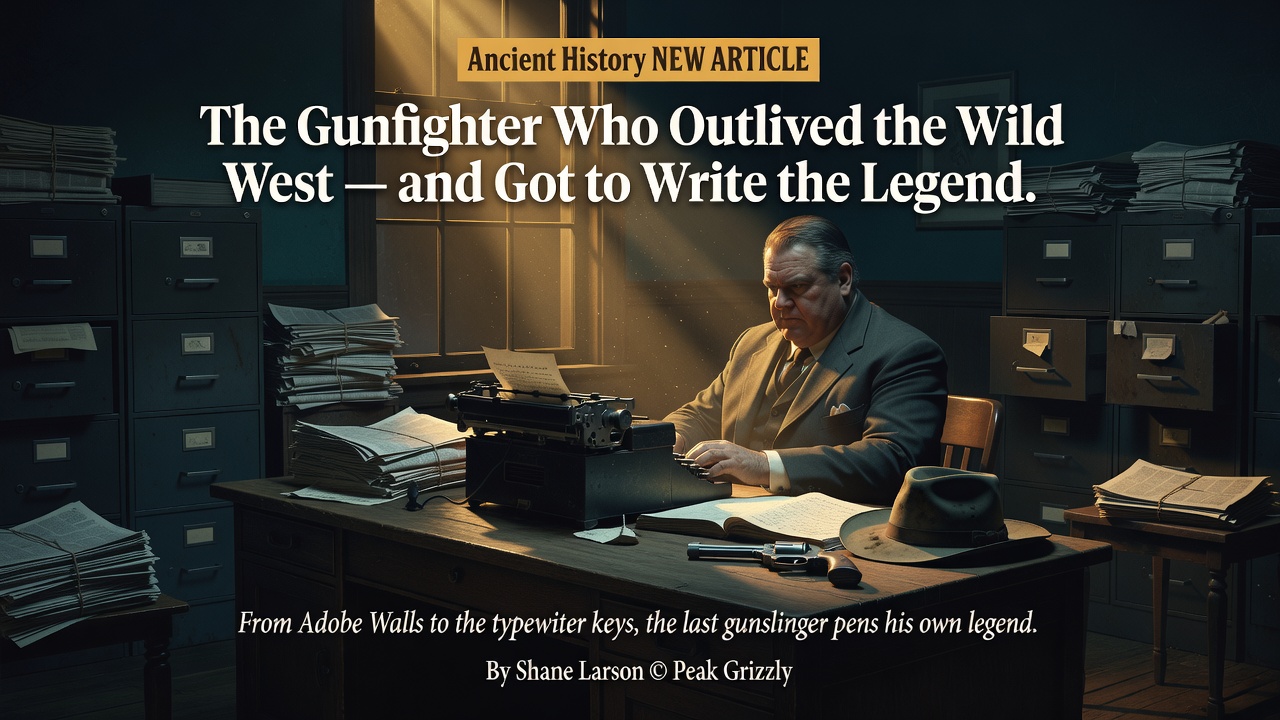
On the morning of October 25, 1921, a heavyset man in a tailored suit sat down at his desk in the offices of the New York Morning Telegraph, rolled a sheet of paper into his typewriter, and began his column. He was a sports editor, a fixture at the prizefights, a friend of the late President Roosevelt, and one of the most recognizable newspapermen in the city. He wrote a few hundred words — something about how the rich get ice in the summer while the poor get it in the winter, and that "everything is equal in the end" — and then his heart stopped. He slumped forward over the keys. He was sixty-seven.
The young reporters in that noisy newsroom knew him as a colleague, an old character with a lot of stories. What most of them did not fully grasp was that they had just watched the last great gunfighter of the American West die at his desk. Fifty years earlier, that same man had hunted buffalo on the Texas plains and helped hold off a Comanche-led war party with his rifle. His name was William Barclay "Bat" Masterson, and his life is the strangest, most complete arc in the entire history of the frontier.
A Kansas Farm Boy on the Buffalo Range
He was born Bartholomew Masterson around 1853 — even his exact birth year and original name are contested, which tells you something about how thin the record of his early life really is. His family were farmers who drifted across the Midwest before settling in Kansas. As a teenager, Bat and his brothers Ed and Jim went out onto the southern plains to hunt buffalo for their hides, part of the brutal commercial slaughter that was emptying the grasslands and breaking the Plains tribes who depended on the herds.
That work put him in the right place for the fight that made him. In June 1874, Masterson was among a small band of hide hunters and traders camped at a spot called Adobe Walls in the Texas Panhandle when hundreds of Comanche, Kiowa, and Cheyenne warriors attacked at dawn. The defenders, badly outnumbered, held the buildings through a brutal siege. Masterson came out of it barely past his teens with something most men never get: a genuine reputation, earned under fire. He scouted for the Army in the Red River War that followed, and then he went looking for the next stage.
Dodge City: Where the Law and the Saloon Shared a Block
He found it in Dodge City, the rowdy terminus of the Texas cattle drives and, by reputation, the wickedest town in the West. Dodge is where the Masterson legend was built. He fell in with Wyatt Earp and Doc Holliday. He gambled, he dealt faro, and before he was twenty-five he was elected sheriff of Ford County — a dapper, well-dressed young lawman who, by one popular origin story for his nickname, was more inclined to bat a troublemaker over the head with his walking cane than to shoot him.
What Dodge City teaches you about the real frontier is how casually law and vice overlapped. The sheriff, the gambler, and the saloon man were often the same person, or at least close business partners. Masterson moved easily between those worlds because on the cattle-town frontier they were barely separate worlds at all. Order and money and vice all ran down the same stretch of Front Street.
The Loss Beneath the Legend
It is easy to romanticize all of this — the dime novelists certainly did, inflating Masterson's tally of dead men far beyond anything the evidence supports. But the frontier extracted a real price, and the Mastersons paid it. In April 1878, Bat's brother Ed, the town marshal, was shot at close range while trying to disarm two drunken cowboys. He died of his wounds. Behind the dapper legend and the cane and the derby was a family that lost a son to the violence everyone else was busy mythologizing.
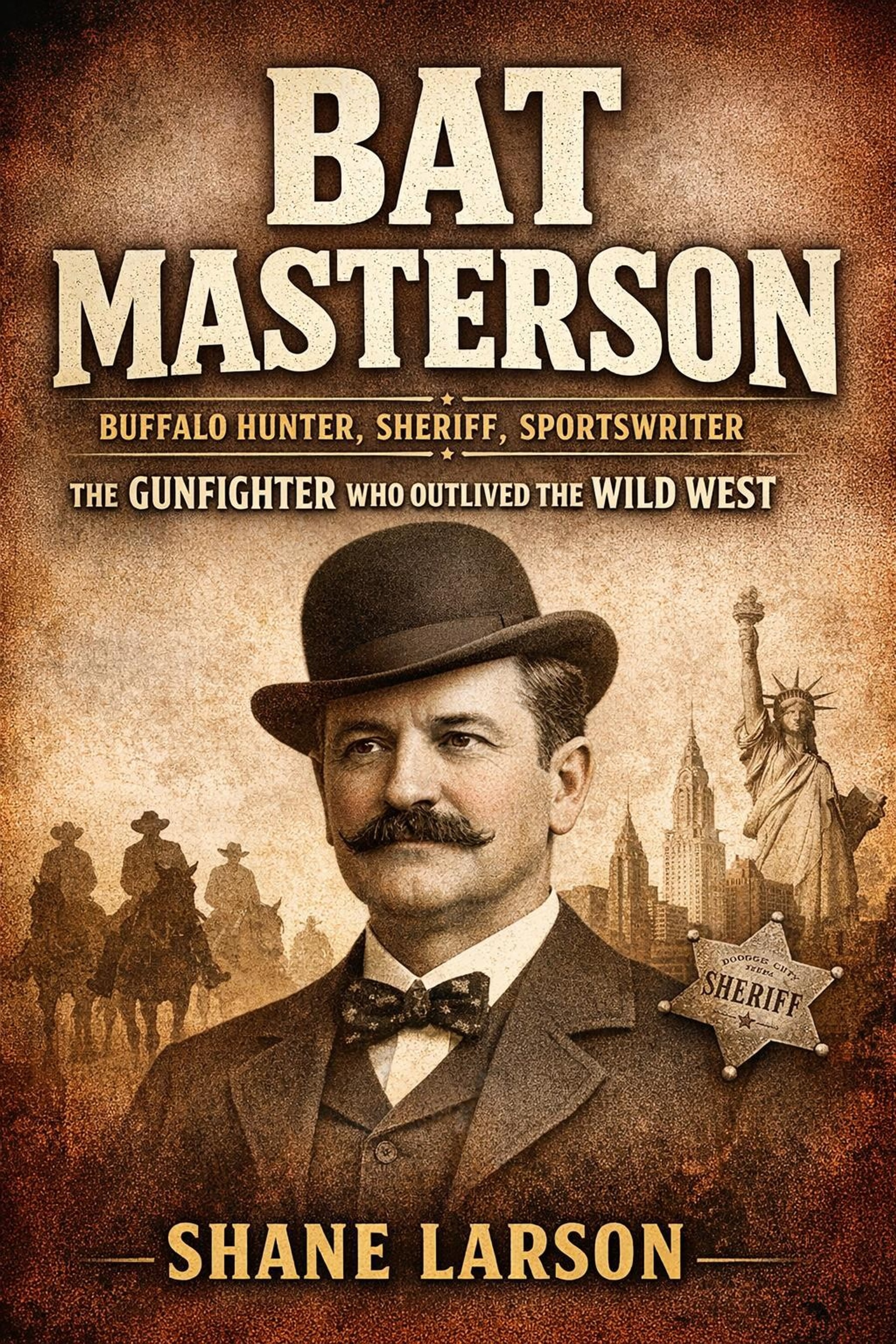
Bat Masterson
In 1883, Masterson returned to Dodge as part of the so-called Dodge City Peace Commission, a gathering of gunmen — Earp among them — assembled to face down a political faction in a confrontation that ended without a shot fired. They posed for a photograph that survives to this day, a lineup of the frontier's most famous names, most of whom would be dead or forgotten within a generation. Masterson would not be. That is the whole point of him.
The Last Reinvention
As the cattle drives ended and the open range closed, Masterson kept reinventing himself. He gambled in Denver. He promoted prizefights and worked as a boxing referee, following the sporting life around the country. And then, in his late forties, he did the most improbable thing of all: he moved to New York City and became a full-time newspaperman.
For the last two decades of his life, Bat Masterson sat at a desk in Manhattan and wrote thousands of words a week about boxing and the sporting scene. Theodore Roosevelt, who admired him, made him a deputy U.S. marshal for the southern district of New York. He wore a derby instead of a Stetson and rode the subway. And here is the part that makes his story matter beyond mere curiosity: from that desk, the man who had lived the Wild West helped write it. He turned out romanticized profiles of frontier gunmen — including his own dead friends — for magazines and newspapers, helping to fix the heroic image of the Old West in the popular American mind.
Think about that. The participant became the publicist. The legend of the frontier was not handed down from on high; it was manufactured, in part, by one of the few men who had actually been there, typing in a city office while the real West receded into memory. When you read about how the myth of the gunfighter took over American culture, Bat Masterson is sitting right at the source, helping to build it.
Everything Equal in the End
That is why his story is the story of the whole frontier and its afterlife. Wild Bill Hickok was shot from behind at a poker table. Doc Holliday coughed himself to death at thirty-six. Wyatt Earp's most famous fight lasted thirty seconds and haunted him for fifty years. They all became legends because they died into the legend. Masterson became something rarer. He survived, he aged, he adapted, and he got the last word — literally, in a column found in his typewriter the morning he died.
The arc from the hide camps of the Texas Panhandle to a Broadway newsroom is so improbable that it would strain belief in a novel. It needs no exaggeration, which is exactly why the exaggeration is worth stripping away. The documented Masterson — the survivor, the reinventor, the honest professional who kept finding new ground to stand on — is more interesting than the dime-novel killing machine ever was.
If you want the whole astonishing life, from Adobe Walls to the last column at the desk, my new book "Bat Masterson: Buffalo Hunter, Sheriff, Sportswriter — The Gunfighter Who Outlived the Wild West" is out now. It's Book 6 in The Wild West series, a direct companion to Wyatt Earp & the O.K. Corral and Doc Holliday — the friend who knew them both, survived them both, and lived to write the legend.
Bat Masterson
New posts and releases, straight to your inbox. No spam, unsubscribe anytime.