Archaeologists Dug the Donner Party's Camp. They Found Cattle, Horse, Deer and a Dog.
November 25, 2026 · 5 min read
Ask anyone what they know about the Donner Party and you will get one word. It is the right word, as far as it goes. The people trapped in the Sierra Nevada in the winter of 1846 to 1847 did eat their dead. Survivors said so, rescuers said so, and a man keeping a diary in one of the cabins wrote it down while it was happening.
So it came as a surprise to a good many people when archaeologists excavated one of the camps and could not find the evidence.
Two camps, six miles apart
The emigrants spent the winter in two places. Most of them, about sixty people, were in three cabins near the east end of Truckee Lake, now Donner Lake, just below the pass they had failed to cross. The two Donner families and their hired men, about twenty-one people, were caught six or seven miles back down the trail at Alder Creek. George Donner's wagon had broken an axle, the snow arrived before they could catch up, and they wintered in tents and brush shelters covered with quilts and hides.
The lake camp is the famous one. It is where Patrick Breen kept his diary and where the monument stands today. Alder Creek is the camp nobody at the time described from the inside. No one there kept a diary that survives. What we know of it comes from the memories of children, written down decades later, and from the brief reports of the relief parties who walked in during February and March.
That is what made it worth digging.
What came out of the ground
In the summers of 2003 and 2004 a team led by the archaeologists Kelly Dixon and Julie Schablitsky excavated a meadow at Alder Creek where earlier survey work had turned up artifacts of the right date. They found a hearth: a patch of ash and charcoal where a fire had burned for a long time. Around it lay the small debris of a household. Fragments of plates and cups. Lead shot. Pieces of writing slate. And bone, thousands of fragments of it, most no bigger than a fingernail, burned and broken.
The bone was the point. Specialists examined the fragments for species and for the marks of butchery. They identified cattle, horse, deer and dog. The fragments had been chopped, sawn and boiled, in some cases apparently more than once, which is what you would expect from people extracting the last grease from the oxen that had pulled their wagons across a continent.
None of the fragments could be identified as human.
What that does not mean
The headlines at the time ran ahead of the finding. Some announced that the cannibalism had been disproved. The archaeologists said nothing of the kind, and their caution is the most interesting part of the story.
Bone does not last in the acidic soil of a Sierra meadow. What survives a century and a half is bone that has been burned or boiled for a long time, which hardens it. The cattle bones at Alder Creek survived because starving people cooked them again and again for months. A human body eaten in the last desperate weeks of the winter would not have been treated that way. Flesh would have been cut from it. The bones would not have gone into the pot over and over, and unprocessed bone would simply have dissolved.
The Cutoff
So the absence of human bone at that hearth cannot tell us that no one at Alder Creek ate human flesh. The documents say they did. The relief parties reported it that March, and the reports reached print within months.
What the hearth can tell us is something the documents mention only in passing. For months, before anything else, these families ate everything they had. They ate the oxen, then the hides, then the bones boiled soft enough to crumble. They ate the horse and the dog. The fragments are a record of a household working methodically through every other possibility, for week after week, in a tent under several feet of snow, with small children to feed.
The cannibalism is true. It was also the end of a very long road, and the archaeology shows how long.
Why the one word took over
The Donner Party's reputation was fixed early. In the spring of 1847 a California newspaper printed what it said was the journal of the last salvage party to reach the lake, and the account dwelt on everything most likely to horrify. It was reprinted across the country. One survivor, Lewis Keseberg, spent the rest of a long life accused of crimes that no one ever proved, and won a slander suit that awarded him one dollar.
The people who had been there told it differently. Thirteen-year-old Virginia Reed wrote a long letter to a cousin in Illinois that May. She described the hunger, the snow and the dead without flinching, and she finished with advice for anyone who meant to follow: never take no cutoffs, and hurry along as fast as you can.
She had identified the cause more accurately than the newspapers did. The company had left the established trail in July for a shortcut recommended in a guidebook by a man who had never taken a wagon over it. The shortcut ran through mountains with no road and across a salt desert twice as wide as promised. It cost about a month. The snow that closed the pass at the end of October would have fallen on an empty trail if they had stayed on the main road.
What the dig changed
The Alder Creek excavations did not overturn the story. They changed its proportions. The famous part turns out to occupy the last few weeks of a winter that lasted four months, and the unfamous part, the daily business of keeping children alive on hides and bone, turns out to be most of what happened.
It is a better story that way, and a more human one. There were eighty-one people in those camps. Forty-five of them walked or were carried out. Most of the survivors were women and children, and most of them went on to live ordinary lives in California, raise families, and answer the same question from strangers for fifty years.
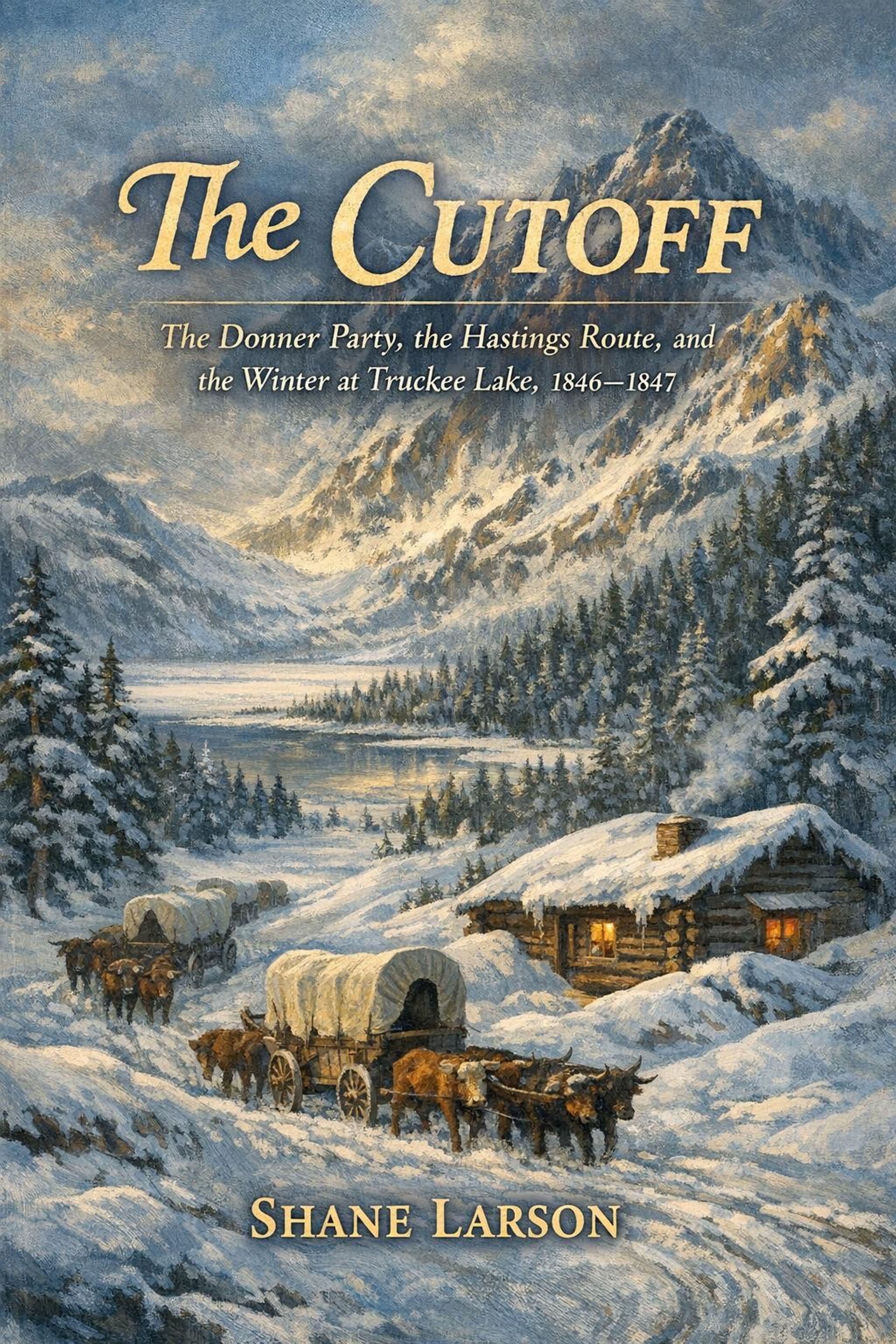
*The Cutoff: The Donner Party, the Hastings Route, and the Winter at Truckee Lake, 1846-1847* tells the whole of it, from an Illinois newspaper notice in the spring of 1846 to the last rescue in April 1847, and it names every one of them.
The Cutoff
New posts and releases, straight to your inbox. No spam, unsubscribe anytime.