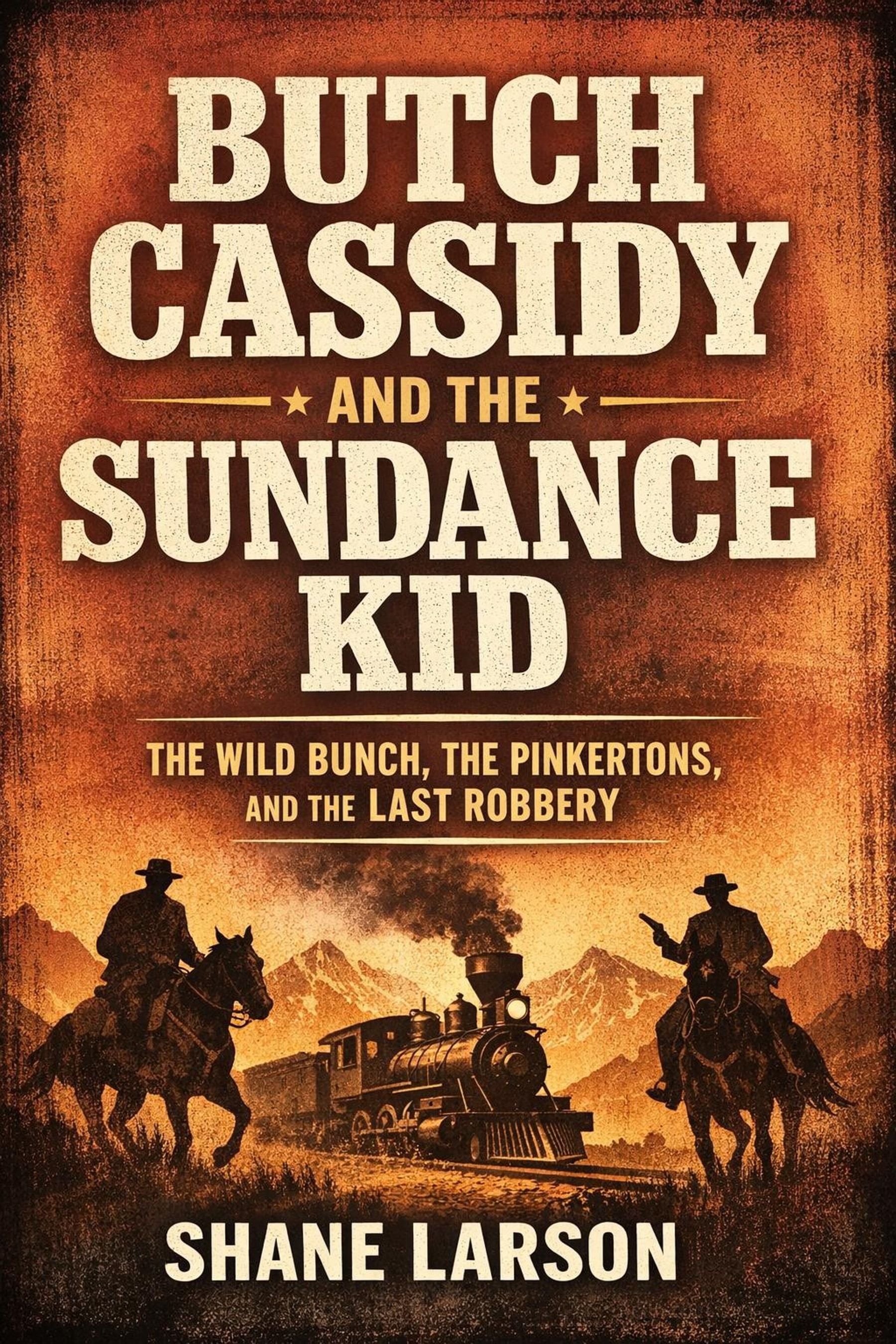
Butch Cassidy & the Sundance Kid
The Wild Bunch, the Pinkertons, and the Last Robbery
By Shane Larson · The Wild West Series (Book 11)
About This Book
In 1900, the core of the Wild Bunch walked into a Fort Worth photographer's studio, put on their best suits, and sat for a group portrait. Five men, relaxed and prosperous-looking, posing like a row of small-town bankers. It was a swagger and a souvenir, a way of marking a good run. It was also the single most destructive decision any of them ever made.
A Pinkerton operative recognized one of the faces. Within weeks the image had been copied, captioned, and wired to railroad offices and police departments across the country and overseas. Men who had spent their entire lives trusting that no one knew what they looked like were suddenly the most recognizable outlaws on the continent. The frontier had always offered one thing above everything else — the power to disappear. That photograph helped kill it.
This is the documented story of Butch Cassidy and the Sundance Kid: not the freeze-frame ending of the 1969 film, but the longer, stranger arc the records actually support — and the modern manhunt that ran the last great outlaw gang of the American West to ground.
The Story Behind the Legend
Robert LeRoy Parker was a Mormon rancher's son who borrowed an alias and became Butch Cassidy: charming, persuasive, and so reluctant to kill that contemporaries described him as nearly a pacifist with a pistol. Harry Longabaugh was the opposite temperament — quiet, watchful, and a genuinely dangerous marksman the world came to know as the Sundance Kid. Around them gathered the loose, shifting confederation of robbers that history remembers as the Wild Bunch.
Their world ran along the Outlaw Trail, a chain of remote hideouts stretching from Montana down through Wyoming's Hole-in-the-Wall to the canyon country of Robbers Roost in Utah. From that network they pulled off a string of bank and train holdups that grew bolder with each job — including the Wilcox and Tipton robberies, where dynamite tore open railway express cars and the take ran into the tens of thousands.
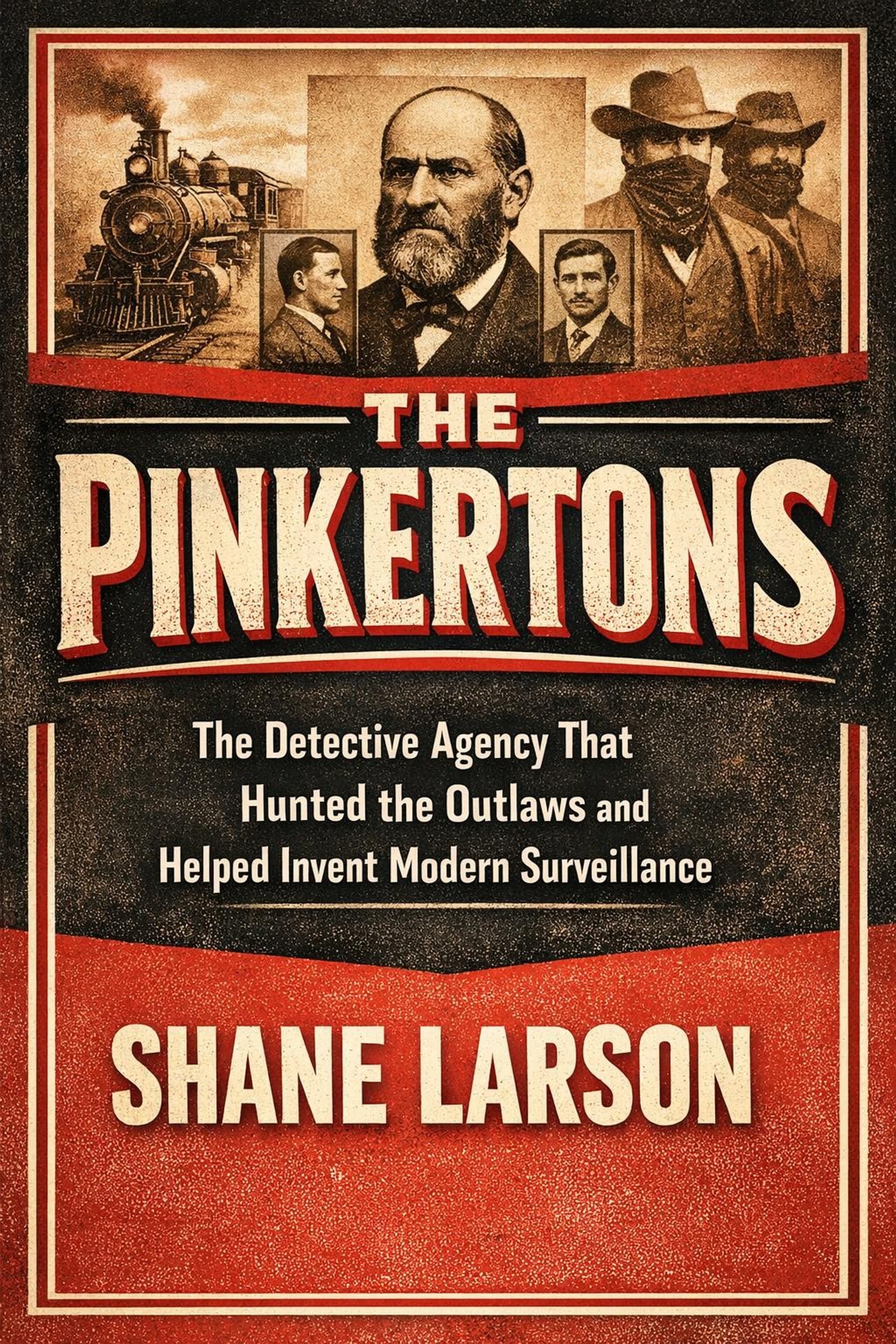
The railroads they hit did not answer with sheriff's posses. They hired the Pinkerton National Detective Agency, a private organization that fought outlaws with telegraphs, rap sheets, circulated photographs, and a continental reach no frontier criminal had ever faced. The Pinkertons were less a band of gunmen than an information machine, and against an information machine the anonymous frontier had no defense. After Fort Worth, Butch and Sundance ran — south through New York and across the ocean with the elusive Etta Place, to ranch land in Patagonia, then back to crime, and finally to a contested 1908 shootout in a San Vicente courtyard that no North American ever witnessed. To this day, no one has proven the two dead men were really them.
This book is built on the Pinkerton files, prison and court records, and Argentine land documents, and it is honest about exactly where the paper trail runs out — no cinematic death scene the sources cannot bear, no folklore smuggled in as fact.
What You'll Discover
- How a likable, near-pacifist ranch boy from Utah became the most wanted man in the West
- The Outlaw Trail in full — the chain of remote hideouts, from Montana to the desert Southwest, that made the Wild Bunch's whole way of life possible
- The Wilcox and Tipton train robberies, dynamited express cars and all, and how the loot was spent
- Why the Pinkerton National Detective Agency, not any lawman, represents the real turning point — the birth of the modern, data-driven manhunt
- How the cocky Fort Worth Five portrait became the very evidence that ended the era of the anonymous outlaw
- The flight to South America, the legitimate ranching years in Patagonia, and the slow drift back into robbery
- What the records actually say — and don't say — about the 1908 San Vicente gunfight
- The fates of the scattered Bunch, from the violent Kid Curry to the steadier Elzy Lay
- The enduring mystery of Etta Place, and the persistent claims that Butch Cassidy quietly came home alive
Why I Wrote This
I came to this expecting a Western and found a surveillance story instead. Butch and Sundance weren't beaten by faster guns or a braver sheriff. They were beaten by an information network — circulated photographs, telegraph wires, centralized criminal files held by a private corporation. That is a remarkably modern way to lose, and once I saw it I couldn't unsee it. Their entire profession depended on the existence of unwired, anonymous space, and the Pinkertons hunted that space to extinction.
The other thing that drove me was irritation with the legend. The 1969 film is wonderful and almost completely confident about an ending the sources can't actually confirm. I wanted to follow the documents as far as they go — the prison records, the agency reports, the land deeds in Argentina — and then stop where the evidence stops, instead of pretending the folklore is the history. The truth turned out to be stranger and more interesting than the myth.
Frequently Asked Questions
Is this just a retelling of the 1969 movie?
No. The film is the starting point this book deliberately moves away from. The narrative is reconstructed from primary sources — Pinkerton case files, court and prison records, and South American land documents — and it parts company with the movie wherever the screen version invented or simplified, especially around the famous death scene.
Did Butch Cassidy and the Sundance Kid really die in Bolivia?
That is the central unsolved question, and the book treats it as one. The 1908 San Vicente shootout is documented but contested, no North American witnessed it, and the bodies were never conclusively identified. You'll get the strongest evidence on every side, including the claims that Butch survived and returned to the United States.
Who were the Wild Bunch?
The Wild Bunch was a loose, rotating confederation of robbers rather than a fixed gang, anchored by Butch and Sundance and including figures like Kid Curry and Elzy Lay. They operated out of the Hole-in-the-Wall and Robbers Roost hideouts and specialized in bank and train robberies across the West.
Why did the Pinkertons matter so much?
The Pinkerton National Detective Agency was a private force that brought industrial methods to crime-fighting: photographs, telegraphed alerts, and centralized files that crossed state and national borders. They represent the moment the manhunt became modern, and they are the reason the frontier's old promise of anonymity stopped working.
Who was Etta Place?
Etta Place was the companion who fled to South America with Butch and Sundance and then vanished from the record almost entirely. Her real identity, origin, and fate remain genuinely unknown, and the book lays out what little is documented alongside the most credible theories.
Is this available on Kindle Unlimited?
Yes. Like the rest of the Peak Grizzly history catalog, the ebook is available to read free through Kindle Unlimited, and in standard Kindle and paperback editions as well.
If You Liked This, You Might Like
- No Law Below the Pass — frontier justice and a killing on a remote wharf, for readers who want the lawless edge of the West in fictional form.
- Digital Outlaws — the surveillance theme that finished the Wild Bunch, replayed a century later, as a new information network closes in on a new generation of outlaws.
- The Technology Collapse Pattern — the deeper structure underneath this story: how a single new technology can render an entire established way of life obsolete almost overnight.
The last outlaws of the American West, hunted down not by a faster gun but by the first modern manhunt — and the questions about their end that the record still refuses to settle.
Included with Kindle Unlimited — read it free if you're a member.
New Wild West / American Frontier History releases and free chapters — no spam, unsubscribe anytime.
More in The Wild West Series
View series →
More in This Genre
View all →