"Brewing Beer," "Stung by a Scorpion": The 3,200-Year-Old Egyptian List of Excuses for Missing Work
November 19, 2026 · 5 min read
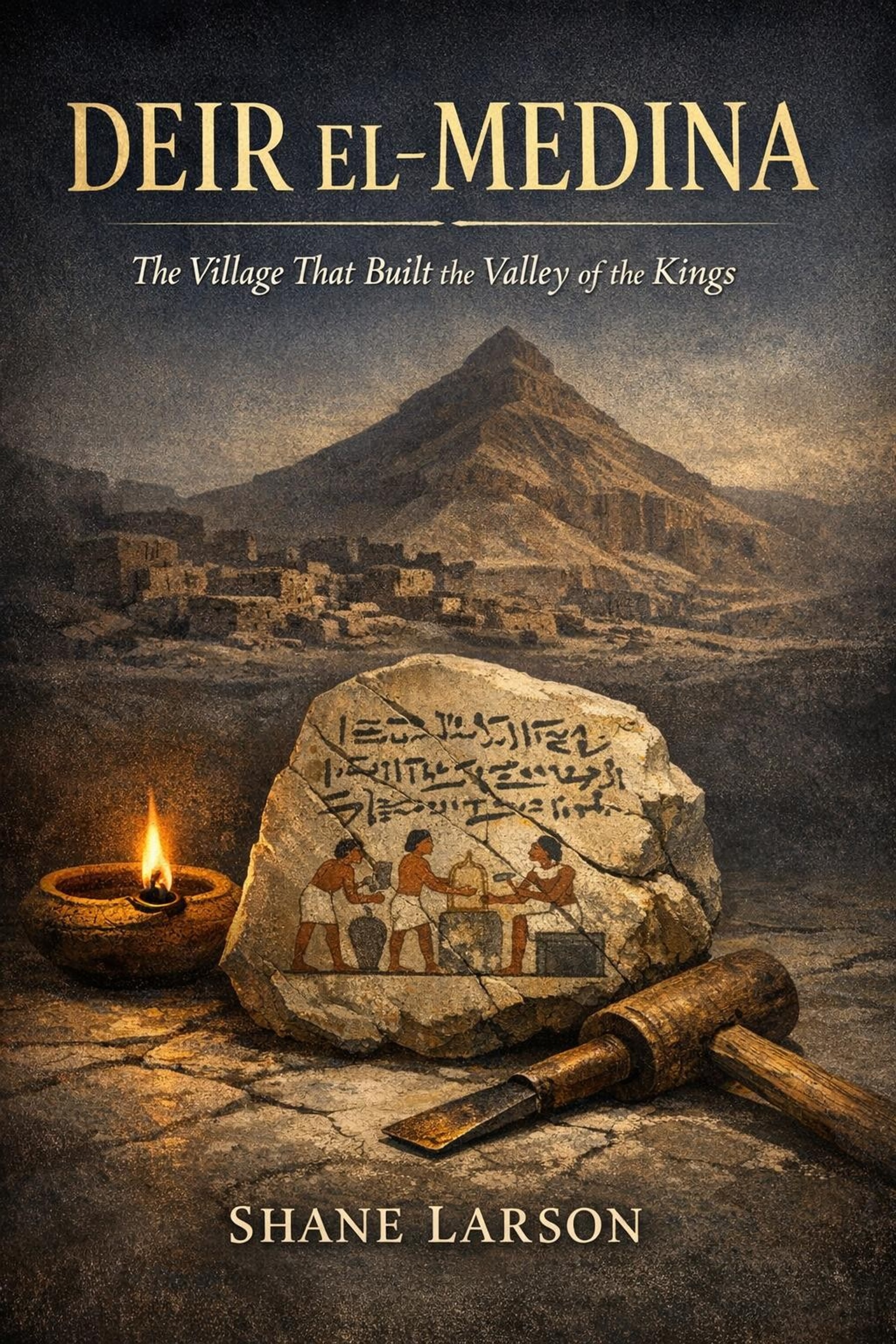
Somewhere around 1240 BC, in the fortieth year of the reign of Ramesses II, a scribe in southern Egypt took a large flake of white limestone and wrote forty names on it in black ink. Beside each name he wrote dates, and above many of the dates, in red, a few words saying why the man had not been at work that day.
The slab is in the British Museum, where it has the inventory number EA 5634. It is about fifteen inches tall. It is one of the best-known objects from ancient Egypt that is not made of gold, because the reasons it gives are ones any modern manager would know on sight.
What the excuses say
The most common reason is the plainest. The man was ill. It appears again and again down the list, sometimes for a single day and sometimes for a run of them. A few entries are more specific and mention trouble with the eyes, which is no surprise in men who spent their working lives in dust, by the light of oil lamps.
Then come the ones that make the slab famous. A workman named Seba was off because a scorpion had stung him. Another, Neferabu, was away embalming his brother. Several men took days to prepare a relative for burial or to pour offerings for a dead father. Egyptians took their duties to the dead seriously, and so, evidently, did their employer.
Some were brewing beer. Beer was a staple food in Egypt, and it was needed in quantity for religious festivals, so this is closer to catering for a holiday than to a hangover. One entry does record a man drinking, in company, on what looks like a feast day.
A number of men stayed home because a wife or a daughter was menstruating. Egyptologists have argued for decades about what exactly this means. It may reflect a rule that kept a man away from a sacred workplace at that time, or household work that fell to him, or something else. The slab gives the reason and does not explain it.
And several were "with their boss". The crew's foremen and the senior scribe had a habit of borrowing workmen for private jobs, such as building a house or fetching stone. The scribe who kept the register wrote this down as calmly as he wrote down the scorpion.
Who these men were
The forty were not ordinary laborers. They were the crew that cut and decorated the royal tombs in the Valley of the Kings, the burial ground of Egypt's pharaohs for almost five hundred years.
They lived with their wives and children in a walled village in the desert over the hill from the Valley, at a place now called Deir el-Medina. The Egyptians called the settlement the Place of Truth. The state built it, supplied it with water by donkey because it had no well, and paid the men a monthly ration of grain. Their working week was ten days long, with the last two off.
The jobs were skilled and usually hereditary. A royal tomb needed stonecutters, plasterers, draftsmen who could lay out long religious texts in hieroglyphs, sculptors to carve them and painters to finish them. It also needed careful accounts, because the tools were copper, copper was valuable, and the tombs themselves were state secrets full of treasure.
Deir el-Medina
Why anyone wrote this down
That last point explains the register. This was a government project, and governments keep records. The scribe attached to the crew logged who was present, how many lamp wicks were issued, how much grain arrived and when the chisels went to be sharpened. The Year 40 slab is one sheet from a filing system.
It is also a sign of something unusual about this village. A large share of its men could read and write, far more than in Egypt at large. They used that skill for private purposes too. Papyrus cost money, so for letters, receipts, lists and school exercises they wrote on what was free: limestone chips from the tomb cuttings and bits of broken pottery. These are called ostraca.
Because the village stood on dry desert rock, the ostraca lasted. More than ten thousand have been found, many of them in a deep pit north of the village that a French team cleared around 1950. Together they make up the most detailed record of everyday life that survives from anywhere in the ancient world.
What the list does not tell us
It is easy to read too much into a document like this. The register does not say whether a man lost pay for a day off. It does not say whether anyone checked the excuses. It lists the men of the crew and nobody else, so the wives and daughters appear only as reasons for an absence, and the servants who ground the village's grain do not appear at all.
It also covers a good year. Under Ramesses II the rations came on time and the village prospered. About eighty years later, under Ramesses III, the grain was weeks late, and the grandsons and great-grandsons of the men on this list walked off the job in the earliest strike known from any written record. Their scribe wrote that down too.
The view from below
Most of what survives from ancient Egypt was made to impress: temples, colossal statues, tombs cut for eternity. Those things say what kings wanted said. The absence register was made for the opposite reason. It was a working note, meant to be useful for a season and then thrown away.
That is why it is worth more than its weight in gold masks. It shows a crew of about forty men with sore eyes, sick children, dead brothers, festival beer to brew and a foreman who wanted his own house built on company time. The royal tombs they cut have been famous for two centuries. The men have been legible for about one, since scholars began reading the ostraca in earnest, and they are better company than the kings.
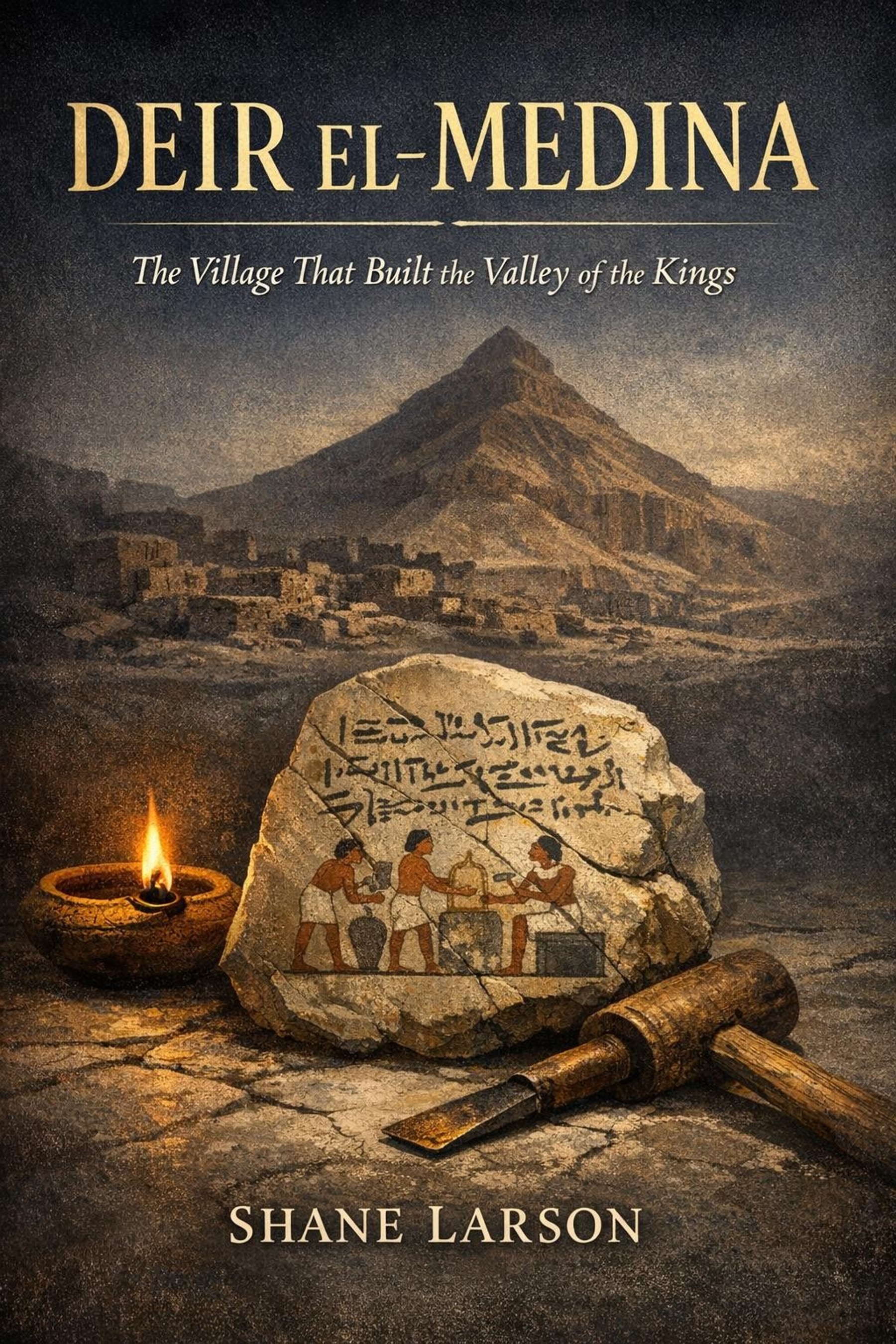
Deir el-Medina: The Village That Built the Valley of the Kings tells the story of that crew and their families across five centuries, from the founding of the village to the strike and the long decline that followed, using the documents they left behind.
Deir el-Medina
New posts and releases, straight to your inbox. No spam, unsubscribe anytime.