Rome Wrote Pages About Caligula's Horse and Not One Word About His Ships
November 20, 2026 · 7 min read
In the late 1920s, workmen pulled several lengths of lead pipe out of the mud of a small lake south of Rome. Roman plumbers often stamped a name into their pipes while the metal was still on the casting bed, to show whose property it was. These carried the name of an emperor: Gaius Caesar Augustus Germanicus, the man history calls Caligula.
The pipes had run through two ships, each about seventy meters long, that had been lying on the bottom of the lake for nineteen centuries. They are the largest physical remains of his reign. They are also missing from every book written about him in antiquity. The same writers who describe his racehorse's marble stable and ivory manger, and who pass on the rumor that he meant to make the animal a consul, say nothing at all about two of the biggest vessels the Roman world is known to have built.
A small lake with a famous shrine
Lake Nemi sits in the crater of an extinct volcano in the Alban Hills, about twenty miles southeast of Rome. It is little more than a mile across, with steep walls that keep the wind off, so the water is often perfectly still. The Romans called it Diana's mirror. On the shore stood the sanctuary of Diana of the Wood, one of the oldest and most visited shrines in central Italy.
It was a strange place to put ships of this size. The larger was roughly 73 meters long and 24 wide, the smaller roughly 70 by 20. Nothing found on either hull suggested a mast. On a lake that small there was nowhere to go.
Five centuries of failed salvage
The local fishermen always knew something was down there. Their nets caught on timbers, and in clear weather the outline of a hull could be seen from the surface.
The first organized attempt came in 1446. Cardinal Prospero Colonna hired Leon Battista Alberti, the Renaissance architect, who is said to have built a raft on barrels, rigged winches, and sent swimmers down to fix hooks to the wreck. The hooks held and the winches turned, and a piece of the ship tore away and came up alone.
In 1535 a military engineer named Francesco De Marchi went down himself in an early diving apparatus and later described what he saw. He brought up fragments and left the hull where it was. Annesio Fusconi tried in 1827 with similar results. In 1895 a dealer, Eliseo Borghi, sent divers to strip the wrecks. They recovered the best bronzes yet seen, including animal heads with mooring rings in their jaws, and by most accounts did serious damage to the hulls while getting them.
Draining the lake
It took a generation and a government that wanted the spectacle. Mussolini's Italy liked the idea of hauling imperial Rome into the daylight, and from October 1928 pumps began lowering the lake under the direction of the engineer Guido Ucelli. The method leaned on Roman work: the pumped water was carried away through an ancient drainage tunnel that had been cut through the crater wall in antiquity.
The first ship was exposed in 1929. The second lay deeper and was not fully out until 1932. The propaganda around the project was heavy, but the engineering was real. Ancient timber that has spent two thousand years under water starts to shrink and split once it dries, and the crater's banks slumped as the lake that had supported them went down.
What came out of the mud was not a pair of oversized rowing boats. The decks had carried buildings. The excavators recorded floors of marble and cut colored stone, roof tiles sheathed in gilded copper, columns, and fittings of the kind used to heat Roman baths. Water ran across the decks in those stamped lead pipes. The hulls were sheathed in lead below the waterline. The reports also describe a pump for the bilge and small platforms that turned on bronze bearings, possibly bases for statues.
A museum was built on the shore, shaped to the two hulls, and opened in 1940.
The night of 31 May 1944
The ships stood under that roof for four years. In the spring of 1944 the war reached the Alban Hills. Allied forces were pushing north from Anzio toward Rome, German units were falling back through the district, and the area around the lake was under fire.
Caligula
On the night of 31 May 1944 the museum burned, and both hulls burned with it. They were dry, pitch-soaked timber in a closed hall. By morning there was ash, twisted metal, and a few charred pieces of frame.
The cause has never been settled. An Italian inquiry after the liberation blamed retreating German troops. The German account blamed Allied shelling. Others have pointed to the possibility of an accident in a building where displaced people are reported to have been sheltering. Each version still has defenders, and none has been proved.
What survived was mostly what had already left the building. Many of the bronzes were in Rome and can be seen there today. The detailed record of the excavation, with its drawings and photographs, became overnight the main evidence for two ships that no longer existed. The timing matters more now than it seemed then. Methods that could have dated the timbers to the year they were felled, or traced where the wood was cut, came later. None of them work on ash.
The panel that became a coffee table
One piece came home by a route nobody would have predicted. Among the ships' floors were panels of colored stone set in geometric patterns. At some point one of them left Italy, in circumstances that have never been fully explained, and ended up in an apartment on Park Avenue in New York, where it served as the top of a coffee table.
It was recognized, the authorities were told, and in 2017 the panel was seized and returned to Italy. It has been on display at the museum in Nemi since 2021. It is one of the very few pieces of those decks that anyone can stand in front of, and it exists because it was not in the museum on the night of the fire.
Why nobody wrote about them
This is the part that deserves a second look. Ships like these could not have been built quietly. Thousands of people must have worked on them, at a shrine that drew visitors from all over Italy, less than a day's travel from the capital.
Seneca was in Rome during the reign and filled his later essays with stories about this emperor. Pliny the Elder was a young man in the city at the time, and his encyclopedia is full of ships, timber and luxury. Suetonius, writing about eighty years later, collected the emperor's extravagances carefully. He does describe pleasure galleys with baths and dining rooms aboard, but he puts them on the sea off Campania and says nothing of a lake. Cassius Dio, a century after that, is silent too.
Compare the horse. Suetonius gives Incitatus a stable, a household, and a rumored political career, though even he says only that the emperor was said to have intended the consulship. Dio, later still, enlarges the story. Or compare the bridge of boats the emperor built across the bay at Baiae, which four ancient writers report. The bridge came with an anecdote: an emperor riding across the sea in costume. The horse came with a joke at the Senate's expense. The ships came with nothing a writer could use. They did not show a madman. They showed a state that could design, plumb, heat and float two palaces to the highest standard of its day, and that was not the story anyone was collecting.
So the ships tell us less about Caligula than about his biographers. What survives in the written record of his four years is what made a good story about a monster. The lead pipes say only whose the ships were. They have no opinion on whether he was cruel or sane, and they are the one witness in the case with no grudge. The same hostile tradition shaped the rest of the dynasty, which is the subject of The Julio-Claudians and of Nero.
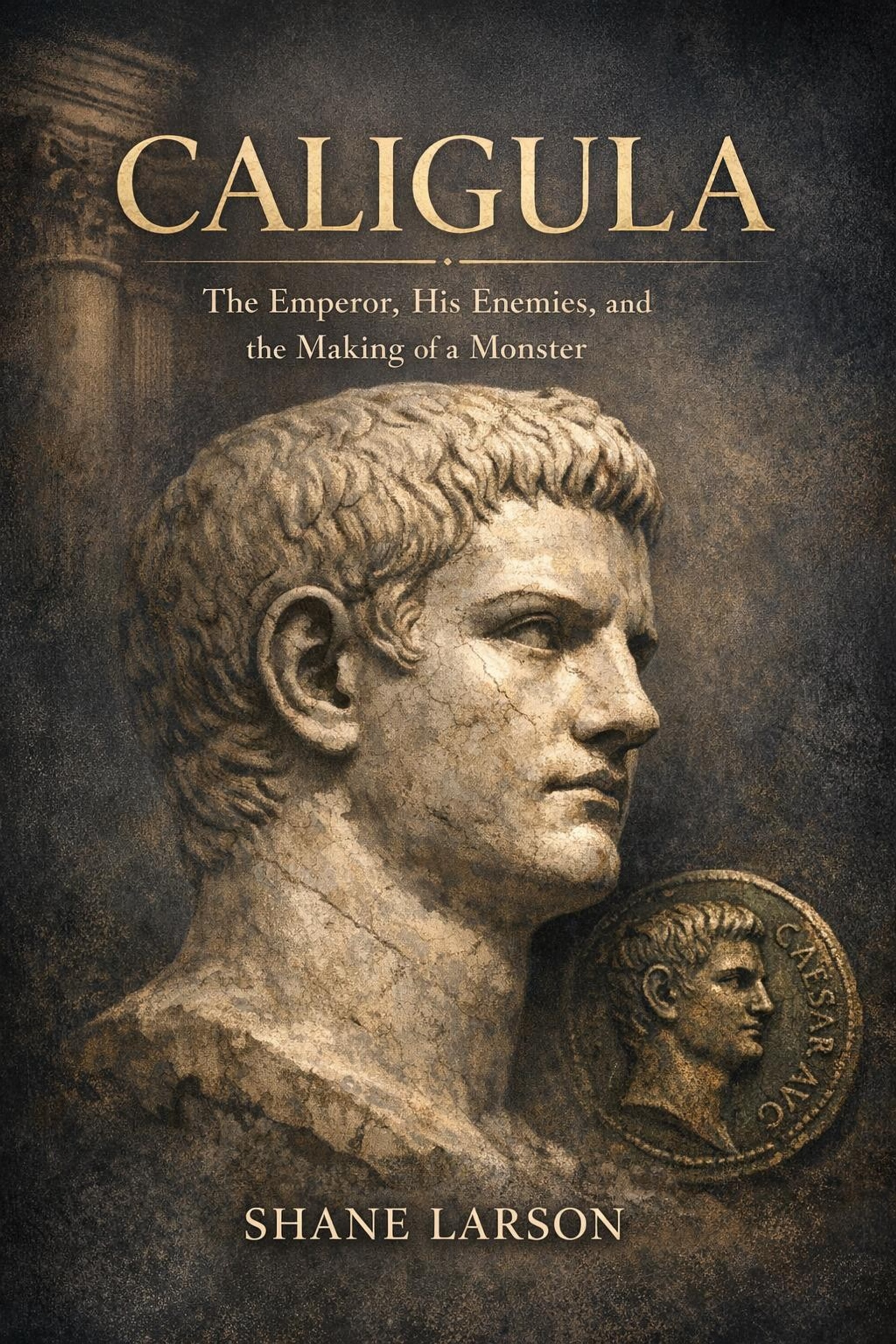
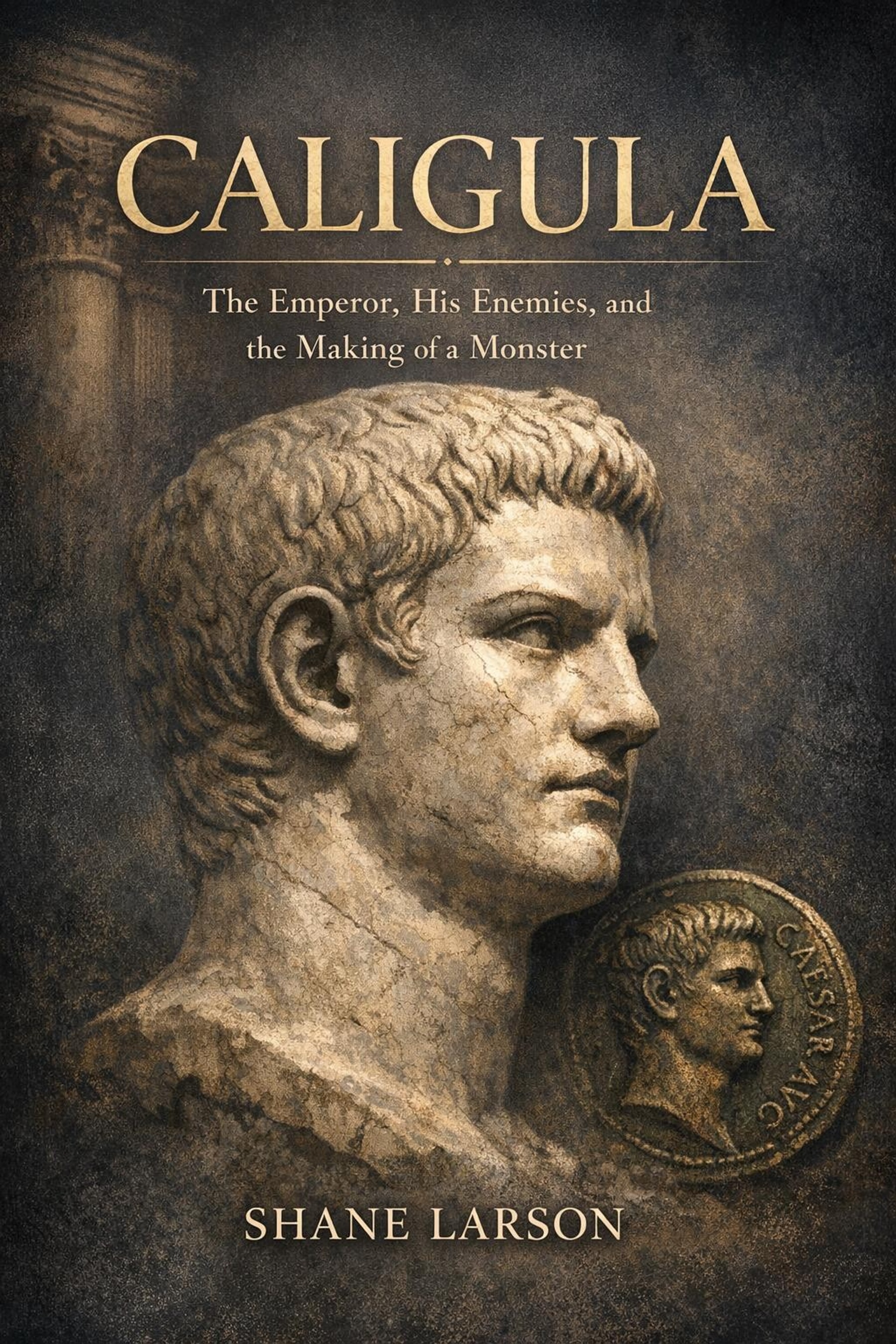
The ships get a chapter of their own in *Caligula: The Emperor, His Enemies, and the Making of a Monster*, which applies the same question to the rest of the reign: who tells each famous story, how long afterward, and what they had against him.
Caligula
New posts and releases, straight to your inbox. No spam, unsubscribe anytime.