"One Riot, One Ranger": The True Story Behind America's Most Famous Lawman Slogan
August 18, 2026 · 6 min read
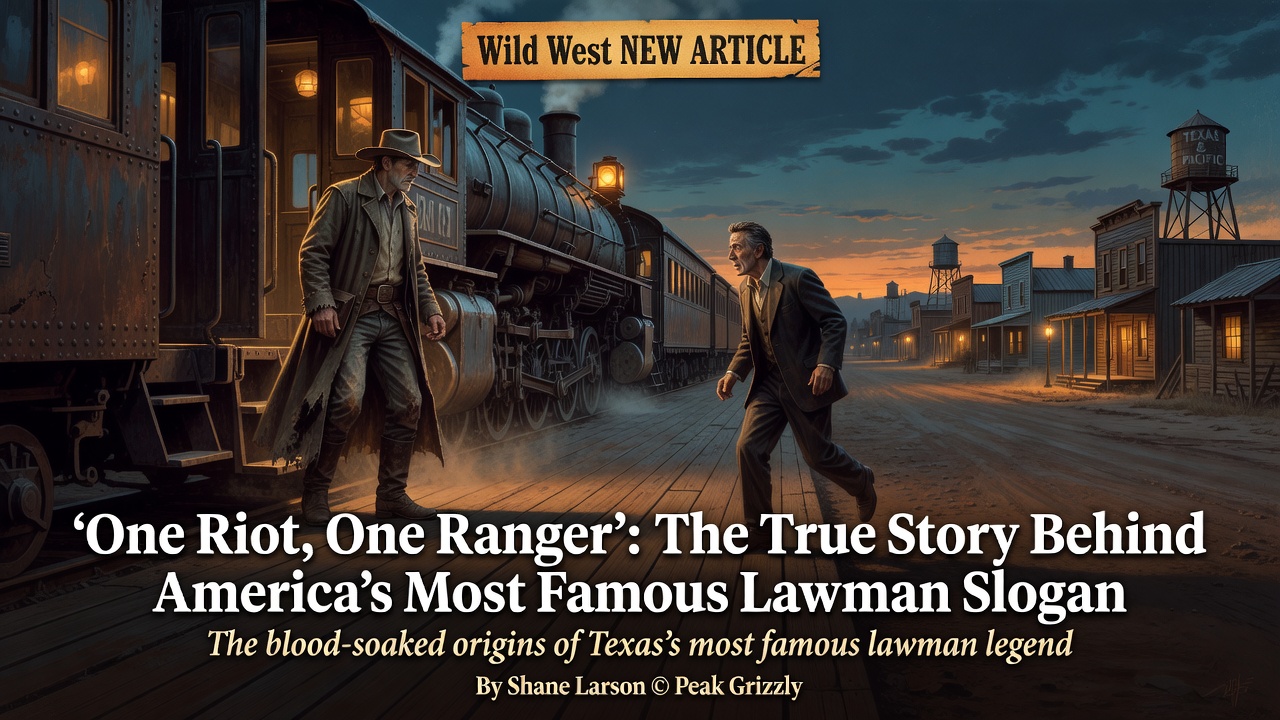
In February 1896, a prizefight promoter named Dan Stuart announced a heavyweight bout that the State of Texas had specifically outlawed. The governor wanted it stopped. He sent the adjutant general, who in turn wired for Captain Bill McDonald of the Frontier Battalion. According to the story that would define the Texas Rangers forever, a nervous city official met McDonald's train and, seeing one man step off, asked where the rest of the company was.
The captain looked at him and said, "Hell, ain't I enough? There's only one prizefight."
Over the following decades, journalists and memoirists sanded that line down into something cleaner and more quotable — "one riot, one ranger" — and stamped it onto the most durable brand in the history of American law enforcement. A single mounted man with a Colt and a badge was supposed to be worth a mob.
That slogan is a good place to start, because it tells you almost everything about how the Texas Rangers have been remembered: the swagger was real, the reputation was real, and the polishing was real too. The legend outran the facts, and it was supposed to. What follows is a short, honest tour of where the Rangers actually came from — and why the real institution is older, stranger, and far bloodier than the brand.
They didn't start as police
Picture a Texas Ranger and you probably picture a lawman — a badge, a jail, a courthouse. For roughly the first fifty years of the force's existence, that picture is wrong.
The Rangers began in the 1820s as an irregular frontier militia. When Stephen F. Austin brought Anglo colonists into Mexican Texas, he needed armed men to defend the settlements against Comanche and Karankawa raids. In 1823 he called for a small company of mounted men to "range" over the country — hence the name. These were not constables. They had no uniforms, no manuals, no pay scale, and no oversight. They were paid, when they were paid at all, in land and plunder.
That origin matters, because it shaped everything that came after. The Rangers were not built to enforce the law evenly across a settled society. They were built as the armed edge of a settlement project — raised to take and hold ground from the Comanche and, soon enough, from Mexico. They were a paramilitary instrument of conquest before they were ever a police force. You cannot understand the institution's later violence without understanding that it was violent by design from the very beginning.
The Colt revolver was a Texas Ranger story first
Here is a fact that surprises even people who know their Western history: the Walker Colt revolver, one of the most famous handguns ever made, is named after a Texas Ranger.
In the early 1840s, the Rangers faced an enemy that conventional frontier militia could not beat. The Comanche were among the finest light cavalry in the world. A mounted Comanche warrior could loose a stream of arrows at a gallop; a Ranger with a single-shot pistol and a muzzle-loading rifle got one or two shots and then had to stop and reload — a death sentence in a running fight.
A young manufacturer named Samuel Colt had patented a revolving five-shot pistol, the Colt Paterson, that almost nobody wanted. The Rangers did. Under Captain John Coffee "Jack" Hays, they carried it into combat at the Battle of Walker's Creek in 1844 and discovered they could now fight on horseback, shot for shot, with a war party that had always held the advantage.
A few years later, Ranger Samuel Walker sought Colt out and the two men redesigned the weapon — bigger, more powerful, more reliable. The result, the Walker Colt, carries the Ranger's name. The repeating revolver, in other words, was a Texas frontier story before it was an American one. It is a clean example of how the Rangers earned their reputation honestly: they were early, they were adaptable, and they were lethally effective.
The Texas Rangers
"Los diablos Tejanos"
That effectiveness had another face. In the Mexican-American War of 1846–1848, the Rangers served as scouts and shock troops, and they were very good at it. They were also responsible for reprisals and killings against Mexican civilians severe enough that people learned to call them los diablos Tejanos — the Texas devils.
This is the pattern that runs through the entire Ranger story, and it is the reason a serious history cannot pick a side. The same qualities that made the Rangers heroic in one frame — fearlessness, aggression, a willingness to operate beyond the rules — made them terrifying in another. The man who would charge a superior force without hesitation was the same man who might shoot a prisoner. Courage and brutality were not opposite types of Ranger. They were frequently the same Ranger.
Collapse, rebirth, and the manhunters
The force was never permanent or continuous. It was abolished during Reconstruction, when a Republican state government replaced the old Rangers with a State Police that Texans came to despise. Then, in 1874, it was reborn as the Frontier Battalion under Major John B. Jones, a disciplined administrator who brought recordkeeping and structure, and as a "Special Force" under Captain Leander McNelly — a tubercular, relentless commander who fought the cattle wars of the Nueces Strip, led an unauthorized raid across the Rio Grande at Las Cuevas in 1875, and used interrogation methods his men quietly called "evaporation."
This is the era that produced the classic image: Rangers as statewide manhunters running down the West's most wanted. They were part of the long pursuit that ended with the capture of the gunman John Wesley Hardin in 1877. They were at the ambush that killed the train robber Sam Bass at Round Rock in 1878. The dime novelists had plenty of real material to work with — which is exactly why the brand became so hard to puncture.
The part the souvenir shops leave out
And then there is the part that the Hall of Fame gift shop tends to skip.
During the chaos of the Mexican Revolution, between roughly 1915 and 1919, the Texas-Mexico border descended into a cycle of raids, panic, and reprisal. Rangers, local officers, and vigilantes killed Tejano and Mexican residents along the border — by the hundreds. The Mexican-American communities of South Texas still call this period La Matanza, the slaughter. In January 1918, Rangers and local men took fifteen unarmed Tejano men and boys from the village of Porvenir and executed them.
For a long time, that history stayed buried under the legend. It did not stay buried entirely. In 1919, a Tejano state representative named José T. Canales forced a legislative investigation into Ranger conduct, putting the killings into the public record and demanding reform. He paid a personal and political price for it. The investigation downsized and reorganized the force, but the popular memory of the Rangers spent the next century working hard to forget what Canales had exposed.
Holding both halves
The honest way to tell the Texas Rangers' story is to refuse the choice between the hero and the villain. The Rangers were genuinely brave. They were genuinely effective. They were also, at times, genuinely lethal to people who had committed no crime but living on contested ground. All of that is documented. None of it cancels the rest.
The legend of the lone Ranger who could quiet a mob was built on that double edge — real courage advertised loudly, real brutality kept quiet. Separating the dime-novel Ranger from the man in the saddle doesn't make the story smaller. It makes it more violent, more morally tangled, and far more interesting than the myth ever was.
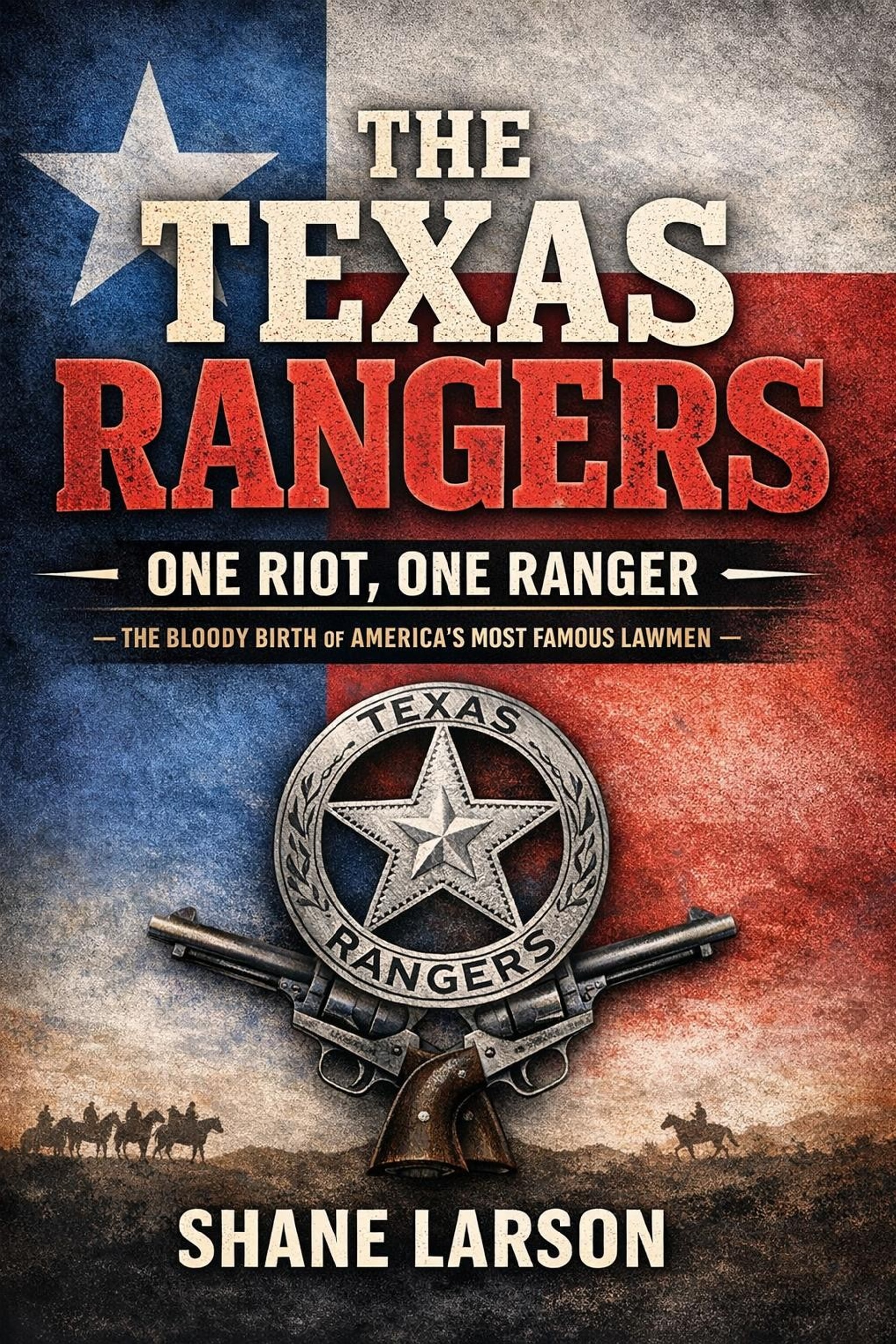
If you want the full story — Hays and the Colt, McNelly and the border, the capture of Hardin, and the reckoning of La Matanza and the Canales investigation — it's all in The Texas Rangers: One Riot, One Ranger, part of the Wild West series. Heroism and atrocity, told straight.
The Texas Rangers
New posts and releases, straight to your inbox. No spam, unsubscribe anytime.