The Spanish Didn't Excavate Chan Chan. They Mined It.
November 20, 2026 · 6 min read
Four kilometres from the main square of Trujillo, on the north coast of Peru, lies the largest city ever built of mud brick in the Americas. Chan Chan covers about twenty square kilometres. Its centre is a group of ten walled compounds, each with a single entrance, hundreds of storerooms, and a platform near the back that held the burial of a king and the people and goods sent with him.
Until 2026 not one of those platforms had been excavated intact by an archaeologist. Nearly every one was dug out long before archaeology existed. What makes Chan Chan unusual is that much of the digging was legal, organised, taxed, and written down.
A city already old
The people who built Chan Chan were the Chimú. Their kingdom, Chimor, held about a thousand kilometres of the Peruvian coast at its height. Around 1470 the Inca conquered it, took its king to Cusco, and resettled many of its metalworkers there. The compounds went out of use. By the time Francisco Pizarro's men came down the coast in 1532, the capital had been declining for two generations, and the epidemics that ran ahead of the Spanish had thinned the coast further.
The Spanish founded Trujillo in 1534–35, beside the ruins. The settlers knew what the great mounds of the coast were. The local word was huaca, a sacred place or thing, and the Spanish applied it to any ancient mound or tomb. They also learned quickly that some huacas held gold.
Treasure with a tax rate
Spanish law had a clear position on buried treasure. A share belonged to the Crown. The standard share on precious metal, whether it came from a mine, a battlefield or a grave, was one-fifth: the quinto real, the royal fifth.
So a huaca could be handled like a mine. A man who wanted to dig one registered his claim with the authorities. Because digging through thousands of tonnes of adobe took labour and money, claimants formed companies with shareholders, each putting in funds or workers for a portion of the proceeds. When gold or silver came out, it was weighed and assayed, the fifth was paid into the royal treasury at Trujillo, and the rest was divided. When partners fell out, they sued each other. All of this left paper.
The verb the Spanish used is telling. They spoke of working a huaca, as one worked a vein.
The strikes
The best-documented early case concerns a huaca the records call Yomayoguan, dug in the 1550s. It produced a lawsuit, and one of the parties was Don Antonio Chayguar, a native lord of the Trujillo valley and a descendant of the kings of Chimor. The historian Susan Ramírez, who studied the case, drew out what makes it valuable. The Spaniards argued about treasure and who had rights to it. Chayguar argued that the huaca was the burial place of his ancestors and that he had duties toward it. The two sides were using the same court to conduct different arguments, and the gap between them is one of the few places where a Chimú noble's view of those platforms survives at all.
The most famous strike was at the mound still called the Huaca de Toledo, after García Gutiérrez de Toledo, who worked it in the 1570s. Later writers, above all the eighteenth-century official Miguel Feijóo de Sosa, reported very large sums paid to the Crown from it over a number of years. The exact totals reach us through that later summary and should be treated with caution. That the yield was large enough to become a legend is not in doubt.
Chan Chan
The big fish and the little fish
The legend goes like this. Don Antonio Chayguar revealed to the Spaniards the location of a treasure known as the peje chico, the little fish, in exchange for a share to benefit the Indian community of Mansiche, outside Trujillo. Somewhere, the story continues, there was a second treasure far greater: the peje grande, the big fish. Its location was never given up.
Whether the big fish ever existed is unknowable. Its effect is not. For roughly three hundred years people dug at Chan Chan and the surrounding huacas looking for it, through the colonial period and well into the republic. The pitted, cratered surfaces of the burial platforms that archaeologists mapped in the twentieth century are the result.
A river as a mining tool
The most drastic single operation was not at Chan Chan itself. A few kilometres away, across the Moche river, stood the Huaca del Sol, built centuries earlier by the Moche and by the usual estimate made of well over a hundred million adobe bricks. In the early 1600s a company diverted the river against it to wash the structure away and collect whatever was inside. Perhaps two-thirds of the building was lost. What stands today, still enormous, is the remainder.
What the looting cost, and what it left
The cost is obvious. A royal burial is information as well as treasure: who was buried, with whom, in what order, wearing what, facing where. Almost all of that is gone from Chan Chan. (In September 2026 Peruvian archaeologists announced one undisturbed platform in the largest compound, with about thirty-eight burials. Its excavation is still under way, and its central occupant has not been identified as a king.) When the Chan Chan–Moche Valley Project excavated a burial platform in 1970, the archaeologists were sorting through what the miners had thrown aside. From fragments of fine cloth, carved wood, shell and bone they could show what kind of burial it had been. They could not recover the burial.
The odd consolation is the paperwork. Because the digging was taxed, there are accounts. Because the partners quarrelled, there are lawsuits. Peruvian historians, notably Jorge Zevallos Quiñones, went through the Trujillo archives and reconstructed which huacas were worked, by whom, and with what result. Those records are evidence that the platforms held gold and silver in quantity, which no excavation could now demonstrate. They confirm that the compounds were royal. And in cases like Chayguar's they show that a century after the Inca conquest, the heirs of the Chimú kings still regarded the platforms as their dead.
It is a strange position for a historian to be in. The same process that destroyed the evidence also produced the best written record of what the evidence was.
Why it matters for reading the site
A visitor to Chan Chan today walks through one restored compound and sees its friezes of fish and sea birds, its courts and its reservoir. The burial platform near the back is a low, battered mass that guidebooks pass over quickly. It deserves more attention. The leading theory about the whole city holds that each compound was built by one king and became his tomb and the headquarters of his estate after he died, which obliged his successor to build a new one. On that reading the platform is the reason the compound exists.
That theory is argued over, and it rests on wreckage. But the wreckage has a paper trail, kept by the people who made it, with the weights noted and the fifth deducted.
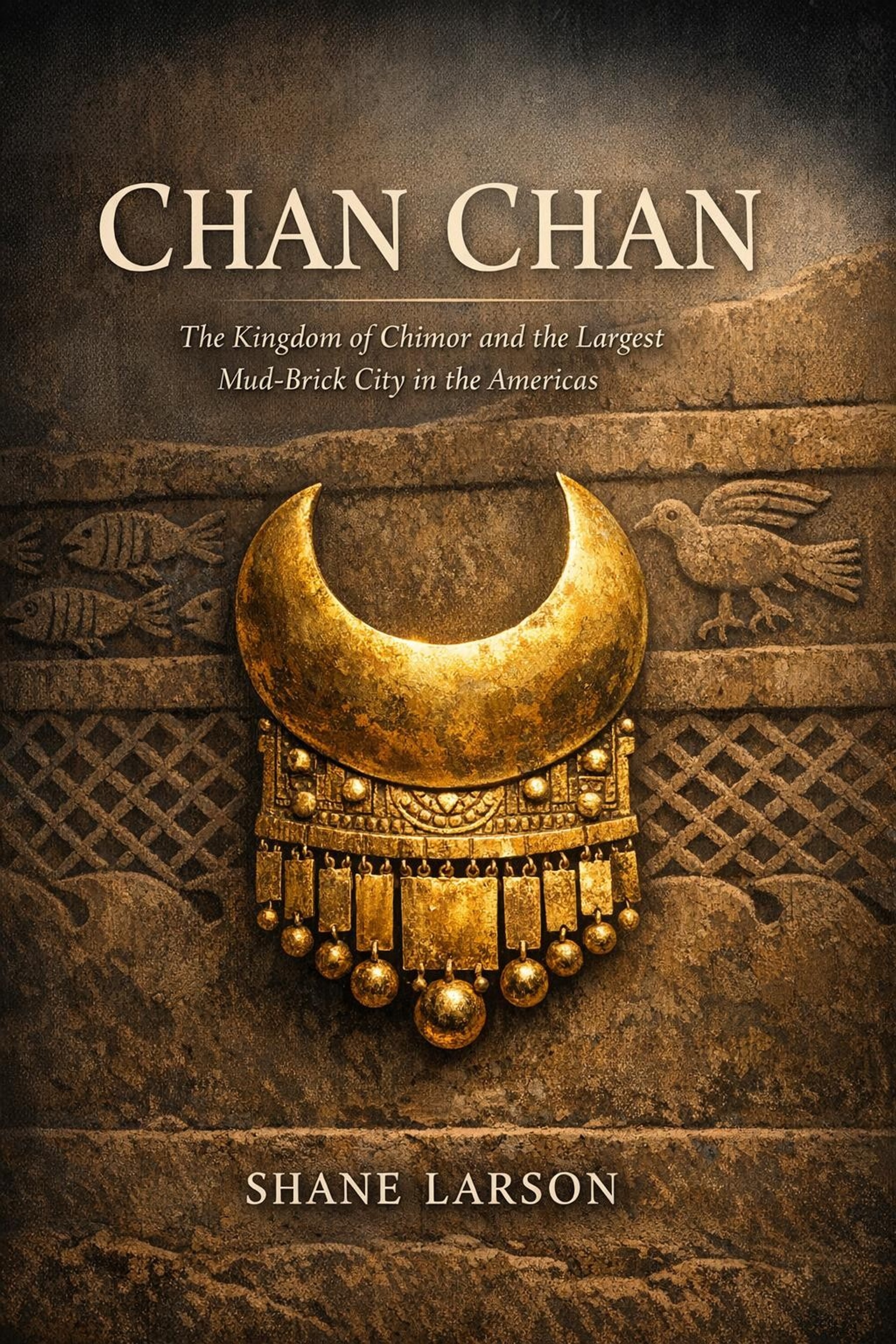
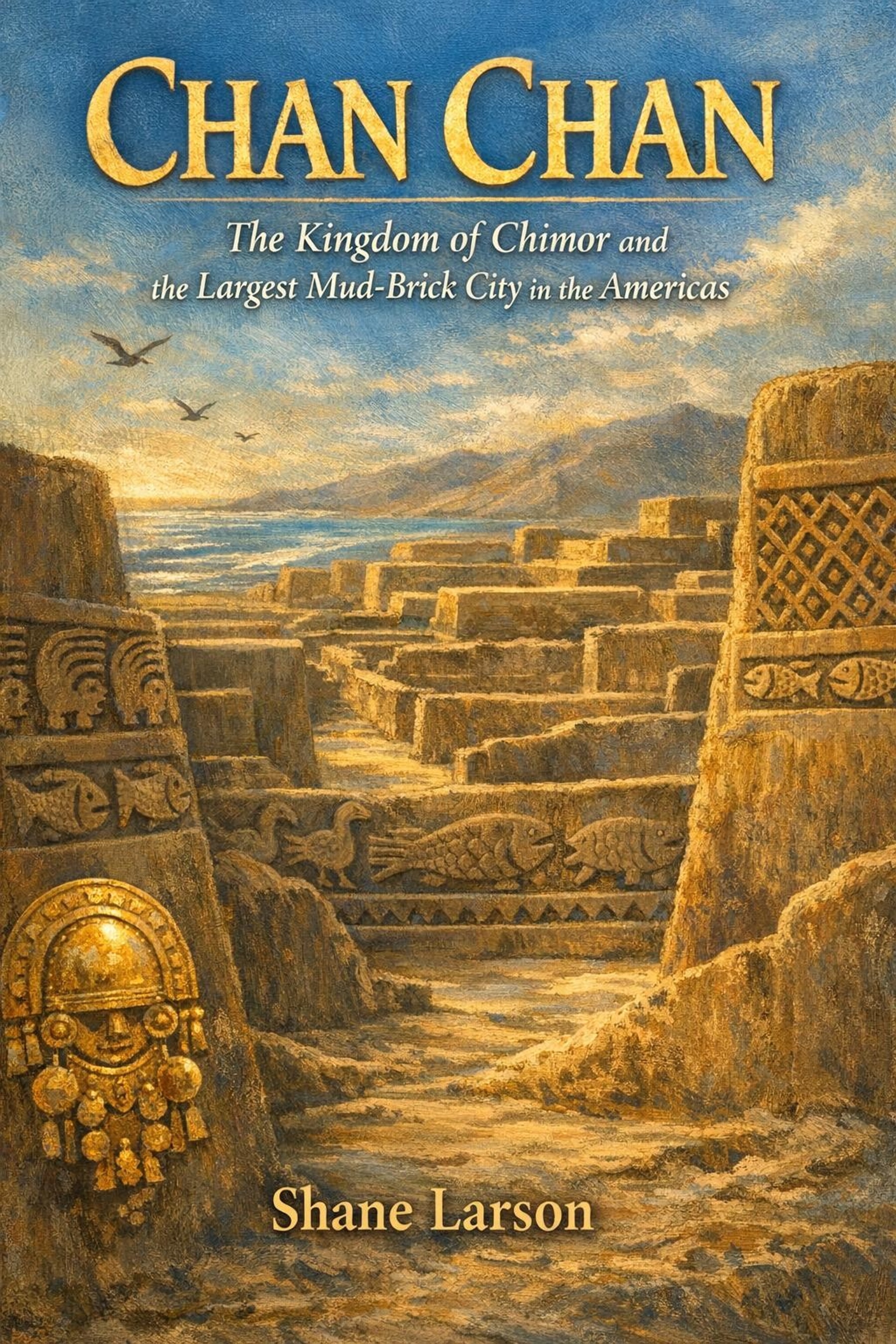
The full story of the kingdom, its capital, and what became of both is told in Chan Chan: The Kingdom of Chimor and the Largest Mud-Brick City in the Americas.
Chan Chan
New posts and releases, straight to your inbox. No spam, unsubscribe anytime.