Burke and Hare Were Not Grave-Robbers: What Actually Happened in Edinburgh in 1828
November 13, 2026 · 6 min read
Ask most people what Burke and Hare did and they will tell you the two men dug up bodies and sold them to doctors. It is the version in the films and on the Edinburgh walking tours. It is also wrong, and the difference matters.
William Burke and William Hare never opened a grave. Over about nine months in 1828 they killed sixteen people in the West Port district of Edinburgh and sold each body to an anatomy school. The grave-robbers of the day, known as resurrection men, at least waited for people to die. Burke and Hare did not.
A debt, a coffin and a price
The business began with a death nobody caused. Hare kept a cheap lodging house in a lane called Tanner's Close. In November 1827 one of his lodgers, an old army pensioner named Donald, died of natural causes a little before his pension was due, owing Hare about four pounds in rent.
Hare and another lodger, William Burke, decided to recover the debt. They took the body out of the coffin, filled the coffin with tanner's bark so that it would feel right to the men who buried it, and carried Donald across the town to 10 Surgeons' Square, where Dr. Robert Knox ran the largest anatomy class in Britain. Knox's school paid them seven pounds ten shillings.
For two laborers that was several months' wages for an evening's work. It also taught them what a body was worth, where to take one, and that the buyers would not ask questions.
Why a body was worth so much
The price makes sense only inside the market that set it. By the 1820s medical students were expected to learn anatomy by dissecting, not by watching. Edinburgh had hundreds of students a year, and London had more. Each needed a body.
The legal supply was tiny. Under the Murder Act of 1752, the bodies of executed murderers could be given to the surgeons for dissection. Parliament had meant this as an extra punishment, and it produced only a few dozen bodies a year across the whole country. The schools needed many times that.
Resurrection men filled the gap. They opened fresh graves at night, took the body and left the shroud, because a body was not legally property and a shroud was. The public knew this was happening and hated it. Scottish parishes fitted graves with iron cages called mortsafes, built watchtowers in their churchyards and organized night watches. The anatomists paid whatever the trade asked, because without bodies they had no students.
That was the market Burke and Hare walked into with Donald. A few weeks later they went back to it with a lodger who had not died on his own.
The sixteen
Most of what is known about the murders comes from two confessions Burke gave in the condemned cell, which do not fully agree, and from the evidence Hare gave at the trial to save himself. None of these is a neutral source.
What they show is a pattern. The victims were lodgers, street sellers, old women and people passing through. They were poor, often alone, and unlikely to be reported missing. Among them were Abigail Simpson, a pensioner from the village of Gilmerton; Mary Paterson, a young woman killed in April 1828; an old woman and her grandson; a relative of Burke's own partner, Helen McDougal; and James Wilson, a young man known across the Old Town as Daft Jamie.
Each was sold at Surgeons' Square for eight or ten pounds, depending on the season. Several of the victims are known only by a first name or a description, because nobody wrote down more.
Burke and Hare
Halloween and the trial
The last victim was Margaret Docherty, killed on 31 October 1828. Two lodgers, James and Ann Gray, found her body under straw the next day, refused an offer of money to keep quiet, and went to the police. By the time officers arrived the body was already at Knox's school, where they found it.
The Crown now had four people in custody: Burke, Hare, Helen McDougal and Hare's wife, Margaret Laird. It had almost no evidence. The doctors who examined Docherty could not say for certain how she had died. So the Lord Advocate made a bargain. Hare would not be prosecuted, and in exchange he would testify.
The trial began on the morning of 24 December 1828 and ran through the night. On Christmas morning the jury found Burke guilty. The charge against McDougal was found "not proven", a verdict particular to Scotland that sets a prisoner free without declaring her innocent.
Burke was hanged on 28 January 1829 before a crowd estimated at more than twenty thousand. By sentence of the court his body was publicly dissected. Hare was released and left Scotland, and nothing reliable is known of him afterward. Knox was never charged with anything. A committee of his own friends concluded that he had not known the bodies were those of murder victims, but that he should have asked more questions.
The part of the story most accounts leave out
The usual telling ends at the gallows. The more lasting consequence came three years later.
Parliament had begun investigating the body trade in the spring of 1828, months before the murders came to light. A first attempt at reform failed in 1829. Then, in November 1831, three men in London tried to sell the body of a boy to King's College, and it emerged that he too had been murdered for the price. The newspapers called it "Burking", and the pressure for a law became impossible to resist.
The Anatomy Act of 1832 ended the dissection of murderers. It licensed anatomy schools and appointed inspectors. And it gave the schools a new supply: workhouses and hospitals were allowed to hand over the bodies of people who died with nobody to claim them.
It worked. With a lawful supply, the price of a stolen body collapsed and grave-robbing died out within a few years. But the bodies had to come from somewhere, and now they came from the poor. For generations afterward, dying in a workhouse without money for a funeral could mean ending up on a dissecting table. Burial clubs, into which working families paid a penny or two a week to guarantee a proper funeral, grew partly out of that fear.
What the legend gets wrong
The popular version makes Burke and Hare a pair of monsters and stops there. The record shows something less comfortable. They were suppliers in a market that respectable institutions had created and relied on, and they were paid by people who did not ask where the goods came from. One man was hanged. The market was left standing and then given a new source.
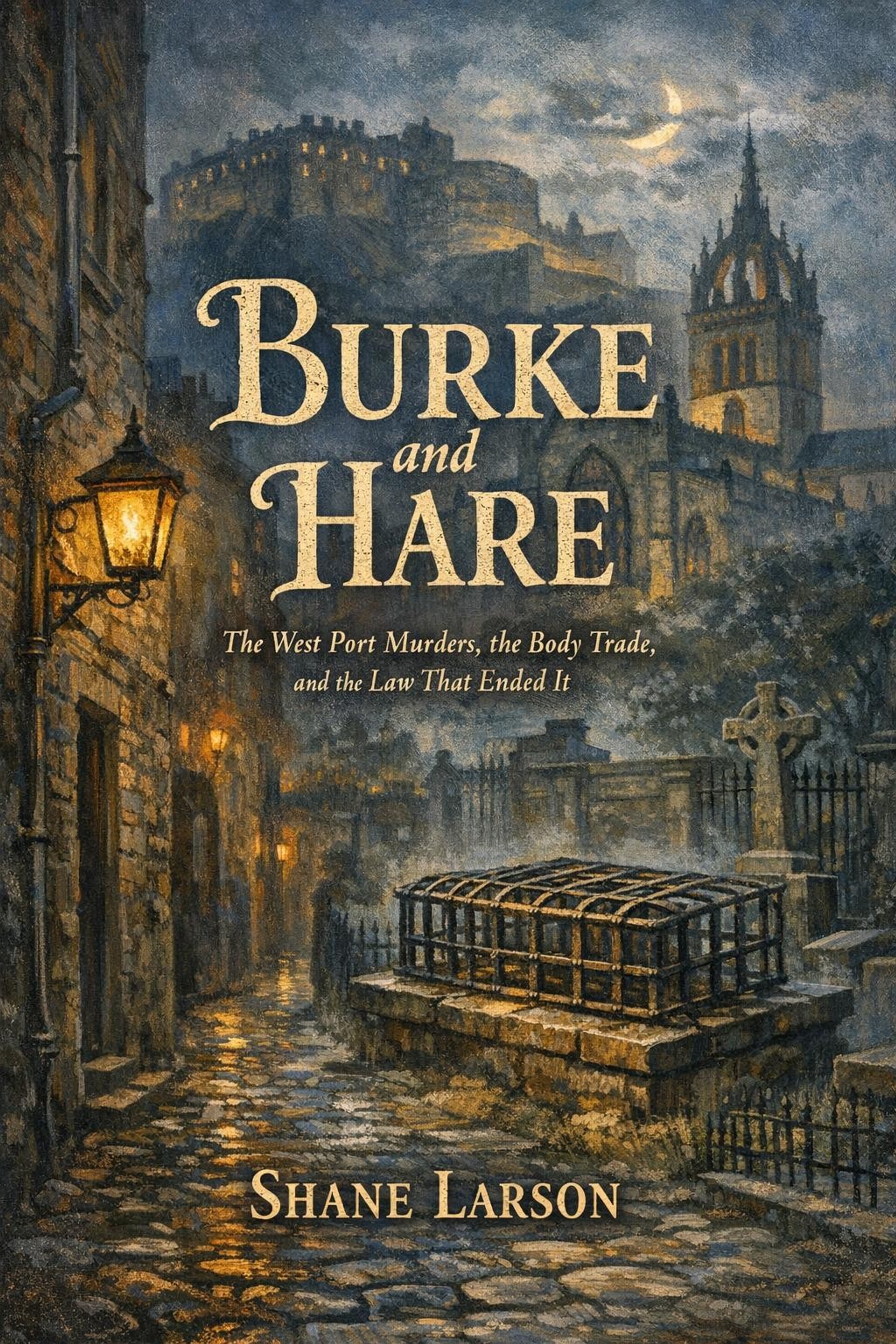
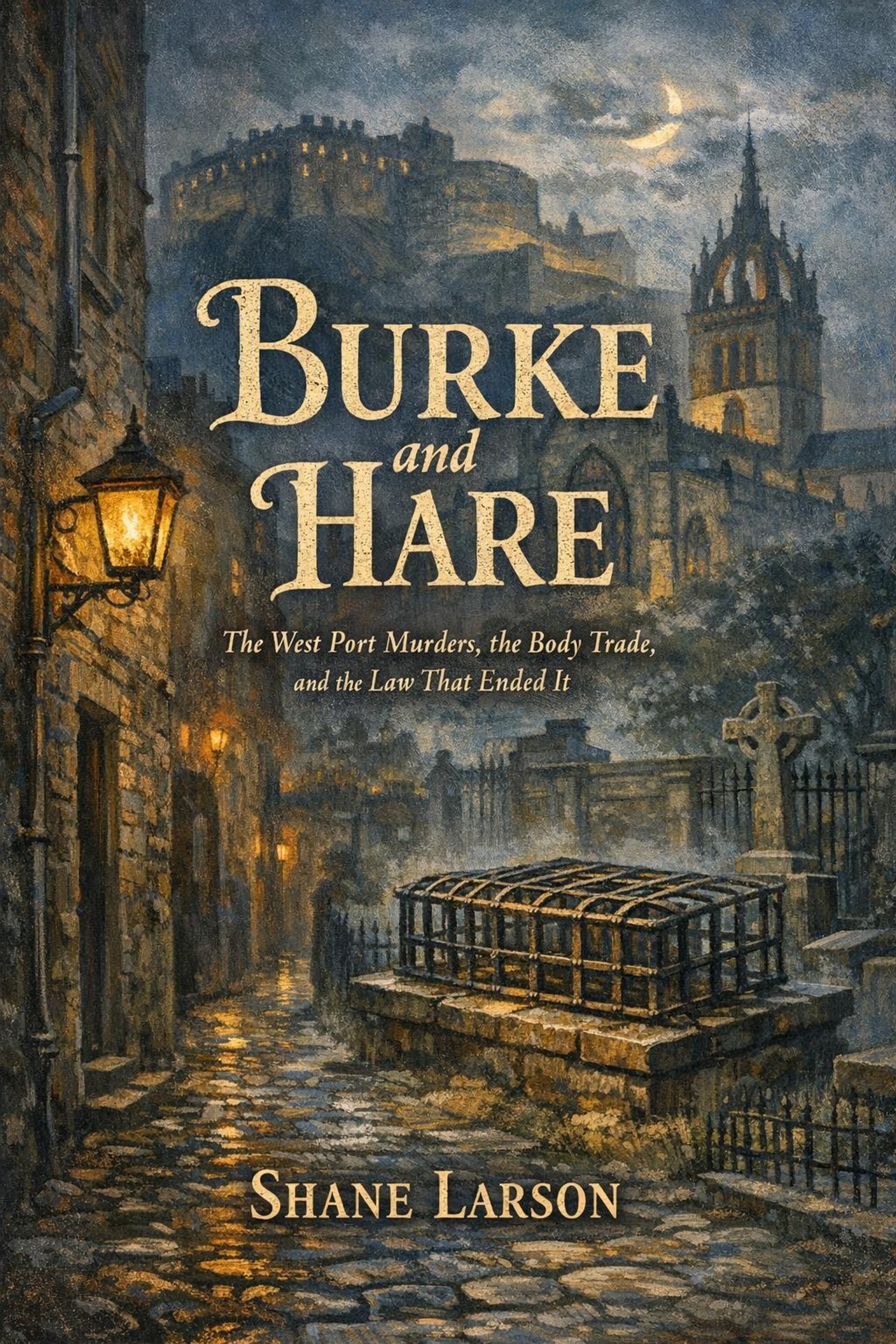
That is the story told in *Burke and Hare: The West Port Murders, the Body Trade, and the Law That Ended It*. It follows the trade from the Murder Act to the Anatomy Act, names each victim as far as the record allows, and sets the confessions side by side where they disagree. The violence is stated plainly and not dramatized.
For the earlier history of anatomy, when almost nobody was allowed to look inside a human body at all, see *Ancient Medicine*. For another murder case told from the record instead of the legend, see *The Bloody Benders*.
Burke and Hare
New posts and releases, straight to your inbox. No spam, unsubscribe anytime.