What Caused the Peasants' Revolt of 1381? A Shilling a Head, Thirty Years of Wage Law, and the Documents They Burned
November 18, 2026 · 8 min read
Ask what caused the Peasants' Revolt and the short answer is a tax. In November 1380 parliament granted the crown a poll tax of a shilling a head on every lay person over fifteen, and seven months later the commons of Essex and Kent were inside London, the archbishop of Canterbury was dead on Tower Hill, and a fourteen-year-old king was writing out the end of serfdom in a field. The short answer is right. It is also the least interesting part of the story, because a tax of a shilling does not by itself put thousands of people on the road to the capital in a week. What it does is tip something that was already leaning. Here is what was leaning.
It began with a plague and a law against being paid
The Black Death reached England in 1348 and over the next two years killed something like half the people in it. Nobody can give a firmer figure than that, but the consequence was the same whatever the number: the survivors found that their labour was suddenly worth more than it had ever been, and they asked for more. The king's government answered in June 1349 with the Ordinance of Labourers, and parliament confirmed it in 1351 as the Statute of Labourers. Wages were pegged to the levels of 1346 and 1347, the years before the plague. A labourer could not leave a master before the end of his term, could not refuse work at the fixed rate, and could not be given alms if he was able-bodied. Craftsmen's prices were fixed too.
The law was enforced. Surviving sessions rolls from the 1350s show thousands of prosecutions in some counties, mostly of ordinary people whose offence was being paid what an employer was willing to give. In 1361 parliament added branding on the forehead for a labourer who broke his contract and fled. Wages rose anyway, because the arithmetic of a half-empty country is stronger than a statute, and that is the point. For thirty years the law made criminals of people who were, by every other measure, doing better than their parents had. Resentment of a law is sharper when the law is losing.
Lords held on to what they had left
The other side of the labour shortage fell on the landlords. A manor that had lost half its tenants had holdings standing empty, rents unpaid and services undone, and a lord who wanted to keep his income had two choices: lease the land out for money and accept the market, or lean harder on the tenants he still had, especially the unfree ones. A villein owed his lord labour on the lord's land, a fine when his daughter married, his best beast when he died, and permission to leave the manor at all, and all of it was recorded on the court roll kept in the lord's chest. Historians still argue over how far lords tightened their grip after the plague, and the honest answer is that it varied from manor to manor. But the attempt was made in enough places for the tenants to notice.
They noticed in a particular way. In 1377 villages across the south of England clubbed together to buy certified copies of their entries in Domesday Book from the royal chancery and went to court with them, arguing that the services their lords demanded had never been owed. They lost, and parliament called it the Great Rumour and legislated against it. Keep that episode in mind. Four years before the rising, the people who would make it were already fighting their lords with documents, and losing because they had the wrong one.
Three poll taxes in four years
The war in France, which had gone well under Edward III, had been going badly since 1369. French raiders burned Rye and attacked Winchelsea in 1377, the year the old king died and his grandson Richard II succeeded him at the age of ten. The crown was bankrupt, the expeditions it paid for achieved nothing, and the commons in parliament were tired of granting the usual taxes on movable goods, which fell on the propertied. So the government tried something new: a tax on heads.
The first poll tax, in 1377, was a groat, fourpence, on every lay person over fourteen except beggars, and the returns counted about 1.36 million taxpayers, which is the best figure historians have for the population after the plague. The second, in 1379, was graduated by rank, from dukes at the top to fourpence for a labourer, and it disappointed. The third, granted at Northampton in November 1380, was three groats, a shilling, on everyone over fifteen, with a vague instruction that the rich in each village should help the poor. A shilling was three days' wages or more for a labourer, and his wife and every grown child owed it too.
When Adam Delved
A third of England disappeared
The returns for the third tax came in early in 1381 and showed something impossible: the taxable population had fallen by about a third since 1377, and the missing were overwhelmingly women. Villages had simply left people off the list. In March the government sent commissioners into the counties to find them, and that is the direct cause of the rising, because a commission of inquiry means officials arriving in your village with the old list, asking by name where your daughter has gone.
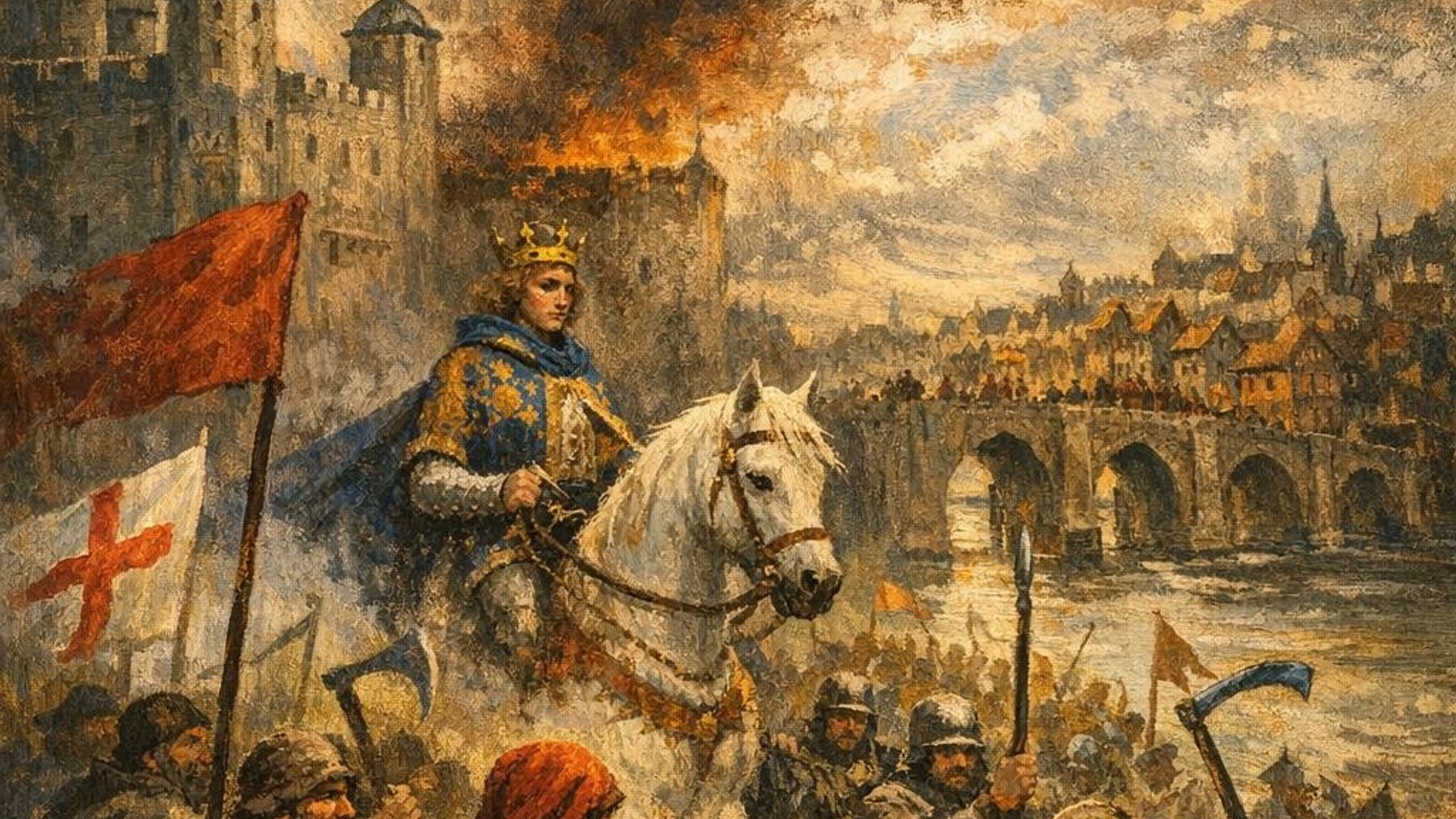
On 30 May 1381 a commissioner sat at Brentwood in Essex to examine the men of Fobbing, Corringham and Stanford-le-Hope. They refused to answer, and drove him out. On 2 June a chief justice came to punish them and was made to swear never to hold such a session again; his clerks were killed. Within days messengers had crossed the Thames into Kent, Rochester Castle was taken, and on 7 June at Maidstone the Kentish host chose as its captain a man called Wat Tyler, about whom nobody then or since has been able to say much for certain. By 12 June he was at Blackheath with thousands behind him. The next day London Bridge was opened from inside.
Who actually rose
The name of the event suggests the poorest in England. The trial records say otherwise. When the king's justices sat that autumn to try the rebels, the indictments named reeves, constables, bailiffs, jurors, craftsmen, substantial tenants, townsmen and a good many clergy: the people who ran a village under the lord's steward in a normal year, kept its tallies and sat on its juries. These were men who understood how lordship worked because they administered it, and that is the key to what they did when they had the capital in their hands.
What they burned, and what they asked for in writing
They burned buildings, but they burned documents far more consistently. The manorial court rolls that recorded who was unfree and what he owed. The sheriff's records at Coggeshall. The archbishop's registers at Lambeth. The lawyers' books and rolls at the Temple on 13 June. The charters of the university at Cambridge, the muniments of the abbeys at St Albans and Bury. And then, at Mile End on 14 June, they asked the king for documents of their own: charters abolishing serfdom, sealed, one for each county, which royal clerks sat and wrote out while the rebels waited for them before going home. The last recorded demand of Wat Tyler, at Smithfield the next day, was for a better charter than the one the clerks had written. He was cut down by the mayor of London in front of the king minutes later, eight days after he first appears in the record.
The charters were revoked at Chelmsford on 2 July. John Ball, the priest who had preached that summer on a couplet in English, Whan Adam dalf, and Eve span, / Who was thanne a gentilman?, was hanged, drawn and quartered at St Albans on 15 July with the king watching. Parliament in November refused to free a single villein.
So what caused it?
A shilling a head, levied on people whose wages the law had tried to hold down for thirty years, by a government that had lost a war and needed the money, collected by officials with a list of names, on behalf of lords who had spent a generation leaning on the tenants they had left. The tax was the match. The fuel was the Statute of Labourers, the court roll in the lord's chest, and the discovery in 1377 that the wrong document would not get you free. In 1381 the commons went for the right ones, and when they had burned them they asked the king for the only document in England that outranked a lord's roll. That is not what a mob does. It is what people do who know exactly how they are governed.
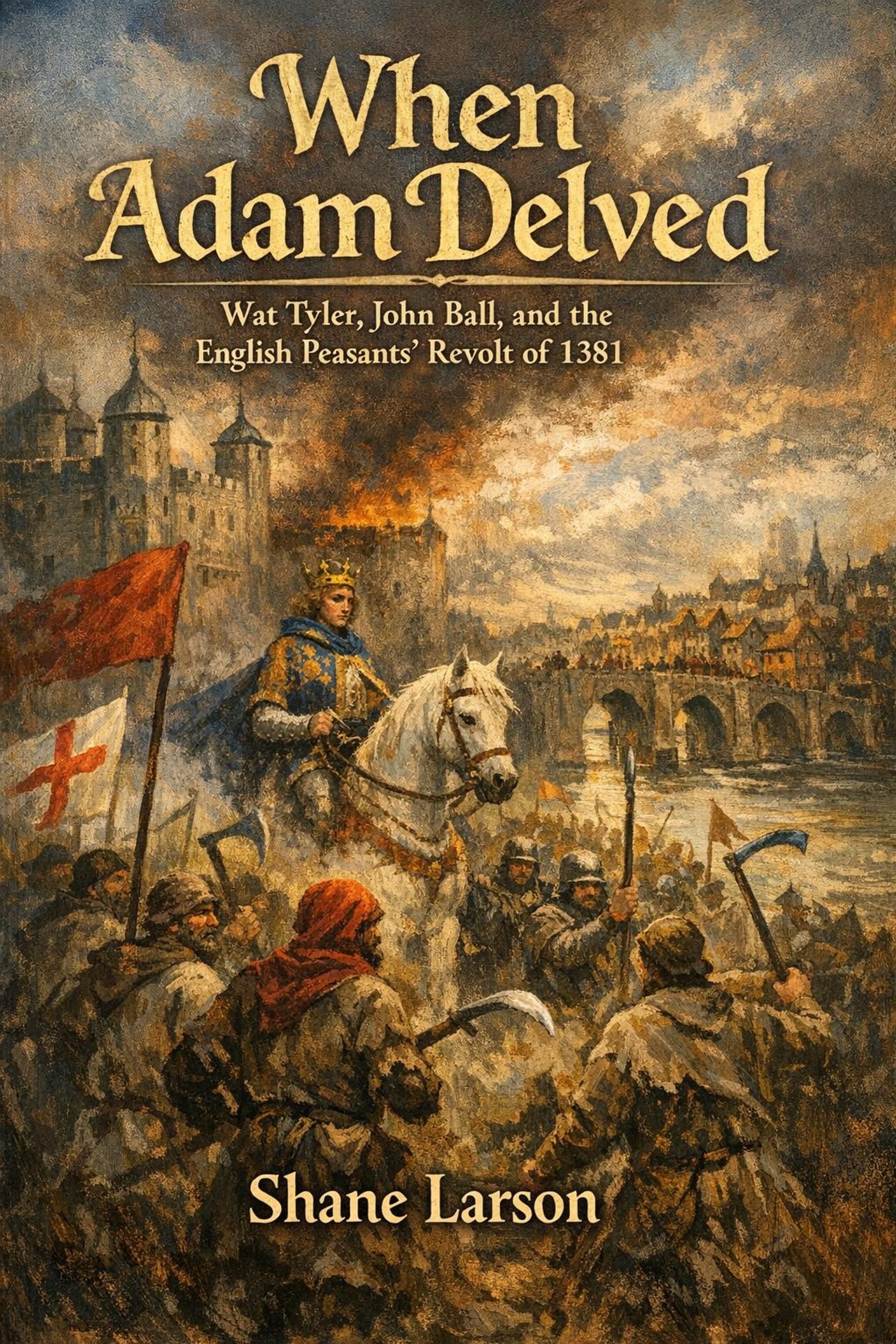
*When Adam Delved: Wat Tyler, John Ball, and the English Peasants' Revolt of 1381* is a narrative history of the rising at three speeds: the thirty years of plague, wage law and taxation that made it, the seventeen days from Brentwood to Smithfield told one at a time, and the county risings, the retribution and the six centuries of argument that followed. It works from the chronicles, which were written by men who hated the rebels, and from the indictments and tax returns, which show who the rebels actually were. The witness is named in every scene, and the question the book ends on is the one the records leave open: did it fail? It sits between *The Black Death*, which tells the plague that started the pressure, and *The Hundred Years' War*, which tells the war the shilling was raised to pay for.
When Adam Delved
New posts and releases, straight to your inbox. No spam, unsubscribe anytime.