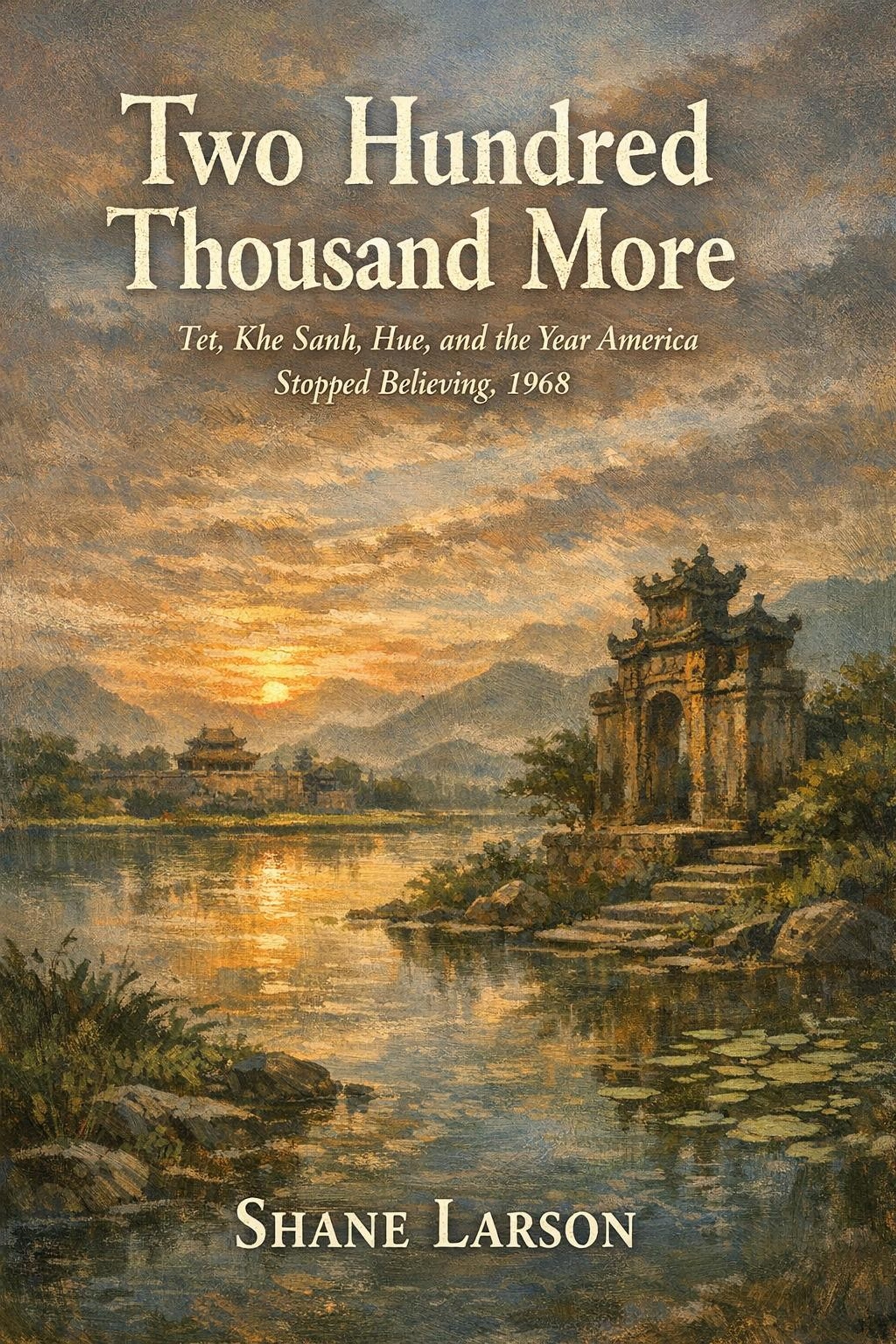
Two Hundred Thousand More
Tet, Khe Sanh, Hue, and the Year America Stopped Believing, 1968
By Shane Larson · The Vietnam War Chronicles (Book 5)
About This Book
Sometime after two in the morning on 31 January 1968, a small team of sappers blew a hole in the perimeter wall of the American embassy compound in Saigon and came through it firing. They never entered the chancery building. Within six hours every one of them was dead or dying, the compound was secured, and the ambassador was telling reporters, accurately enough, that it had been a relatively small affair. As a military action it barely registers against the scale of that night, when attacks broke across more than a hundred towns and cities of South Vietnam at once.
It may still have been the most consequential firefight of the war — because of where the hole in the wall was, and because of what the American public had spent the previous eleven weeks being assured about the war that put it there.
The fifth volume of The Vietnam War Chronicles covers 1968: the siege at Khe Sanh, the countrywide offensive at Tet, the month it took to retake Hue, the request for two hundred thousand more men that gave this book its title, and the thirty-one days of March in which the government that had built the war re-examined it on paper and its president left the race. It also covers what came after, which popular memory has largely misplaced — the deadliest months American forces experienced in the entire war arrived in the spring and summer, after the offensive had failed.
And it did fail. That is the spine of the book, and it is worth being blunt about here. The general uprising the plan required never happened. The South Vietnamese army, which the plan needed to dissolve, fought — at half strength, on a holiday, and better than either its enemies or its allies expected, a performance American accounts still routinely omit. The southern cadre who surfaced to lead the rising were destroyed in weeks, and the war passed to the regulars of the North for the rest of its course. Hanoi's own official history, which this book examines in its own chapter, concedes most of this in its own vocabulary. What the offensive broke was not an army. It was an account — the one the American government had given of its own war — and the year that followed was what a democracy does when it stops believing what it is told.
Why I Wrote This
This is the volume the series was pointed at from the beginning. The first four books each traced a decision — a war inherited, a commitment unexamined, a scale undisclosed, a measure that corrupted what it measured — and 1968 is where the invoice for all four arrived in a single week. I did not want to write the ironic version, the one where Tet is a paradox and history has a dark sense of humour. The mechanism is not ironic. A promise was manufactured; an event arrived that the promise could not survive; the promise-maker's credit was gone. That is a consequence, and consequences can be learned from in a way ironies cannot.
What surprised me was February's polling. The country's first response to Tet was not despair — it was hawkish, by a wide margin. Americans wanted to hit back. What collapsed that winter was not the public's will; it was the government's capacity to be believed proposing anything at all. Once I saw that distinction in the numbers, the whole year reorganised itself around it.
Frequently Asked Questions
Did the United States lose the Tet Offensive?
Militarily, no — and the book states this plainly, because its whole argument stands on it. The offensive failed on every objective its planners set, at a cost the southern insurgency never recovered from. What the offensive won was a demonstration, in front of the entire country at once, that the war being reported and the war being fought were not the same war. The book is about why the second result outweighed the first.
How does the book handle My Lai?
From the Peers Inquiry and the court-martial record, and from nothing else. Only individuals named in those records are named; nothing is novelised; there is no harrowing detail beyond what establishing the record requires. The chapter states what the record establishes — including the helicopter crew who intervened, the twenty months of suppression, and the single conviction and the sentence actually served — and then asks the institutional question of how the reporting system absorbed it.
How many people died in the Hue mass graves?
The honest answer is that the number is contested, it is contested for political reasons on both sides, and this book does not pick one. Every major estimate is given with its provenance, its method, and who has had an interest in its being larger or smaller. The appendix on the numbers of 1968 treats this at length; it is the page a hostile reader from either direction will check first, and it was written knowing that.
Was Khe Sanh the real objective or a diversion?
The book presents both readings at full strength and declines to settle a question the surviving record cannot settle — though the conclusion does weigh the evidence and say where it runs out. What is established is the effect: whatever the divisions on the plateau were for, they held the American command's attention through the last weeks in which the assault on the cities might have been anticipated.
Do I need to read the earlier volumes first?
No. The Introduction opens with a compressed account of the war from the French reconquest through the end of 1967, and 1968 draws more first-time readers than any other year of this war. The earlier volumes deepen the argument — especially the fourth, on the reporting system whose bill this book presents — but nothing here assumes them.
If You Liked This, You Might Like
The four earlier volumes of The Vietnam War Chronicles carry the story to this point:
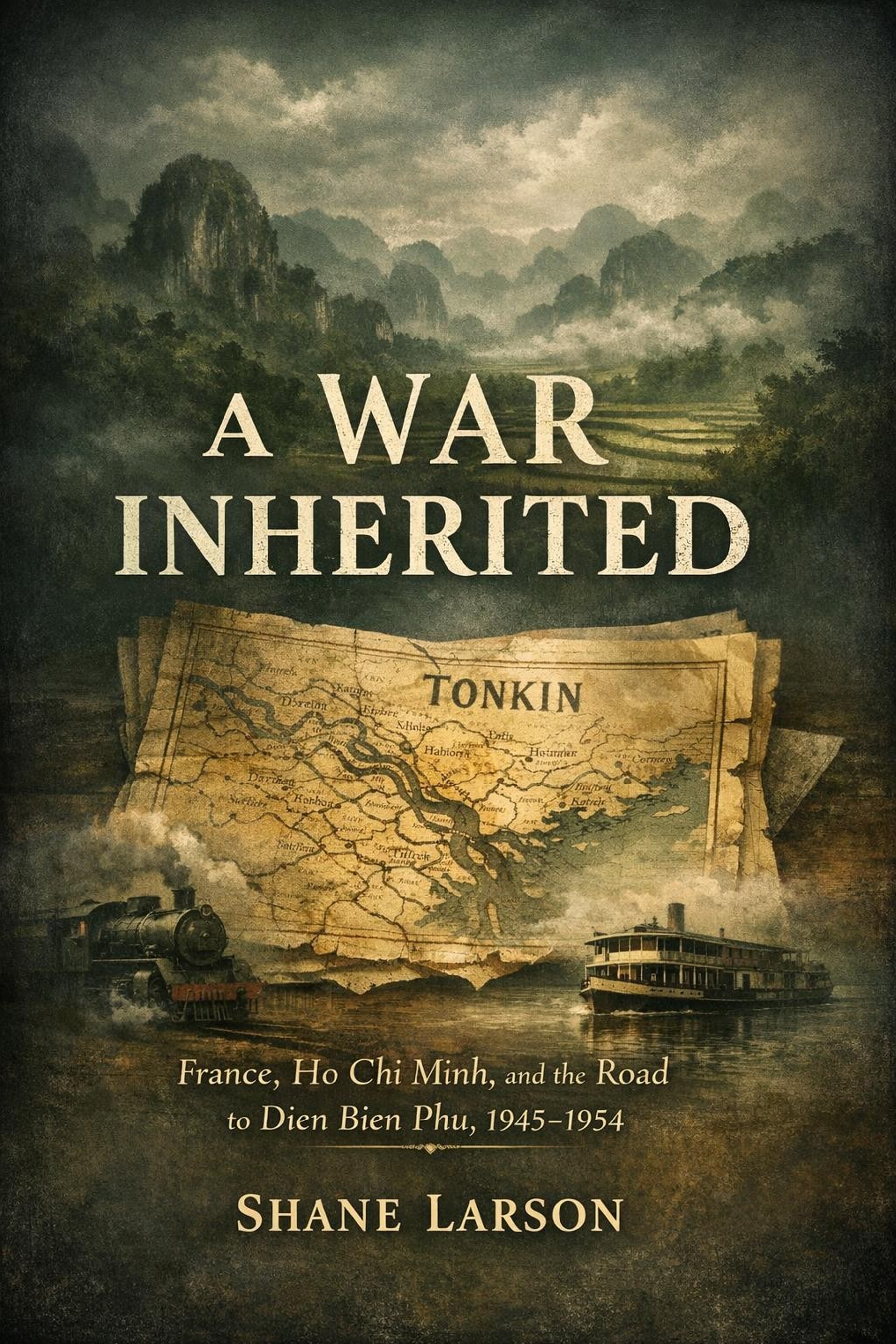
- A War Inherited: France, Ho Chi Minh, and the Road to Dien Bien Phu, 1945–1954 — Volume 1
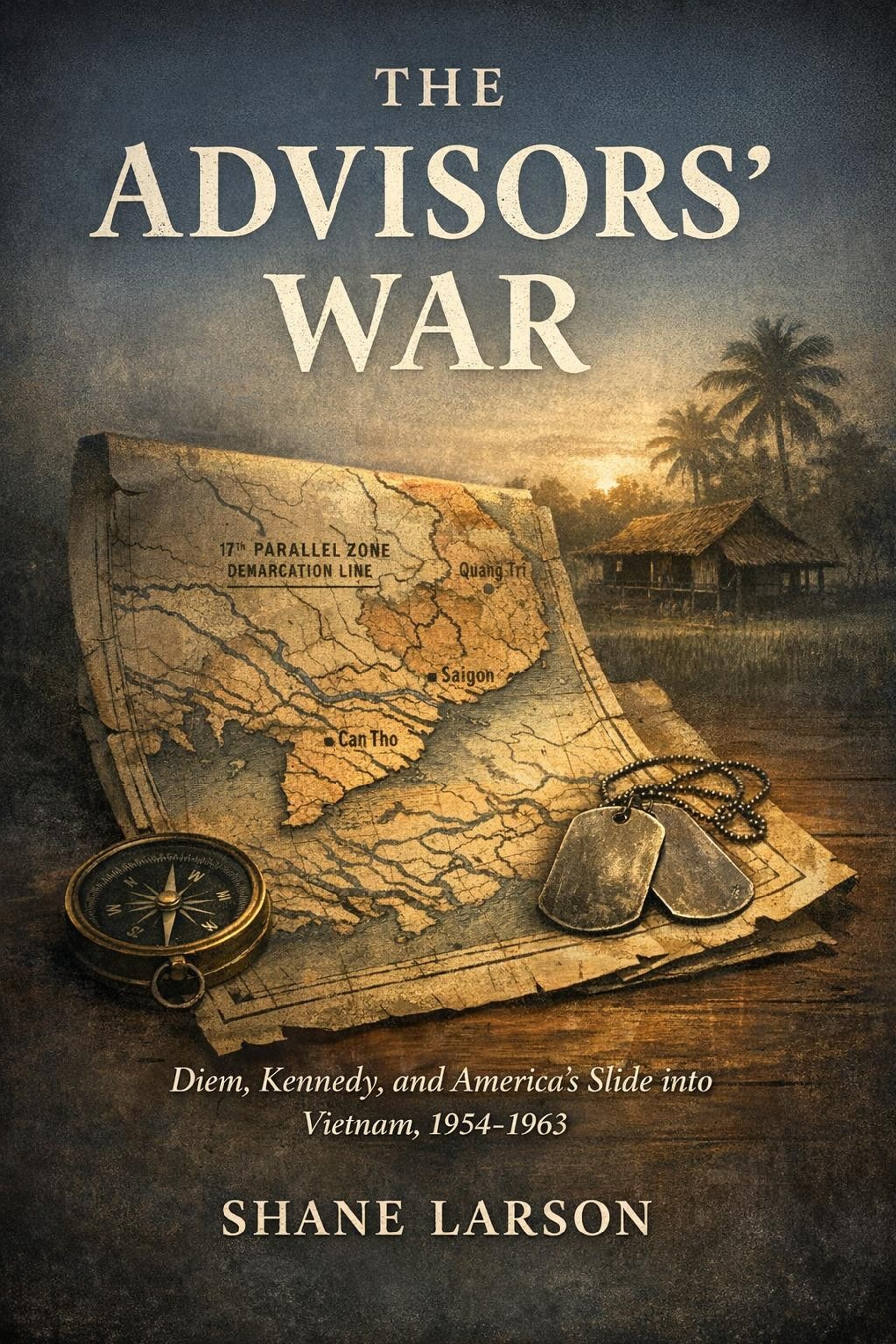
- The Advisors' War: Diem, Kennedy, and America's Slide into Vietnam, 1954–1963 — Volume 2
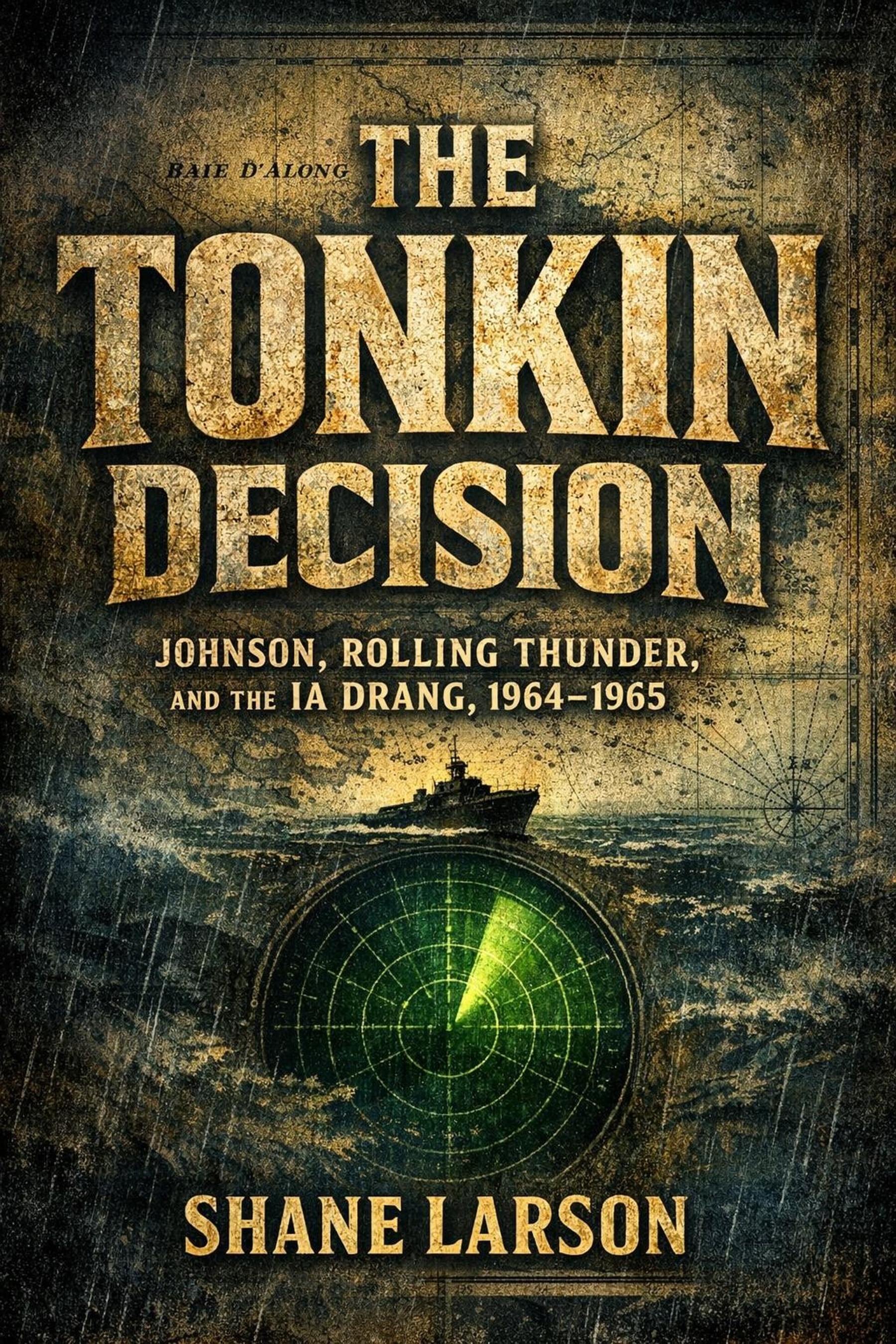
- The Tonkin Decision: Johnson, Rolling Thunder, and the Ia Drang, 1964–1965 — Volume 3
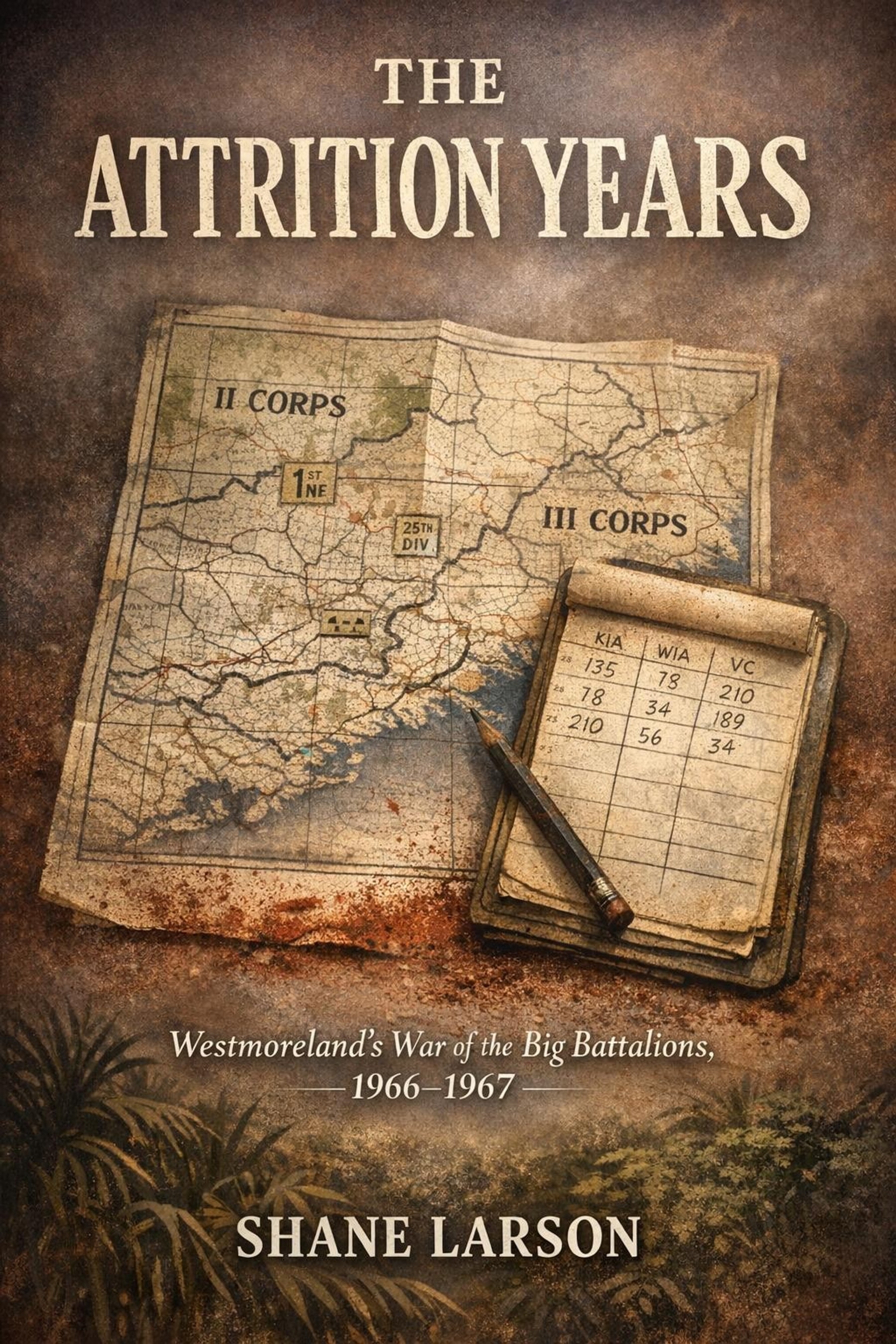
- The Attrition Years: Westmoreland's War of the Big Battalions, 1966–1967 — Volume 4, the reporting system whose claims came due at Tet
And from a much older chapter of the same country's history:
- The Trung Sisters — Vietnam's first recorded war against a foreign occupier, fought nineteen centuries earlier, and part of the long record of resistance the planners of the American war never weighed.
The offensive was defeated in February. The description was defeated in March. Two Hundred Thousand More is the fifth volume of The Vietnam War Chronicles, an eight-volume history of America's war in Vietnam.
What You'll Learn
- **Khe Sanh, both ways** — seventy-seven days, two North Vietnamese divisions, a scale model in the White House basement, and the question the book conducts at full strength without settling: true objective, or the war's most effective diversion?
- **Hanoi's year, from Hanoi's record** — what the General Offensive and General Uprising was actually designed to achieve, the internal argument over it, and the Party's own later admissions of what it got wrong.
- **The warnings** — what was collected, what was inferred, and why the inference that was not drawn was missed for reasons that were not stupid.
- **The embassy, hour by hour** — the event from the record, set against what was reported in the first hours, which was different, and which is what the country received.
- **Hue** — the hardest fighting of the offensive, the destruction of the city, and the mass graves presented source by source, with the provenance of every estimate and the interest each side has had in its size stated openly. No number is endorsed, because the evidence does not permit one.
- **The request and the reversal** — Wheeler's 206,000, the reserves it would have required, the leak of 10 March, the Clifford reassessment, the Wise Men's reversal, and 31 March.
- **The country turns** — the polling before and after Tet, which does not say what the received story says it does, and the open question of whether the press reported the shift or produced it.
- **My Lai** — written from the Peers Inquiry and the court-martial record and from nothing else, with only the individuals those records name, and then the institutional question: what its suppression reveals about the reporting system this series has tracked since its second volume.
Included with Kindle Unlimited — read it free if you're a member.
New Military History releases and free chapters — no spam, unsubscribe anytime.
More in The Vietnam War Chronicles
View series →