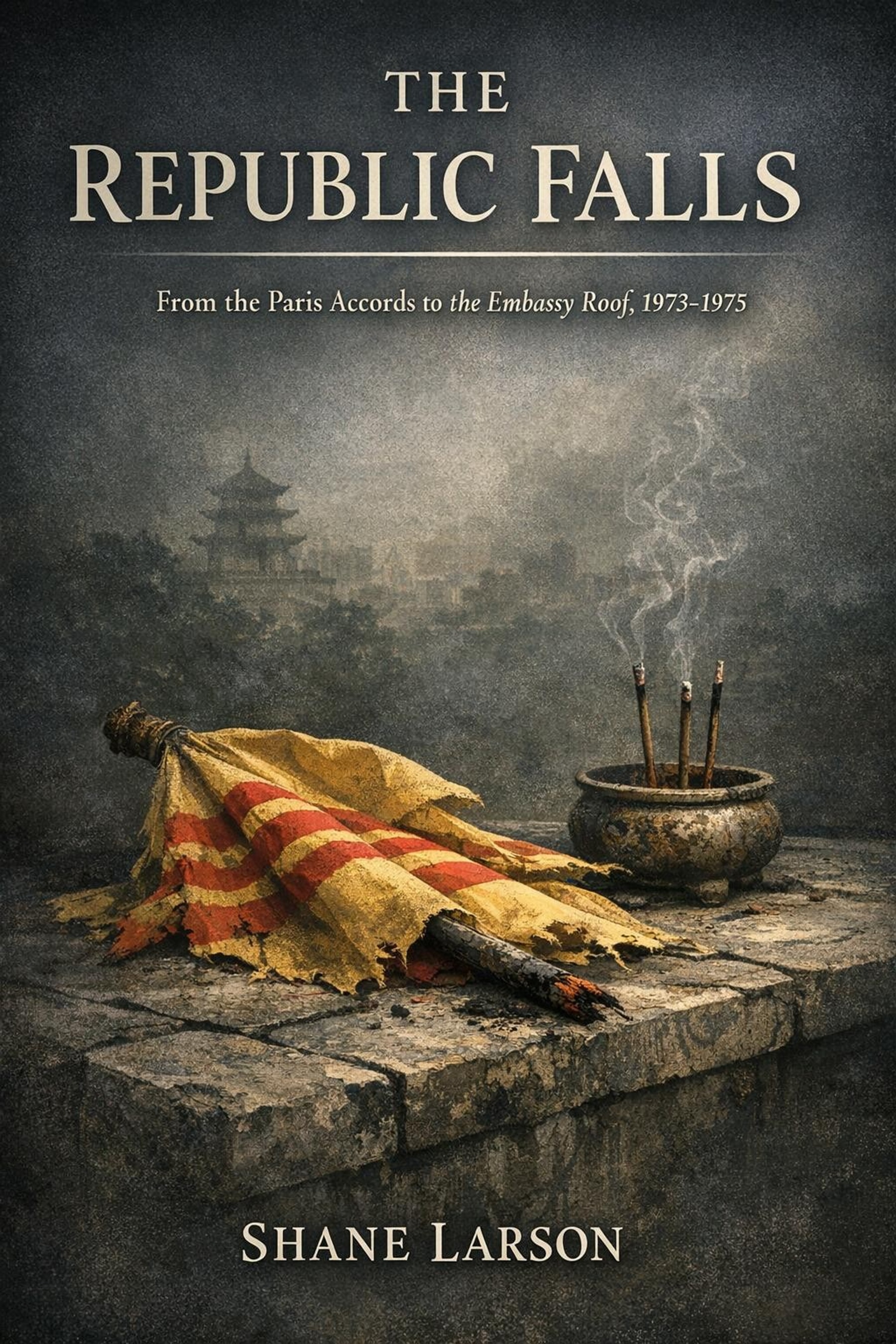
The Republic Falls
From the Paris Accords to the Embassy Roof, 1973-1975
By Shane Larson · The Vietnam War Chronicles (Book 8)
About This Book
In the first days of January 1975, North Vietnamese forces took Phuoc Long — an entire province of South Vietnam, its capital included — and held it. It was the first time in the war that a provincial capital had been lost and not retaken, and it was, on Hanoi's side, an experiment: the Politburo's plan at that point ran to 1976, and Phuoc Long was the instrument that measured whether the American air power promised in presidential letters would return to enforce the Paris agreement. The measurement came back zero. No aircraft, no ultimatum, no response of any kind. Within weeks a two-year campaign plan had become a one-season one, and by the end of April the state the United States had spent two decades sustaining had ceased to exist.
The eighth and final volume of The Vietnam War Chronicles covers the war's last twenty-seven months — from the hour the Paris ceasefire took effect in January 1973 to the tanks at the Independence Palace gate — and its argument is that the Republic of Vietnam was destroyed by a sequence of decisions, most of them its own government's, and not by any battle. The worst of those decisions was given verbally at Cam Ranh Bay on 14 March 1975, with no written plan, no staff study, and no notice to the province chiefs whose provinces were being abandoned. What that order set in motion, and what it foreclosed, is the spine of the book.
But the book is built around a contradiction it refuses to flatten. In March, a corps dissolved on a road in under a week without fighting a battle of its own choosing. In April, a division the same army rated as mediocre held Xuan Loc for two weeks against several times its number. Same army, same month, same pay, same appropriations. Any account that explains the collapse with a slogan about morale has to look away from one of those two facts; this book keeps both in view and argues that the difference between them was command — a plan written down, an order communicated, a fortnight of preparation — and nothing the soldiers were.
Why I Wrote This
Eight volumes ago this series set out to follow one war through the institutions that decided it, and to state each volume's argument up front so the reader could watch it tested instead of taking it on faith. This volume is the series' answer to its own question. The agreement at the end of the seventh book settled the American war and deliberately left the Vietnamese one open; this book is what happened in the space that was left open, and the finding is the one the whole series has been building: institutions under time pressure, working from information they had themselves shaped, failed in ways that were visible afterwards and mostly available at the time. Very little in these fifty-five days was unforeseeable. Most of it was foreseen, by people whose warnings are in the record, dated before the events.
The hardest part to write was the part the reader will be most tempted to skip past: the two years before the offensive. The popular memory compresses the fall of South Vietnam into one day and one image. Restoring the true chronology — two years of losing, then fifty-five days of collapse — changes what the collapse means, because it moves the decisive ground from the battlefield to the appropriations committee, the Politburo plenum, and a meeting room at Cam Ranh Bay. Those chapters are not background. They are the war.
Frequently Asked Questions
Was South Vietnam destroyed by the American aid cuts?
That is the war's angriest surviving argument, and the book gives it a full hearing rather than a verdict. The revisionist case — argued at greatest length by George Veith — holds that a functioning army was starved of ammunition, fuel, and parts while the deterrent it had signed the Accords under was legislated away. The structural case — running from Arnold Isaacs's generation of correspondents to Gregory Daddis — holds that the defeat was built in: an army designed for an American system that went home, an economy that was an American expenditure, an officer corps promoted on loyalty. Both cases marshal real evidence, and examined closely they are not fully exclusive. Appendix B prints the figures — appropriations and actual expenditure in nominal and inflation-adjusted dollars, ammunition and availability rates, and Soviet and Chinese deliveries with the source disagreements shown rather than averaged — so you can check the arithmetic yourself.
Why doesn't the book just settle it?
Because the evidence runs out before the verdict does, and the book says exactly where. The figures establish that the aid reduction was severe — far more severe in real terms than nominal ones — and that it measurably degraded the army's fighting power. They also establish that the 1973 baseline was an artificially inflated surge, and that a state solvent only at that subsidy level had a structural problem no appropriation could vote away. What no appropriations table can establish is what a differently commanded army would have done with the same supplies: Highway 7B was not lost for want of ammunition, and Xuan Loc, the proof the army could fight, consumed ammunition at a rate the national stocks could not have sustained. A book that pretended the figures decide the question would be a partisan wearing the costume of a judge.
How does the book handle the evacuation and the people who were left?
From the record, under the strictest sourcing rules in the series, because more of this volume's participants are living than any before it — many of them now American citizens. Nothing is reconstructed: no invented dialogue, no composite witnesses, no atmosphere. The book reports who got out, who did not, and how those categories were actually determined — the employee lists, the improvised networks, the selection at the walls — without sentimentality and without assigning blame. The re-education camps and the exodus by sea are reported factually, with their figures sourced and their unverifiable numbers labelled as unverifiable, as the beginning of a story this book does not cover.
Is the famous rooftop in the final photograph the American embassy?
No — and the book corrects this carefully, because it is the single most widely misattributed fact of the war's ending. The building in the famous image is 22 Gia Long Street, an apartment building. Chapter 14 establishes the building, the ladder, the aircraft, and who was lifted from it, from the record.
What are the Highway 7B casualty figures?
A range with a named source at each end, and an honest statement that the true toll cannot be verified: nobody counted the column when it formed and nobody could count it after it was destroyed. The estimates span an order of magnitude, and the book declines to choose a number, because choosing one would be an aesthetic preference dressed as arithmetic.
Do I need to read the earlier volumes first?
No. The Introduction carries the whole war — from the French reconquest through Tet, Vietnamization, and the Paris agreement — in a single compressed account, and the volume stands alone. Readers of the seventh volume will recognise this book as the answer to the question that volume ended on: what happens when only one of 1972's two proofs still applies.
If You Liked This, You Might Like
The seven earlier volumes of The Vietnam War Chronicles carry the story to this point:
- A War Inherited: France, Ho Chi Minh, and the Road to Dien Bien Phu, 1945–1954 — Volume 1, the first handover
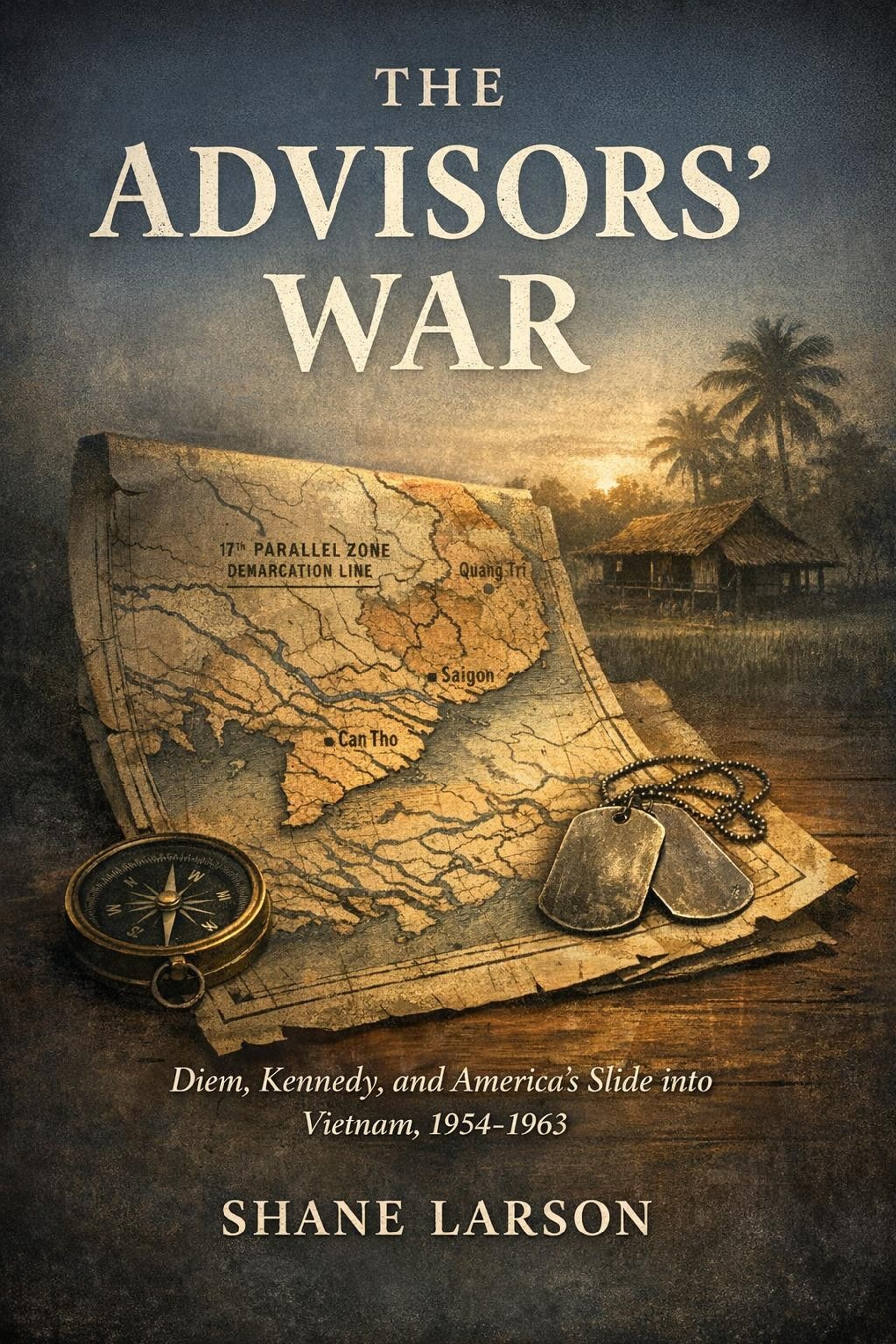
- The Advisors' War: Diem, Kennedy, and America's Slide into Vietnam, 1954–1963 — Volume 2
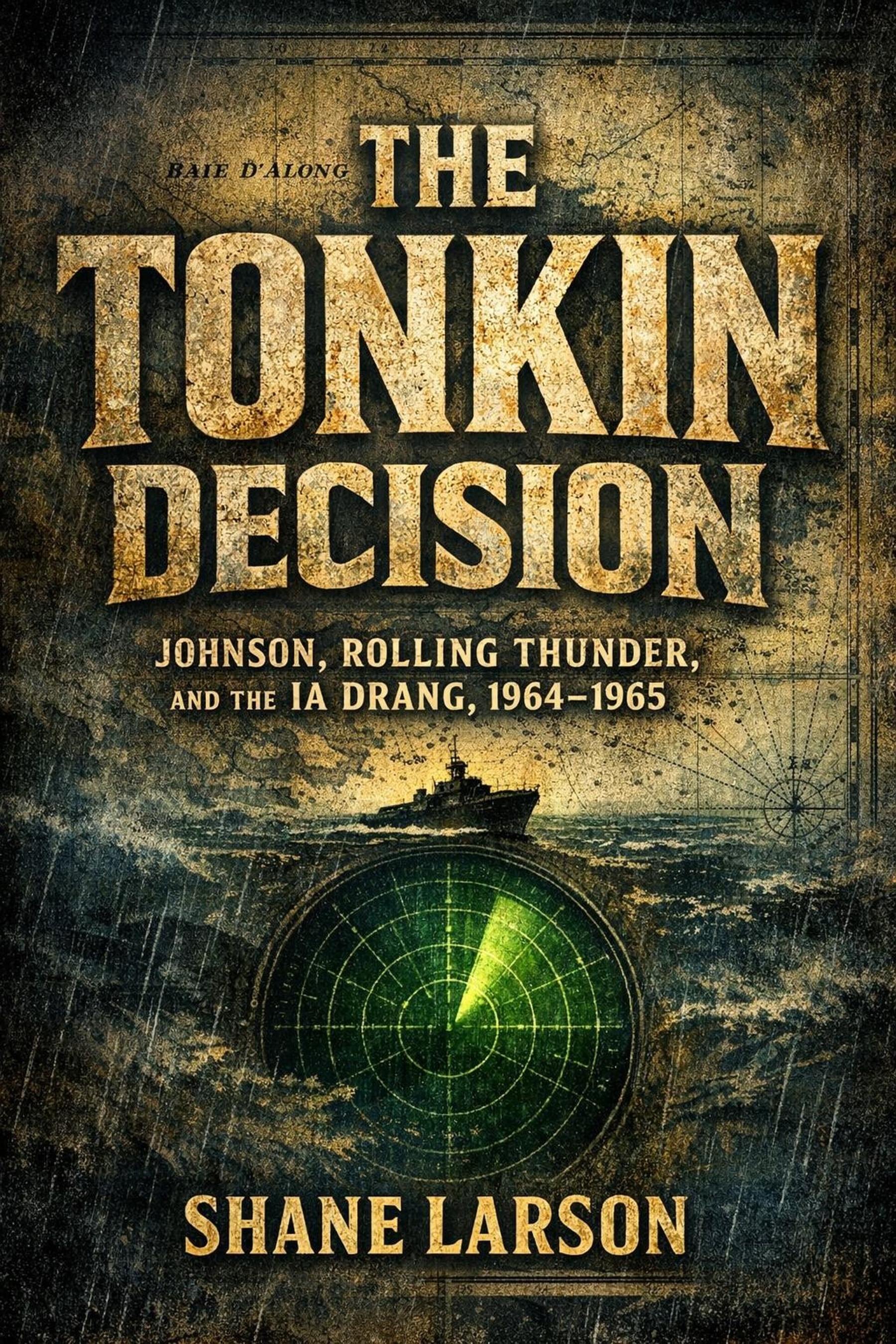
- The Tonkin Decision: Johnson, Rolling Thunder, and the Ia Drang, 1964–1965 — Volume 3
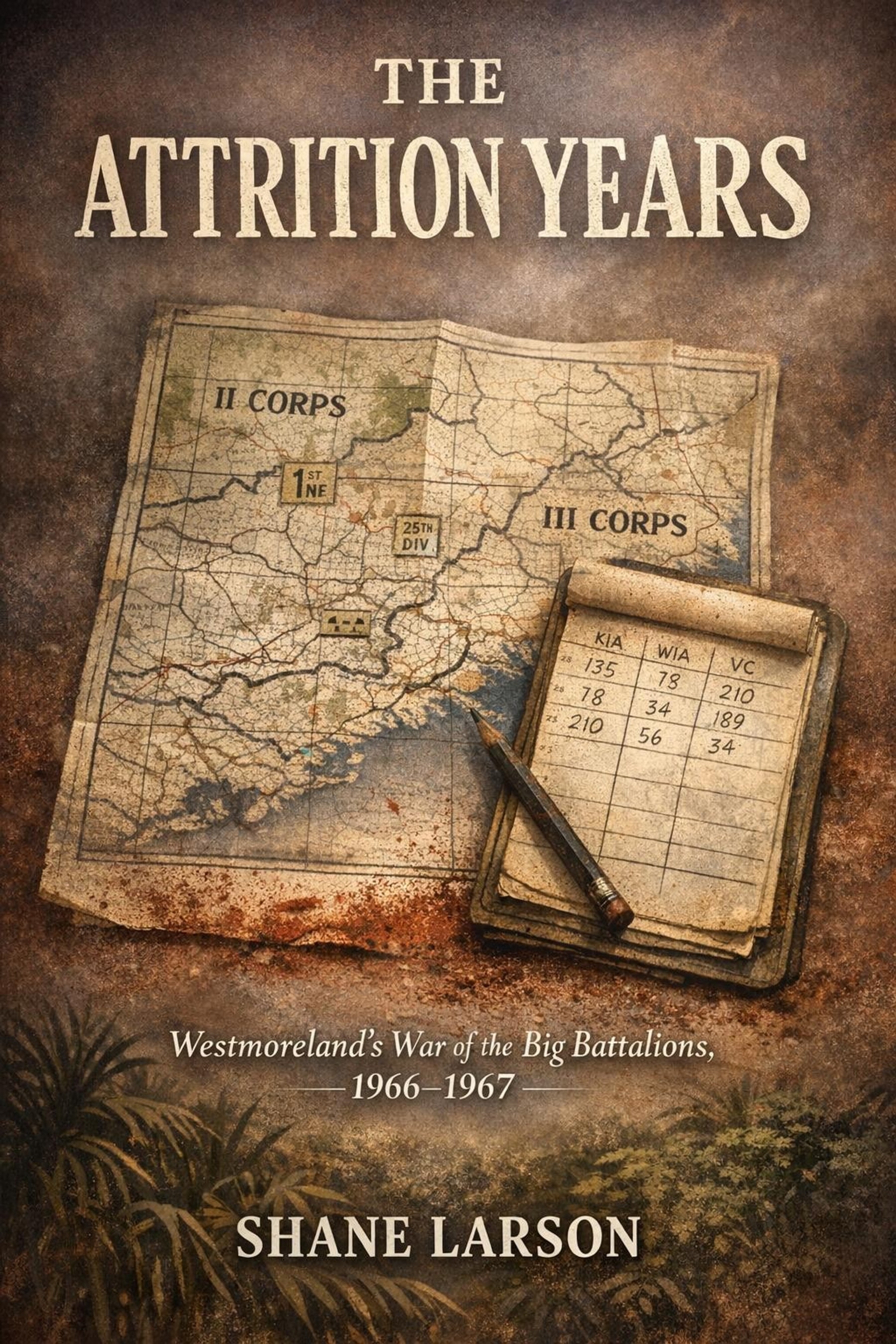
- The Attrition Years: Westmoreland's War of the Big Battalions, 1966–1967 — Volume 4, the corrupting number
- Two Hundred Thousand More: Tet, Khe Sanh, Hue, and the Year America Stopped Believing, 1968 — Volume 5, whose events return as an operational fact in this book's ninth chapter
- Handing Over the War: Vietnamization, Cambodia, and the War at Home, 1969–1971 — Volume 6
- The Easter Gamble: Hanoi's 1972 Offensive, Linebacker, and the Paris Accords, 1972–1973 — Volume 7, which ends where this book begins
The Republic Falls is the eighth and final volume of The Vietnam War Chronicles — eight books, one war, and one finding, tested eight times: that institutions under time pressure, acting on incomplete information, fail in ways that are perfectly visible afterwards and were available to see at the time.
What You'll Learn
- **The ceasefire war** — the agreement as it actually worked: no agreed line, a leopard-spot map, both sides racing to plant flags, and a supervisory commission that could not, by its own design, supervise anything.
- **The economy the Americans left behind** — what half a million foreign personnel had been worth to the South, the 1973 oil shock arriving on top of the withdrawal, and a soldier's pay measured against the price of rice.
- **Hanoi returns to war** — the 21st Plenum, the faction that argued for rebuilding the North instead, and the Truong Son corridor rebuilt into an all-weather highway with a fuel pipeline beside it — told from the North's own campaign history, with its self-serving passages identified as such.
- **Washington turns away** — Case-Church, the War Powers Resolution, and the FY1974–75 appropriations laid against the Watergate timeline, with the inflation arithmetic the whole aid argument turns on.
- **Phuoc Long and Ban Me Thuot** — why the January test, not the March assault, was the decisive event, shown from the Politburo's own record.
- **Cam Ranh and Highway 7B** — the decision reconstructed from orders, cables, and published testimony, with the thin places in the record reported as thin; and the road, with its casualty figures given as a range, a named source at each end, and a plain statement of why the toll cannot be verified.
- **Hue and Da Nang** — the 1968 memory as an operational fact seven years later, and a city of two million lost without a battle, with the largest materiel loss of the war inside it.
- **The Ho Chi Minh Campaign** — corps-sized formations moved six hundred miles in three weeks: the operational achievement of the campaign, almost never described in English, told from the North's side of the hill.
- **Xuan Loc** — the 18th Division's twelve days, and the volume's central military judgement stated explicitly.
- **The last days** — the evacuation as the record documents it, Ambassador Martin's stated reasoning reported without psychologising, the Cambodian contrast, and the fifty-fifth day, hour by hour — including a careful correction of the most widely misattributed fact of the war's ending.
Included with Kindle Unlimited — read it free if you're a member.
New Military History releases and free chapters — no spam, unsubscribe anytime.
More in The Vietnam War Chronicles
View series →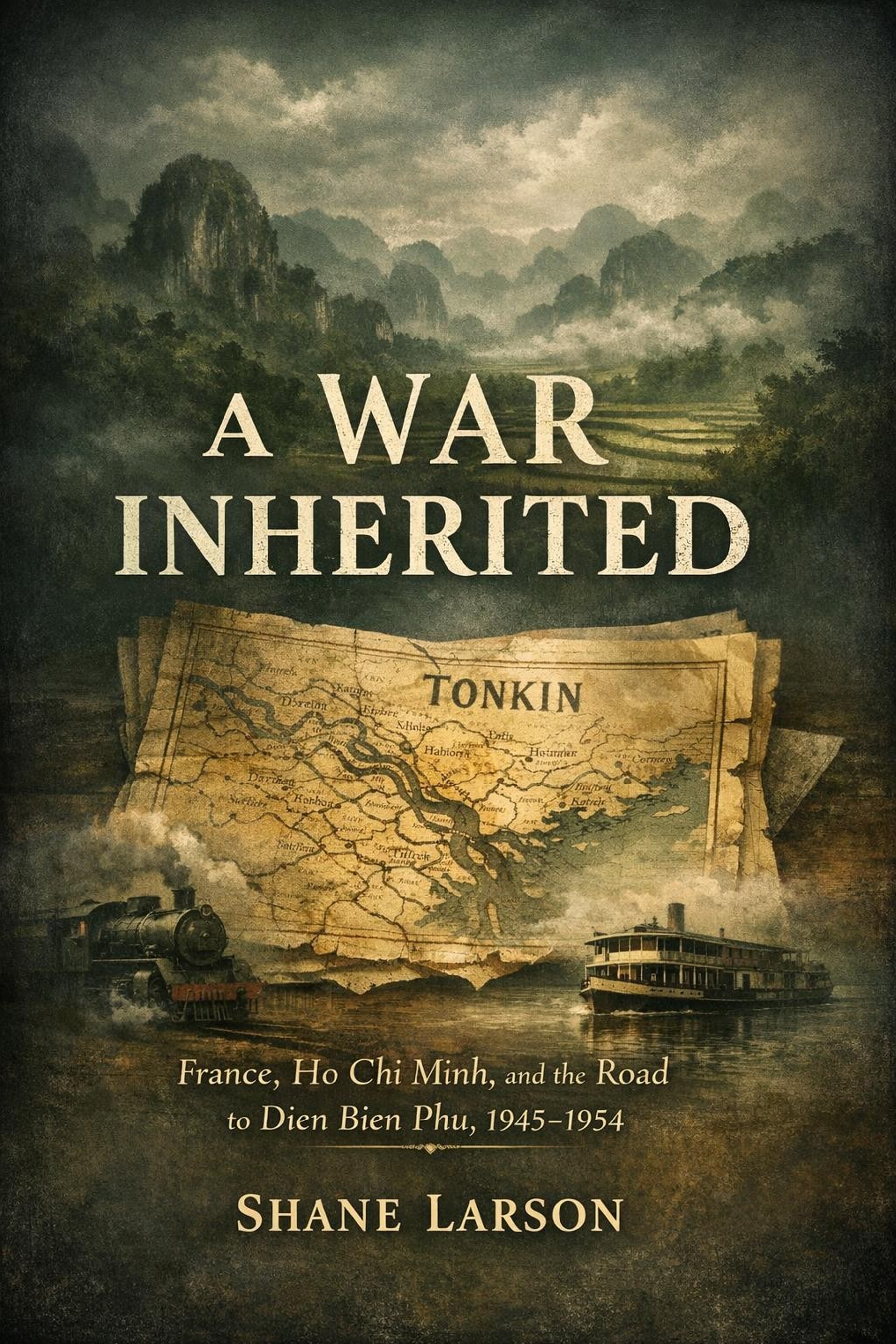


More in This Genre
View all →