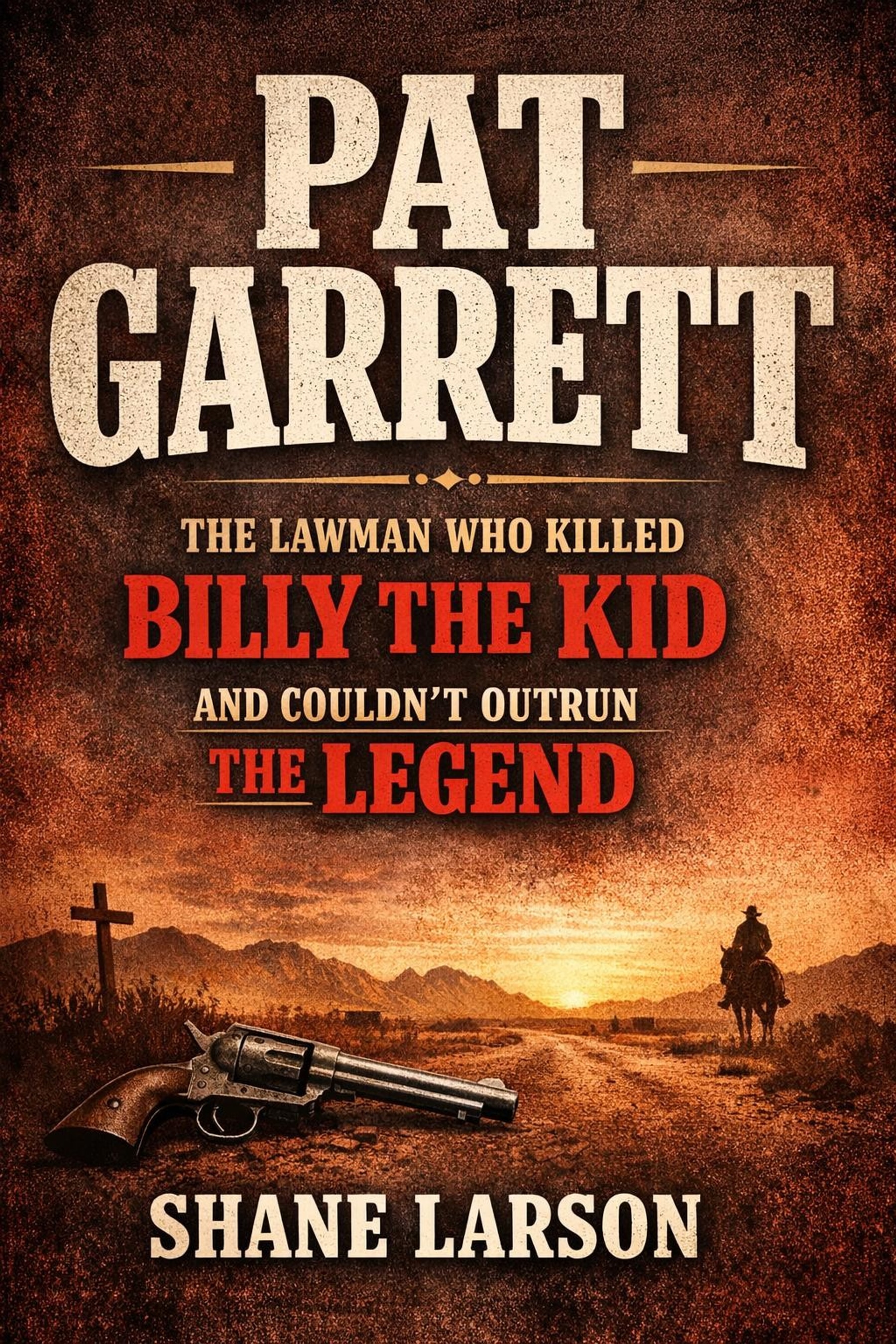
Pat Garrett
The Lawman Who Killed Billy the Kid and Couldn't Outrun the Legend
By Shane Larson · The Wild West Series (Book 15)
About This Book
The jury in Las Cruces deliberated for about as long as it takes to roll a cigarette. Wayne Brazel had already confessed — stood up in a New Mexico courtroom and admitted he shot Pat Garrett on the Mail-Scott Road — and the jury acquitted him anyway. Self-defense, they said, for a man shot in the back of the head.
Nobody in the room seemed especially bothered. That may be the strangest fact in the whole story: the most famous lawman in the American Southwest was murdered in broad daylight, his killer named himself, and the territory shrugged.
To understand how it came to that, you have to go back twenty-seven years, to a dark bedroom in Fort Sumner and the single gunshot that made Pat Garrett a legend — and then spent the rest of his life collecting on the debt.
The Man Who Shot the Legend
In July 1881, Sheriff Pat Garrett tracked William H. Bonney — Billy the Kid — to Pete Maxwell's house and killed him in the dark, without warning, without a word. It was effective police work by the standards of the New Mexico Territory. It was also, in the eyes of a public falling in love with the Kid's myth, something closer to an execution. The whisper started almost immediately and never stopped: Garrett hadn't outdrawn anyone. He'd shot a young man in a shadowed room.
Garrett spent the next quarter century trying to outrun that whisper. He co-wrote The Authentic Life of Billy the Kid to control the story and collect the profits; the book failed commercially and, worse, fed the very legend it was supposed to bury. He lost elections he expected to win. His ranches bled money. As a hired investigator he took on the disappearance of Albert Fountain and his young son — one of the West's most notorious cold cases — and couldn't close it. Theodore Roosevelt handed him a plum customs post in El Paso and then declined to reappoint him. By 1908 the man who ended the Lincoln County War's most wanted outlaw was broke, drinking, and locked in a bitter dispute over a goat herd grazing on land he desperately needed to lease.
That dispute is what put him on the road outside Las Cruces on the morning of February 29, 1908 — and what has kept historians arguing ever since about who really pulled the trigger. Brazel confessed. But the deal that lured Garrett onto that road had other hands in it, and one of the men in the buggy party had ties to Jim "Killer" Miller, a professional assassin with a preacher's wardrobe and a long client list. This book follows the evidence — the land records, the trial transcript, the forensic details, the competing theories — without ever pretending the record proves what it doesn't.
What You'll Discover
- The unlikely road from a collapsed Louisiana plantation through the buffalo ranges of Texas to a sheriff's badge in Lincoln County, New Mexico
- What actually happened in Pete Maxwell's bedroom on July 14, 1881 — reconstructed from the firsthand accounts, and why "ambush" is a fairer word than "gunfight"
- How The Authentic Life of Billy the Kid backfired twice: as a business venture and as reputation repair, handing the Kid immortality while shrinking Garrett into a supporting character
- The Fountain disappearance, the investigation Garrett staked his comeback on, and why it broke instead of made him
- A full anatomy of the murder on the Mail-Scott Road: Wayne Brazel's confession, the improbable self-defense verdict, the Jim Miller theory, and the land-and-goats deal that may have financed a killing
- The forensic and documentary evidence for each suspect, weighed honestly — including where the record simply runs out
- Why fame for a single act can hollow out an otherwise capable life, and what Garrett's long fall says about the machinery of Western myth-making
Why I Wrote This
I came to Pat Garrett through Billy the Kid, the way almost everyone does, and I kept snagging on the same detail: the lawman outlived the outlaw by twenty-seven years, and almost nobody can tell you a single thing about those years. That gap bothered me. When I dug into it, I found something better than a footnote — a man undone slowly by the one act everyone remembers, and then murdered in a case that remains genuinely unsolved. Not "unsolved" as a marketing hook. Actually unsolved, with a confessed killer nobody believes and a paper trail full of motive. I wrote this book because Garrett deserved to be the subject of his own story for once, and because the evidence around his death is rich enough to lay out fairly and let you sit on the jury yourself.
Frequently Asked Questions
Who really killed Pat Garrett?
Nobody knows with certainty, and this book doesn't pretend otherwise. Wayne Brazel confessed and was acquitted; many historians suspect the hired assassin Jim "Killer" Miller, possibly paid through a land deal involving the men who arranged the fateful meeting. The book walks through the evidence for each theory and is honest about where the documentation ends.
Did Pat Garrett shoot Billy the Kid in the back?
Not in the back, but not in a fair fight either. Garrett fired from concealment in a darkened bedroom at a man who never knew who was in the room. The book reconstructs the night at Fort Sumner from the primary accounts and examines why that ambiguity haunted Garrett for the rest of his life.
Do I need to read the Billy the Kid book first?
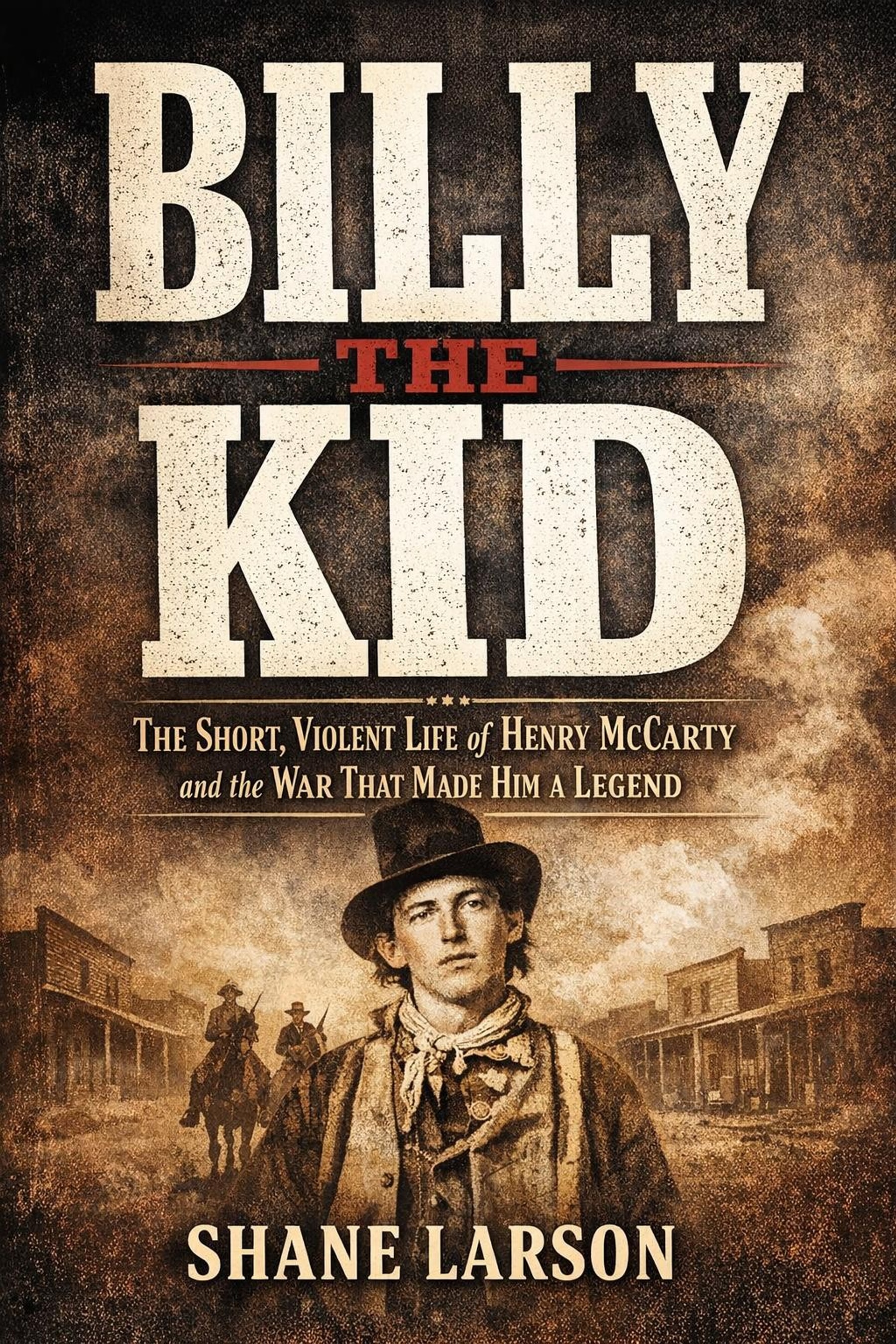
No. This book stands alone and covers the Fort Sumner killing in full. Reading it alongside Billy the Kid and The Lincoln County War gives you the complete arc — outlaw, war, and lawman — but each volume is self-contained.
Is this narrative history or true crime?
Both, honestly. The first half is narrative biography of a frontier lawman; the final act is a genuine cold-case investigation into his 1908 murder, built on trial records, land documents, and period newspapers. If you like either genre, the other half will pull you along.
Does the book invent scenes or dialogue?
No. Everything is drawn from documented sources — court records, contemporary accounts, correspondence, and the historical scholarship on the case. Where the record is silent or contested, the book says so plainly rather than filling the gap with fiction.
Is this book available on Kindle Unlimited?
Yes. Like the rest of the Peak Grizzly catalog, it's enrolled in Kindle Unlimited, so subscribers can read it at no extra cost.
If You Liked This, You Might Like
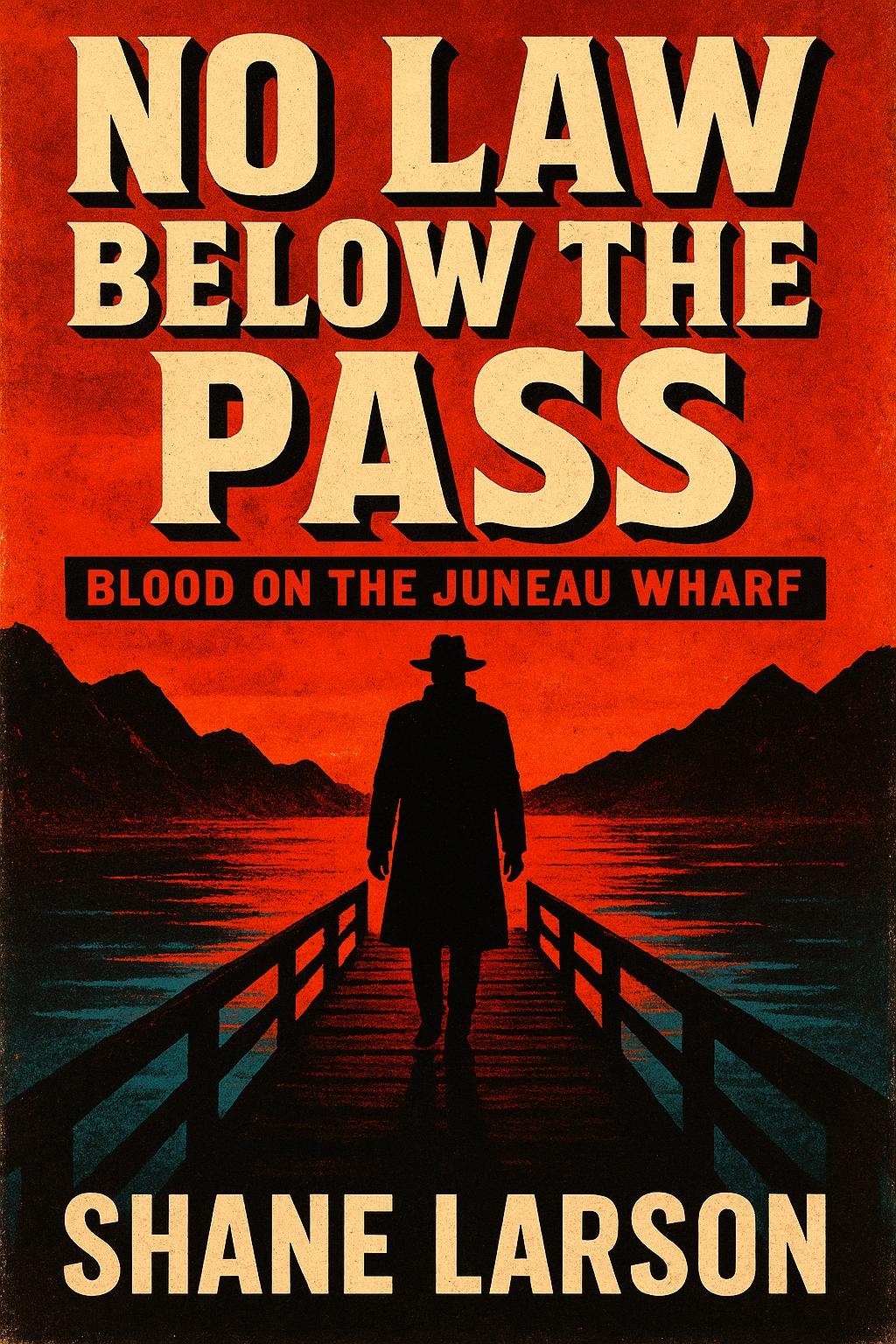
- No Law Below the Pass — a frontier thriller set on the lawless Juneau wharf, for readers who want the feel of the frontier's rough justice in fiction form.
- Sea Peoples: Raiders of the Bronze Age — another genuine historical whodunit, three thousand years older, where the evidence is weighed with the same refusal to invent a verdict.
- Cahokia — a different corner of American history the textbooks skipped: the native city on the Mississippi that was bigger than London.
Pat Garrett fired one shot and became famous. This is the story of everything that shot cost him — and of the unsolved murder that finally settled the account.
Book 2 of The Wild West series.
Included with Kindle Unlimited — read it free if you're a member.
New Wild West / American Frontier History releases and free chapters — no spam, unsubscribe anytime.
More in The Wild West Series
View series →
More in This Genre
View all →