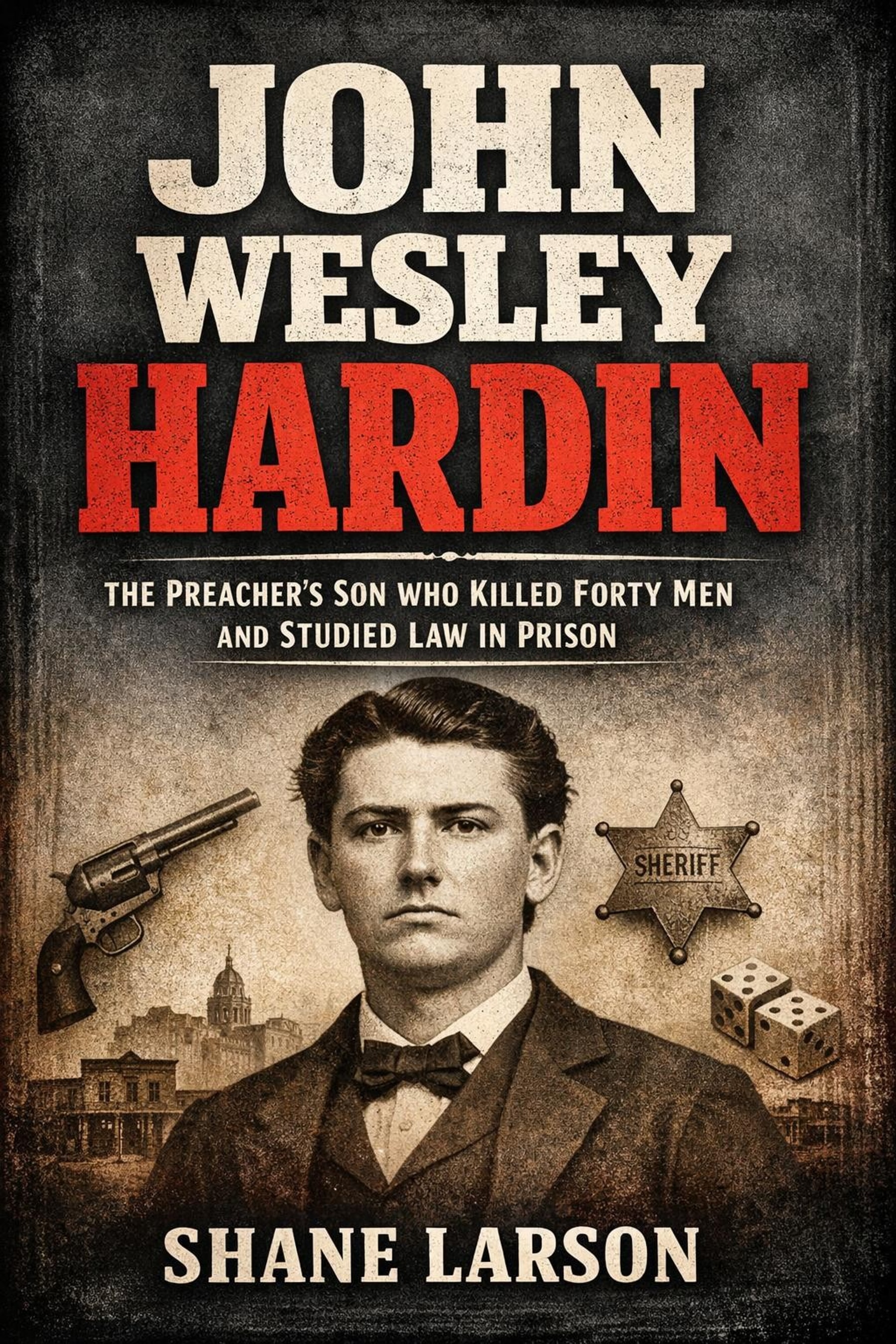
John Wesley Hardin
The Preacher's Son Who Killed Forty Men and Studied Law in Prison
By Shane Larson · The Wild West Series (Book 8)
About This Book
August 19, 1895. El Paso. The Acme Saloon.
John Wesley Hardin is shaking dice with a grocer when an aging constable named John Selman walks up behind him and fires a bullet into the back of his skull. Hardin drops mid-sentence — "Brown, you have four sixes to beat" — and never moves again. The most feared gunman in Texas history never saw his killer's face. He never had the chance to draw.
It is exactly the kind of ending his life had been building toward for forty years: violent, inglorious, and shot through with irony. The man who had terrified lawmen, feudists, and cattle-trail rivals from Reconstruction Texas to the Gulf survived every face-to-face confrontation he ever entered, only to be killed from behind in a dusty saloon over nothing at all.
The Myth and the Man
Hardin left his own account of his life — an autobiography written in his own hand during his years in Huntsville Penitentiary. It is an extraordinary document and a deeply unreliable one. Every killing in it is justified. Every lawman who came for him was corrupt or cowardly or both. Every fight was forced on him by the other party. He is, in his own telling, the wronged party in every confrontation from the age of fifteen forward.
This book uses that autobiography as a primary source — and as a subject of scrutiny. The documented record, the court filings, the newspaper accounts, and the testimony of people who knew him reveal a Hardin considerably more complex than the one he preferred to remember: a man of genuine intelligence and occasional cold-blooded calculation, not simply a hair-trigger product of a violent time.
That time mattered, though. Reconstruction Texas was a powder keg. Confederate defeat had left a white Southern society humiliated, surveilled by Union troops, and governed in part by Black freedmen and the state police formed to protect them. Hardin grew up inside that fury. His first killing, at fifteen, was a freedman named Mage in a wrestling dispute. The men who came to arrest him became his next victims. From that moment, the logic of his life was fixed: shoot before you can be shot, and trust your name to keep lesser men at a respectful distance.
For a decade, the strategy worked. He rode the Chisholm Trail, married a woman named Jane Bowen at seventeen, ran cattle with his Clements cousins, and plunged into the Sutton-Taylor feud — the bloodiest private war in Texas history — gunning down lawmen and feudists on both sides. His reputation became its own armor. Men who might have tested him in a fair fight preferred not to find out.
It was Deputy Charles Webb who finally broke the armor. The killing of Webb in 1874 was too public and too brazen to escape. Texas Ranger John Armstrong tracked Hardin onto a train bound for Florida, tackled him in the aisle, and dragged him back to Texas in chains. A jury gave him twenty-five years.
The Second Act
What happened in Huntsville is almost more remarkable than anything Hardin did with a gun. He took the beatings the prison system had available to deliver. He plotted escapes. And then — somewhere in the prison library, surrounded by theology texts and law books — he decided to become something else.
He led the Sunday school. He read obsessively. He studied law until he could argue it. By the time he walked out in 1894, pardoned and gray-haired at forty-one, he had passed the Texas bar. He hung a shingle in El Paso and tried, genuinely it seems, to be a respectable attorney.
He failed. The drinking that had shadowed him on the cattle trails caught up with him. The gambling followed. He entangled himself with a married woman whose husband happened to be the son of the constable who would eventually kill him. The violence that had defined his first forty years found him in his last one, from behind, the way it always finds men who have spent their lives forcing others to come at them from the front.
What's Inside
- How Reconstruction Texas created the conditions that turned a preacher's son into a gunman — and made him a folk hero while doing it
- The wrestling match that started everything: Hardin's first killing at fifteen, and the manhunt that turned one death into many
- The truth behind the famous legend that he shot a man for snoring — what the record actually shows
- The Sutton-Taylor feud in full: the origins, the key killings, and why Hardin's involvement made it bloodier and harder to stop
- The killing of Deputy Charles Webb in Comanche — the moment that made flight impossible and capture inevitable
- Ranger John Armstrong's capture of Hardin aboard a Pensacola-bound train, one of the most dramatic arrests in Texas history
- The Huntsville years: the discipline, the escape attempts, and the unlikely transformation of a convicted killer into a licensed attorney
- An honest body-count audit — weighing Hardin's own claims against the documented record to arrive at what the evidence actually supports
- The El Paso years: the law practice, the drinking, the entanglement with the Selman family, and the night it ended at the Acme Saloon
Why I Wrote This
I kept running into Hardin as a footnote in other books — mentioned in accounts of the cattle trails, the Sutton-Taylor feud, the Ranger era — and the footnotes never quite agreed with each other. The mythology had clearly outrun the man. When I went back to the primary sources, especially the autobiography, I found something more interesting than either the legend or the debunking: a genuinely complicated person who understood exactly what he was doing and spent his whole life constructing a narrative that absolved him of it. That gap — between the self-understanding and the reality — is where the real story lives.
Frequently Asked Questions
Is this a sympathetic portrait of Hardin or a condemnation?
Neither, exactly. The goal is accuracy. Hardin was a product of a specific time and place, and that context matters — but context is not absolution. The book takes him seriously as a historical figure while declining to romanticize what he actually did.
How does this handle the body count question?
Carefully. Hardin claimed forty-two kills. Contemporary accounts inflated the number further. The book works through the documented cases one by one, weighs the evidence, and arrives at a figure that's lower than the legend but still significant — and examines what the inflation itself reveals about the mythology surrounding him.
Do I need prior knowledge of Texas history to follow the story?
No. The book opens with the Reconstruction context that shaped Hardin's world and builds from there. Readers without a background in post-Civil War Texas will find enough grounding to follow the events; readers who already know the era will find the Hardin story adds texture to what they already understand.
How does this compare to other Hardin biographies?
Most treatments lean heavily on Hardin's own autobiography — which is the problem, since the autobiography is its own argument. This account treats the autobiography as evidence to be tested rather than testimony to be trusted, cross-referencing it against court records, newspaper archives, and the accounts of people who knew him.
Is this part of a series?
Yes. This title is part of The Wild West series from Peak Grizzly Publishing, which profiles the outlaws, lawmen, and figures who defined the American frontier era — examining the documented record behind the legends.
Is it available on Kindle Unlimited?
Yes. The ebook is enrolled in Kindle Unlimited and available to read at no additional cost for KU subscribers.
If You Liked This, You Might Like
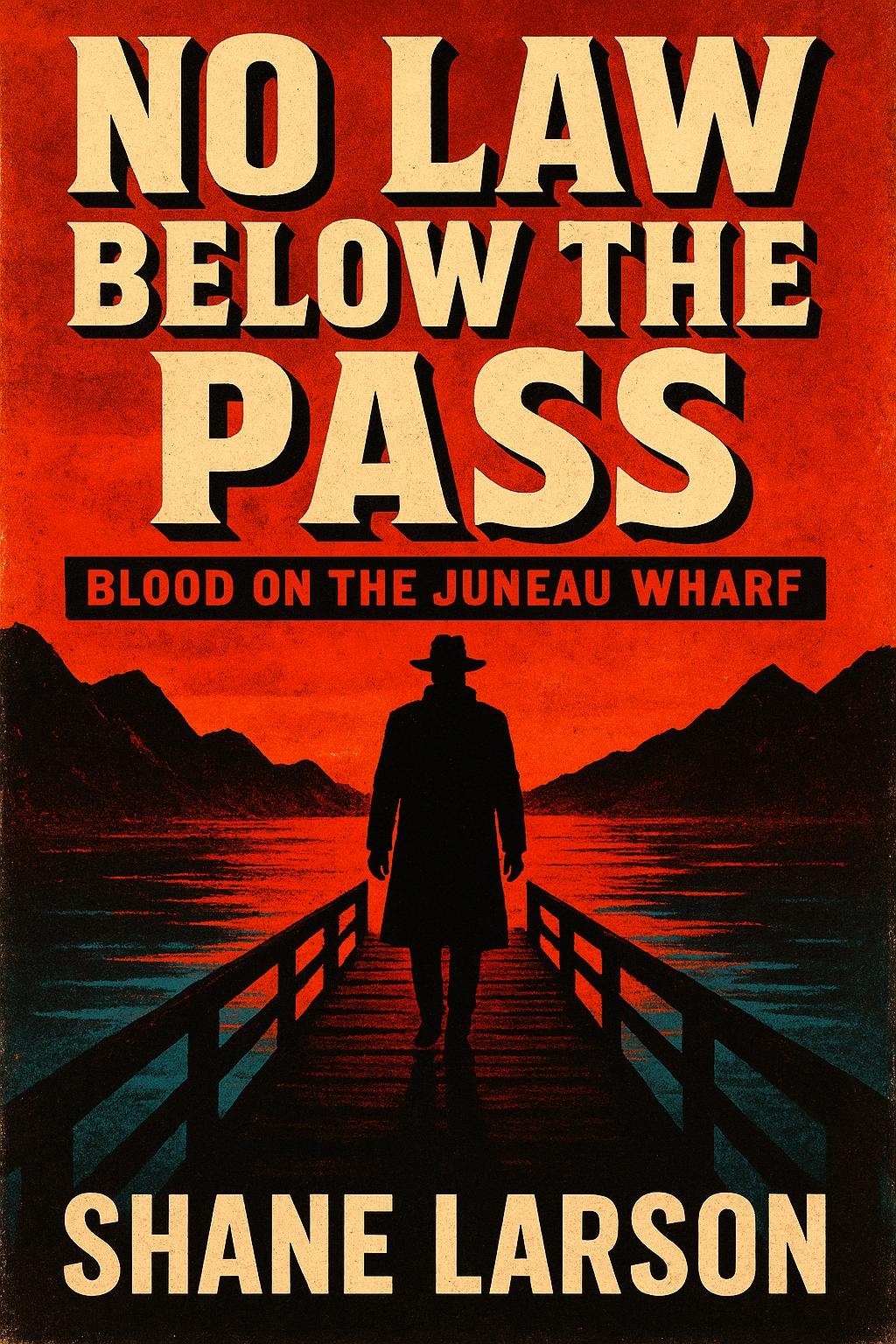
- No Law Below the Pass — A frontier thriller set in the raw, lawless territory of the Juneau waterfront; for readers who want the violence and moral complexity of the West in narrative form.
- The Mongol Storm — The story of Genghis Khan's grandsons and the empire that reshaped the world through conquest; for readers drawn to figures who left devastation in their wake and transformed everything around them.
- The Samurai Century — How Japan's warrior caste built and ultimately broke a civilization across a century of internal war — a different culture, the same questions about violence, loyalty, and what men built with force.
John Wesley Hardin lived long enough to become something other than what he was — but not long enough to stay that way. John Wesley Hardin examines the full arc: the gunman, the prisoner, the lawyer, and the corpse, mid-sentence, on a saloon floor in El Paso.
Included with Kindle Unlimited — read it free if you're a member.
New Wild West / American Frontier History releases and free chapters — no spam, unsubscribe anytime.
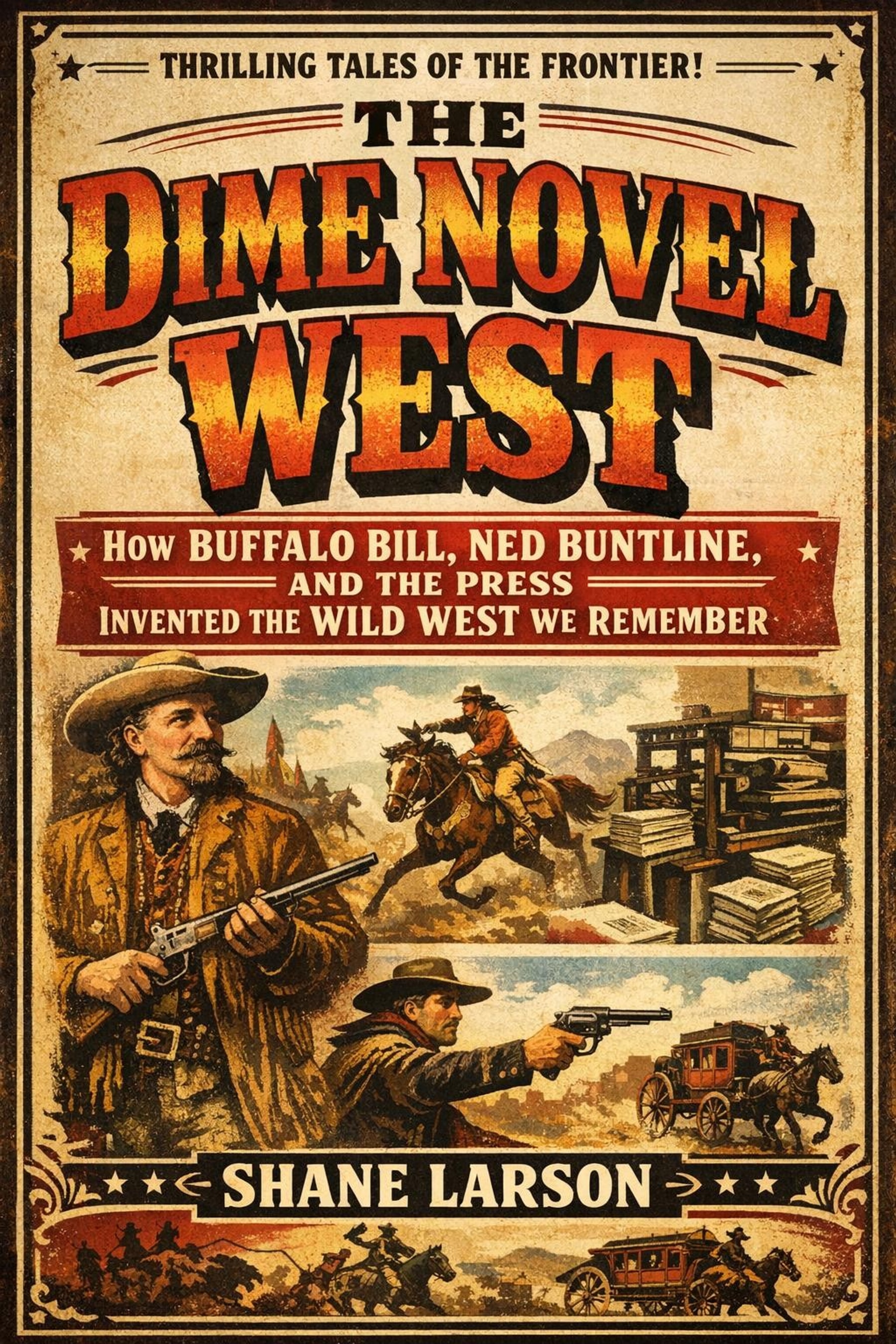
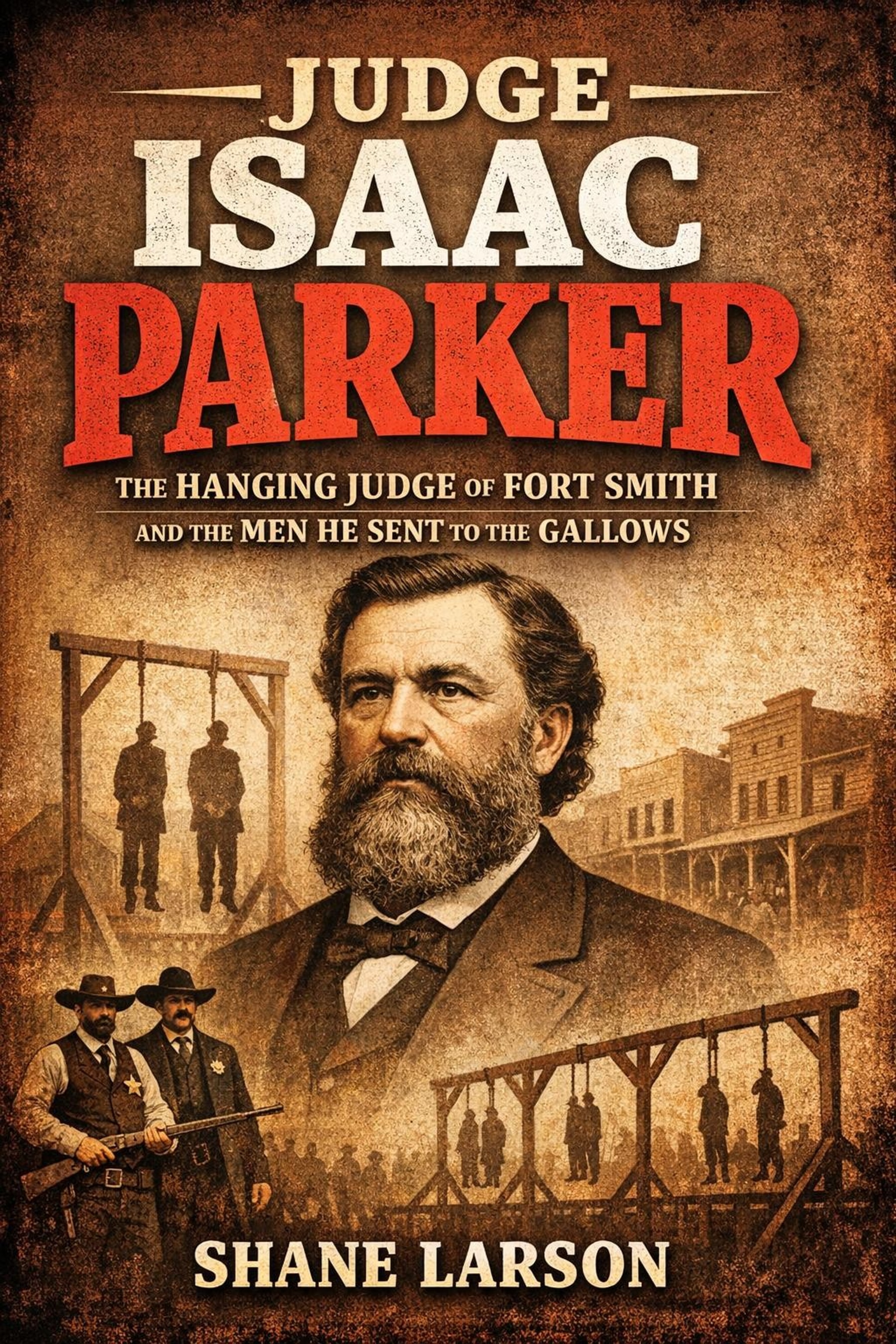
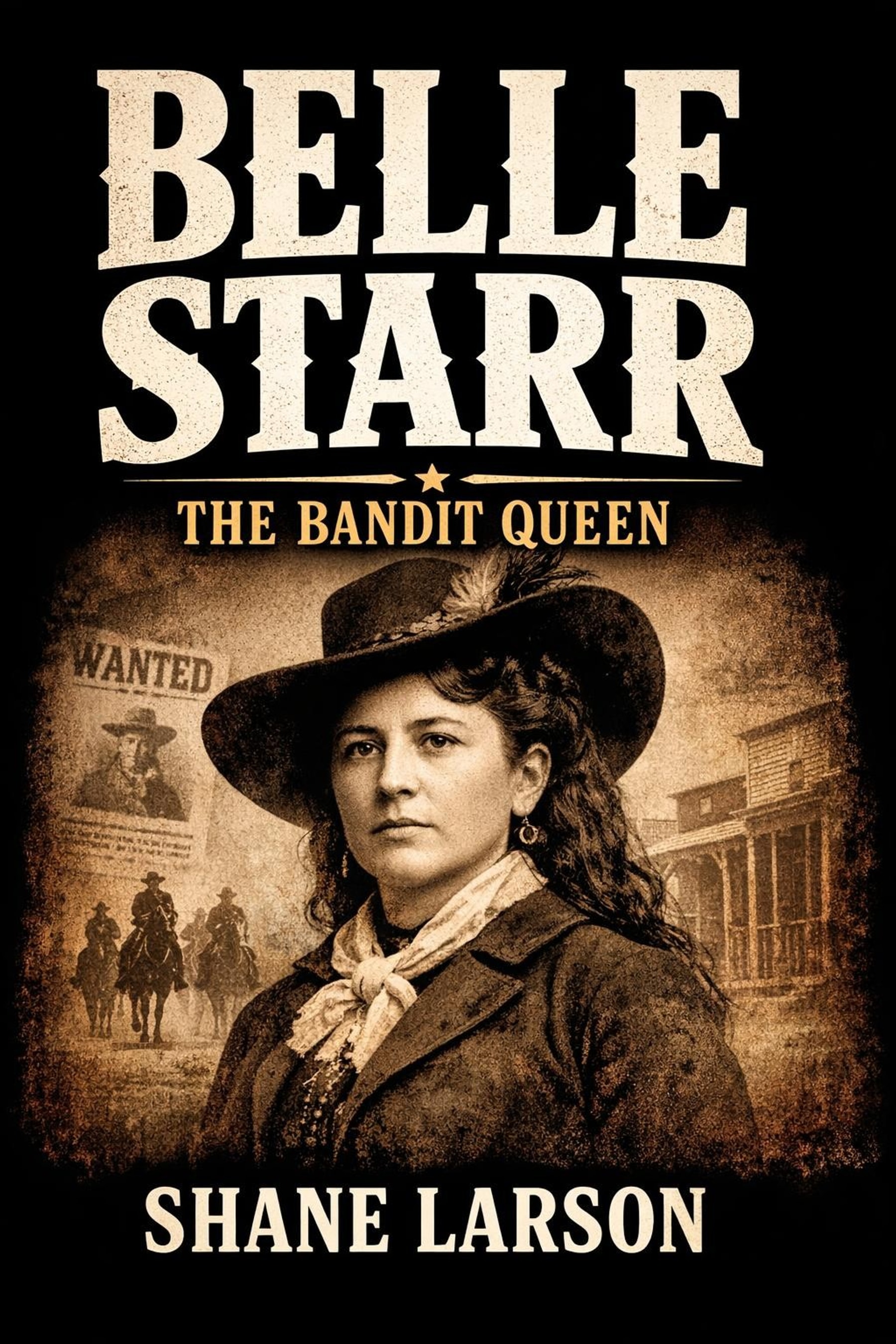
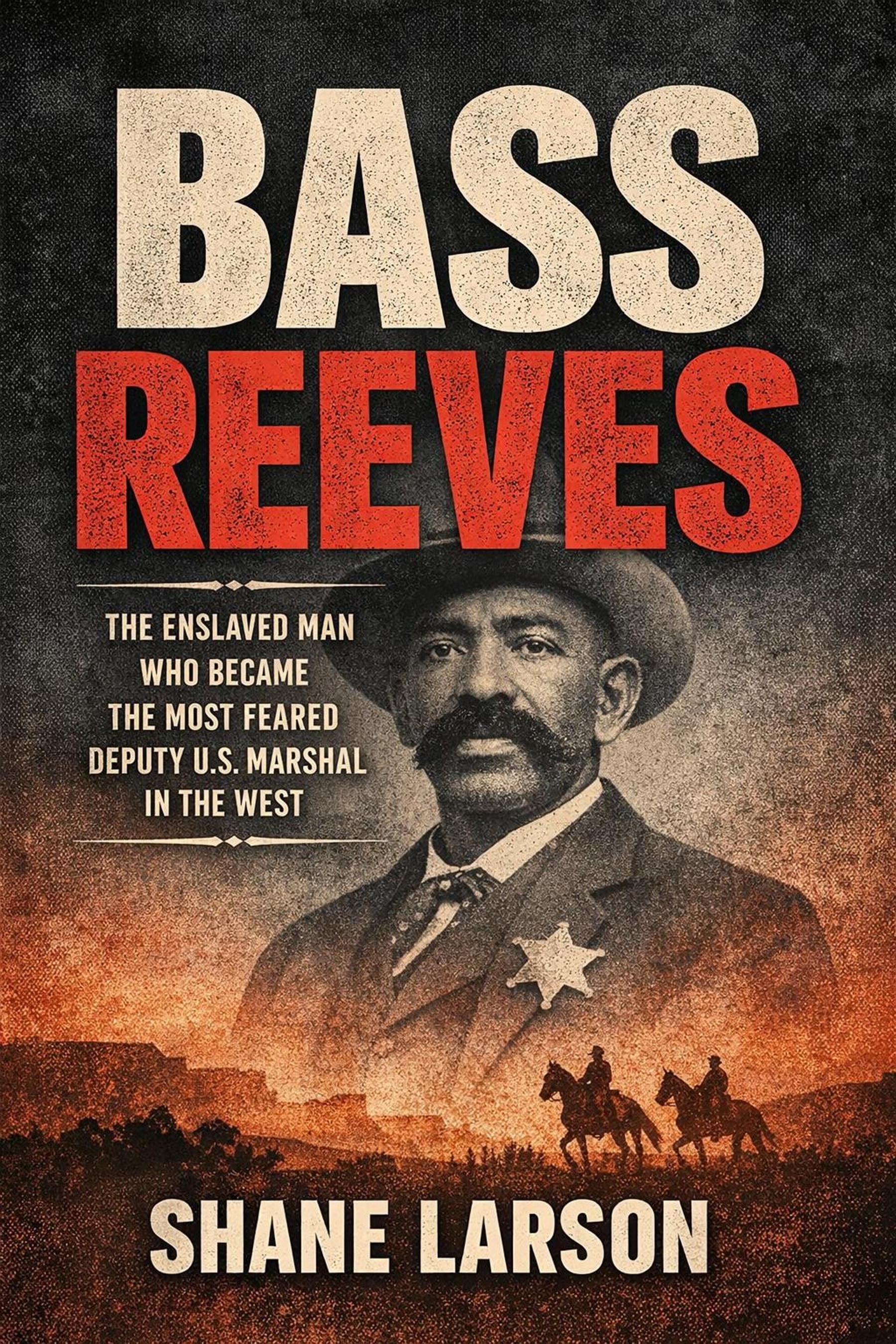
More in The Wild West Series
View series →
More in This Genre
View all →