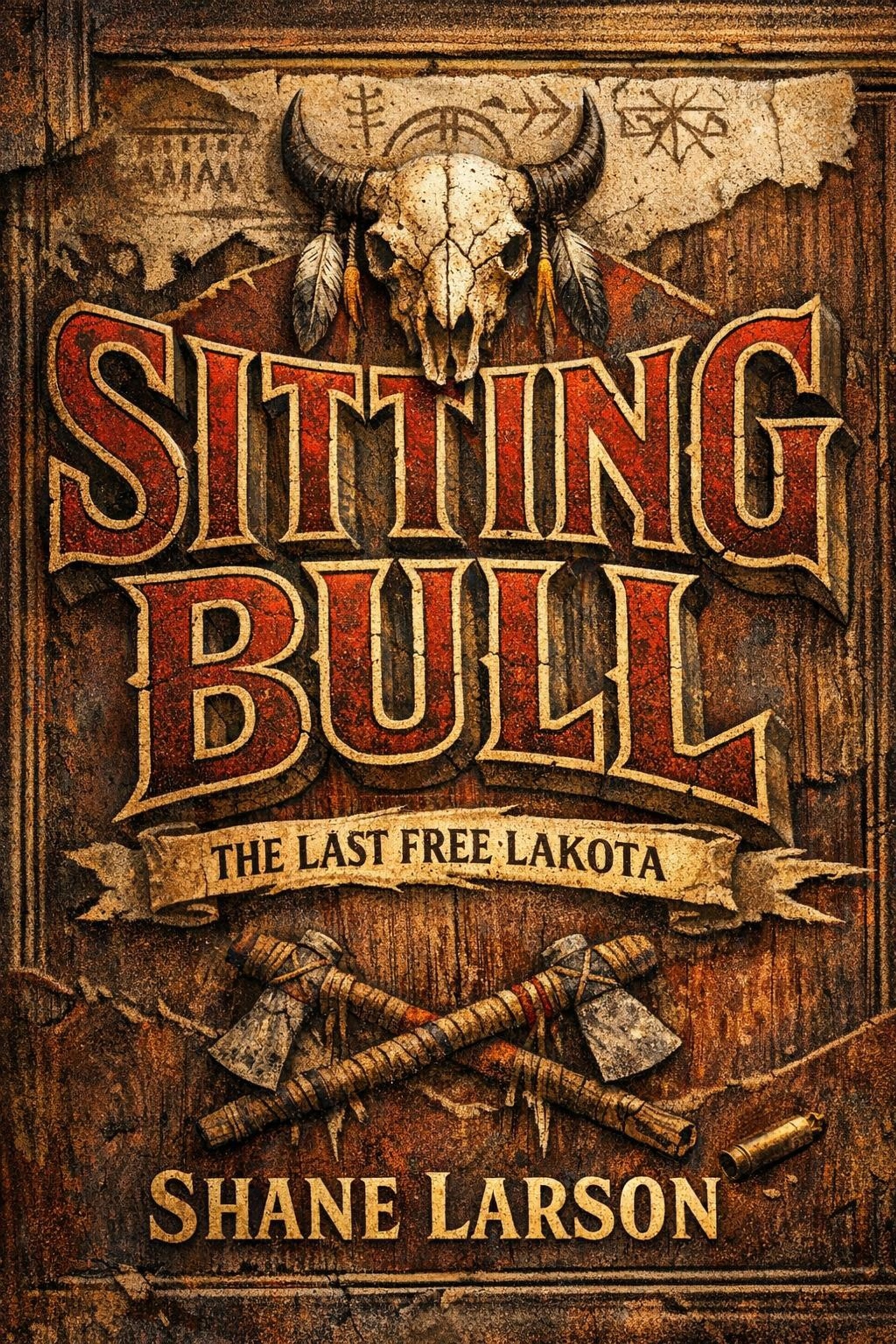
Sitting Bull
The Last Free Lakota
By Shane Larson · The Wild West Series (Book 28)
About This Book
In the last dark hour before dawn on December 15, 1890, forty-three men of the Standing Rock Indian police rode out from the direction of Fort Yates toward a cluster of cabins on the Grand River. They were Lakota — most had known the man they were ordered to arrest all their lives, and one was his relative. Their instructions were to have him out of his cabin and mounted before the camp woke.
By full daylight Sitting Bull was dead in his own doorway, along with his seventeen-year-old son Crow Foot and a dozen men on both sides of a close-quarters fight between neighbours. Two weeks later, Custer's old regiment opened fire on a fleeing Minneconjou band at Wounded Knee Creek.
The army that fought him for a generation never beat him in the field. So how does that man die in a doorway, at the hands of men who spoke his own language? Answering honestly takes a whole life, which is what this book sets out to give.
Sitting Bull was born on the northern plains around 1831, a watchful, deliberate child whose people teasingly called him Slow. The teasing ended in his mid-teens, when he counted his first coup and came home to receive his father's own name: Tatanka Iyotake. From there the book follows how a Hunkpapa man accumulated the strange, officeless kind of power he held — a standing built from a war record, a reputation for spiritual insight, relentless generosity, and thirty years of saying the same thing: no treaty, no rations, no agency. Washington spent decades hunting for a chief with the authority to sign the Lakota away and never found one at his fire, because no such authority existed.
In June 1876 he danced the Sun Dance on the Rosebud, gave an offering of his own flesh, and reported a vision that electrified the gathered bands. When the Seventh Cavalry struck the great camp on the Little Bighorn weeks later, Sitting Bull — a forty-five-year-old holy man, not a field commander — spent the fight seeing the women, children, and elderly out of danger while younger men led the defense. Within days the newspapers had rewritten him as the mastermind of the massacre, and the invention outlived him.
Then comes the part most readers have never been told, and the part this book argues matters most. Four years of exile in Canada while the buffalo failed on both sides of the border. The return to Fort Buford in 1881, starved out rather than defeated, his young son carrying the rifle to the surrender. A single 1885 season with Buffalo Bill's Wild West, jeered by crowds as the man who killed Custer while he gave his wages away and befriended Annie Oakley. Seven years at Standing Rock in a patient duel with Agent James McLaughlin, who called him finished while arranging the entire agency to contain him. And finally the Ghost Dance — a prayer for a restored world that Sitting Bull permitted without leading, and pretext enough for the men who wanted him gone.
Why I Wrote This
Sitting Bull may be the most recognizable Native leader in American history, and nearly all of that recognition rests on one afternoon in June 1876 — an afternoon he did not command and never claimed to. What kept me reading was the discovery that the fourteen years after the Little Bighorn are more interesting than the battle: exile, surrender, show business, reservation politics, a new religion, a dawn arrest. That is the real story, and it barely figures in the popular version.
The other draw was the sources. The people who recorded this life — agents, officers, journalists, missionaries, and Lakota witnesses interviewed decades later — contradict each other constantly, sometimes about things as basic as what happened in the doorway. I would rather show those seams than sand them smooth; the contradictions are part of the record, and they are honest in a way a tidy version is not.
Frequently Asked Questions
Did Sitting Bull kill Custer at the Battle of the Little Bighorn?
No. He was not on the ridge where Custer's battalion was destroyed and directed no part of the fighting; he was securing the village's noncombatants while war leaders such as Crazy Horse and Gall led the fighting men. The claim that he killed Custer was a press invention that audiences shouted at him for the rest of his life.
Why was Sitting Bull killed by Indian police instead of soldiers?
Because the arrest was designed that way. Agent James McLaughlin wanted Sitting Bull removed by the reservation's own Lakota police rather than by the army, keeping the operation under his authority. When followers resisted, the fight was Lakota against Lakota — which is what makes that morning one of the darkest in the whole story.
Was Sitting Bull a chief?
Not in the sense the word usually implies. Lakota society had no supreme executive office, and his influence could not be inherited, purchased, or transferred by signature. His standing rested on his war record, his generosity, his reputation as a wichasha wakan — a holy man — and decades of consistency. That is why federal negotiators found him ungovernable: no office to strip, no successor to bribe.
What was the Ghost Dance and did Sitting Bull lead it?
A religious movement begun with the Paiute prophet Wovoka, promising the dead would return and the old world be restored. Sitting Bull permitted the dance at his camp, but never claimed to lead it, and the evidence that he believed its prophecies is thin. Permission was enough: officials cast him as its mastermind, and that framing produced the arrest order.
Where is Sitting Bull buried?
The honest answer is that it is disputed. He was buried at Fort Yates, North Dakota, in 1890. In 1953, relatives and South Dakota boosters moved what they believed were his remains to a site near Mobridge, under a granite bust. Whether the right remains made the journey has been argued ever since; the book lays out what is actually known.
If You Liked This, You Might Like
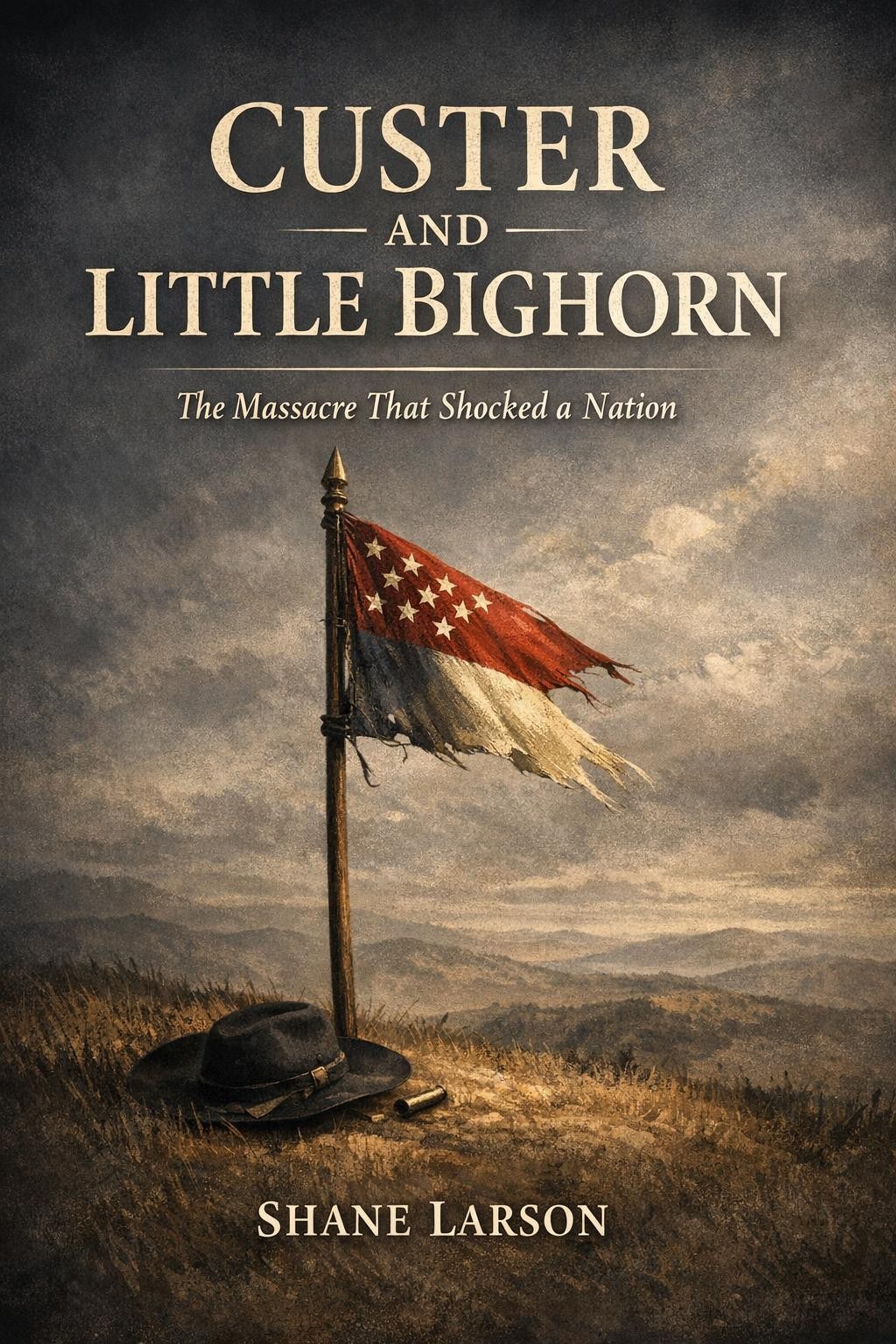
- Custer and Little Bighorn — the same June afternoon told from the cavalry's side of the ridge; the two books are deliberate mirrors of one battle.
- Buffalo Bill Cody — the 1885 season from the other end of the handshake, and the arena machinery Sitting Bull spent one summer inside.
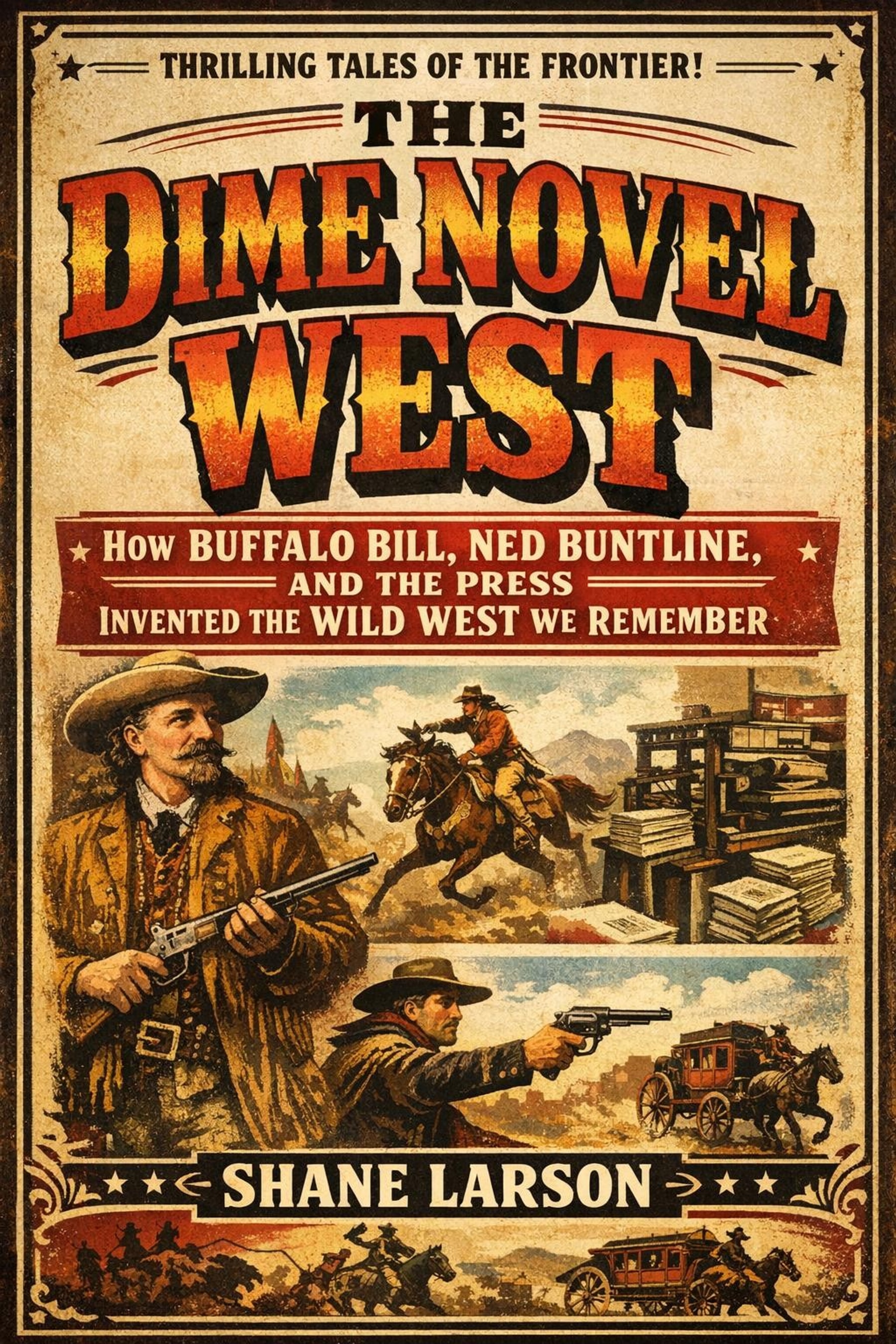
- The Dime Novel West — how press and pulp fiction manufactured legends wholesale, including the "killer of Custer" he could never shake.
He spent thirty years refusing to become what the United States needed him to be, and this book follows him — from a boy nicknamed Slow to a winter dawn on the Grand River. The Wild West Series.
What You'll Learn
- The quiet boy who became Tatanka Iyotake — a plains childhood, a first coup in his mid-teens, and the moment a father hands his son his own name.
- How Lakota leadership actually worked — and why the "head chief of all the Sioux" the government kept negotiating with was a fiction of its own paperwork.
- Thirty years of saying no — the Fort Laramie treaty he stayed away from, the seizure of the Black Hills, and the winter ultimatum of 1875–76 that made war certain.
- The Rosebud Sun Dance and the Little Bighorn from inside the village — the flesh offering, the vision, where Sitting Bull actually was hour by hour, and how the newspaper version overwrote the real one almost immediately.
- The Canadian years — Major James Walsh, the diplomacy of a stateless nation, and the slow arithmetic of hunger as the herds collapsed.
- The arena and the agency — Fort Buford, imprisonment at Fort Randall, the 1885 show season, and seven years of maneuvering against James McLaughlin at Standing Rock.
- The Ghost Dance and the arrest — what the religion actually taught, and the chain of decisions that put Lakota policemen at his door.
- Three appendices — a chronology set against federal policy, a sources appendix on where the record disagrees with itself, and a guide to the Lakota names, terms, and social structure used in the book.
Included with Kindle Unlimited — read it free if you're a member.
New Wild West / American Frontier History releases and free chapters — no spam, unsubscribe anytime.
More in The Wild West Series
View series →