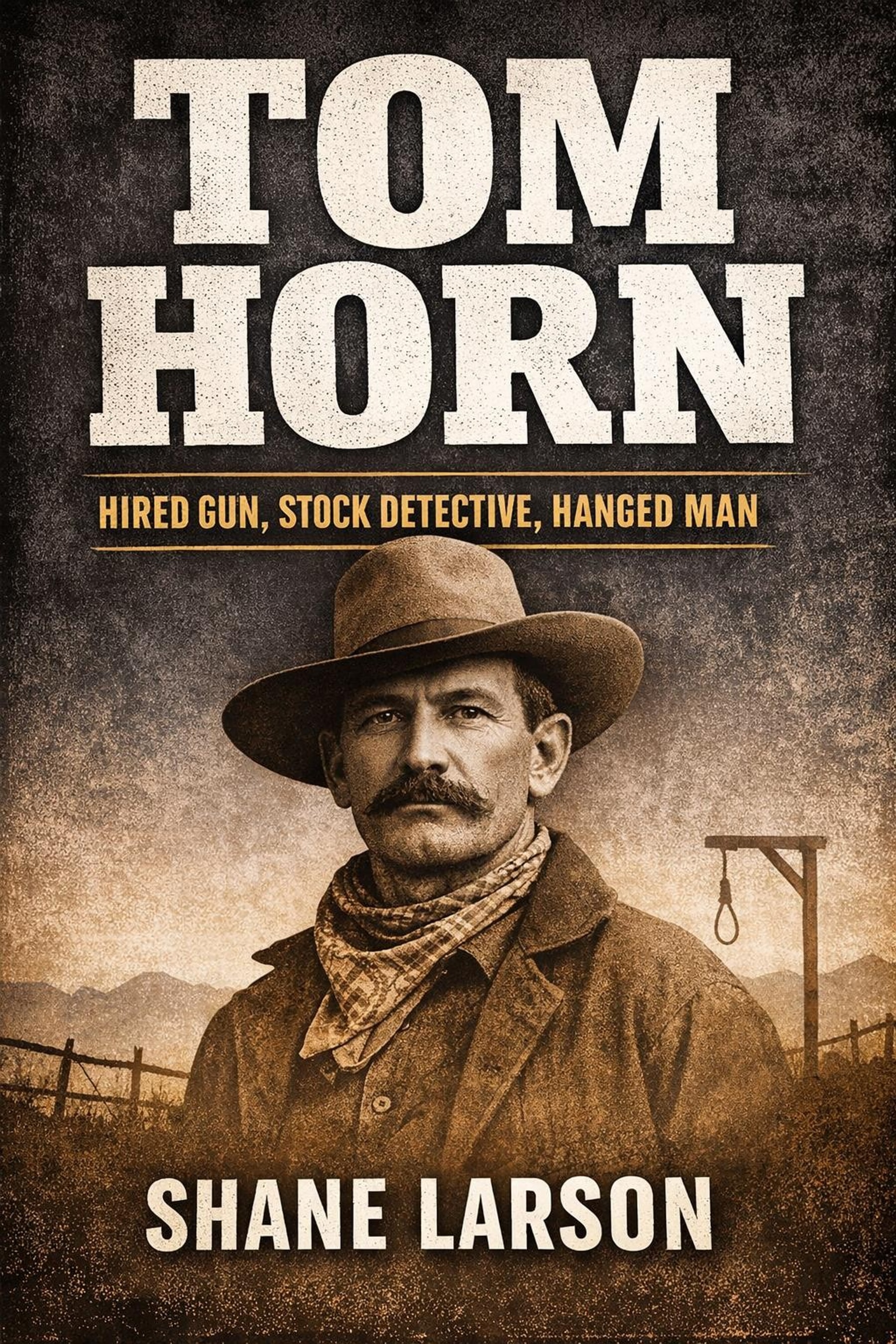
Tom Horn
Hired Gun, Stock Detective, Hanged Man
By Shane Larson · The Wild West Series (Book 32)
About This Book
On November 20, 1903, the day before his forty-third birthday, Tom Horn climbed the steps of a gallows in Cheyenne that was designed to kill him with his own weight. The Julian gallows used a water mechanism so that the condemned man, by standing on the trap, drained a tank and in effect sprang his own drop — a machine built to spare any human being the guilt of pulling the lever. Horn met it calmly. He had been joking earlier. The powerful cattlemen who had paid him in cash and in silence, and for whom he had very likely killed, were nowhere near the scaffold. They had let him go to it alone.
That is the shape of the whole story: a man used hard by people with money, and then discarded the moment he became a liability. Whether the specific killing he hanged for was even his remains, more than a century later, genuinely unsettled.
The body the state answered for belonged to a fourteen-year-old. Willie Nickell was shot at his family's gate at first light in July 1901, wearing his father's coat and riding his father's horse. The likeliest reading, then and now, is that the assassin fired at the wrong man — that the bullet was meant for the father in a range feud the cattle interests wanted closed. The most feared hired killer in Wyoming was the obvious suspect. He was also, quite possibly, innocent of this particular death.
The Argument
Tom Horn was not a dime-novel villain, and he was not a misunderstood frontiersman. He was both more capable and more disturbing than either cliché. As a young man he learned the Apache trails and language under Al Sieber, the Army's legendary chief of scouts, and rode in the campaigns that finally ran down Geronimo. He was, by the accounts of men who had no reason to flatter him, one of the finest scouts the Southwest ever produced. Then he drifted — into private detective work with the Pinkertons, who reportedly found even him too fast to settle a problem with a bullet, and at last into the cattle barons' employ as a "stock detective."
The job title was a euphemism, and everyone involved knew it. The actual work was long-range killing from cover, and a grim signature was said to follow it: a small rock placed beneath the dead man's head. The killings of Matt Rash and Isom Dart carried that mark. The failed Johnson County War had taught Wyoming's cattle interests an expensive lesson — that sending an army of hired guns against small ranchers ended in scandal and cavalry — and the alternative they settled on was quieter. One competent man, working alone, could do what an invading force could not.
Tom Horn: Hired Gun, Stock Detective, Hanged Man lays out that documented life without inventing a verdict the evidence does not support. The centerpiece is the so-called whiskey confession — a boozy, boasting monologue to a deputy marshal that a stenographer copied down from the next room, word by word. The book reconstructs exactly how it was obtained, how it was transcribed in secret, and whether what it captured was a genuine admission or an empty brag from a man who liked to be thought dangerous. The case for Horn's guilt and the case against it are set side by side, sourced, and left standing. This is not a book that tells you what to think. It is a book that shows you what is known and what is not.
Why I Wrote This
Most of what people carry around about Tom Horn comes from a movie and a legend, and both of them smooth the man into something easier to hold than the record allows. What pulled me in was the unresolved core of it: here is a documented killer who may well have hanged for the one death he did not cause, executed on the word of a confession extracted while he was drunk. I did not want to solve a case the evidence cannot solve. I wanted to follow the money — to show how power on the frontier learned to kill at a distance, through a man it could disown, and how completely it disowned him when the bill came due. Horn is fascinating precisely because he resists the tidy ending. Leaving the guilt question open, honestly, felt more truthful than forcing a verdict the sources will not carry.
Frequently Asked Questions
Did Tom Horn actually kill Willie Nickell?
Nobody can say for certain, and the book does not pretend otherwise. It lays out the evidence on both sides — the confession, the range feud, the likelihood the shot was meant for the boy's father — and lets the genuine uncertainty stand rather than inventing a conclusion.
Is this based on the Steve McQueen film?
No. The film is the legend; this is the documented history behind it. Where the popular story and the record diverge, the book follows the record and says so.
How much of the book is the Apache scouting versus the assassinations?
Both get real weight. Horn's years tracking Geronimo under Al Sieber are essential to understanding the man, so they are told in full, not treated as a prologue to the killings.
Is it fair to the cattle barons, or is it a one-sided attack on them?
It follows what the documents show, which is that men of money and power hired dangerous work done and then let the hired man face the rope alone. That is not editorializing; it is the sequence of events. The book names what the record supports and no more.
Does it connect to the other Wyoming range-war history?
Closely. The failed Johnson County War is the hinge of the whole story, and Horn's earlier detective years brush against the Pinkerton world as well.
If You Liked This, You Might Like
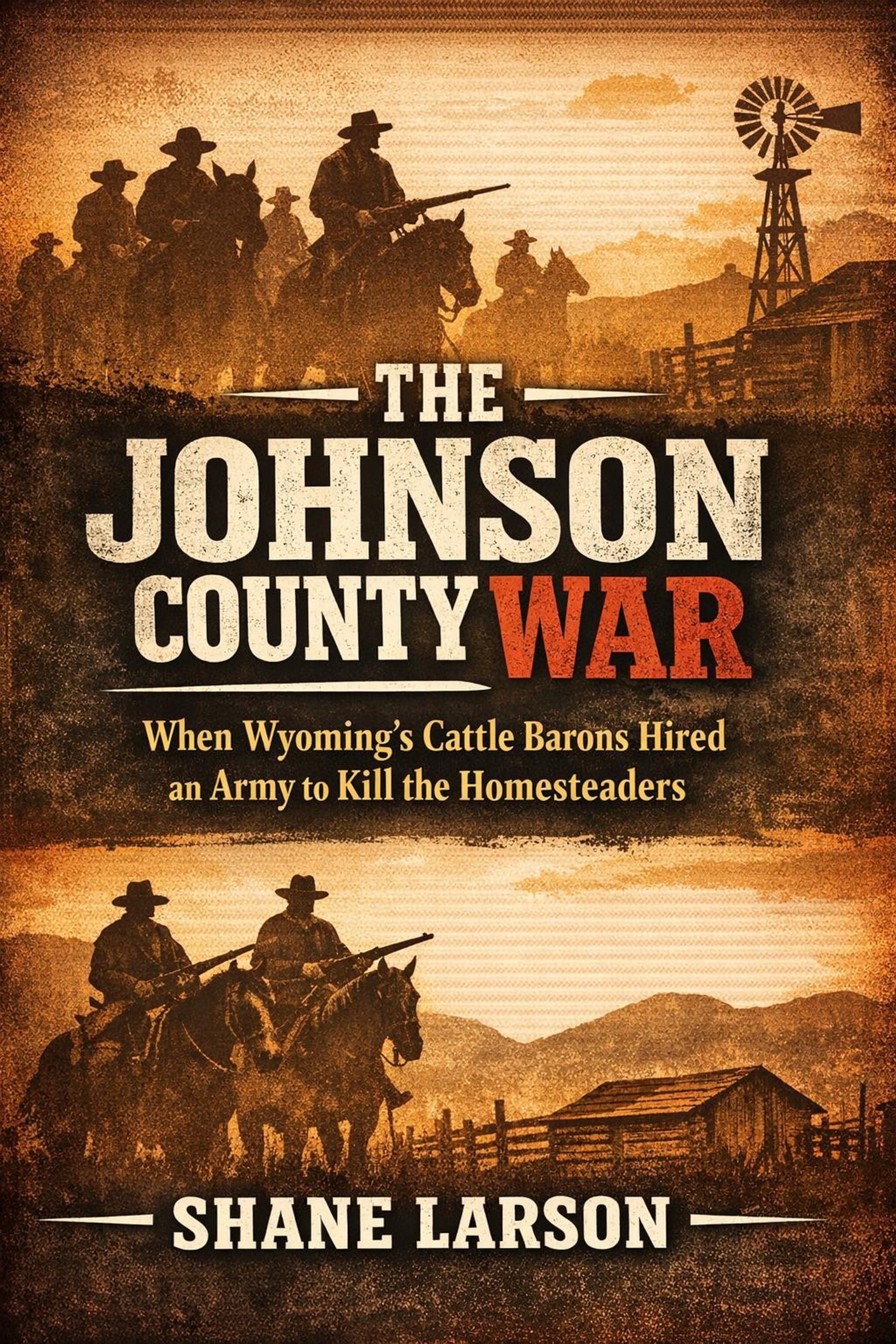
- The Johnson County War — the failed cattlemen's invasion that taught Wyoming's barons to trade an army of gunmen for a single quiet assassin like Horn.
- Butch Cassidy and the Sundance Kid — the other end of the same frontier, where the hunted outlaws ran while the hired manhunters closed in.
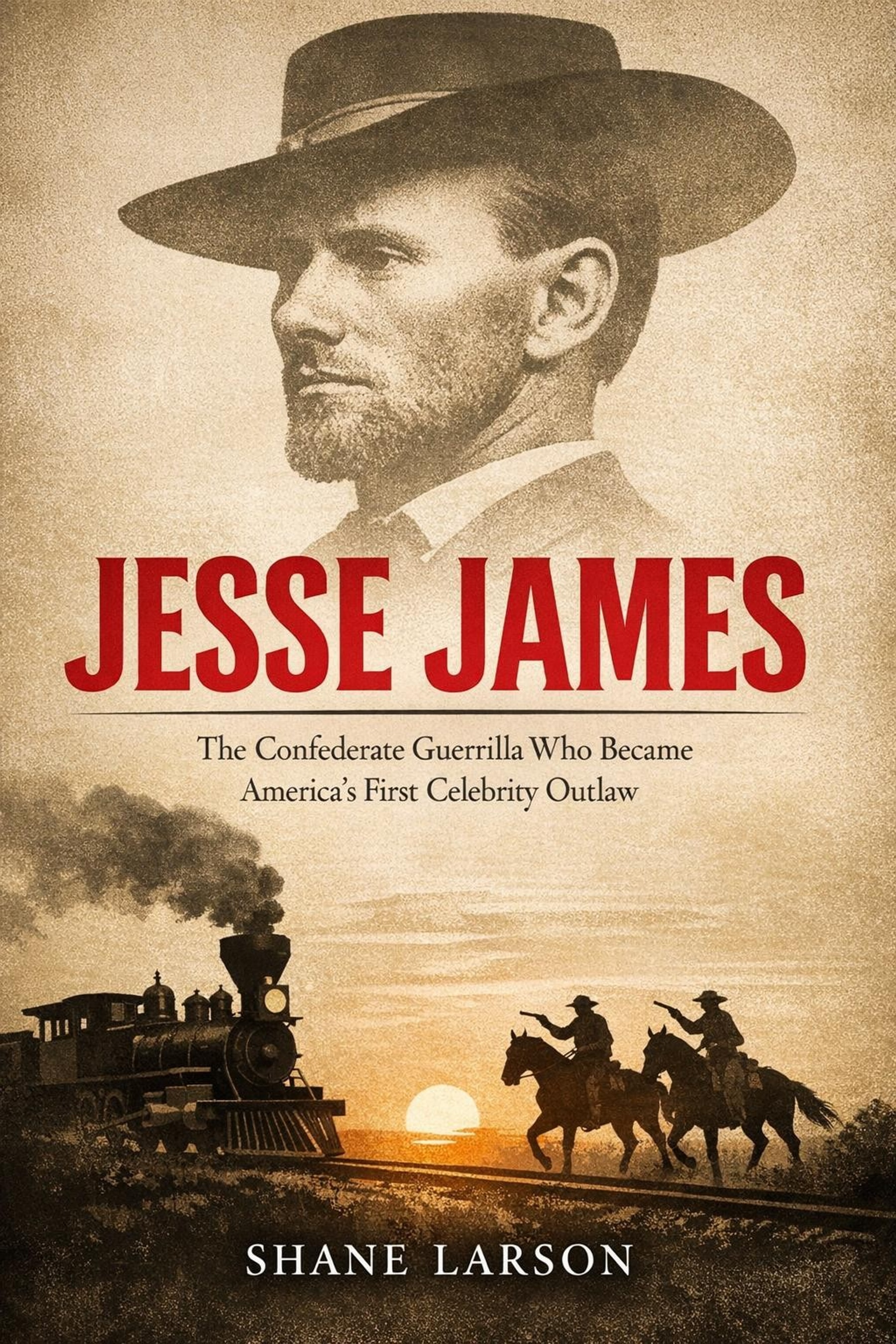
- Jesse James — another frontier reputation built as much by legend-makers as by the man himself, and undone by the same distance between story and record.
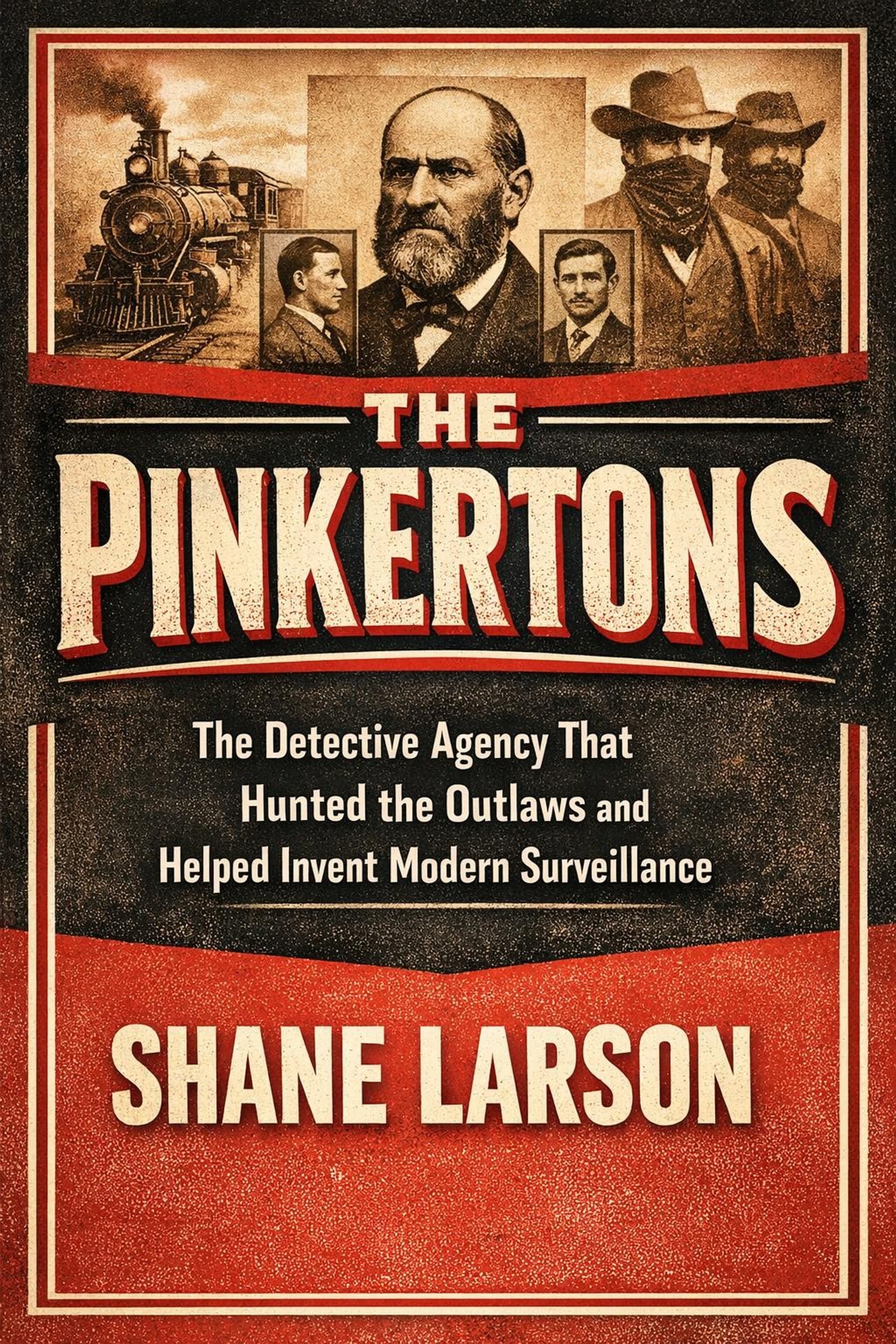
The Pinkertons covers the detective world Horn moved through before the cattle range claimed him, and reads well alongside this one. The assassin was hired, used, and abandoned. What is left is the record — and a question the record still will not close.
Part of The Wild West series from Peak Grizzly Publishing.
What You'll Learn
- **The scout years** — how a Missouri farm boy became the Army's finest Apache tracker under Al Sieber, and how Horn later inflated that record into legend.
- **Too quick for the Pinkertons** — the detective work that came between the Army and the cattle range, and why even a hard agency found Horn's methods alarming.
- **The lesson of Johnson County** — how a botched invasion by hired gunmen taught the cattle barons to stop sending armies and start hiring one quiet assassin.
- **The rock under the head** — the killings of Matt Rash and Isom Dart, and the eerie calling card the frontier attached to Horn's name.
- **The whiskey confession, in full** — how it was drawn out of him, how it was secretly recorded, and the unresolved question of whether it was confession or drunken theater.
- **The Cheyenne trial** — the courtroom, the evidence, and the conspicuous silence of the wealthy men who had paid for his services.
- **The self-triggered gallows** — the water-powered execution machine that made Horn spring his own drop, and the birthday he did not live to see.
- **The verdict left open** — the honest arguments for and against his guilt in the Nickell killing, without a manufactured resolution.
New Wild West / American Frontier History releases and free chapters — no spam, unsubscribe anytime.
More in The Wild West Series
View series →
More in This Genre
View all →